


The Promise of the Nissan Leaf – and a Test Drive
Carlos Ghosn says Nissan will have enough capacity to produce 500,000 pure electric vehicles in less than three years. Will the metrics work?

On Friday, Nov. 13 in Los Angeles, Nissan embarked on the first stop of its 22-city dog-and-pony show for the Nissan Leaf, with Nissan-Renault President and CEO Carlos Ghosn as its Electric Horseman.
Ghosn flew in from Paris to introduce the all-electric Leaf, take it for a test spin and expound on the promise and challenges of an electric vehicle future.
Nissan has big plans for the Leaf and electric vehicles in general. Unlike Toyota's hybrids or GM's plug-in hybrid electric Chevy Volt, Nissan says it is poised to downshift past these "bridge" technologies straight to pure electric vehicles.
In addition to the Leaf, Nissan's electric vehicle portfolio includes a compact four-seat Infiniti version, an unspecified concept vehicle and a LCV (light commercial vehicle) based on the NV200 commercial vehicle.
Fleets will have a "very important role" to play in the rollout of these vehicles, Ghosn said. Nissan has partnerships with more than 30 cities, municipalities and power companies to promote electric-vehicle infrastructure and testing.
Initial rollout of the Leaf starts at the end of 2010 with limited sales in the U.S., Japan and Europe and ramps up to mass market sales by 2012. Initial production will begin in Japan with 50,000 units a year capacity. By 2012 Nissan expects to have its Smyrna, Tenn. plant producing as many as 150,000 electric vehicles, including the battery as well.
At full run, Nissan anticipates enough capacity in North America, Europe and Japan to produce 500,000 electric cars.
The Market - Are We Ready?
Ghosn sat in on a panel discussion of electric vehicles' future, consisting of representatives from California Air Resources Board (CARB), the Union of Concerned Scientists and NRG Energy, one of the largest electricity generators in the U.S.
The panel uniformly agreed that for electric vehicles to gain traction, a close partnership between government and automakers is essential. David Crane, president and CEO of NRG Energy, said the present electricity grid can handle the initial rollout of electric vehicles, though the system will have to be upgraded extensively to handle Obama's goal of 1 million electric cars (including plug-in hybrids) on American roads by 2015. He warned against a chicken-and-egg scenario, in which either electricity providers or automakers lagged behind the other.
The need for public charging stations is one key, though reducing charging time is even more crucial. A conventional 110-volt socket will take 14 to 16 hours to recharge the battery; a 220-volt socket will cut that to less than eight hours. A 440-volt "quick charge" station will get you to an 80 percent charge in less than 30 minutes.
For Obama's electric dream to be realized, Crane envisions e-car sales to be concentrated in "foothold" markets that are supported with the proper electricity infrastructure and government incentives.
Ghosn is bullish on Obama's pledge. "We hope to have much more than 1 million cars on the road before then," he said.
What has changed to make this possible? "The public has abandoned the idea of cheap oil," said Ghosn. "Ten to 15 years ago, environmental concerns were driven by academics and a select few. Today, everyone is expecting the government and automakers to lead the charge. And we are."
Will it Be Cost Effective?
"We're not simply saying we're launching electric cars, we're launching affordable electric cars," Ghosn said. "There will be no premium on electrification." That means the Leaf will be sold at a price point within 1 to 2 percent of a gas-powered car of a similar size and amenities.
That eye-popping statement has some considerable caveats. First: this assumes the present government incentive of $7,500 per vehicle is still in effect. It also does not include the cost of the battery. The battery will be leased, which will allow the carmaker to swap it for newer technology when the time comes. Nissan is not providing a dollar figure, but Ghosn said the monthly lease, plus the cost of electricity, will be less than the cost of gas for a month for drivers that average 12,000-15,000 miles a year. Add that to an initial sticker price of $25,000-$30,000.
But How Does it Drive?
Leaf's range is 100 miles. (Nissan surveys showed that 90 percent of the American public drives less than 100 miles daily.) Top speed is between 80-90 mph.
With no established frame of reference, power specs for pure electric vehicles don't mean much-yet-to the lay person. The Leaf's laminated lithium-ion battery kicks out 80 kW of power with a max torque of 280nM, or 206-foot pounds. (As a point of reference, the 2010 Nissan Versa ICE produces 111 foot-pounds of torque at 4,600 rpm.)
Our Leaf tester was actually a Nissan Versa-based prototype with "nearly final battery and platform performance characteristics." The drive was through a short cone course in the Dodger Stadium parking lot, so performance at highway speeds would have to wait another day.
Without an internal combustion engine-and with a battery pack that runs through the middle of the car-this e-car had a low center of gravity that kept the car grounded through the corners.
Befitting of electrification, the car is dead quiet. There are no transmission shifts. Torque is instantaneous. We're told the Leaf does 0-60 in better than 10 seconds. Instantaneous torque is one of the thrills of electric vehicles, and Ghosn made sure to point that out. "This is no golf cart," he said on more than occasion. Combine that with zero emissions technology and you have a winner, Ghosn says. "The guilt of carbon emissions will be completely disassociated from the fun of driving," he remarked.
More Blog Posts
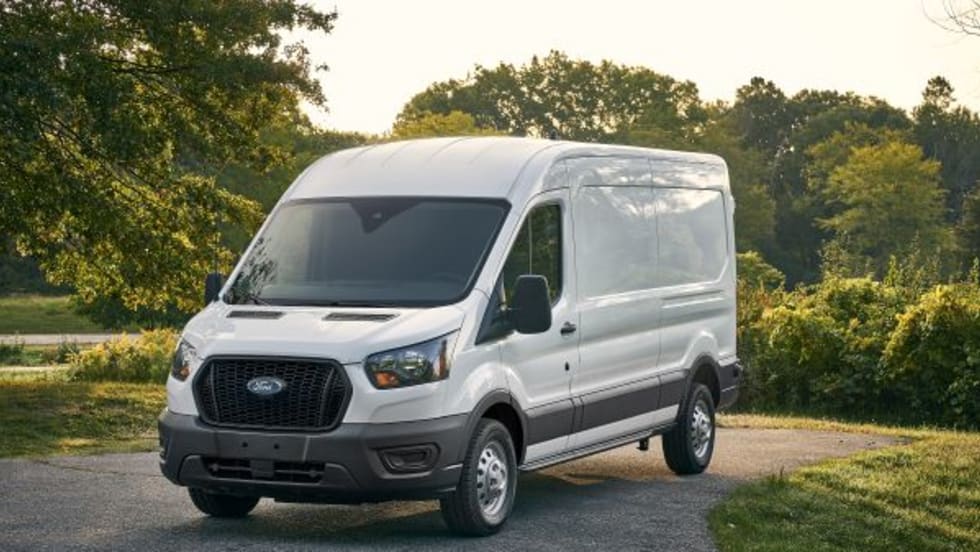
2021 Ford Transit Offers Versatility for Fleets
For the 2021-MY, Ford made ergonomic enhancements for drivers and added an available Parcel Delivery Package. This follows a major refresh in 2020, which added a Crew version, a new standard engine, standard active safety technologies, and embedded telematics to the Transit van family.
Read More →
Recognizing the Other Essential Drivers
Vocational and business fleet drivers don’t get the attention that truckers do. Yet they too are on the front lines, and their jobs often bring them into uncontrolled environments every day.
Read More →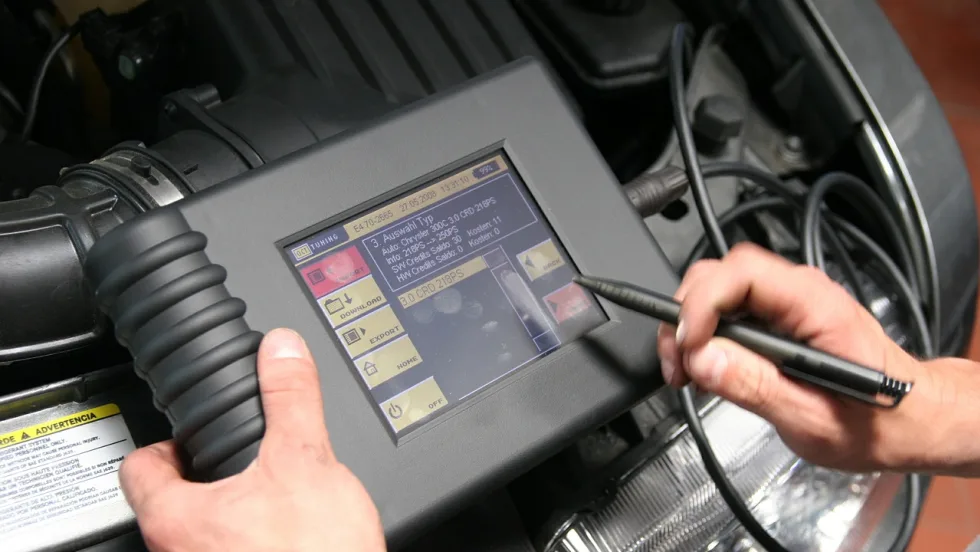
It’s Time to Formulate an ADAS Game Plan
As proliferation of Advanced Driver Assistance Systems (ADAS) increases, skilled labor, equipment, and training costs will increase as well. Fleet operators can’t mitigate these financial burdens by cutting corners on ADAS recalibration and repairs.
Read More →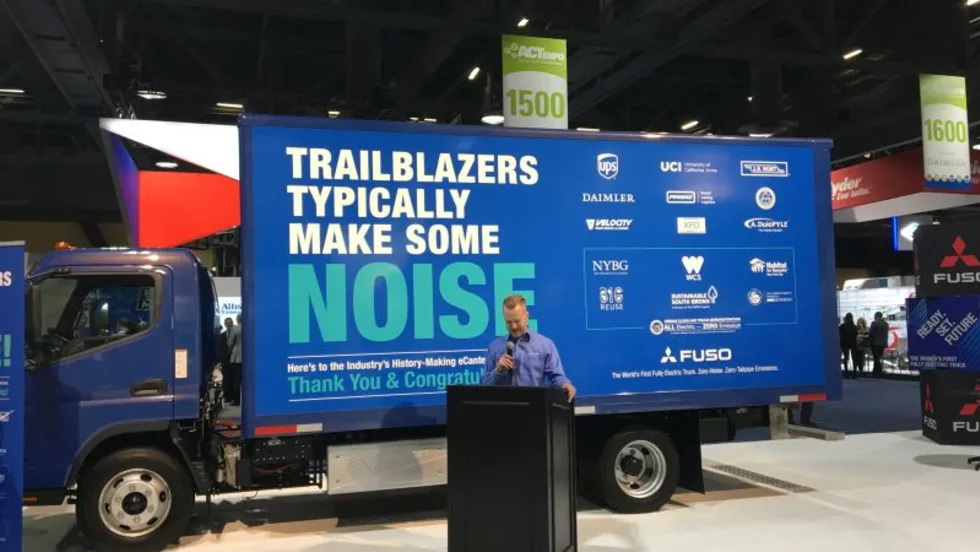
The Future is Electric, But…
With an increasing emphasis on emissions reductions mandates, will fleet operators get caught between clean technologies on their way out and an electric future that hasn’t yet arrived?
Read More →
6 Trend Lines from the 2019 Work Truck Show
From giant leaps in torque and towing to heavy duty truck personalization and chassis cab styling, these trends emerged from this year’s Work Truck Show in Indianapolis.
Read More →
They’re Coming for Your Diesel
In Southern California and other parts of the world, regulators are coalescing to ban, or severely curtail, diesel vehicles. There’s a growing disconnect with the mandates to green the environment and the availability of products and technologies to get us there.
Read More →
Hey Cannabis Companies, Welcome to Fleet
An industry is forming, and it needs help with fleet. In the meantime, the fleet industry should know that these new businesses are navigating extraordinary circumstances, which is forcing them to be better fleet operators pretty darn quick.
Read More →
Takeaways from the Fleet Forward Conference
Most attendees — from established fleets and vendors to new players that were only formed five years ago — didn’t know anyone. But that’s exactly the point.
Read More →
Is it Time to Rethink How Drivers Are Paid?
With the ELD rule affecting miles driven, and drivers’ duties increasingly including more than just driving the vehicle, what can be done to more accurately and fairly reflect a driver’s workday?
Read More →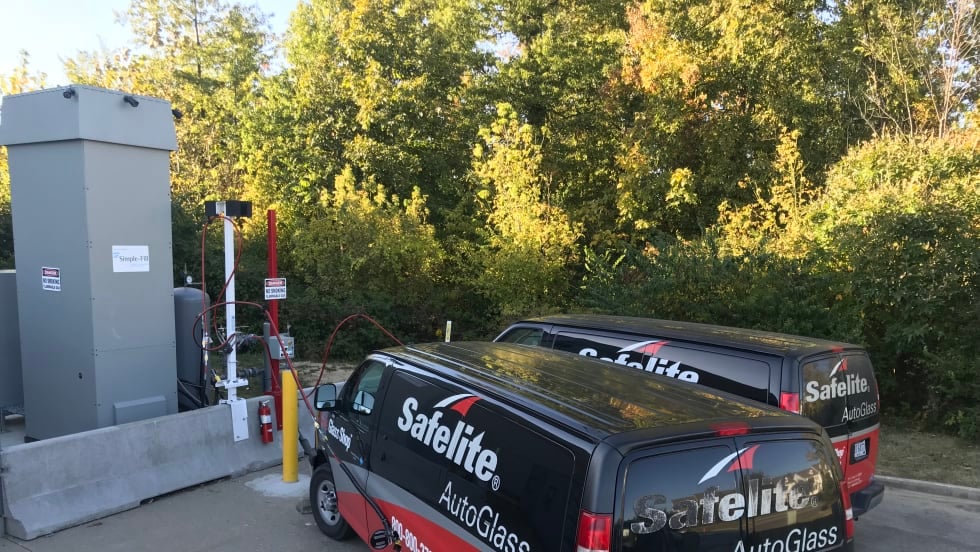
Whatever Happened to CNG?
While the light-duty market for compressed natural gas vehicles has almost evaporated, new near zero emissions technology and drastic reductions in infrastructure costs have reinvigorated the market for medium- and heavy-duty applications — even for smaller fleets.
Read More →