


The EV Experience: Nissan Leaf Drivers Speak Out (Part 1)
All-electric vehicles are finally in the real world. After 5,000 miles of driving, five Nissan Leaf users share their experiences on the ordering and buying process, charging challenges, figuring costs per mile, the driving experience and the specter of range anxiety. This is part one of a two-part blog, with photos.

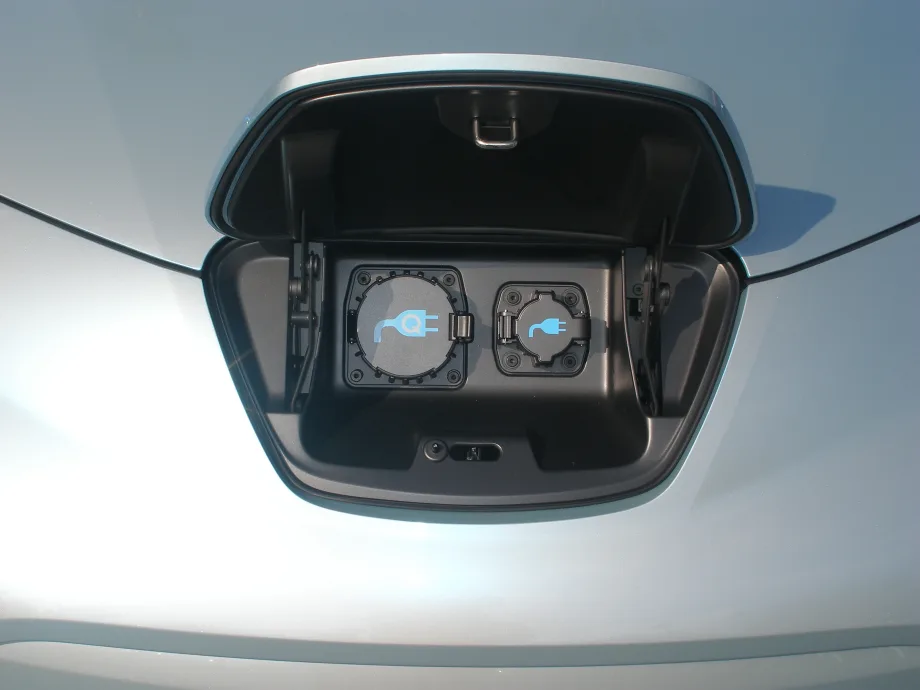
The port on the right accepts the Level 1 and Level 2 plugs. This Leaf comes with the Level 3 port, a $700 option.
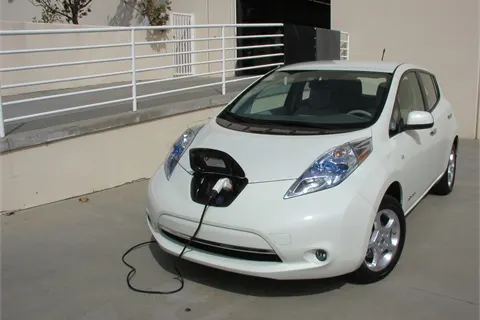
The Leaf charges at our company’s loading dock. A full charge costs about $2.75 using an average national electricity cost of $.11/kWh. However, most Leaf drivers program the car with a cell-phone app to charge at night and pay off-peak electricity rates.
Electric vehicles are finally moving from theory and the testing phase to everyday reality.
In this first comprehensive look at the real-world electric vehicle experience, we asked five Nissan Leaf users — the electric car most widely available now — to share their stories on the ordering and buying process, charging challenges, figuring costs per mile and the driving experience. And, while range limitations are real, these drivers answer the question, is “range anxiety” an ongoing factor or a relic of the pre-EV era?
George Whiteside, an acupuncturist and massage therapist in Seattle, expects to put 15,000 miles a year on his Leaf. He admits he “was not an EV enthusiast” and “was leery of the technology.”
Tom Tweed of La Jolla, Calif., is retired and says his wife primarily uses the Leaf. Tweed and his wife had considered converting their Mazda Miata’s internal combustion engine to an electric motor but decided not to “mess around with an expensive conversion” and to “buy a car from a major manufacturer with a warranty” instead.
Air traffic controller Jim Hamilton of Oceanside, Calif., admits he’d never call himself an early adopter. He also drives a hybrid SUV.
Kirk Gebb works for the facilities dept. for the school district in Eugene, Ore. He’s one of the first of about 20 Leaf drivers in his area. Gebb also owns a Prius.
At the University of California, San Diego (UCSD), facilities management fleet manager Jim Ruby and assistant director Dave Weil are helping the university to implement its “Tailpipe Endgame” program. The program is part of the university’s sustainability initiative that includes implementing a variety of alt-fuel and alt-power vehicles on campus, including hybrids, all-electrics and compressed natural gas (CNG). The university recently took acquisition of five Nissan Leafs with a goal of acquiring 50 in total along with other EV models.
Frustrating Delays in Ordering Process
For many, the ordering process was fraught with delays and hiccups due in part to a new reservation process. This procedure was further aggravated by the Japan earthquake and tsunami in March. As well, some buyers got caught in a computer programming mix-up from order to delivery, which resulted in some cars being delivered out of order from the reservation.[PAGEBREAK]
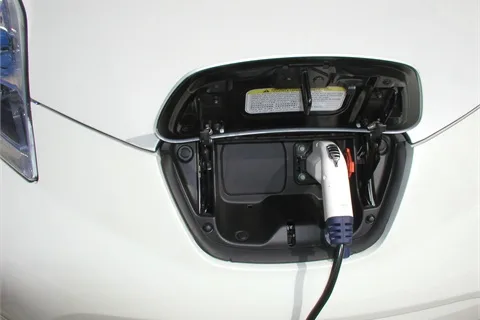
The Leaf’s onboard charger plugs into a regular 110/120V household outlet. This Level 1 “trickle charge,” however, will take close to 20 hours from a depleted battery to full charge. The Level 2 home charging dock, which works off of a 220/240v line, charges the car to 80 percent in about seven hours. Commercial quick-charge (480v) stations take less than 30 minutes, though very few are online and available.
Overseas, Japan’s Leaf buyers were taking advantage of a rebate that diverted orders to production there. The rebate was set to expire in March 2011, though the expiration date was then extended, which further hampered American allocation — and then the tsunami hit.
After the reservation system went live on April 20, 2010, potential buyers plunked down $99 to get in line. Several months later on Aug. 31, buyers could start placing orders and track the process online via their personal “dashboard.” Four- to seven-month waits were common.
Regarding price, buyers chose a dealer and sent a “request for quotation.” Buyers could accept or reject the quote and move on to another dealer. When a quote was accepted, the manufacturing order was placed and Nissan assigned a delivery date.
Hamilton put his $99 reservation down only minutes after the list opened. He also found himself at his computer when the order bank opened at the end of August. Hamilton took delivery of his vehicle in January.
“For some, ordering process was a nightmare and spoiled it for a lot of people,” Whiteside says. He was able to circumvent the process by purchasing an “orphan,” or a Leaf that was ordered and produced and ultimately not acquired by the original requester. Whiteside says some orphans were marked up $5,000 to $7,000 above MSRP for the luxury of shortening the acquisition process, though he found a dealer who “sold it not too much over MSRP,” he says.
Tweed reached out to a local dealer before the RFQ process and had sewn up a price on his own. Tweed shopped price between two local dealers and ended up with $1,000 off MSRP. Tweed says he saw deals as low as $1,500 to $1,800 less than MSRP. “Other than the wait, it’s been a wonderful experience,” he says.
Gebb paid less than $33,000 out the door and says his buying experience “was no worse than anyone else’s,” though like the others, he “would’ve liked to have the car in October instead of April.”
At UCSD, Ruby wrote a “letter of intent” to Nissan and got the university on a wait list. He solicited bids from three dealers and picked the lowest.[PAGEBREAK]
The port on the right accepts the Level 1 and Level 2 plugs. This Leaf comes with the Level 3 port, a $700 option.
UCSD’s five Leafs are on 36-month leases. Nissan sweetened the deal by passing along the federal $7,500 tax credit, which the university can’t take advantage of. UCSD leases vehicles internally to its departments and was able to do it with the price break at the same rate as a Toyota Prius.
“We’re striving to convert as much of our fleet to alternative sources of energy as we can,” Ruby says, though not if the costs are too high. “Everything that we do when it comes to sustainability has to be done as cost effectively as possible. We don’t want to take money away from other campus budgets.”
All other interviewees were able to take advantage of the $7,500 federal tax credit and varying forms of state credits and rebates.
These Leaf drivers also received a free, home charging station courtesy of the EV Project, though some buyers experienced delays in getting their government-funded Level 2 home charging station installed. The provider, ECOtality, was at one point “overwhelmed by orders,” according to Tweed. Nissan had to stop taking orders for a few weeks in September to allow the EV Project to catch up. The program is scheduled to end at the end of this year.
Many Leaf drivers cite the ordering process as the most negative aspect of the experience so far, much of it owed to the extraordinary “act of God” that devastated Japan. However, they acknowledge the unique, new way of acquiring a vehicle. Nissan appears to be working through these problems.
Cost Per Mile – 2 Cents?
In terms of operational costs, Leaf buyers are enjoying the immediate savings with electricity as a power source over fossil fuels. As well, with fewer moving parts and fluids along with regenerative braking to prolong brake life, EVs enjoy minimal maintenance costs.
Tweed pays less than 7 cents a kilowatt hour to charge at night, or $1.75 to “fill his tank.” Going the same distance in his Mazda Miata would cost $16, he says.
Hamilton pays $45 to $55 a month in electricity to power his Leaf — and that’s for a hefty 1,500 miles of driving per month. He calculates that his BMW 330 was costing $300 to $400 a month in fuel, or about 20 cents a mile. “We’re now down to almost a tenth of the cost,” he says.
Gebb has put 7,000 miles on his Leaf since late April and pays about 2 cents a mile to operate. “I tell people I’m making the payments for this car in savings,” he says.
Whiteside calculates savings of $2,000 a year in gasoline. “The most stunning thing to me is the 4,500 miles I have on the car cost me less than $100 in electricity,” Whiteside says. "I've heard plenty of concerns from skeptics about electric cars, but 2.2 cents a miles? That's real. That's a hardcore reality that just about anyone can appreciate."
None of these Leaf drivers have reported a serious maintenance issue yet, and all have driven at least 5,000 miles. Tweed took the car into the dealer to update the firmware, which corrected an air-conditioning controller fault, among other minor issues. There have been scattered reports of a parking brake controller problem.
On the charge point side, Weil and Ruby at UCSD mentioned having to reboot the system software.[PAGEBREAK]
What about the Battery?
Certainly, the biggest maintenance fear surrounds the (very expensive) battery, and we are too close to initial rollout to make any judgments into longevity. We do know, however, that the latest generation of lithium-ion batteries has one major advantage — individual battery cells can be replaced, which relieves the cost of replacing the entire battery.
Whiteside’s research suggests that the Leaf’s battery will perform as expected for at least 3,000 charges when charging from zero to 100 percent. However, Nissan recommends charging to 80 percent, which these users are adhering to. This stopping point ups battery life considerably, perhaps to tens of thousands of charges, according to Whiteside. “If you want to get 150,000 miles out of this battery, you probably can and still have a pretty functional battery,” Whiteside contends.
Hamilton leased his Leaf as a safety net to battery degradation. “If there isn’t (degradation), I’ll buy the car,” he says.
Gebb sees the bright side of technological progress. “If my battery wore out in five years, it would be a good thing,” he says. “I could put in a battery that could go twice as far, and (that battery) will last longer because you won’t be pushing its limits as hard.”
There is also speculation that the faster you pump electricity into the charger (i.e. a Level 2 240v or Level 3 480v and up charger), the quicker the battery degrades, though there is no proof of this yet.
The Charging Infrastructure Scramble
The Leaf comes with a 120v (commonly referred to as 110v) Level 1 charger that plugs into a standard house outlet. (Leaf users are quick to point out that the actual charger is built into the car. “Wall chargers” are just devices that regulate the flow of electricity. Another term for charger is EVSE, which stands for electric vehicle supply equipment.)
Charging from dead zero to 100 percent could take up to 18 hours on a standard 120v wall outlet. For some, the basic Level 1 charger may be sufficient, especially for shorter commutes. Hamilton calculates a 120v charge adds 5 miles of range per hour, while a 240v (also known as 220v) charge adds about 15 miles. For daily commutes of 40 miles, charging on 120v could be done while you sleep, he says. Gebb did just that, charging on a standard plug for two months for about 14 hours each night.
The Level 2 home charger takes about five-and-a-half to six hours from near empty to 80 percent charge.
Commercial Level 3 chargers (480v or more) can charge from zero to 80 percent in about 25 minutes and are just beginning to be installed in publicly accessible locations. “That’s a mind-boggling amount of electricity going through those wires,” Whiteside says.
Public charging stations are coming but most likely at a price premium for electricity. “I’m afraid electricity will be priced out of the ballpark to the equivalent of buying gas,” Tweed says. “I’m paying the equivalent of 2 cents a mile. There’s no way I’m going to pay $2.50 an hour for charging at a commercial charger when I can get a complete fill up in five hours overnight for 35 cents.”
ECOtality is installing 20 publicly available charging stations on the UCSD campus, Weil says.
The aftermarket is beginning to service the charging infrastructure. A company called EVSEupgrade.com will upgrade the car charger to accept a 240v charge, provided your house has a 240v outlet (typically for clothes dryers) for about $300.
As an interim solution to the public charging infrastructure build out, individuals are listing their household charging stations online for use by other EV drivers through a grassroots program called PlugShare.
Many Leaf early adopters are offsetting their charging with solar power, and Hamilton is one of them. Hamilton’s home is powered almost 100 percent by solar, though the power required by the Leaf puts it over the top. “You’d need another roof (of solar panels) to cover (the Leaf) consumption,” he says.
UCSD is looking into using its existing “solar trees” on campus to power the EVs.
Whiteside points out that the nation’s electric grid has a tremendous amount of excess capacity that goes to waste at night because the big industrial boilers can't be powered down easily. At night, EVs could capture that excess. “It’s not just a car anymore, EV's offer a much-needed way to store off-peak excess electricity,” Whiteside says.
Whiteside is considering a solar system for his house. “I’m saving so much money on gas, I can afford to put solar panels on my house,” he says. “For the first time, that equation makes sense. This all of a sudden makes alternative energy affordable. I’m optimistic this car will offer freedom from foreign oil.”
More Blog Posts
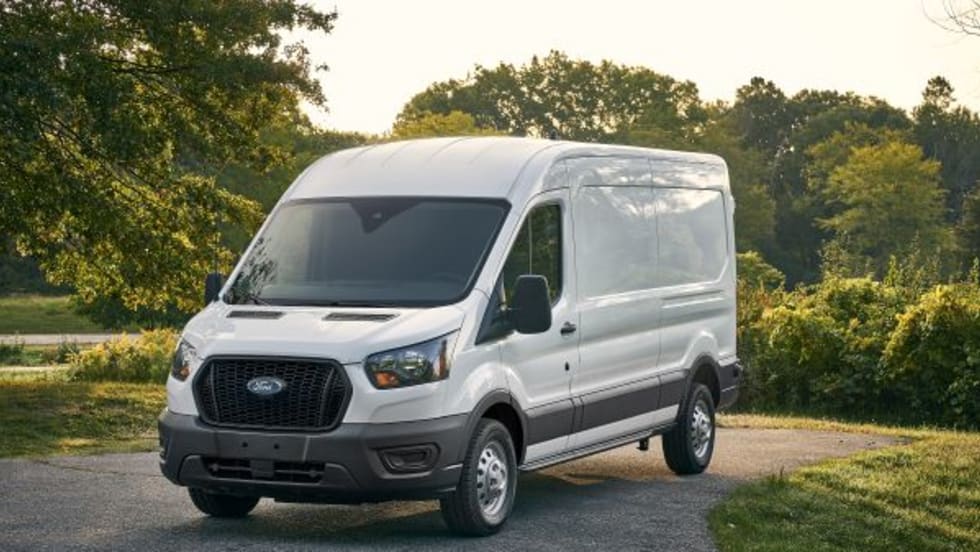
2021 Ford Transit Offers Versatility for Fleets
For the 2021-MY, Ford made ergonomic enhancements for drivers and added an available Parcel Delivery Package. This follows a major refresh in 2020, which added a Crew version, a new standard engine, standard active safety technologies, and embedded telematics to the Transit van family.
Read More →
Recognizing the Other Essential Drivers
Vocational and business fleet drivers don’t get the attention that truckers do. Yet they too are on the front lines, and their jobs often bring them into uncontrolled environments every day.
Read More →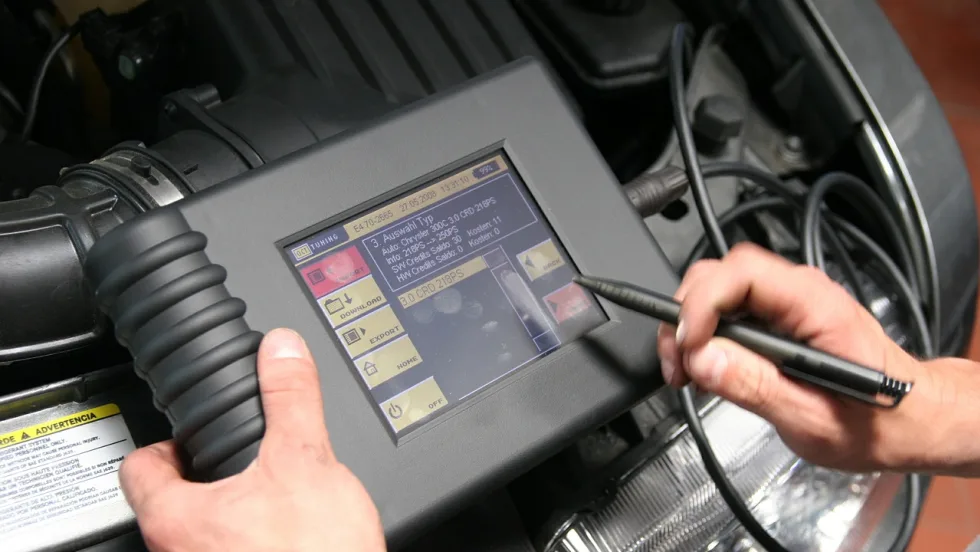
It’s Time to Formulate an ADAS Game Plan
As proliferation of Advanced Driver Assistance Systems (ADAS) increases, skilled labor, equipment, and training costs will increase as well. Fleet operators can’t mitigate these financial burdens by cutting corners on ADAS recalibration and repairs.
Read More →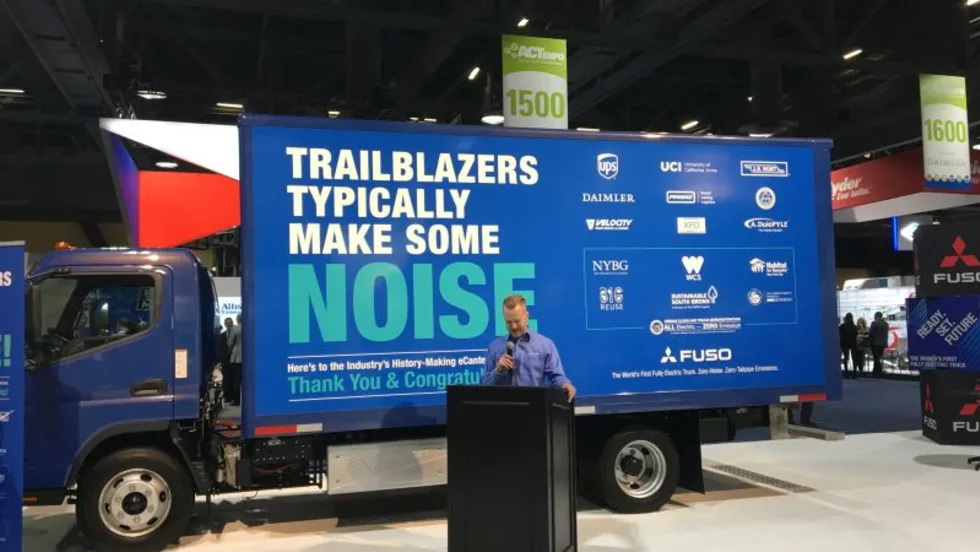
The Future is Electric, But…
With an increasing emphasis on emissions reductions mandates, will fleet operators get caught between clean technologies on their way out and an electric future that hasn’t yet arrived?
Read More →
6 Trend Lines from the 2019 Work Truck Show
From giant leaps in torque and towing to heavy duty truck personalization and chassis cab styling, these trends emerged from this year’s Work Truck Show in Indianapolis.
Read More →
They’re Coming for Your Diesel
In Southern California and other parts of the world, regulators are coalescing to ban, or severely curtail, diesel vehicles. There’s a growing disconnect with the mandates to green the environment and the availability of products and technologies to get us there.
Read More →
Hey Cannabis Companies, Welcome to Fleet
An industry is forming, and it needs help with fleet. In the meantime, the fleet industry should know that these new businesses are navigating extraordinary circumstances, which is forcing them to be better fleet operators pretty darn quick.
Read More →
Takeaways from the Fleet Forward Conference
Most attendees — from established fleets and vendors to new players that were only formed five years ago — didn’t know anyone. But that’s exactly the point.
Read More →
Is it Time to Rethink How Drivers Are Paid?
With the ELD rule affecting miles driven, and drivers’ duties increasingly including more than just driving the vehicle, what can be done to more accurately and fairly reflect a driver’s workday?
Read More →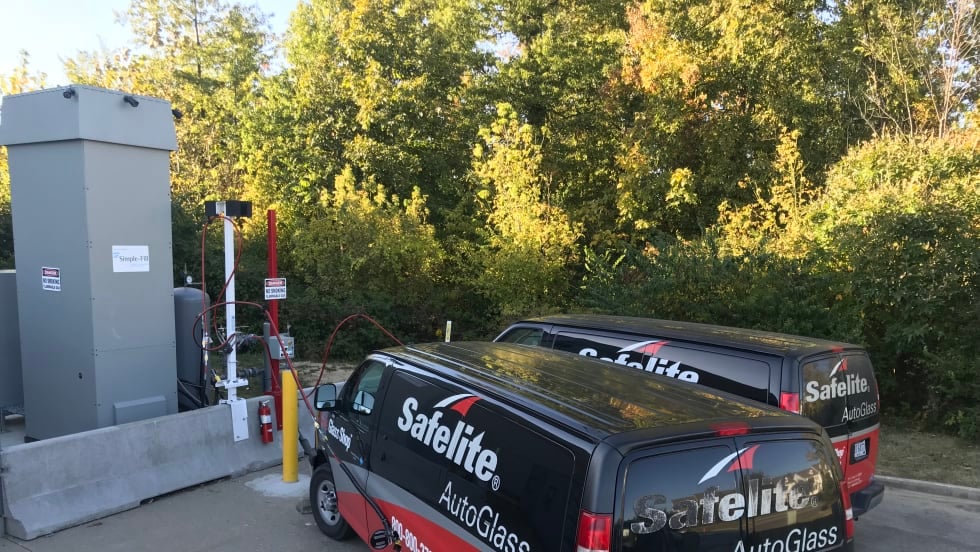
Whatever Happened to CNG?
While the light-duty market for compressed natural gas vehicles has almost evaporated, new near zero emissions technology and drastic reductions in infrastructure costs have reinvigorated the market for medium- and heavy-duty applications — even for smaller fleets.
Read More →