


Ford Transit Connect Gets Fleet Action in Beverly Hills
The 2010 Ford Transit Connect light-duty utility van is ready to deliver the goods. (Photos and videos included.)


Ford is on a cross-country dog-and-pony show to show off its new Transit Connect van. The Bobit Auto team caught up with Ford in Hollywood and Beverly Hills, and got to drive the van in three distinct small business work environments.
You'll be seeing a lot of the Transit Connect. But get your factory orders in now, because you won't be able to pluck this hot European-conceived-and-built van off a dealer lot any time soon.
The Transit Connect is designed for business uses that don't call for the capacity and power of the E-Series lineup, yet need an economical, small work vehicle that maximizes space and fuel economy. The segment is a virtual white space in terms of model offerings in North America.
The Look
The Transit Connect has the "look at me" value of the Dodge Sprinter, without the price tag, and twice as much cargo capacity as the Chevy HHR panel van. The closest model type would be the erstwhile cargo versions of minivan models such as the Ford Windstar Cargo or Chevy Astro Cargo. However, the Transit Connect is light years forward from those vehicles in every respect.
The white, tall sides are ideal for a vehicle wrap, making it a "business card on wheels."
In some situations around Beverly Hills and Hollywood an E Series van would be a bull in a china shop. The Transit Connect is more like a trusty butler, delivering the goods unobtrusively in boutique shop and residential suburban settings.
The Drive
The van drives and handles like a passenger vehicle, more so than any work vehicle I've ever driven. This is an important selling point for Ford, who expects some business owners to use the van as a personal vehicle during off hours.
Unladen, the 2.0-liter, I-4 136 hp engine was powerful enough, though some journalists wondered how it would produce under its full 1,600 lb payload. Even if slightly underpowered, I would make the trade off for fuel economy any day, and rest easier that my drivers didn't have enough juice to gun it in a residential neighborhood.
The turning radius of 39' curb to curb makes it as nimble as a compact car. We put the van through a twisty cone course and it was remarkably agile. Negotiating the stop-and-go Hollywood traffic was a breeze. Front and side visibility is great. Our driving team appreciated the rear view mirror visibility through the back windows (an option).
The Function
Factory upfit packages are offered through Adrien Steel, Leggett & Platt and Sortimo, a UK company. Ford execs use the phrase "uber organization," and it fits. This is the first small van to have so many storage options offered through the factory.
The van maximizes every inch of its 135.3 cubic feet of cargo volume, highlighted by dual sliding rear side doors. The tall back opens up to a maximum of 59.1 inches of floor to ceiling height, while load width is 48.1 inches between the wheel arches. The split rear cargo doors open at a standard 180 degrees, or an optional 255 degrees.
Furthering the organizational capabilities is Ford Work Solutions, an optional in-dash computer system. Not only do users in the field have a full computer in the car, the system can link to the business's main office computer network via cellular connection and print out invoices, etc. on the fly with a Bluetooth enabled, battery-powered printer.
Other features of Ford Work Solutions include a full GPS tracking and navigation system and a tool tracker using RFID tags.
Perhaps a bit undersized for the HVAC, contractor and utility applications, the Transit Connect seems perfect for light-duty delivery situations such as bakeries, florists and picture framers. We visited an actual business in each of those categories.
While none of the three companies we visited actually had a Transit Connect in operation yet, the owners all had definite ideas on uses for their businesses.
Tree Frogs
First stop was to Tree Frogs, a specialty florist in Beverly Hills since 1958. "Tina Sinatra just called," said owner Fred Gibbons, rolling his eyes at another of her offbeat arrangement requests.
Tree Frogs runs two full-size trucks and an SUV at present. The company produces 40-50 big events per year. The vans make five to 50 deliveries a day, depending on the season. However, most deliveries do not fill up the van, so a more fuel-efficient vehicle is better suited for his application.
If needed, Gibbons reckons he could fit up to 50 centerpieces in the Transit Connect. With that many deliveries and centerpieces, ingress and egress are key. Gibbons liked the dual side doors and the low load height.
Gibbons also liked how the Transit Connect stood out from a vanilla cargo van. The Transit Connect projects the right image to his high-class clientele, he said. (Image conscious in Beverly Hills-who'da thunk?) Gibbons actually sees getting some personal use from the van.
His manager David was impressed with the connectivity of Work Solutions, especially the link to the files at the office and mobile printing capabilities. "I could run the business out of this vehicle," he said.
Hansen's Cakes
Hansen's Cakes is an institution in Los Angeles. Like Tree Frogs, Hansen's is a low-weight, high-volume business, perfectly suited for the Transit Connect.
Patrick Hansen, a seventh-generation cake maker, runs two Windstars, an Aerostar and an E150 out of three stores. The company serves as many as 60 weddings on a Saturday. The fleet gains close to 100,000 miles per year on each of the vans.
Judging from the jerry-rigged wood shelf in the cargo van, a factory-installed rack unit would do wonders for inventory organization, especially racks of cupcakes.
Suzi Finer, Hansen's marketing manager, thought the GPS tracking would come in handy. "When bride says, 'where's my cake,' we're ready with an answer," she says.
The navigation function also alleviates trying to flip through a map book in the winding Hollywood Hills.
Finer pointed out that the fuel economy and drivability "were like a sedan."
Beverly Hills Picture Framing and Gallery
Anita Kasar and John Pohle run their small business out of one of the busiest areas of Beverly Hills.
The gallery's single minivan is used for outside sales and deliveries of completed frames, as well as personal transportation. "It's not very professional, but we make it work," said Kasar. "I saw these neat little trucks in Japan, and I thought, 'why can't we have that here?'"
There is no back alley to park in, so maneuverability at the front entrance is essential. Most of their deliveries are within a five-mile radius.
Kasar said the Transit Connect delivers on convenience and organization. She liked the advertising white space on the sides, and the fact that the fuel-economy says "green" to clientele.
Final Goodies
Out of the gate, Ford is offering $500 customer cash, an upfit incentive and 6.9 percent financing. Pricing starts at $21,475 including destination.
More good news: the Transit Connect, with its 21/24 mpg, qualifies for the government's Cash for Clunkers discount. If your business is still schlepping around in an old-gas guzzling van, that $4,500 incentive will drop operating costs even lower.
More Blog Posts
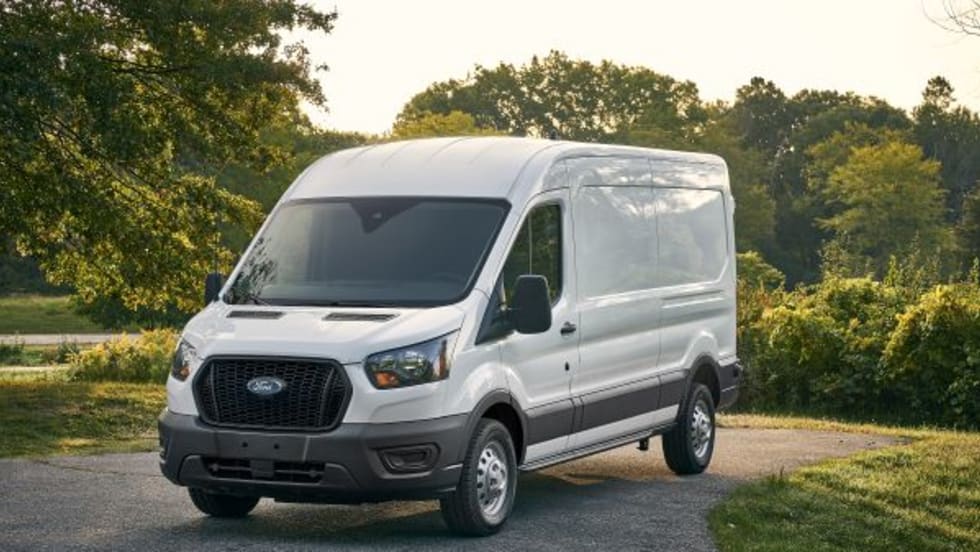
2021 Ford Transit Offers Versatility for Fleets
For the 2021-MY, Ford made ergonomic enhancements for drivers and added an available Parcel Delivery Package. This follows a major refresh in 2020, which added a Crew version, a new standard engine, standard active safety technologies, and embedded telematics to the Transit van family.
Read More →
Recognizing the Other Essential Drivers
Vocational and business fleet drivers don’t get the attention that truckers do. Yet they too are on the front lines, and their jobs often bring them into uncontrolled environments every day.
Read More →
It’s Time to Formulate an ADAS Game Plan
As proliferation of Advanced Driver Assistance Systems (ADAS) increases, skilled labor, equipment, and training costs will increase as well. Fleet operators can’t mitigate these financial burdens by cutting corners on ADAS recalibration and repairs.
Read More →
The Future is Electric, But…
With an increasing emphasis on emissions reductions mandates, will fleet operators get caught between clean technologies on their way out and an electric future that hasn’t yet arrived?
Read More →
6 Trend Lines from the 2019 Work Truck Show
From giant leaps in torque and towing to heavy duty truck personalization and chassis cab styling, these trends emerged from this year’s Work Truck Show in Indianapolis.
Read More →
They’re Coming for Your Diesel
In Southern California and other parts of the world, regulators are coalescing to ban, or severely curtail, diesel vehicles. There’s a growing disconnect with the mandates to green the environment and the availability of products and technologies to get us there.
Read More →
Hey Cannabis Companies, Welcome to Fleet
An industry is forming, and it needs help with fleet. In the meantime, the fleet industry should know that these new businesses are navigating extraordinary circumstances, which is forcing them to be better fleet operators pretty darn quick.
Read More →
Takeaways from the Fleet Forward Conference
Most attendees — from established fleets and vendors to new players that were only formed five years ago — didn’t know anyone. But that’s exactly the point.
Read More →
Is it Time to Rethink How Drivers Are Paid?
With the ELD rule affecting miles driven, and drivers’ duties increasingly including more than just driving the vehicle, what can be done to more accurately and fairly reflect a driver’s workday?
Read More →
Whatever Happened to CNG?
While the light-duty market for compressed natural gas vehicles has almost evaporated, new near zero emissions technology and drastic reductions in infrastructure costs have reinvigorated the market for medium- and heavy-duty applications — even for smaller fleets.
Read More →