


The Business Case for Short Cycling Compact SUVs
The aggressive fleet incentives that manufacturers are currently offering commercial fleets present the opportunity to give serious consideration to substituting a compact SUV on a selector in lieu of a traditional intermediate-size fleet sedan, so long as it is capable of fulfilling the fleet application.


Do you understand the benefits of short-cycling?
Photo: Bobit
The aggressive fleet incentives that manufacturers are currently offering commercial fleets present the opportunity to give serious consideration to substituting a compact SUV on a selector in lieu of a traditional intermediate-size fleet sedan, so long as it is capable of fulfilling the fleet application.
When you compare lifecycle costs during a 36-month service life, a compact SUV actually has a lower monthly total cost. Interestingly, they are also less expensive at a shorter 24-month cycle.
One advocate for short cycling compact SUVs is Gary Rappeport, CEO and president of Donlen Corp., a fleet management company headquartered in Northbrook, Ill.
“The opportunity exists today for fleets to think out of the box,” he said. “Today’s high incentives change the dynamics for fleets and present the opportunity to not only migrate to a more upscale vehicle, but also operate them within a shorter 24-month replacement cycle.”
Donlen compares the lifecycle costs of three intermediate-size sedans kept in service for 36 months against three compact SUVs kept in service for 24 months. Counter-intuitively, the average total monthly cost for a compact SUV is substantially less expensive than an intermediate-size fleet sedan. Upon analysis of this data, there are five factors that favor using a compact SUV for a shorter 24-month replacement cycle.
1. Operating Costs are Reduced
By short cycling, a vehicle remains covered under the new-vehicle warranty for a greater percentage of its service life.
“As a result, there is substantial operating cost savings by avoiding the significant maintenance costs for fleet vehicles that occur in years 3 and 4,” said Rappeport.
During the first two years of service, most maintenance expenses are for oil-filter-lube and other related preventive maintenance.
“By reducing vehicle service life to 24 months, there are significant savings opportunities in maintenance. If you reduce maintenance costs, there will be a parallel reduction in downtime since drivers are scheduling less maintenance. Although SUVs traditionally have had a reputation for poor fuel economy, the smaller engines in compact SUVs often have comparable mpg ratings as those of intermediate-size sedans,” added Rappeport.
2. Fleet Incentives are Maximized
“If you suppose a $2,500 competitive assistance program (CAP program) and spread it out across 36 months, it amounts to $69 for each month of vehicle service,” said Rappeport. “But if you take that same $2,500 and layer it across 24 months, this incentive is now worth $104 per month.”
3. New-Vehicle Order Volume is Maximized
A hypothetical 600-vehicle fleet on a 36-month cycle will order, on average, about 200 vehicles a year.
“If a fleet short cycles to 24 months and increases its orders to 300 vehicles, how much greater CAP incentive would they be able to negotiate with a manufacturer?” asks Rappeport. “This increased order volume gives greater negotiating leverage. Let’s say you are able to negotiate an additional $1,000 per vehicle, which increases the total CAP program to $3,500 per vehicle. If you divide this by 24 months, then this increases the amount you can deduct from a monthly payment by $146. A key assumption is that a shorter cycle with more vehicle orders will increase a CAP incentive by $1,000. This may not be valid for smaller fleets or a fleet that has already negotiated a CAP incentive at the high end.”
4. Resale Value is Increased
Although acquisition costs for compact SUVs are greater, they have substantially higher resale values. In addition, short cycling means that a vehicle coming out of service will be newer, have fewer miles, and most likely be in better condition, which means an even higher resale value.
Manheim and ADESA auction data in the chart below shows that the resale value of a 2-year-old compact SUV with 50,000 miles is $5,200 to $7,700 more versus a 3-year-old intermediate sedan with 75,000 miles.
5. Driver Morale is Improved
The average age of a vehicle is 18 months in a three-year cycle, while in a two-year cycle it is 12 months.
“By short cycling, you dramatically reduce the age of your fleet vehicles,” said Rappeport. Driving a newer vehicle will raise driver morale. Anecdotally, most fleet managers will tell you if a driver had a choice, most would select a compact SUV instead of a standard fleet sedan.
Originally posted on Automotive Fleet
More Remarketing & Resale
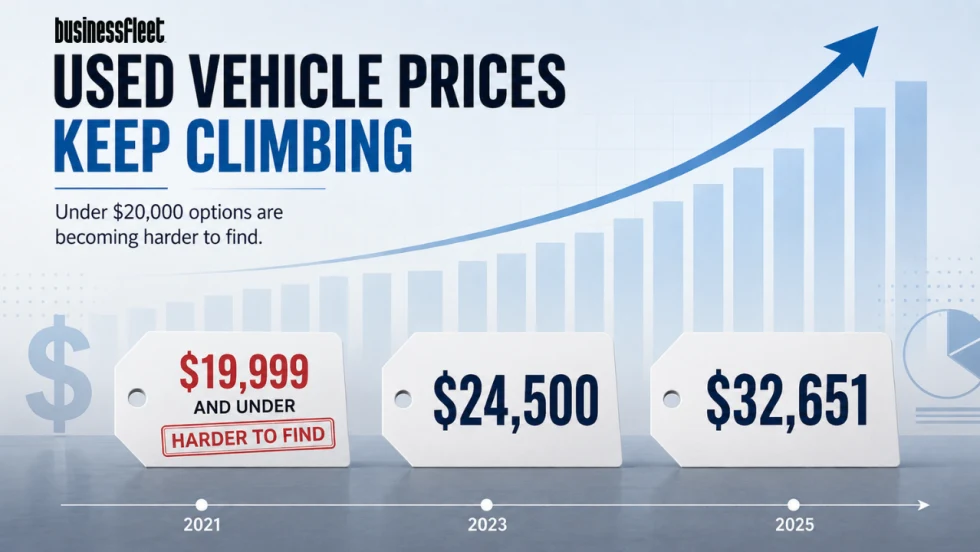
Small Fleets Shopping Used May Need to Rethink What $20,000 Buys
Small fleets shopping used are finding fewer affordable options. With late-model used vehicle prices climbing and $20,000 buying a much older vehicle than it did in 2019, replacement planning may need a rethink.
Read More →
AP Fleet Management Expands Vehicle Remarketing Program to Help Small Fleets Recover More Value
AP Fleet Management expanded its remarketing program with online vehicle listings and end-to-end resale services to help fleets maximize vehicle value.
Read More →
Prepping Your Fleet Vehicles for Resale
When it's time to dispose of retired units, which vehicle prep strategies can improve resale value? Following industry basics can have a significant impact on resale prices.
Read More →
Getting Creative with a Lack of Van Availability
Chip Cooper of Cooper Motors shares his take on where vehicle supply and availability are headed this year and offers a creative way to spec to get the job done.
Read More →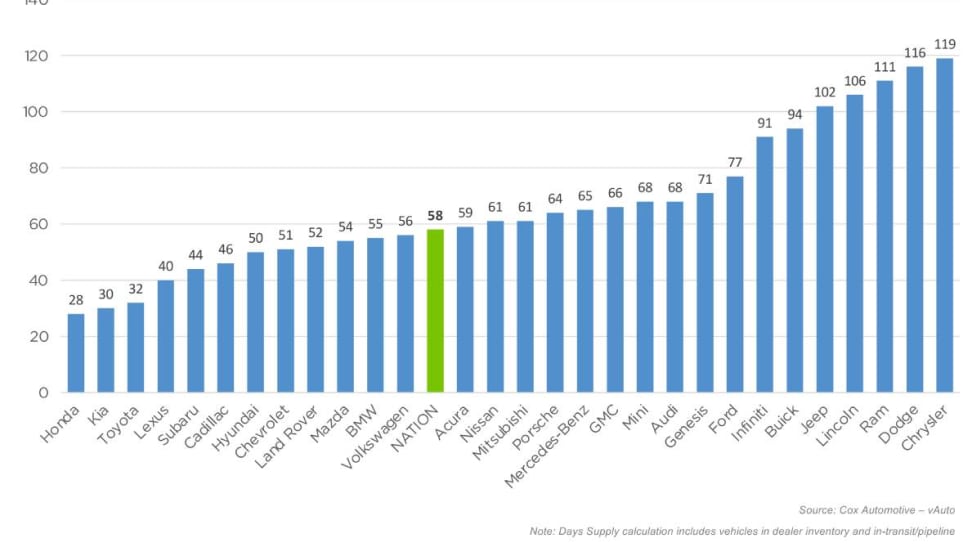
New-Vehicle Supply Grows Ahead of Potential Strike
The United Auto Workers contract with the Detroit Big 3 automakers expires Sept. 14 as new inventory remains 68% above last year's level.
Read More →
The 5 W's of Remarketing Upfits & Equipment
Fleet experts shared their insights on remarketing upfits and equipment in the work truck industry.
Read More →
Maintaining Work Trucks with Resale in Mind
What is the top maintenance-related factor to worry about when resale is on your mind? What should you avoid spending money on? What matters the most?
Read More →
At the Beginning and Through the Decades
IARA 20th Anniversary Issue: Industry observer, media figure, and conference host Charlie Vogelheim has circulated throughout the automotive world, qualifying him to sum up the legacy of the IARA.
Read More →
Higher Commodity Prices Exert Upward Cost Pressure on Tires
Many tire OEMs have increased prices in CY-2021, ranging from 3-10% depending on type of tire and size. Higher commodity prices and increased ocean freight rates are being passed on to end users as OE profit margins compress.
Read More →
CAR Event Ready to Take Off with Vegas Reopening
The Conference of Automotive Remarketing will be among the first wave of in-person events since the start of the pandemic.
Read More →