


How to Select & Specify Service Bodes
Developing an optimum service body specification selection requires considerable forethought. Research available options and utilize end-user input to guide your decision.

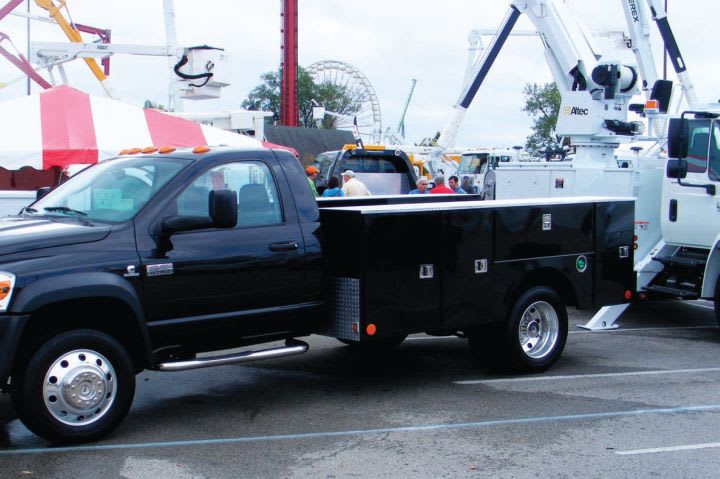
- Successful service body specification involves thorough research into available options.
- Incorporating user feedback is crucial in guiding the selection process.
- Planning and forethought are necessary to develop an optimum service body specification.
*Summarized by AI
Acquisition cost is often a primary driver in the selection of work truck chassis, their associated service bodies, and equipment. But understanding what a work truck actually costs to operate requires looking beyond the purchase price to the work it performs.
At the same time, many fleets also desire to avoid DOT regulations by operating trucks under 10,001 pounds GVW. This has led to overloading vehicles or buying smaller sizes, such as a Ford F-350 Super Duty, rather than the F-450 the fleet really needs to do the job.
And now, with the rapid rise in fuel prices, fleets are also looking to downsize with smaller trucks and smaller bodies. These factors can result in developing a body that doesn’t meet the specific requirements of the driver using the truck.
As Bob Johnson, director of fleet relations for the Farmington Hills, Mich.-based National Truck Equipment Association (NTEA), points out, “If the unit isn’t optimized for its intended application, its lifecycle cost will usually be higher than a properly designed, or spec’d unit.”
Dave Decker, manager of truck engineering for fleet management company Wheels Inc., adds, “Usually, if you cut corners and take something generic, when you need custom work, it ends up costing you more in the long run.”
For the safety and convenience of drivers and to make the job more productive, the majority of Wheels’ customers, for example, use customized service bodies, according to Decker.
Overall, service bodies typically require some degree of upfitting to adapt them for their intended application. Ultimately, coming up with the optimum selection and specification requires considerable forethought.
Select the Body First
Spec’ing experts, including Dave Duford, specifications engineer with Mount Laurel, N.J.-based fleet management company Automotive Resources International (ARI), typically recommend selecting the service body before choosing the chassis. Planning the chassis and upfit together helps fleets account for how the completed vehicle will work.
“The body is the tool portion of the truck,” said Duford. “How that’s going to be used, along with considerations such as compartment and shelving placement, will tell you what type of chassis to pick.”
Conversely, if the chassis is selected first, there’s a risk that it, or some part of it, may not fit the body.
Differences in the fuel tank placement of some Ford, Chevrolet, and Dodge chassis, for example, could interfere with a fleet’s desired placement of the body shelving and ultimately prevent use of a preferred chassis supplier.
Putting an underbody compressor on a medium service vehicle may also pose problems with certain exhaust systems.
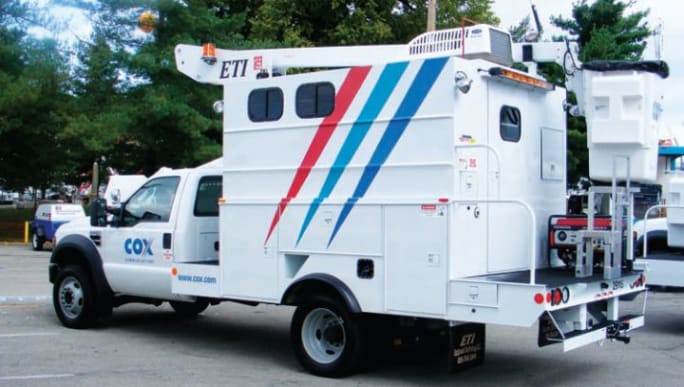
Safety and productivity go hand-in-hand in selecting and spec’ing body requirements. In spec’ing service bodies, place a priority on driver safety and ergonomics.
Photo: Cox Automotive
User Input Is Key to Decision-Making
With all the considerations required for proper spec’ing, ranging from how much operators need to carry to locality, terrain, and special handling and storage requirements, end-user input is key to making the right decisions. Leaving the right people out of the spec’ing process can leave a fleet with equipment that doesn’t fit the job.
Large fleets, including Kinder Morgan and BP Products North America, typically rely on meetings with department heads for their input. Kinder Morgan, with its fleet of approximately 3,600 light- and medium-duty trucks, has an annual fleet council meeting in which “we bring in key people and ask what’s working and not working,” as well as discussing special requirements, says John Drozd, fleet manager in Lakewood, Colo.
The company also holds yearly specifications reviews with its Des Plaines, Ill.-based fleet management company Wheels Inc. and its Bensenville, Ill.-based upfitter Auto Truck Group.
During these meetings, “All three of us look at the specs,” said Drozd. “We ask a lot of questions and they provide a lot of input. It’s a very effective relationship.”
Similarly, BP Products North America fleet officials “talk to the folks in the field every year,” including approximately 40-50 team leads of trucks for feedback and potential changes in requirements, said Joe Smolar, the company’s fleet services manager in Warrenville, Ill.
“In my terminology, ‘end user’ is the specific department and sometimes the vehicle operator,” adds the director of another large Southern fleet. “We carry a lot of fittings and plumbing supplies and need a good understanding of the end-user’s inventory and size. This determines how deep or large the compartments should be, whether they work in daylight or darkness and need lights in the compartments of the service bodies, and whether they need emergency lighting on the outside.”
This fleet group takes particular care in researching operational requirements on service bodies with top-mounted cranes due to the critical nature of the specifications, including lift, weight capacity, and other data relating to the geometry.
Account for the Body’s Impact on Payload
One of the biggest problems ARI encounters is fleet operators underestimating the weight of a service body when determining payload capacity and gross vehicle weight rating.
“They take a service body, which is relatively heavy and treat it as a pickup truck. You have to find out exactly what’s in there, the type of tooling, and how the truck will be used,” Duford says.
With a crane application, for example, the body itself needs reinforcement so the crane won’t twist on the body during operation.
On a lighter-duty body, this may mean adding an additional leaf spring on the right rear axle. On medium-duty trucks with larger or longer bodies, it may require adding manual or hydraulic outriggers to stabilize the truck on the ground.
Consider Safety and Productivity While Spec’ing
Safety and productivity go hand-in-hand in selecting and spec’ing body requirements.
“There will always be some compromises driven by both cost and usability,” says Johnson. And, even though fleet officials will never be able to eliminate all safety concerns, they should be able to show a “good faith” effort to do so, he adds.
In spec’ing service bodies, BP Products North America fleet officials, for example, place a priority on driver safety and ergonomics, says Smolar.
Aside from larger considerations, such as suspension of the upfit to make sure there are no problems with the added weight, safety influences other variables in the company’s specs. Examples include the length of drawers, number of shelves, and compartments in the upfit. Evaluating those features also means considering whether drivers of different heights can comfortably reach and use them.
The company also seeks to minimize bending and lifting while placing equipment to prevent back and knee injuries. It uses bed slides or platforms that slide out of the rear of the truck, where needed, to bring equipment to operators. This minimizes the need to climb in and out of the truck, Smolar adds.
Within the past year, Rhino Linings and other spray-on bed liners have also become increasingly popular with fleets due to the products’ safety and protective benefits.
While helping prevent rust and damage from tools thrown around, these products also improve traction and help prevent sliding on wet or slippery surfaces.
The liners are used throughout the inside of the cargo area on service bodies, with some fleets covering the surfaces of bumpers to help prevent slippage, Wheels’ Decker notes.
Write Out Specification Requirements
“Unless you’re buying a completed unit out of stock, you should always use some form of a written specification to define your requirements,” advises NTEA’s Johnson.
He cautions against letting a vendor provide a sales order and saying, “This is the specification that we will be using.”
“When you use a sales order as a specification, you leave yourself open to changed orders and increased costs,” Johnson adds.
Vendors always issue sales orders; however, that’s a vendor document, and it can be interpreted however the vendor wants. The key, says Johnson, is to make sure the order references the fleet’s specifications as the controlling document.
NTEA’s website provides a list of distributor member companies that specialize in truck upfitting. Those with a rectangular “MVP” (Member Verification Program) logo have provided documentation to NTEA stating they comply with various minimum safety, quality assurance, and completed chassis requirements. They must also have certified technicians, such as welders and electricians, in their employ and meet minimum insurance requirements.
Most truck equipment upfitters are reputable companies. In fact, their long-term survival depends on the maintenance of a reputation for quality service.
Unfortunately, a few vendors still may seek to take advantage of a fleet by building a first unit, for example, in such a way that the fleet official is forced to change it, potentially incurring change-order charges.
Having a well-written customer-supplied specification as the controlling document gives the customer the final word if any differences in the interpretation of the vehicle order arise.
A written specification, when properly used:
- Defines the fleet manager’s requirements.
- Serves as a basis for written quotations.
- Serves as a basis for all quality and conformance inspections.
- Acts as the controlling document for resolving disputes between the fleet manager and the vendor.
Johnson also advises being specific regarding performance requirements and critical dimensional minimums, and providing clear and concise details about the required layout of the unit. However, he cautions against fleet managers making themselves “the design engineer.”
“Tell the vendor what you want, but don’t tell them how to do it,” Johnson says. “If you tell the vendor how to design or how to engineer a product, you’re taking on a lot of the liability for product safety and performance.”
In the same context, he advises allowing vendors flexibility when possible.
As a final caution, Johnson advises against incorporating a feature unique to a single vendor unless absolutely necessary. He noted instances in which a vendor’s sales representative has volunteered to help write a fleet’s specifications, doing it in such a way as to gain an advantage over competitors. That might include spec’ing a minor proprietary feature unique to that vendor.
“Every other vendor that quotes on that upfit will have to take an exception. The company that helped write the spec knows that, and it will drive the price up,” says Johnson.
“There’s nothing wrong with allowing a sales rep to help you write the spec. But, after you’re done, take out any proprietary features in the spec, which only that upfitter can provide,” he adds.
Specs should also include all of a fleet manager’s miscellaneous requirements and reference existing industry and government standards whenever applicable, including those from the Department of Transportation, American National Standards Institute, Society of Automotive Engineers, and American Society of Mechanical Engineers.
Compare Steel and Aluminum Body Construction
Body material plays a significant role in overall upfit cost. The vast majority of large fleets, for example, favor steel service bodies for their cost and durability.
A steel service body’s life can be virtually limitless, though it will show signs of wear more readily than fiberglass or aluminum, according to Eric Nelson, truck engineer with Wheels.
For that reason, steel bodies are also preferred by fleets that trade trucks in on a three- to five-year cycle, which lease and fleet management companies have determined is the best cycle to achieve maximum dollar return for a used service-body vehicle. Complete units, sold with body and chassis intact, provide the best resale.
“There are any number of independent contractors who don’t want to spend the up-front money for a new unit and just want a unit that runs and works for a few years,” Nelson says.
Kinder Morgan is among the fleets using steel service bodies. The service bodies are typically mounted on Ford Super Duties, have a basic Knapheide 108-type design with flip-top compartments, and are primarily used for carrying tools and parts. The company operates its trucks on a “one-time lifecycle” basis, according to Drozd.
“We go for a product with a decent price,” Drozd says. “We own our own vehicles and keep them until they’re worn out. Then we retire the whole thing off the books.”
The bodies are “terminated” along with the chassis when the latter wear out, typically about seven to eight years or 120,000 to 150,000 miles.
Conversely, at BP Products North America, “We try to use aluminum. In some cases, we use fiberglass to keep the weight down,” says Smolar. The longer-lasting appearance benefits of these materials, which still have steel understructures, also help increase their resale value.
Smolar’s fleet includes more than 1,100 light- and medium-duty trucks. The light-duty trucks are typically spec’ed for a 10-year/100,000-mile trade-in cycle, though they usually reach their mileage limitation first, Smolar adds. At that point, the company remarkets the bodies with their chassis.
As fleets evaluate replacements, it’s also worth reviewing newer configurations, such as service and combination bodies introduced at Work Truck Week 2026, against their current storage, access, and equipment needs.
Factor in Maintenance and Ship-Thru
Maintenance and ship-thru also affect a fleet’s choice of an upfitter. Regional upfitters may offer an opportunity to save money; however, if the fleet is national in scope and has vehicle accident issues, a regional upfitter may not have locations for adequate servicing.
“On any given day, there are many options for having the same piece of equipment installed,” Nelson says. “Often, we get three different quotes on bodies and chassis.”
For a ship-thru to work, an upfitter and/or distributor must be located next to a major truck plant. The order for the equipment installation and upfitter is given to one of the Detroit 3 truck manufacturers, for example, which handle the logistics of delivering the vehicle to a designated dealer.
Building upfit lead time into the acquisition plan gives the fleet, manufacturer, and upfitter time to coordinate specifications and delivery requirements before the vehicle is needed.
Quick Answers
Key factors include understanding the specific needs of the end-user, researching available options, and considering quality, durability, and cost.
*Summarized by AI
Originally posted on Work Truck Online
More Operations
Uber Eats and AutoParts.com Partner
Skip the parts run. Uber Eats and AutoParts.com are bringing on-demand auto parts delivery to small business fleets, offering another way to tackle downtime.

Small Fleet Decisions, Big Business Impact | Business Fleet Brief
Are your vehicles helping or hurting your bottom line? This month's Business Fleet Brief covers fleet costs, insurance, a mobile business, winter safety, and more.

5 Signs Your Small Fleet Has Outgrown the Way You Manage It
More vehicles, same old process? Learn five signs your fleet management needs an update and practical ways to keep up as your business grows.

Is Your Fleet Making Your Business Money or Quietly Costing It?
Your vehicles keep your business moving, but are they helping your bottom line? From underused vehicles and unexpected downtime to the real cost of completing a job, here's how to find out whether your fleet is working as hard as your business needs it to.

Les Schwab Tires Launches Foundation With $100,000 for Community Recovery
Les Schwab Tires launches a foundation with $100,000 to support recovery for Silver Rail Elementary and the Bend community following a school shooting.

Small Carriers Make Up 91% of Trucking Industry as Freight Revenue Rises
The latest American Trucking Associations report shows modest gains in freight tonnage and revenue, with businesses operating 10 or fewer trucks accounting for most carriers.
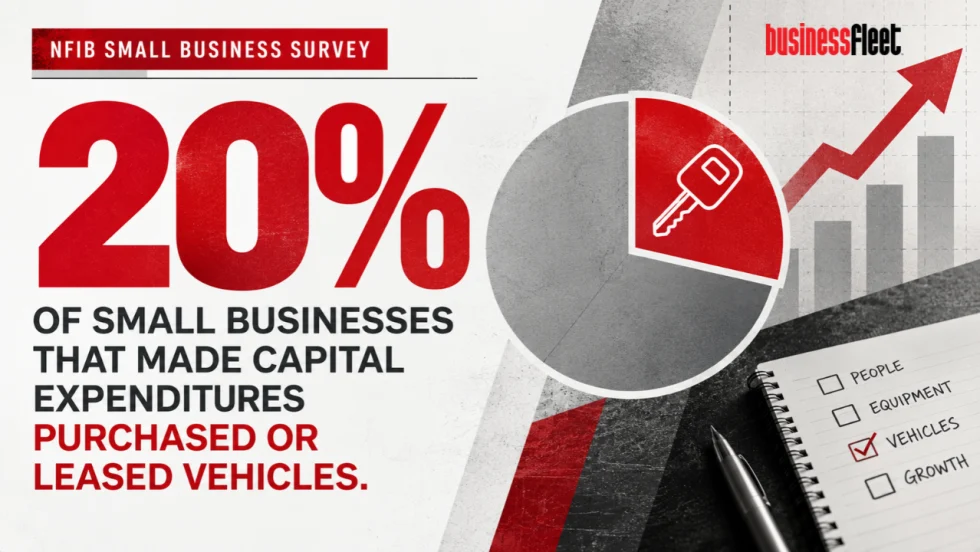
Small Business Vehicle Purchases Slip as Owners Pull Back on Expansion
New NFIB survey data shows fewer small businesses purchasing or leasing vehicles as inflation, hiring challenges, and borrowing costs weigh on expansion plans.

Growing Fleets, Bigger Challenges | Business Fleet Brief
From growing pains and weather risks to workers' comp, new vehicles, and telematics gaps, this month's Business Fleet Brief covers what small fleets need to know.

Your Business Grew, Did Your Fleet Management Program Grow With It?
Small fleets often grow faster than the processes supporting them. Here’s how to recognize when informal fleet management has stopped working and what to formalize first.

Small Fleet Lessons That Can Make a Big Difference | Business Fleet Brief
From used-vehicle costs and lost keys to safety tech and replacement planning, this Business Fleet Brief breaks down practical lessons that can make a big difference for small fleets.