


Making the Move to Managed Fuel
After you decide to investigate and try a managed fuel program, a little research will help you make sure the program you get is what you need.
With managed fuel, you get a more complete picture of each driver's operating characteristics, and can spot problem areas such as the wrong grade of fuel being pumped.
Photo: Work Truck
Editor's Note: This article was originally published several years ago and is maintained for archival purposes. While the benefits of fuel management programs, including improved purchasing controls, expense tracking, and reduced administrative work, remain relevant, the technology, reporting capabilities, and available services have evolved significantly. The savings estimates and program features discussed reflect the time of publication and should not be considered representative of current results or offerings. Readers should evaluate current fuel management solutions based on their fleet's operating needs, costs, and available technology.
The general consensus is that by putting a managed fuel program into place, your company will likely realize savings of at least 15 percent in overall operating costs compared with not using fuel management. Importantly, those basic savings bear no relationship to the size of the company fleet.
With managed fuel, you get a more complete picture of each driver's operating characteristics, and can spot problem areas such as the wrong grade of fuel being pumped. Detailed monitoring of incidental expenses incurred is easily accomplished.
Cards can be instantly "turned off" to avoid unauthorized purchases if an employee is terminated. A monthly or weekly printout shows purchases by vehicle number. You can see miles traveled per month and miles per gallon per vehicle. Any discrepancies can be flagged so that you can contact the driver to see if he or she is mismanaging fuel purchases.
The benefits of fuel management are numerous, according to companies that have tried it. Paramount among these for many managers of company vehicles is less paperwork and more control over fuel type and price.
Find the Existing Fuel Numbers
The more carefully you can design the program to fit your company's needs, the greater the savings can be. Let's take a look at some of the considerations you'll need to take into account when developing your fuel management program.
Start out by going through your current fuel charge, billing and payment systems as carefully as you can. Find out what your actual costs are. Without an established baseline, there is no way you can plot any benefits against your current costs.
You have to know where you're coming from in order to develop a correct course toward where you want to go.
Determine what it costs for your company to cut a check to a driver. Determine the amount of time it takes to decipher a fuel receipt and enter it into your system. Track each of your current fuel-related expenses, to build a baseline from which you can work.
Multiple Fuel Suppliers are Available
There are many possible fuel management suppliers. Once you have determined what your needs are, present them to several suppliers to see which one will most closely match those needs.
Fuel companies and major credit card companies all have programs through which a fleet can manage its fuel purchases. In addition, there are companies specializing only in fuel management for fleets. Most fuel management program providers will fine-tune their program for your specific needs, so do not hesitate to ask for special considerations. If company A won't accommodate you, Company B probably will.
Multiple Tools are Offered
Here are some of the tools offered by fuel management providers, not necessarily in any order of importance. You determine your actual order of importance.
Are you looking for the lowest fuel prices, or looking for maximum convenience, or are you only concerned with data capture and controls? Any one, or all three, of these goals can be reached through the use of these fuel management tools.
- Driver convenience. One card may be good at thousands of fueling stations across the country. With another, your drivers may waste valuable time looking for the "right" station.
- Increased security. You can set the PIN number requirements for driver or vehicle.
- Electronic transaction capability. Most stations offer this added convenience.
- Custom-designed billing. Payment can be set up monthly, weekly, or for whatever frequency you need. Payment can be electronic.
- Multiple reports. Reports can help you see and control every aspect of the drivers' use of their fuel cards.
- Exception reports. These can help you pinpoint vehicle performance and maintenance needs, as well as flag problem vehicles or drivers.
- Tax-exempt fuel services. Most fuel management providers allow tax-exempt entities to have their adjustments handled at the pump at the time of purchase.
- Direct account access. Customers can view account status directly from their computers.
- Service staff available 24/7. In an emergency situation, no matter what the day or time, service personnel are available to assist.
Reducing the Human Cost Factor
One saving that is not directly addressed by the various fuel card providers, but is certainly an important cost factor in your operating expenses, is the human factor.
Every time someone inputs data at a keyboard there is an error factor involved. When was the last time you typed an e-mail, for example, without making a single typo?
The automated systems in place at fuel management providers virtually eliminate the need for re-keying any data. From pump to final statement, there is no keyboarding involved. This means savings in terms of accuracy as well as of time.
When Business Fleet conducted a survey of fleet managers on the subject of fuel management, several indicated that their operations were simplified and sped up, while at the same time more detailed information was available.
No More Twinkies
In unmanaged systems, drivers occasionally slip in a snack along with their fuel purchase--the infamous "Twinkie Factor." They assume the notation on the receipt--if it's even there--
Originally posted on Work Truck Online
More Operations

Small Fleet Decisions, Big Business Impact | Business Fleet Brief
Are your vehicles helping or hurting your bottom line? This month's Business Fleet Brief covers fleet costs, insurance, a mobile business, winter safety, and more.

5 Signs Your Small Fleet Has Outgrown the Way You Manage It
More vehicles, same old process? Learn five signs your fleet management needs an update and practical ways to keep up as your business grows.

Is Your Fleet Making Your Business Money or Quietly Costing It?
Your vehicles keep your business moving, but are they helping your bottom line? From underused vehicles and unexpected downtime to the real cost of completing a job, here's how to find out whether your fleet is working as hard as your business needs it to.

Les Schwab Tires Launches Foundation With $100,000 for Community Recovery
Les Schwab Tires launches a foundation with $100,000 to support recovery for Silver Rail Elementary and the Bend community following a school shooting.
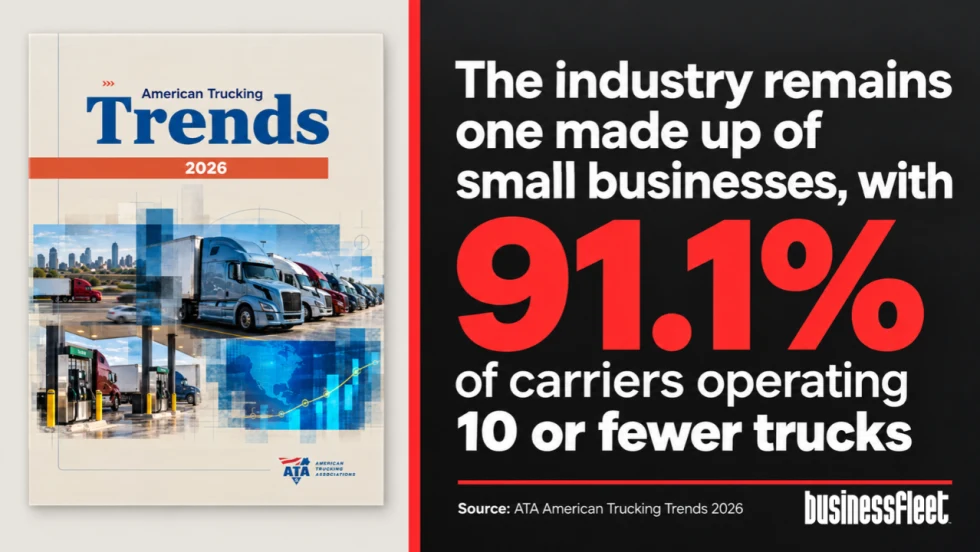
Small Carriers Make Up 91% of Trucking Industry as Freight Revenue Rises
The latest American Trucking Associations report shows modest gains in freight tonnage and revenue, with businesses operating 10 or fewer trucks accounting for most carriers.
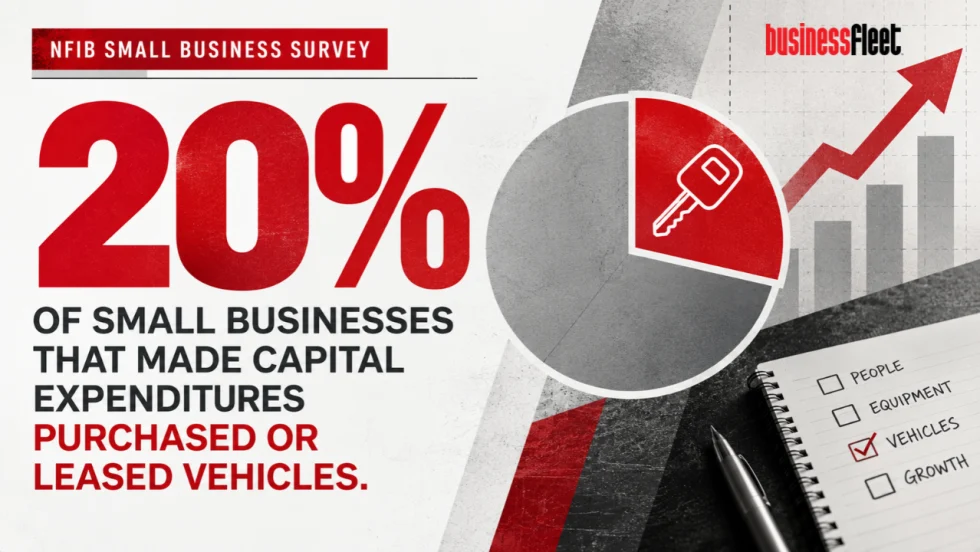
Small Business Vehicle Purchases Slip as Owners Pull Back on Expansion
New NFIB survey data shows fewer small businesses purchasing or leasing vehicles as inflation, hiring challenges, and borrowing costs weigh on expansion plans.

Growing Fleets, Bigger Challenges | Business Fleet Brief
From growing pains and weather risks to workers' comp, new vehicles, and telematics gaps, this month's Business Fleet Brief covers what small fleets need to know.

Your Business Grew, Did Your Fleet Management Program Grow With It?
Small fleets often grow faster than the processes supporting them. Here’s how to recognize when informal fleet management has stopped working and what to formalize first.

Small Fleet Lessons That Can Make a Big Difference | Business Fleet Brief
From used-vehicle costs and lost keys to safety tech and replacement planning, this Business Fleet Brief breaks down practical lessons that can make a big difference for small fleets.

Automotive Fleet Opens 2026 Personal Use Survey for Commercial Fleet Managers
Less than two weeks left! Commercial and corporate fleet managers are invited to share how their organizations handle company vehicle personal-use policies, charges, and driver eligibility.