


When Will Chinese-Made Vehicles Be Sold in America?
Chinese automakers are eyeing the U.S. market. Can Bricklin and Harmer succeed in bringing affordable Chinese cars stateside by 2008? Challenges lie ahead.
June 1, 2006

4 min to read

Malcolm Bricklin and John Harmer lead the charge to bring affordable Chinese cars to the U.S., racing against time and regulatory hurdles.
Photo: Work Truck
Malcolm Bricklin (Chery) and John Harmer (Geely) are in a race to bring cheap Chinese vehicles to America. Harmer is forecasting a late 2008 sale date here, initially in only a few markets near ports.
In January, Geely estimated it would sell 25,000 cars in its first year and 100,000 in its fifth year. Bricklin’s sales plans are a bit more grandiose: sales of 250,000 units in the first year and 1 million within five. Those numbers seem impossibly high. But is the timeline accurate?
Prepare for the Inevitable
Chinese cars are a fait accompli in America. Not because America’s mature auto market needs a new set of nameplates, but because the Chinese government is behind an export push. This isn’t about national pride. Though China is the third-largest car market in the world, there aren’t many Chinese that can afford to own automobiles—yet. China is building state-of-the-art factories in anticipation of that demand. In the meantime, they intend to export product overseas.
The government is backing up the talk. Chery was recently the beneficiary of a $610 million loan from the Chinese government to beef up production. The Financial Times reported in April that the government is considering approving new plants only with a commitment to export part of the capacity.
George Peterson, president of forecasting firm AutoPacific, has visited Chery’s new plant. “It looks like they have no resource constraints whatsoever. They’re just pouring money at new facilities,” he says.
The Hurdles
With that in mind, heads were scratching over Geely’s unveiling of the first-ever Chinese car at an American auto show, in Detroit in January. The fit and finish were sloppy; apparently, they couldn’t even glue the letters of the nameplate on straight. “It’s almost too bad they showed it, because it gave people a lot of negative opinions about the quality,” Peterson says.
Geely intends to import the grandson of that vehicle, the CK sedan, to America. The grandson needs to evolve mechanically. While Geely claims to have passed U.S. rollover tests, Harmer stated publicly the sedan flunked emissions tests. (Geely denies this.)
Geely says it “plans to conduct further market research and make vehicle improvements to suit the market demand.” Reengineering could blow Harmer’s magical $10,000 price point out of the water.
Readying brand-new foreign-made vehicles for U.S. certification is a lengthy process, says Lynn Bevis of Wallace Environmental Testing Laboratories Inc., an EPA-approved emissions testing facility. Bevis says that manufacturers plan two years ahead to get a new vehicle certified, as the EPA requires data that demonstrates durability over the useful life of the vehicle. Manufacturers must constantly be looking down the road to comply with ever-tightening regulations from EPA and NHTSA. “My understanding is that some of these vehicles coming in from China are pretty far off,” she says.
At least Geely has a car to test. Bricklin is still at the engineering stage. Yet Bricklin may ultimately have the advantage. Chery is building cars for export from the ground up with international design and engineering expertise, not retrofitting a car made for a third-world market.
Bricklin seems to be ahead in building a dealer network too. After hitting a financing snag, Bricklin says he has 42 out of 125 dealers signed up. Harmer is still scouting locations for an American headquarters.
The Mind of the American Consumer
The Chinese are notoriously protectionist when it comes to imports. China’s tariff on foreign-made automobiles is currently 28%, while the U.S. tariff on Chinese cars is 2.5%. Congress has introduced legislation (H.R. 4808) to prohibit the importation of Chinese vehicles until tariffs are equal. This bill is not likely to pass, as the Big 3 have an even bigger stake in China than Chinese manufacturers themselves. But the political backlash is real.
And then there is the mind of the American consumer. In our online poll asking what would keep readers from buying a Chinese vehicle, two-thirds cited “patriotism,” almost twice as many more responses than the next highest answer, “mechanical quality.”
What may trump patriotism is the lack of brand recognition. Selling unknown, untested cars in this brand-conscious society is a major step for a country generally known as a cheap wholesale producer. Geely Chairman Li Shufu has said that Geely engineers don’t yet know enough about the tastes of U.S. consumers to design a car for them.
A Realistic Timeframe
Still, with all the known hurdles, Bricklin and Harmer’s predictions for a 2008 sales launch in the U.S. are not so far off from those of industry forecasters. Michael Dawson, a global forecaster for JD Power & Associates, says 2009. AutoPacific says the end of the decade.
“It took the Japanese 20 years to catch on and the Koreans 10,” says Peterson. “It will probably take the Chinese five.”
And Beyond
Perhaps bringing Chinese-made vehicles here to the U.S. is missing the real story. Chinese auto factory workers make $3.50 an hour while the average UAW worker costs automakers about $65 an hour. As has happened long ago with everything from sneakers and stereos and now to IBM computers, American automakers will be looking to China as a manufacturing base.
“Maybe this is an inexorable step in the maturing of a major economy in the world,” Peterson says.
Originally posted on Work Truck Online
More Operations

5 Signs Your Small Fleet Has Outgrown the Way You Manage It
More vehicles, same old process? Learn five signs your fleet management needs an update and practical ways to keep up as your business grows.
Read More →
Is Your Fleet Making Your Business Money or Quietly Costing It?
Your vehicles keep your business moving, but are they helping your bottom line? From underused vehicles and unexpected downtime to the real cost of completing a job, here's how to find out whether your fleet is working as hard as your business needs it to.
Read More →
Les Schwab Tires Launches Foundation With $100,000 for Community Recovery
Les Schwab Tires launches a foundation with $100,000 to support recovery for Silver Rail Elementary and the Bend community following a school shooting.
Read More →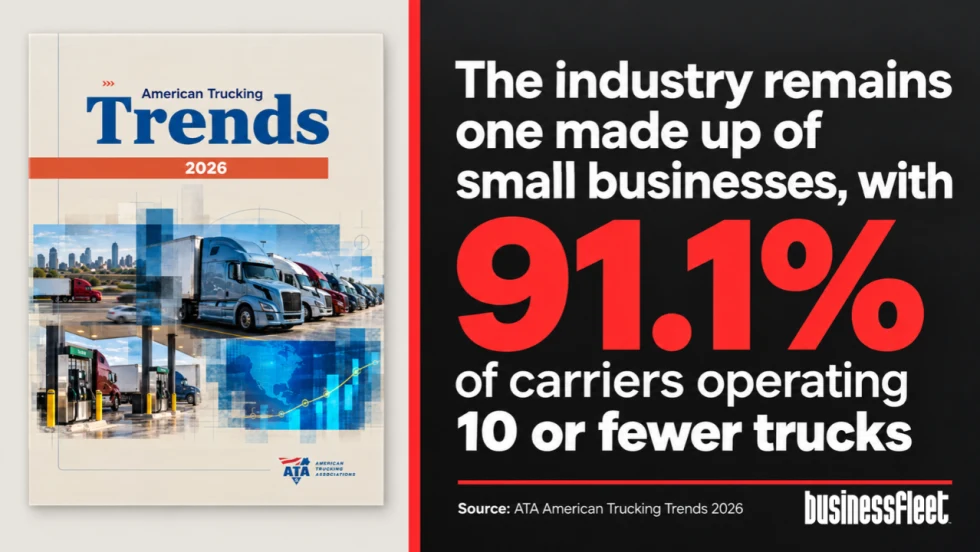
Small Carriers Make Up 91% of Trucking Industry as Freight Revenue Rises
The latest American Trucking Associations report shows modest gains in freight tonnage and revenue, with businesses operating 10 or fewer trucks accounting for most carriers.
Read More →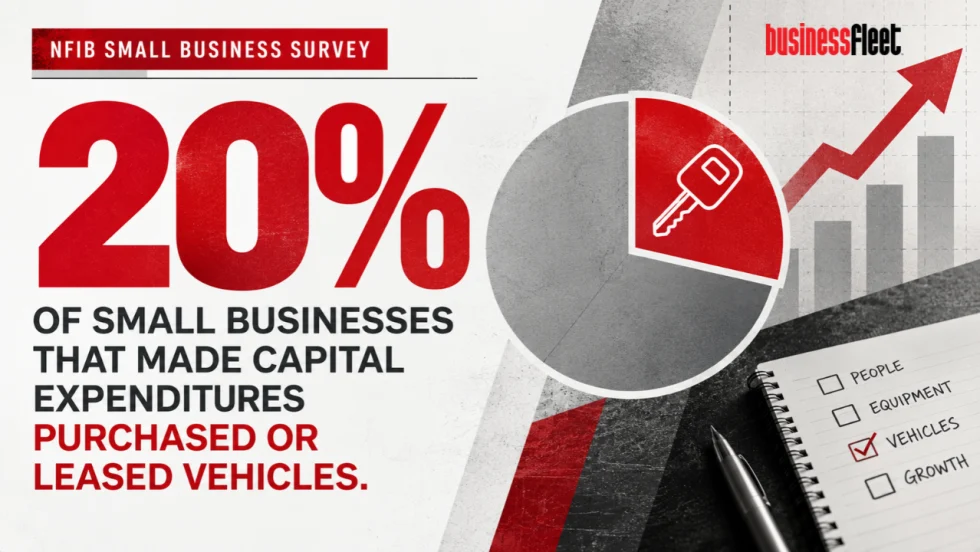
Small Business Vehicle Purchases Slip as Owners Pull Back on Expansion
New NFIB survey data shows fewer small businesses purchasing or leasing vehicles as inflation, hiring challenges, and borrowing costs weigh on expansion plans.
Read More →
Growing Fleets, Bigger Challenges | Business Fleet Brief
From growing pains and weather risks to workers' comp, new vehicles, and telematics gaps, this month's Business Fleet Brief covers what small fleets need to know.
Read More →
Your Business Grew, Did Your Fleet Management Program Grow With It?
Small fleets often grow faster than the processes supporting them. Here’s how to recognize when informal fleet management has stopped working and what to formalize first.
Read More →
Small Fleet Lessons That Can Make a Big Difference | Business Fleet Brief
From used-vehicle costs and lost keys to safety tech and replacement planning, this Business Fleet Brief breaks down practical lessons that can make a big difference for small fleets.
Read More →
Automotive Fleet Opens 2026 Personal Use Survey for Commercial Fleet Managers
Less than two weeks left! Commercial and corporate fleet managers are invited to share how their organizations handle company vehicle personal-use policies, charges, and driver eligibility.
Read More →
You Do Not Have to Be a Big Business to Build the Next Generation
Small businesses may not have the biggest budgets or the biggest fleets, but they do have something powerful. They are close to the communities they serve, and that makes them uniquely equipped to help shape the next generation of automotive and fleet talent.
Read More →Subscribe to Our Newsletter