



Operations
Your Business Grew, Did Your Fleet Management Program Grow With It?
Small fleets often grow faster than the processes supporting them. Here’s how to recognize when informal fleet management has stopped working and what to formalize first.

Small fleet managers: boost efficiency, reduce downtime, improve maintenance, and run a smarter fleet with these 15 quick, practical time-saving tips.

Running a small fleet is never going to feel slow or quiet, but it can feel more manageable. These quick habits don’t require fancy software, big budgets, or extra hours you don’t have.
Business Fleet
Let’s be real: if you had extra time, you’d probably use it to sleep. Or delete those 47 open browser tabs you swear you’re going to read later. Small fleet managers rarely get “extra” anything, which is why 2026 calls for smarter systems, not longer hours.
Here’s your small fleet cheat sheet, which includes 15 ways to tighten up operations, keep vehicles healthy, and make your life noticeably easier, all without adding hours to your week.
For fleets that don’t have backend dashboards tracking mileage, grab a coffee and jot down odometer readings first thing Monday. That quick snapshot helps you flag unusual jumps, prevent overdue PMs from sneaking up on you, and catch… let’s call them “enthusiastic” lunch-break drives. It’s simple, fast, and surprisingly revealing.
A single shared file becomes the HQ for your entire fleet. Drop in key dates, PM schedules, policies, essential contacts, and links you constantly look up. It saves time, reduces repeated questions, and eliminates the “where did I put that again?” spiral. Bonus points if drivers can view it, too.
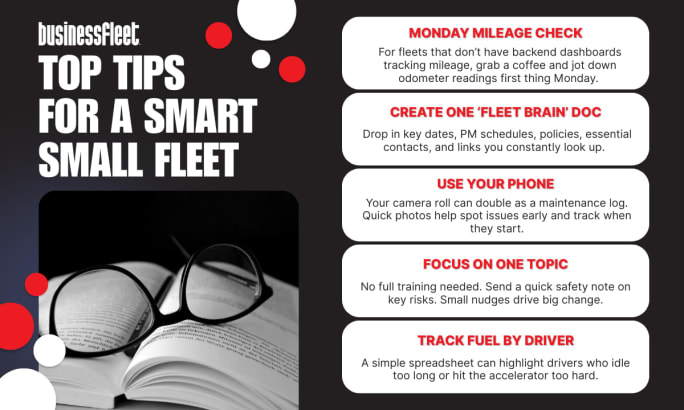
Smart fleets don’t need more hours. They need better habits. These first five tips help small fleets stay organized, proactive, and one step ahead every week.
Business Fleet
Your camera roll can double as a maintenance log. Quick snapshots of tires, wear points, and under-hood checks help you spot leaks, uneven wear, loose parts, or recurring issues. And when something does fail, you’ll know exactly when and where it started: no guessing, no debates.
This doesn’t need to be a full training session. One short message to the team about distracted driving, proper backing, secure loads, or seasonal hazards is enough to keep safety top of mind. Tiny nudges add up to real behavior changes.
You don’t need full telematics to see what’s going on. A simple spreadsheet can highlight drivers who idle too long or hit the accelerator like they’re auditioning for Fast & Furious. It’s a small window of time that reveals long-term patterns you can actually act on.
You always need a backup shop. Nothing wrecks uptime like your only vendor being overbooked for three days (or three months). And while a repair might cost a little more somewhere else, the savings from eliminating downtime often more than makes up for it.
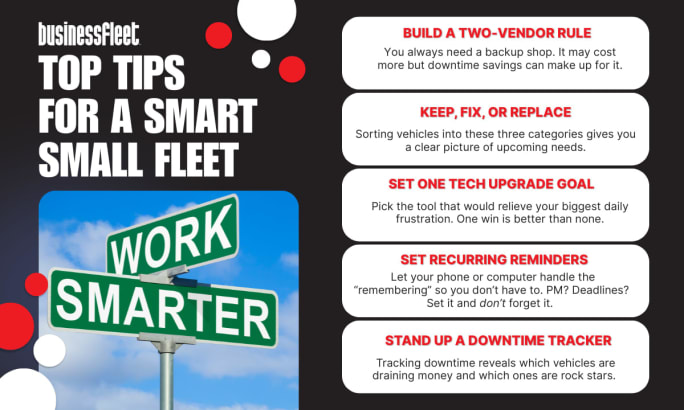
Downtime, tech, and reminders don’t have to be complicated. These tips focus on planning ahead, simplifying decisions, and cutting avoidable disruptions.
Business Fleet
A little end-of-year honesty goes a long way. Sorting vehicles into these three categories gives you a clear picture of upcoming needs, keeps budget talks calm, and helps avoid those “surprise” clunkers that suddenly need major repairs at the worst possible moment.
Pick the tool that would relieve your biggest daily frustration. Maybe that’s GPS to simplify dispatching. Perhaps it’s dashcams for insurance protection. Or something small like digital PM reminders. One win is better than five half-finished attempts.
PM scheduling, registration renewals, insurance checks, warranty deadlines; let your phone or computer handle the “remembering” so you don’t have to. Automated reminders are basically free fleet assistants that never forget anything.
Whether it’s Excel, a whiteboard, or a few columns in a notebook, tracking downtime reveals which vehicles are draining money and which ones are rock stars. It also helps you justify new replacements or bigger repairs with real data behind you.
Business Fleet
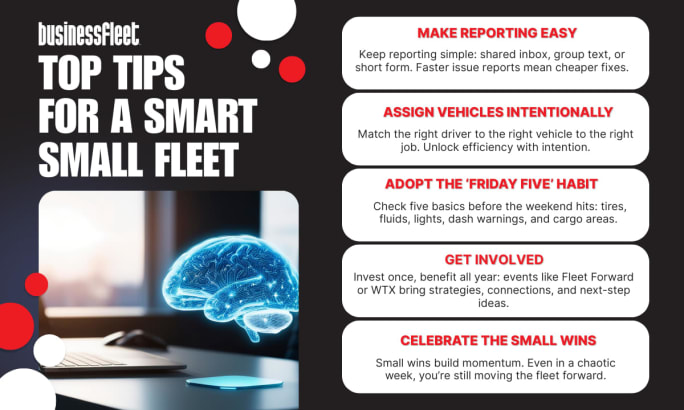
Make it simple: a shared inbox, a group text, or a short form. When there’s an easy system for reporting issues, you’ll learn about weird noises, sluggish brakes, and new warning lights sooner, and sooner (in this case) is always cheaper.
Match the truck to the job. The right vehicle on the right route saves fuel, reduces wear, boosts driver morale, and makes the whole day run smoother. It’s amazing the efficiency you can unlock just by swapping a few assignments around.
Before the weekend, check five basics: tires, fluids, lights, dash warnings, and cargo areas. It takes just a few minutes and drastically cuts down on Monday morning surprises that derail your whole week.
This is the one investment that pays off all year. Whether you attend an event like Fleet Forward Conference or join the NAFA Fleet Management Association, you’ll walk away with smarter strategies, new connections, and real-world ideas from other fleet pros. It’s professional development that solves problems you deal with every day, and it keeps you plugged into what’s coming next.
Catching a problem early, reducing idle time, passing an inspection with zero notes, those wins matter. Small victories build momentum and remind you that even when the week feels chaotic, you are moving the fleet forward. You deserve to recognize that.

Running a small fleet is never going to feel slow or quiet, but it can feel more manageable. These quick habits don’t require fancy software, big budgets, or extra hours you don’t have.
Business Fleet
Running a small fleet is never going to feel slow or quiet, but it can feel more manageable. These quick habits don’t require fancy software, big budgets, or extra hours you don’t have. They help you run smarter, stay ahead of the chaos, and keep your trucks (and your sanity) in a better place.
Pick a few, try them out, and give yourself credit for every little improvement along the way. You’ve got a fleet to run, and you’re doing it better than you think.
Loading data...

Operations
Small fleets often grow faster than the processes supporting them. Here’s how to recognize when informal fleet management has stopped working and what to formalize first.









Operations
Small businesses may not have the biggest budgets or the biggest fleets, but they do have something powerful. They are close to the communities they serve, and that makes them uniquely equipped to help shape the next generation of automotive and fleet talent.
Operations
No fleet department? The work still has to get done. Learn how to prioritize your most critical vehicles, catch problems before they become downtime, and build a simple routine that keeps your small fleet moving.
Operations
Twelve fleet leaders share the lessons they learned the hard way on leadership, communication, relationships, and building a stronger fleet.
Operations
Small fleet managers do far more than manage vehicles. From operations to safety and retention, fleet impacts nearly every part of the business.
Fleet may be one responsibility, but it impacts everything. Here’s how small fleet leaders manage pressure and create control where it matters most.
Safety
Small fleets can improve safety without big budgets by building simple routines, spotting blind spots early, and creating habits that stick.
Operations
Here’s a more realistic playbook for small fleet leaders who want to stay effective without burning out.
Operations
Small fleet managers: boost efficiency, reduce downtime, improve maintenance, and run a smarter fleet with these 15 quick, practical time-saving tips.
Operations
Learn the six rules to boost safety, lower operating costs, improve uptime, and streamline daily operations for small fleet operations.