


Are You Being Fuelish?
Hi there! My name is Terry. Steve Elliott, the executive editor of Business Fleet, also edits F&I Management and Technology, another Bobit magazine. Between the two, Steve's "cup runneth over," so I've come on board to give Steve a hand with Business Fleet.
Photo: Work Truck
Hi there! My name is Terry. Steve Elliott, the executive editor of Business Fleet, also edits F&I Management and Technology, another Bobit magazine.
Between the two, Steve's "cup runneth over," so I've come on board to give Steve a hand with Business Fleet.
I'll be writing the "Revving Up" editorial from now on as well as most of the feature articles starting with the May/June issue. I'll be writing about fleet items that will hopefully assist you in managing your company vehicles and/or reimbursing your drivers -- and features that will hopefully save your company either time, money or both. Business Fleet exists to serve you, the small-fleet operator. All features will be selected with that objective being paramount.
Wanted: Reader Assistance
To better accomplish that purpose, we need your help. We want to hear from you as to your problems and what aspects of managing your vehicles or driver reimbursement you want to hear about. So, don't be shy. We exist to serve your auto/truck management needs and we want to hear what those needs are! By way of introduction, my background includes the management of three Fortune 500 corporate fleets ranging in size from 1,000 to 5,200 vehicles over the past 20 years.
"Vehicle scope" of those fleets included automobiles, light/medium trucks, tractors and trailers. On the financing, the mix included both owned and leased vehicles. In the late '70s, I authored a book, The Executive Guide To Successful Business Car Management, published by the Dartnell Corporation. I have also been a freelance writer for Bobit Publishing since 1990 and have written about 40 feature articles for Automotive Fleet and Fleet Financials, two sister magazines that are directed to large-fleet operators.
Under-Served Market
Business Fleet 2002 Buyer's Guide statistics reveal that almost eight million fleet cars and trucks are in operation within fleets ranging from 10 to 1,000 plus in number. Within that total, you, the 10-to-50 group operate 2,630,000 units -- more than 32 percent of the total -- and get about two percent of the attention! There is definitely something wrong with that picture. With Business Fleet, we'll see if we can't ratchet that attention level up a bit.
Are You Being Fuelish?
On to some money talk. A survey of 22 major cities from coast-to-coast reveals that, on average, unleaded regular fuel cost-per-gallon has risen 51 percent from $1.08 a year ago to $1.63 today (mid-February). Putting that into perspective, if you're running vehicles 2,000 miles a month that average 20 miles per gallon, your annual fuel cost has jumped almost $16,000 operating 25 vehicles. Currently, fuel cost is at the highest level in San Francisco at $1.71/gallon and lowest in Seattle at $1.35/gallon.
OK, not much that any of us can do about the pump price -- and with war with Iraq looming, it's likely to spiral even higher. However, there is something you can do to lower your fuel bill. An in-depth look reveals that the price range at various stations within those cities averages 20 percent for the same gallon of unleaded regular. On average, buying at the low-cost versus the high-cost stations will save you 30 bucks per-vehicle-per-month, $750 at 25 vehicles and $9,000 a year with 25.
About the Author: Terry Flesia is a former feature editor at Bobit.
Originally posted on Work Truck Online
More Operations

What Fleet Legends Wish Every Small Fleet Manager Knew
Twelve fleet leaders share the lessons they learned the hard way on leadership, communication, relationships, and building a stronger fleet.
Read More →
We're Back! Business Fleet Returns With a Fresh New Look
Check out our redesigned website with a faster experience and a renewed commitment to serving small fleet professionals.
Read More →
Fleet Impacts Everything Even When It’s Not ‘Fleet’
Small fleet managers do far more than manage vehicles. From operations to safety and retention, fleet impacts nearly every part of the business.
Read More →
DECKED Program Highlights Growing Need for Work-Life Balance Among Fleet Dads
DECKED’s “Dad Time Off” initiative puts the spotlight on work-life balance by giving 100 dads a paid day away from the job.
Read More →
Linxup Partners with Applause to Help Reward, Retain Safe Drivers in Field Service
Linxup and Applause partnered to combine driver safety data, technician performance metrics and customer feedback into a single incentive platform aimed at improving retention and service performance.
Read More →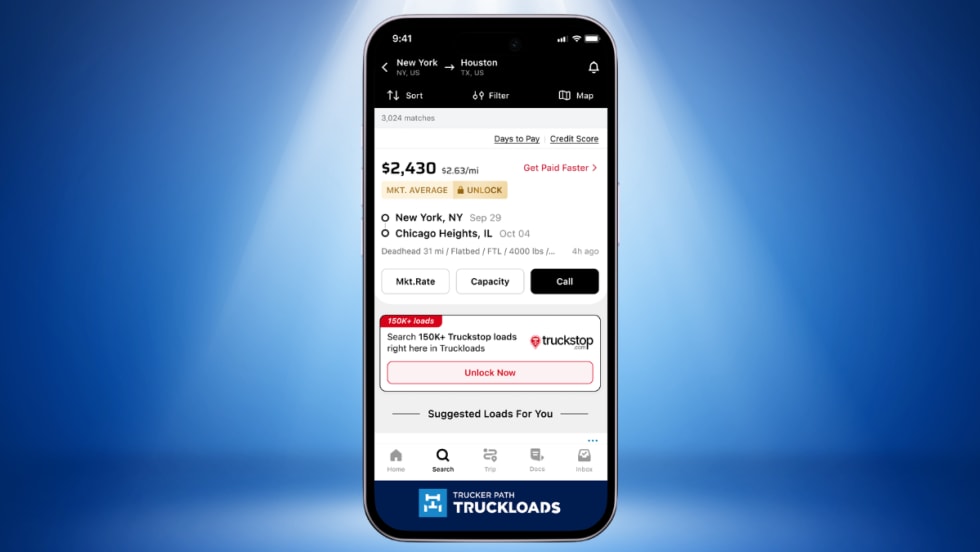
Trucker Path and Truckstop.com Expand Freight Access for Carriers and Brokers
Trucker Path and Truckstop.com partnered to integrate Truckstop freight listings into the TruckLoads mobile app, expanding load availability and carrier access across North America.
Read More →
The Small Fleet Leader’s Guide to Reducing Stress Today
Here’s a more realistic playbook for small fleet leaders who want to stay effective without burning out.
Read More →
From Small-Town Minnesota to Fleets Nationwide: Sheldon Zitzmann of TigerTough
What does it take to grow a fleet-focused brand in a town with fewer than 300 people? If you care about fleet durability, American manufacturing, or stories that start small and scale smart, this one’s for you.
Read More →
15 Ways to Run a Smarter Small Fleet When You’re Short on Time
Small fleet managers: boost efficiency, reduce downtime, improve maintenance, and run a smarter fleet with these 15 quick, practical time-saving tips.
Read More →
The 6 New Rules of Running a Small Fleet in 2026
Learn the six rules to boost safety, lower operating costs, improve uptime, and streamline daily operations for small fleet operations.
Read More →