


All About Truck Tires: Load Ratings, Sizes & More
Calculating Commercial Vehicle Weight Distribution & Payload Made Easy
Axle capacities are limited either by the axle capacity or the legal weight limits, whichever is lower. Performing a weight distribution analysis can achieve the proper axle loadings before a truck is built.
by Richard Toner & Work Truck Staff
May 6, 2024
Having the correct wheelbase on the chassis and placing the bodies and loads in the proper place will assure that the axles are located correctly.
Photo courtesy of NTEA
6 min to read
Do you know how much truck weight matters? Let's consider a scenario where a truck is consistently overloaded in normal use. This can lead to various problems for both the users and the equipment installer. Overloads can significantly shorten the life of a vehicle and its components, not to mention the potential non-compliance with weight laws and federal safety standards. This is why performing a truck weight distribution analysis is crucial.
One of the most practical and relevant aspects of understanding a truck's capabilities is its payload capacity. But what exactly is payload capacity? It's the maximum weight that a fleet can add to a truck’s cargo area, in addition to its curb weight, without compromising safety. This concept is crucial for fleet managers and truck operators to grasp.
NTEA members can take advantage of the Association's "Vehicle Center of Gravity and Axle Weight Calculator" for additional help.
What & Why of Truck Weight Distribution
What is truck weight distribution, exactly? In simple terms, truck weight distribution is the amount of the total vehicle weight imposed on the following:
Ground at an axle
Group of axles
An individual wheel.
The weight on a truck must be distributed on the axles to comply with the chassis manufacturer's axle ratings and weight laws.

A glossary of truck chassis dimensions.
Photo courtesy of NTEA
Having the correct wheelbase on the chassis and placing bodies and loads in the proper place will ensure that axles are loaded correctly and that payload capacity is not maxed out. A truck weight distribution analysis is performed to identify the proper axle loadings before building a truck.
Axle capacities are limited either by the axle capacity or legal weight limits, whichever is lower.
Both trucks in Image A have a front axle rated at 12,000 lbs., limiting the weight on those axles. The rear axle on the single-drive truck is limited by the axle capacity or legal weight restrictions to 20,000 lbs. The two rear axles on the tandem-drive truck are limited either by axle capacities or legal weight restrictions to 17,000 lbs. for each axle, or a total of 34,000 lbs. for the pair of axles.
What is the Impact of a Truck's Center of Gravity?
While the concept of an object's center of gravity is something many of us feel confident in understanding, let's delve deeper into it. Imagine you're trying to figure out the center of gravity on an odd-shaped object. What about something like a truck, considering the weight of the engine, axles, and loaded or unloaded trailer? It's not as straightforward as it seems, but understanding this concept is crucial for maintaining your truck's stability and safety.
The center of gravity of an object does not have to be in the material of the object (Image C). When considering a solid ball, such as a billiard ball, it is obvious the center of gravity is the center of the ball and in the material that makes up the object.
In the case of a hollow ball, the center of gravity is also at the center, but it is not in the material. If the center of gravity of a truck body is in the material of the body, it is a coincidence. Most of the time, the center of gravity of a truck body is in the air, similar to the hollow ball example.

The centers-of-gravity of the truck chassis is shown at the top of the frame rail at the cab and body and cargo centers-of-gravity are shown with a single symbol at the center of the body about a third of the body height above the floor.
Photo courtesy of NTEA
Each truck component, including passengers and cargo, have a center of gravity. For example, the center of gravity of the truck chassis is shown at the top of the frame rail at the back of the cab and the body and cargo centers of gravity are shown with a single symbol at the center of the body about a third of the body height above the floor.
The horizontal centers of gravity are used to calculate weight distribution on the axles. If individual wheel loadings are calculated, the lateral centers of gravity are also used. Unless a lateral center of gravity is given for the chassis or a component, it is assumed to be on the centerline of the chassis.

The horizontal and vertical centers of gravity for the entire sample truck is shown with the center of gravity (CG) symbol.
Photo courtesy of NTEA
Lateral centers of gravity (CGs) are measured from the vehicle centerline toward the right or passenger side as positive, left as negative. These are used to calculate individual wheel loadings and in-compliance calculations.
"Moments" are a way to measure the force or weight of an object. It's calculated by multiplying the force or weight by the distance it's applied. For example, one pound of force times one foot is 1 ft.-lb. One pound of force times 12 inches is 12 in.-lbs. They are both the same moment. Understanding this concept is essential for calculating weight distribution and ensuring the safe operation of your truck.
Moments can be used to calculate:
CGs.
Weight distribution.
Frame loads.
Hoist capacities.
Effective wheelbase.
Moments provide a way to combine a number of components or items to calculate a CG for them as a group (Image F).
When the CG distance is known for all items combined, it is possible to calculate the weight on each axle. Moments in one direction must match the moments in the other. The down moment of the chassis plus the down moment of the body must equal the up moment on the rear axle. This balance is crucial for maintaining your truck's stability and ensuring its safe operation.

Lateral CGs measured from the vehicle centerline with toward the right or passenger side as positive. Toward the left is negative. They are used to calculate individual wheel loadings and inccompliance calculations.
Photo courtesy of NTEA
The Truck Weight Distribution Analysis Process
If you want to know how to calculate truck weight distribution, use the following four steps:
Determine the truck weight and center of gravity location for all of the components and items to be considered
Multiply the center of gravity distance times the weight to get the moment for each component and item.
Add all of the moments and divide by the wheelbase to get the weight on the rear axle.
Subtract the rear axle weight from the total weight to get the front axle weight.

When you know the CG distance for all of the items combined, you can calculate the weight on each axle.
Photo courtesy of NTEA
Glossary of Truck Weight Terms
AB - Center of front axle to back of cab
AF - (After Frame). The distance from the center of the back axle to the rear end of the chassis frame.
BA - Bumper to axle
BL - (Body Length). Overall length of the body.
CA - (Cab to Axle). Distance from back of the cab to center of the rear axle.
CB - (Cab to Body). Distance between back of cab to front of body.
GVWR - Gross vehicle weight rating
WB - (Wheelbase). Distance from center of the front axle to center of rear axle.
Why Does Truck Weight Matter?
Bottom line: the weight of a truck matters in truck fleet management and operation. A heavier truck with a 5,000-lb. GVWR cannot carry as much payload as a lighter truck with the same 5,000-lb. GVWR, it's simple math. Additionally, when unloaded, a lighter truck utilizes less fuel than a heavier counterpart.
Some additional ways to reduce weight include the materials your truck is made out of. As previously reported here in Work Truck: Reducing the weight of the truck lowers the vehicle’s center of gravity, leading to increased maneuverability and a tighter turning radius. Less weight also means superior acceleration and braking. This not only leads to a comfortable driving experience but also better fuel mileage, as the truck is getting up to speed and stopping faster.
A lighter truck allows for greater hauling capacity. Because work trucks must abide by weight restrictions, a heavier truck means lighter loads, less efficiency, and lost dollars.
Curious about how to lightweight your truck fleet? Or what impact the added weight of an electric battery has on a truck's suspension? Read more now and sign up for our Work Truck eNewsletter so you never miss a resource for your commercial fleet operation!
Editor's Note: This article was originally published in 2011 and has been reviewed and updated for continued relevance.
Originally posted on Work Truck Online
More Vehicle Insights

2027 Mitsubishi Eclipse Sportback Starts at $39,740
Mitsubishi’s new battery-electric vehicle offers up to 282 miles of range, with U.S. sales scheduled to begin in October.
Read More →
2027 Chevrolet Trax and Trailblazer Add Standard Safety Tech and New Features
Chevrolet updates its two smallest SUVs for 2027 with more than 20 standard safety and driver-assistance features, larger displays, and a new Trailblazer Z71 trim.
Read More →
2027 Toyota Camry Starts at $29,700 With Up to 51 MPG Combined
The 2027 Toyota Camry returns with an exclusively hybrid powertrain, available all-wheel drive, standard safety technology, and five trim levels.
Read More →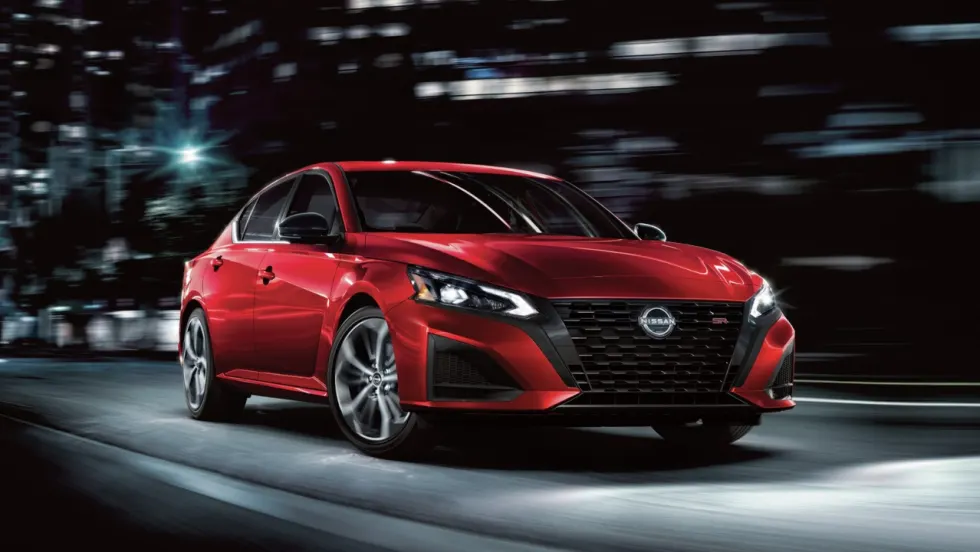
2027 Nissan Altima Starts at $27,790 With Up to 36 MPG Highway
The 2027 Nissan Altima is now on sale with three configurations, available all-wheel drive, standard driver-assistance technology, and up to 36 mpg highway.
Read More →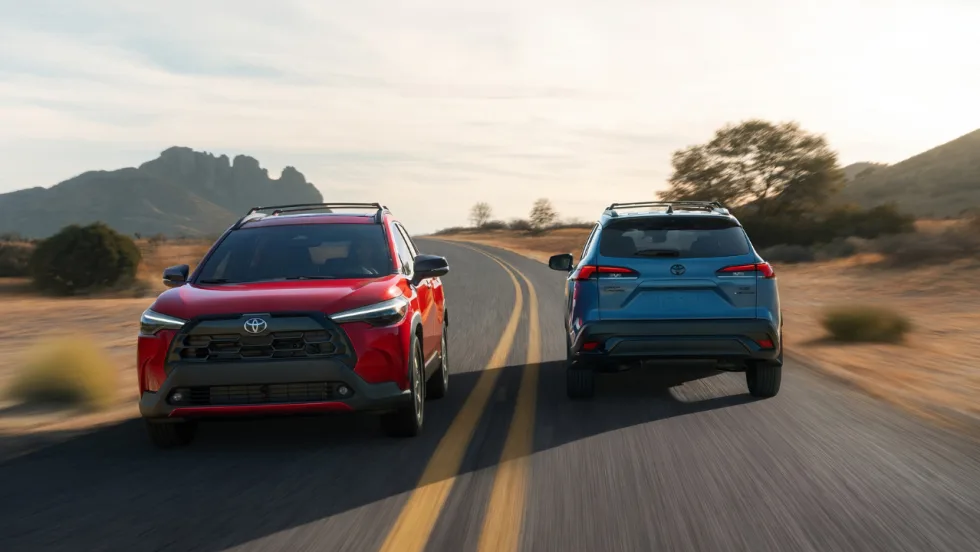
2027 Toyota Corolla Cross Hybrid Returns with 42 MPG
The 2027 Toyota Corolla Cross gives small business fleets gas and hybrid options, available AWD, flexible cargo space, and up to an estimated 42 mpg combined.
Read More →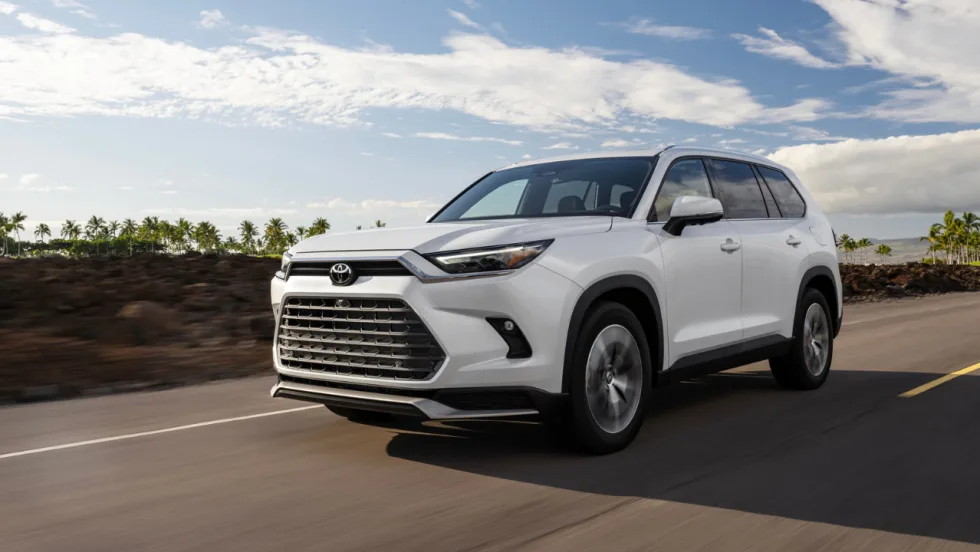
2027 Toyota Grand Highlander Expands Hybrid Options for Small Business Fleets
The 2027 Toyota Grand Highlander offers gas, hybrid, and Hybrid MAX powertrains, up to 97.5 cubic feet of cargo space, and towing capacity up to 5,000 pounds.
Read More →
2027 Nissan Rogue Hybrid Brings e-POWER Technology to U.S. Fleets
The 2027 Nissan Rogue Hybrid brings e-POWER technology to the U.S. with standard AWD, up to 38 mpg combined, and a starting MSRP of $35,490.
Read More →
2027 Silverado and Sierra Give Small Fleets Four Ways to Spec a Work Truck
GM’s 2027 Silverado 1500 and Sierra 1500 will offer four powertrains with different strengths in payload, towing, power, and driving range.
Read More →
GM Brings New Truck Focused Interface to 2027 Silverado and Sierra
GM's new pickup interface puts trailering data, camera views, vehicle controls, and smartphone integration closer to the driver in the 2027 Silverado and Sierra.
Read More →
Volkswagen Expands Driver Assistance Features Across 2027 Lineup
Volkswagen is adding lane-change assistance, expanded emergency intervention, pedestrian detection, and updated predictive cruise control features to select 2027 models.
Read More →Subscribe to Our Newsletter