


Detroit’s Challenge: Weaning Buyers From Years of Deals
To get through the shaky economy of the last two years, carmakers loaded on the perks, ranging from zero percent financing to hefty cash rebates—and consumers got hooked on them. Now the automakers face a huge challenge: weaning consumers from all those discounts.
Weaning customers from the discounts won’t be easy for the domestics.
Photo: Work Truck
- Automakers previously relied on significant perks like zero percent financing and cash rebates to navigate economic uncertainties.
- Consumers have become accustomed to these incentives during recent economic challenges.
- The current challenge for carmakers is to reduce or eliminate these discounts without losing customer interest.
*Summarized by AI
To get through the shaky economy of the last two years, carmakers loaded on the perks, ranging from zero percent financing to hefty cash rebates—and consumers got hooked on them. Now the automakers face a huge challenge: weaning consumers from all those discounts.
All the “deals” have seriously eroded the automakers’ profits, particularly the domestics. Looking at the per-vehicle profit picture, in 1999 General Motors realized $1,224 profit per vehicle sold in North America. In 2002 that same profit declined to $701 per vehicle sold. The situation is even worse for Chrysler. In 1999 its per vehicle profit was $1,497. That profit slid to $226 in 2002. Of the “Big Three,” Ford suffered the most. Ford’s profit in North America turned into $114 per vehicle sold in 2002, a huge slide from Ford’s reported $1,735 per vehicle profit in 1999.
Making life even more difficult for the domestic automakers is that despite the fact that the Japanese automakers’ cash rebates average about a quarter of the domestics, their North American profit per vehicle improved during the same period. Honda’s profit increased to $1,581 in 2002, up from $1,484 in 1999. Toyota surged from a $974 profit in 1999 to $1,214 in 2002.
Weaning customers from the discounts won’t be easy for the domestics. In 2003, rebates for some models rose to their highest levels in years. The average cash rebate from Chevrolet was $3,231 in 2003, nearly double 2001’s $1,654 average giveaway, according to Power Information Network. Ford’s average rebate in 2003 was $2,752, more than double its 2001 average of $1,334. Lincoln’s 2003 cash rebate averaged $4,086, up from $2,449 in 2001, and Chrysler went from $1,835 in 2001 to $2,832 last year.
Although automakers raised sticker prices to offset some of the rebate costs, most have had to sacrifice profit margins. The Big Three are trying to break away from the heavy discounts. Executives at GM, Ford and Chrysler say an improving economy should allow them to ease off incentives, though they don’t expect to abolish them altogether. “I suspect that we’ll be having incentives in some form for the rest of our lives,” said Richard Wagoner, GM’s chief executive. On the flipside, many dealers say that rebates were the only way buyers could finance a new car.
The automakers are trying other strategies to wean buyers off heavy cash discounts. Chrysler is trying to follow the lead of Japanese automakers, adding new features to its vehicles and then setting sticker prices closer to what buyers actually might pay. Ford is trying to scale back its deals by monitoring which packages of options sell best in each region of the country. Ford uses that analysis to target regional promotions that motivate buyers--but cost less than national across-the-board giveaways. GM has just extended for all of 2004 a 24-hour test-drive program.
Automakers are up against a powerful force of consumer behavior. As many clothing, toy and electronics retailers found out during the Christmas shopping season, a lot of American consumers are prepared to sit on their wallets if they don’t see big discounts.
Given the post-9/11 buying mentality of the American consumer today, it’s going to be a tough sell for the domestics.
About the Author: Terry Flesia is a former features editor for Bobit.
Originally posted on Work Truck Online
More Operations
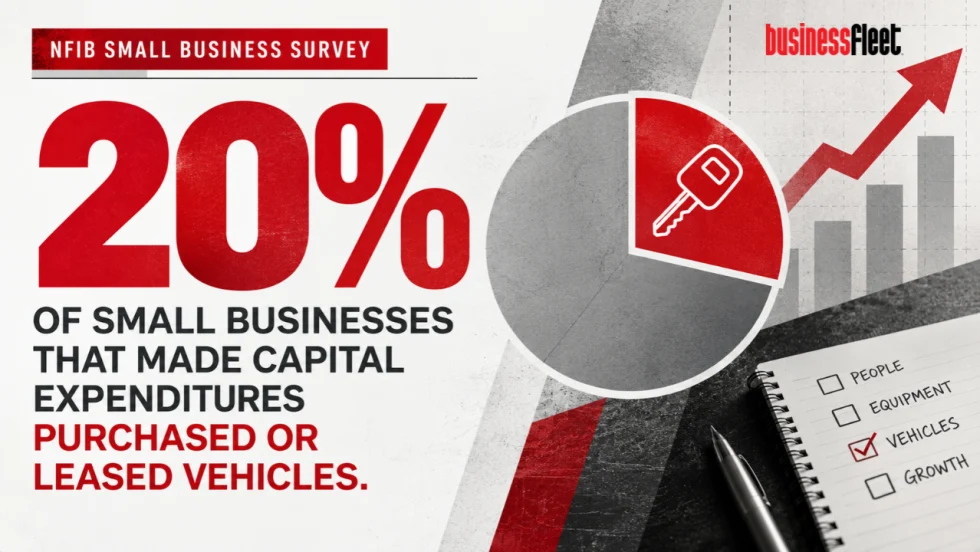
Small Business Vehicle Purchases Slip as Owners Pull Back on Expansion
New NFIB survey data shows fewer small businesses purchasing or leasing vehicles as inflation, hiring challenges, and borrowing costs weigh on expansion plans.
Read More →
Growing Fleets, Bigger Challenges | Business Fleet Brief
From growing pains and weather risks to workers' comp, new vehicles, and telematics gaps, this month's Business Fleet Brief covers what small fleets need to know.
Read More →
Your Business Grew, Did Your Fleet Management Program Grow With It?
Small fleets often grow faster than the processes supporting them. Here’s how to recognize when informal fleet management has stopped working and what to formalize first.
Read More →
Small Fleet Lessons That Can Make a Big Difference | Business Fleet Brief
From used-vehicle costs and lost keys to safety tech and replacement planning, this Business Fleet Brief breaks down practical lessons that can make a big difference for small fleets.
Read More →
Automotive Fleet Opens 2026 Personal Use Survey for Commercial Fleet Managers
Less than two weeks left! Commercial and corporate fleet managers are invited to share how their organizations handle company vehicle personal-use policies, charges, and driver eligibility.
Read More →
You Do Not Have to Be a Big Business to Build the Next Generation
Small businesses may not have the biggest budgets or the biggest fleets, but they do have something powerful. They are close to the communities they serve, and that makes them uniquely equipped to help shape the next generation of automotive and fleet talent.
Read More →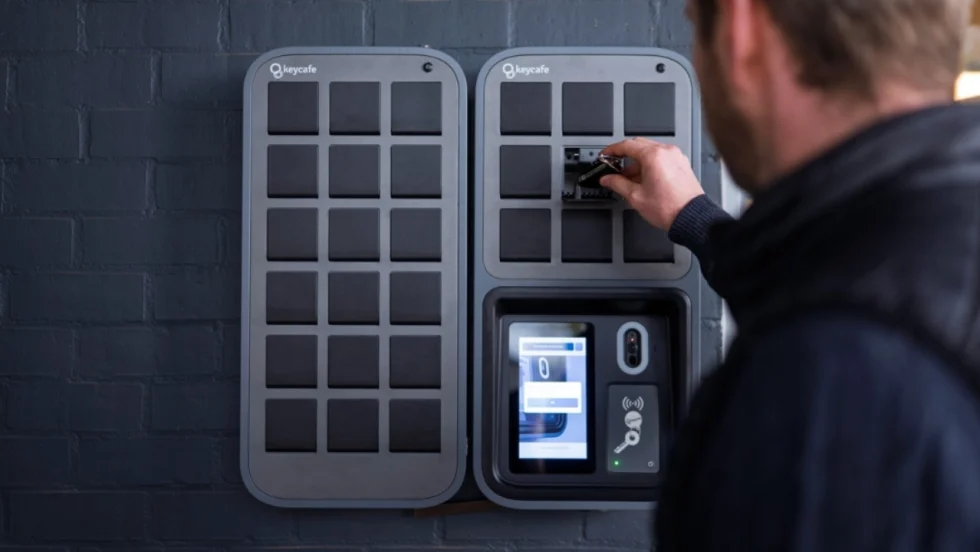
How Small Fleets Can Stop Losing Time to Lost Keys
Lost keys can mean delayed jobs, idle vehicles and unexpected replacement costs. See how small fleets are using digital key management to keep vehicles moving and improve accountability.
Read More →
How to Build Custom Fleet Tools With AI and Vibe Coding [Webinar]
A new Automotive Fleet webinar explores how fleet managers are using AI and vibe coding to automate routine work and create simple operational tools without traditional programming skills.
Read More →
You May Be a Fleet Manager (Even If No One Told You)
Managing vehicles may not be your full-time job, but the costs, risks, and responsibilities are still very real. Business Fleet In Motion is here to help small and growing businesses make smarter fleet decisions without needing a full fleet department.
Read More →
Fleet Management Without a Fleet Department?
No fleet department? The work still has to get done. Learn how to prioritize your most critical vehicles, catch problems before they become downtime, and build a simple routine that keeps your small fleet moving.
Read More →