


Fleet Trends for 2005 and Beyond
We editors of the Bobit fleet publications are constantly scouring the news and picking the brains of industry sources for trends in fleet management and the automotive world. As we embark on the second half of the decade, here is a brief compendium of some of our expectations.

What are the top trends in fleet management in 2005? Read on!
Photo: Work Truck
Editor's Note: Curious about more modern trends? Check out the Top 7 Fleet Management Trends from 2024!
In the automotive fleet industry, several trends are shaping the market and influencing the decisions of fleet managers and business owners.
Ongoing aggressive manufacturer volume incentives, the expansion of state DMV online renewal services, increased use of vehicle tracking systems, maintenance issues with hybrid vehicles, and the shift from SUVs to crossover vehicles are all significant developments that will impact fleet management in the coming years.
Ongoing Aggressive Manufacturer Volume Incentives
The extremely competitive environment to get as many fleet orders as possible to keep plants running near capacity will continue to fuel the very aggressive rebate and incentive scenario, Jim Creighton, director of operations, ARI, told Automotive Fleet.
Steeper interest rates and a decline in real disposable income will eat into auto sales, analysts say. Meanwhile, rising energy and commodity prices will cut into automakers’ profits. Yet competition is so intense that most carmakers will eat the extra cost and continue to offer incentives to keep market share, even as profits decline.
Changing Definition of Volume Order
“The number of vehicles that defines ‘volume’ has taken a huge step backward,” Jim Tangney, vice president, purchasing for Emkay Inc., told AF. Tangney says ‘volume’ can now be defined as anywhere from 1-25 vehicles, where in the past that order would need to have been 50-75 vehicles per year. This trend will benefit the small-fleet buyer, though it will hurt residual values.
Expansion of State DMV Online Renewal Services
Currently, online registration renewals are available only in nine states. Over the next five years, at least 25 to 30 of the remaining 50 states will institute online registration access. “There will be continuing development of electronic titling to reduce the need for duplicate titles and the risk of fraud,” Ken Ridgley, manager, title administration for PHH, told AF. “State process improvements and automation will result in improved tracking of taxes due or past due at the time of title and registration.”
Increased Use of Vehicle Tracking Systems
The technology to allow a fleet manager to track and monitor vehicles has been available for years, though its prohibitive cost has meant GPS systems were used primarily by the trucking industry. As the cost of systems continues to decline and economies of scale are achieved, vehicle tracking systems are becoming more cost-effective for the small vehicle fleet.
Maintenance Issues with Hybrid Vehicles
There will be a rapid increase in the use of hybrid vehicles in the fleet market during the next five years, said Dave Lodding, vice president of Fleet Management Services for Donlen Corporation. “The issue of servicing these vehicles will be critical for their success. Fleet drivers will be required to return to a dealership for service until the independent repair facilities become trained to properly service these vehicle,” said Lodding. “Normal PM services are no different than traditionally powered vehicles.”
Fewer SUVs and More Crossover Vehicles in Fleet
Manufacturers will develop different types of products that will change the profile of fleets. These vehicles will provide many of the benefits of SUVs, but have an improved risk profile (not as many rollovers, etc.) and better fuel efficiency.
Some crossover vehicles will be more like station wagons, like the Ford Freestyle. Several manufacturers, including Ford, DaimlerChrysler, and Subaru, will offer AWD versions of new sedans. These vehicles are likely to replace higher-priced SUVs when safety is a concern and there is no true need for an off-road-type vehicle.\
Originally posted on Work Truck Online
More Operations
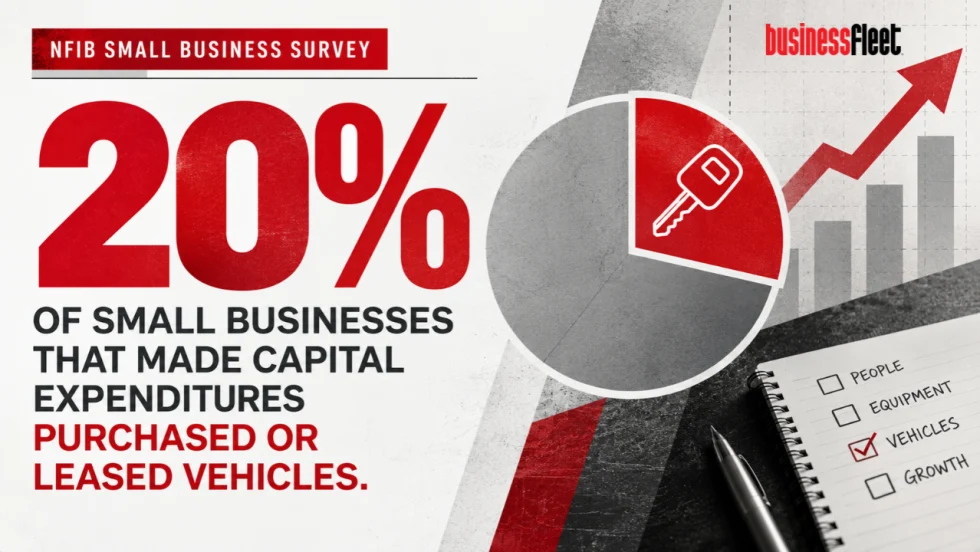
Small Business Vehicle Purchases Slip as Owners Pull Back on Expansion
New NFIB survey data shows fewer small businesses purchasing or leasing vehicles as inflation, hiring challenges, and borrowing costs weigh on expansion plans.
Read More →
Growing Fleets, Bigger Challenges | Business Fleet Brief
From growing pains and weather risks to workers' comp, new vehicles, and telematics gaps, this month's Business Fleet Brief covers what small fleets need to know.
Read More →
Your Business Grew, Did Your Fleet Management Program Grow With It?
Small fleets often grow faster than the processes supporting them. Here’s how to recognize when informal fleet management has stopped working and what to formalize first.
Read More →
Small Fleet Lessons That Can Make a Big Difference | Business Fleet Brief
From used-vehicle costs and lost keys to safety tech and replacement planning, this Business Fleet Brief breaks down practical lessons that can make a big difference for small fleets.
Read More →
Automotive Fleet Opens 2026 Personal Use Survey for Commercial Fleet Managers
Less than two weeks left! Commercial and corporate fleet managers are invited to share how their organizations handle company vehicle personal-use policies, charges, and driver eligibility.
Read More →
You Do Not Have to Be a Big Business to Build the Next Generation
Small businesses may not have the biggest budgets or the biggest fleets, but they do have something powerful. They are close to the communities they serve, and that makes them uniquely equipped to help shape the next generation of automotive and fleet talent.
Read More →
How Small Fleets Can Stop Losing Time to Lost Keys
Lost keys can mean delayed jobs, idle vehicles and unexpected replacement costs. See how small fleets are using digital key management to keep vehicles moving and improve accountability.
Read More →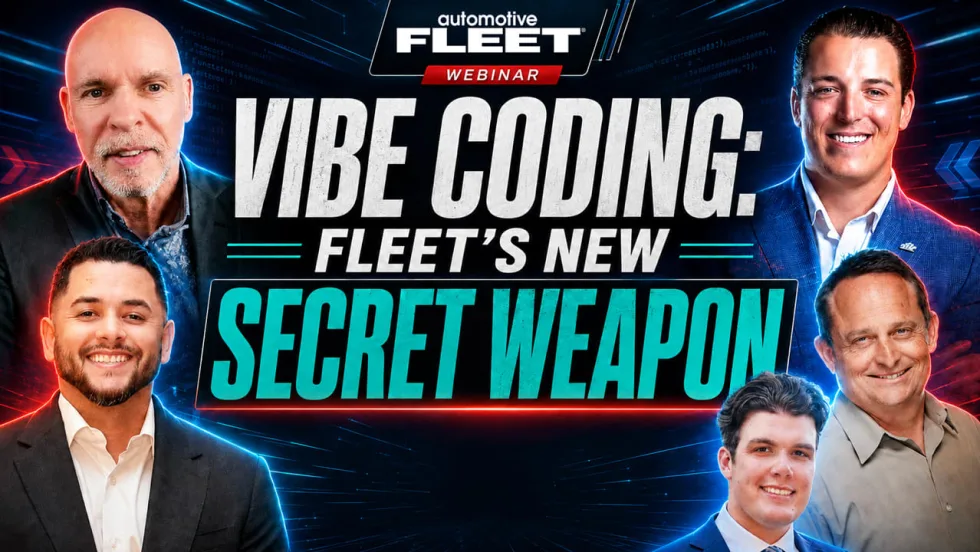
How to Build Custom Fleet Tools With AI and Vibe Coding [Webinar]
A new Automotive Fleet webinar explores how fleet managers are using AI and vibe coding to automate routine work and create simple operational tools without traditional programming skills.
Read More →
You May Be a Fleet Manager (Even If No One Told You)
Managing vehicles may not be your full-time job, but the costs, risks, and responsibilities are still very real. Business Fleet In Motion is here to help small and growing businesses make smarter fleet decisions without needing a full fleet department.
Read More →
Fleet Management Without a Fleet Department?
No fleet department? The work still has to get done. Learn how to prioritize your most critical vehicles, catch problems before they become downtime, and build a simple routine that keeps your small fleet moving.
Read More →