



Keep Reading: The Good Driver vs. The Safe Driver: What’s the Difference?
How Driver Records Affect Commercial Fleet Insurance
A poor driving record can raise premiums or limit coverage. Here is how fleets can screen drivers, monitor changes, and respond without creating new risks.
September 1, 2002

Reviewing driver records before assigning vehicle access can help fleets identify insurance risks early and avoid costly surprises at renewal.
Credit:
This image was generated by OpenAI. Please refer to our terms of use.
8 min to read
- Employers should thoroughly screen potential drivers during the hiring process.
- It is crucial to review the driving records of existing employees regularly.
- Careful selection of employees for company vehicle assignments is recommended.
*Summarized by AI
Editor's note: This article was originally published in 2002 and has been substantially updated to reflect current commercial auto underwriting, driver monitoring, and employment compliance practices.
Commercial auto insurance remains a challenging expense for many businesses that depend on trucks and vans.
Although commercial insurance pricing increases have moderated overall, commercial auto rates continued to rise during the first quarter of 2026. Insurance carriers are still paying close attention to the people operating company vehicles, along with a fleet’s claims history, vehicle types, business operations, location, and coverage needs.
That makes driver qualification more than an insurance task. It is part of protecting employees, vehicles, customers, and the business itself.
Why Driving Records Matter
Commercial auto insurers commonly review motor vehicle records, or MVRs, for employees who will have access to company vehicles. Accidents, traffic violations, license suspensions, and limited driving experience may affect the insurer’s assessment of the account.
A driver’s record can contribute to higher premiums, restrictions, requests for additional safety controls, or a decision not to insure that driver. The exact response varies by carrier, state, business type, vehicle, violation, and the rest of the fleet’s loss experience. There is no universal number of tickets or accidents that automatically makes every driver unacceptable.
That distinction matters. Fleets should not rely on a generic rule such as “one accident is acceptable” or “anything more than 15 mph over the limit results in disqualification.”
Instead, fleet managers should establish written driver standards with input from their insurance broker or carrier, human resources team, and employment counsel.
Review Drivers Before Handing Over the Keys
A candidate may have the technical skills and experience needed for the job but still present an unacceptable driving risk.
When driving is part of the position, fleets should review the candidate’s qualifications before allowing that employee to operate a company vehicle. This may include confirming that the person has a valid license for the type of vehicle being driven, reviewing the MVR, checking relevant experience, and completing a practical driving evaluation.
The review should look beyond whether the applicant has a license. Consider whether the person has experience operating a vehicle of a similar size and configuration.
Someone who has spent years driving a passenger car may need additional instruction before operating a cargo van, service body, medium-duty truck, trailer combination, or vehicle with restricted visibility. Even when a commercial driver’s license is not required, the employee still needs the skill to control the vehicle safely.
Driver standards should be related to the actual position and applied consistently. Making exceptions for certain employees because they are difficult to replace can create safety, employment, and insurance concerns later.
Understand the Rules for Obtaining MVRs
Fleets also need to follow the correct process when obtaining and using driving records.
When an employer purchases an MVR or background report from a third-party consumer reporting company for an employment decision, the Fair Credit Reporting Act may apply. The employer generally must provide a stand-alone written disclosure and obtain the applicant’s or employee’s written authorization before requesting the report.
Additional steps may be required before and after an employer decides not to hire, reassign, suspend, terminate, or take another adverse action based on information in that report. State and local laws may add other requirements, so employers should review the process with qualified counsel.
The goal is not only to follow the law. Giving employees a chance to review the information can uncover incorrect, outdated, or incomplete records before a decision is finalized.
Do Not Treat Screening as a One-Time Task
An acceptable MVR at the time of hire only shows what was on the employee’s record that day. A license can later be suspended. A driver may receive a serious citation, be involved in a collision, or become subject to restrictions that affect their ability to perform the job.
Fleets should establish a schedule for reviewing the records of employees who drive for work. Travelers recommends obtaining MVRs for anyone who drives on behalf of the company, reviewing them regularly, and applying the organization’s standards consistently.
Companies may also require employees to report:
- License suspensions, expirations, or restrictions.
- Moving violations and serious citations.
- Collisions involving company or personal vehicles.
- Impaired-driving charges.
- Changes to medical qualifications when relevant to the position.
- Any other development that could affect their legal ability to drive.
Some states offer employer notification services that alert enrolled employers when a driver’s license status changes or when certain crashes or convictions are added to the record. Availability, eligibility, and reporting details vary by state.
Continuous monitoring can help fleets learn about a problem sooner, but it should support a broader driver-management program rather than replace regular communication and supervision.
Know Which Federal Requirements Apply
Some commercial motor carriers are subject to additional federal driver-qualification requirements.
Under 49 CFR 391.25, covered motor carriers generally must obtain and review the driving record of each applicable driver at least once every 12 months. The review must consider the driver’s accident record, traffic violations, and evidence of unsafe behavior, with particular weight given to serious violations such as reckless driving, speeding, and operating under the influence.
These requirements do not automatically apply to every employee who drives a pickup, van, or company car. Applicability depends on the vehicle, operation, commerce, exemptions, and other factors.
Fleet managers should determine which federal and state driver-qualification rules apply to their specific operation rather than assuming that meeting the insurer’s standards also satisfies regulatory requirements.
Have a Plan for Current Drivers
The more difficult situation often arises when a current employee develops a problem after being hired. Perhaps an experienced technician receives a DUI while driving their personal vehicle. A service employee’s license is suspended, or a previously reliable driver accumulates several preventable collisions.
The fleet should not ignore the issue and wait for the insurance company to discover it at renewal. Depending on policy terms and the circumstances, failing to provide required information could create a larger coverage or underwriting problem.
Instead, fleet managers should work with human resources, legal counsel, and the company’s insurance representative to evaluate:
- Whether the employee is still legally permitted to drive.
- Whether the insurer will continue to cover the driver.
- The seriousness and timing of the violation.
- Whether driving is an essential function of the position.
- Whether the company has handled similar situations consistently.
- Whether training, reassignment, restricted duties, or another corrective action is appropriate.
- Whether the employee has followed the company’s reporting policy.
In some cases, a carrier may allow the driver to remain on the policy with additional controls or pricing. In others, the carrier may request that the person be removed or formally excluded where driver exclusions are legally permitted.
An exclusion should never be treated casually. An excluded employee generally cannot operate a covered vehicle, even for a quick trip or emergency, without potentially creating serious coverage consequences.
Build a Clear Driver Eligibility Policy
Employees should not learn the company’s driver standards after something goes wrong.
A written policy can explain who is authorized to drive, how records are reviewed, which incidents must be reported, and what may happen when an employee no longer meets company or insurer requirements.
The policy should address:
- Minimum licensing and experience requirements.
- MVR reviews before driving duties begin.
- The frequency of ongoing record reviews.
- Employee responsibilities for reporting changes.
- Standards for preventable collisions and violations.
- Required driver orientation and vehicle-specific training.
- Remedial coaching or corrective action.
- Personal use of company vehicles.
- Employees using personal vehicles for company business.
- The appeal or review process when information may be inaccurate.
Policies should leave enough room to evaluate individual circumstances without becoming so vague that standards are applied differently from one employee to another.
Look Beyond the MVR
An MVR is important, but it does not show everything a fleet needs to know about a driver. A clean record does not necessarily mean someone consistently follows company policy or avoids risk. A driver may speed, follow too closely, use a phone, fail to wear a seat belt, or make aggressive maneuvers without receiving a citation.
Likewise, a driver with an older violation may have completed training and demonstrated years of responsible behavior since the incident.
Fleets can build a more complete picture through practical evaluations, collision reviews, driver coaching, telematics, camera data, roadside inspection results, customer reports, and documented observations from supervisors.
The goal is to develop drivers who are both skilled and safe. A technically capable driver who routinely takes unnecessary risks can expose the company to just as much trouble as an inexperienced driver who lacks confidence behind the wheel.
Make Safety Part of the Insurance Conversation
Fleet managers should not wait until renewal to discuss driver standards with their insurance broker or carrier. Regular conversations can help the business understand how the insurer evaluates drivers, which safety controls may strengthen the account, and where the fleet needs to improve before underwriters review it.
A documented safety program can include driver selection, orientation, ongoing training, collision review, vehicle inspections, distracted-driving policies, seat belt expectations, and corrective action. Insurers may also offer training resources or risk-control support that policyholders can use.
Insurance is not a replacement for a safety program, and an insurable driver is not automatically a safe driver. The strongest fleets use underwriting requirements as one part of a larger process that manages driver risk every day.
No Surprises at Renewal
Drivers have a direct impact on fleet safety, productivity, operating costs, and insurance. Screening applicants carefully is an important first step, but it cannot be the last one. Fleets also need consistent monitoring, clear reporting requirements, meaningful training, and a documented process for responding when a driver’s status changes.
The earlier a fleet identifies a problem, the more options it may have to correct it before it becomes a collision, coverage dispute, or unwelcome surprise at renewal.
Originally posted on Work Truck Online
More Operations

Growing Fleets, Bigger Challenges | Business Fleet Brief
From growing pains and weather risks to workers' comp, new vehicles, and telematics gaps, this month's Business Fleet Brief covers what small fleets need to know.
Read More →
Your Business Grew, Did Your Fleet Management Program Grow With It?
Small fleets often grow faster than the processes supporting them. Here’s how to recognize when informal fleet management has stopped working and what to formalize first.
Read More →
Small Fleet Lessons That Can Make a Big Difference | Business Fleet Brief
From used-vehicle costs and lost keys to safety tech and replacement planning, this Business Fleet Brief breaks down practical lessons that can make a big difference for small fleets.
Read More →
Automotive Fleet Opens 2026 Personal Use Survey for Commercial Fleet Managers
Less than two weeks left! Commercial and corporate fleet managers are invited to share how their organizations handle company vehicle personal-use policies, charges, and driver eligibility.
Read More →
You Do Not Have to Be a Big Business to Build the Next Generation
Small businesses may not have the biggest budgets or the biggest fleets, but they do have something powerful. They are close to the communities they serve, and that makes them uniquely equipped to help shape the next generation of automotive and fleet talent.
Read More →
How Small Fleets Can Stop Losing Time to Lost Keys
Lost keys can mean delayed jobs, idle vehicles and unexpected replacement costs. See how small fleets are using digital key management to keep vehicles moving and improve accountability.
Read More →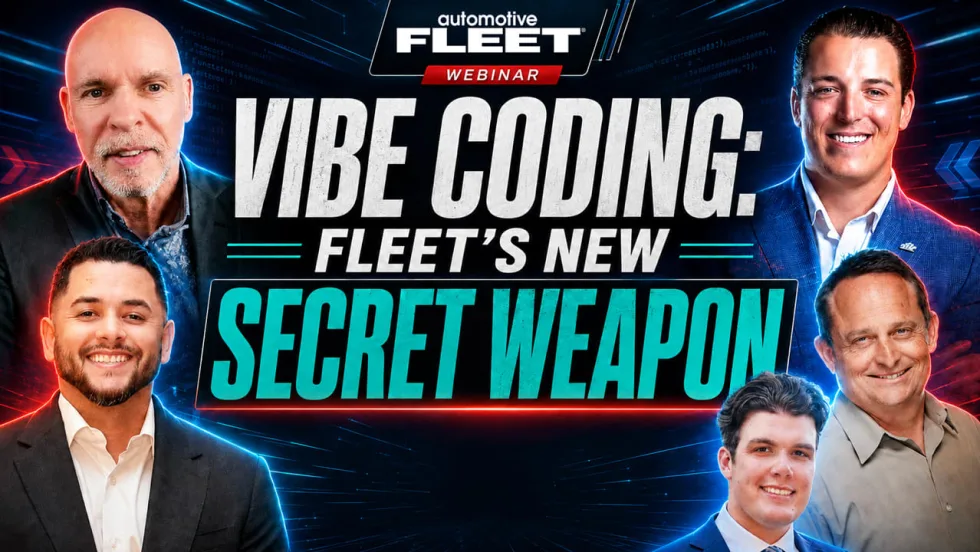
How to Build Custom Fleet Tools With AI and Vibe Coding [Webinar]
A new Automotive Fleet webinar explores how fleet managers are using AI and vibe coding to automate routine work and create simple operational tools without traditional programming skills.
Read More →
You May Be a Fleet Manager (Even If No One Told You)
Managing vehicles may not be your full-time job, but the costs, risks, and responsibilities are still very real. Business Fleet In Motion is here to help small and growing businesses make smarter fleet decisions without needing a full fleet department.
Read More →
Fleet Management Without a Fleet Department?
No fleet department? The work still has to get done. Learn how to prioritize your most critical vehicles, catch problems before they become downtime, and build a simple routine that keeps your small fleet moving.
Read More →
Why the IRS Raised Its Mileage Rate in the Middle of 2026
Fuel-price volatility drove the rare increase to 76 cents per mile, the fifth midyear adjustment since 2000.
Read More →Subscribe to Our Newsletter