The “Best in Fleet” conference session delved into changes brought about by supply chain issues, an influx of data, and more.
by Lexi Tucker
November 16, 2021
The Best in Fleet event took place virtually, bringing together fleet professionals to discuss sustainable mobility, emerging tech, and the supply chain. Chris Conroy, president & COO of Holman Enterprises, welcomed viewers to the event.
Photo via Holman
6 min to read
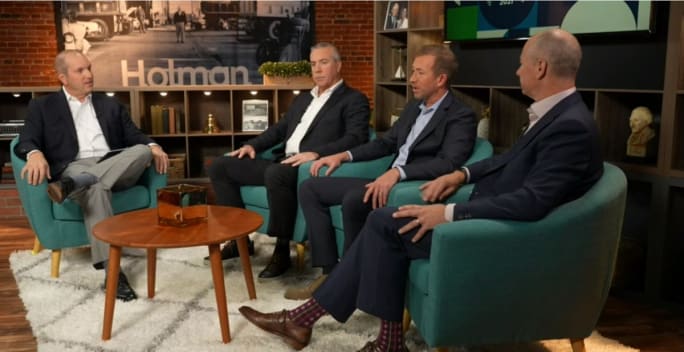
During fleet management company ARI’s (part of Holman Enterprises) annual “Best in Fleet” conference, Chris Conroy, president & COO of Holman Enterprises, moderated a question-and-answer session with Bob White, president of Holman Fleet & Mobility; Pete Dondlinger, president of Holman Manufacturing and Distribution; and Rick Tousaw, CCO of Holman Enterprises, to discuss changes in the fleet industry, technology, and recruitment outlook.
Q: We've heard so much about technology, change, and disruption. What are your thoughts on what that means for your specific areas of expertise, and the industry at large?
Ad Loading...
White: I think for us, it's how do we best leverage technology to deliver more information to customers so they can make better-informed decisions. How do we make ourselves easier to do business with? How do we make sure our customers can spend more time on areas with a bigger impact?
Dondlinger: Regarding vehicle technology, three different examples are impacting what we do for our clients. The first is electrification. Take an electric transit van, one of the most common vans used in all vocations. In these EV units, you can't drill holes in the floor anymore, because there are battery packs, but you still need to install various components for their intended job function. We're working hard to develop new products so we can install equipment in vehicles and technicians can do jobs as they have in the past. Two, vocational vehicles typically don't come out of the factory with all the sensors, equipment, and truck bodies in the commercial world. We're working with a couple of clients right now to install LIDAR, radars, and sensors, and integrating data to prepare their efforts towards autonomous applications in the future. The third one is connected vehicles. There are state DOTs that are connecting their snowplow trucks to, in the future, be able to patrol highways without drivers, so we're working on how do you get inputs from the road, friction sensors, hardware, and software? It all continues to evolve rapidly, but I feel like we're in a good position with all the brainpower we have in our organization to be able to be successful and develop creative solutions for our customers.
Tousaw: For us, I think we look at it a couple of different ways. One, we have to make sure we've got a good discipline around the things we do today. Because there's always an opportunity to enhance what we do and leverage new technologies that come in to serve our clients better. The disruptive world is going to be where we have to make sense of data coming in from such numerous and fragmented sources. Normalize and display this information in a way that makes sense that they can make actionable decisions out of it fairly quickly. At the end of the day, it's all about customer experience. We have to make it as seamless as possible, regardless of the disruption.
Q: With demand for labor across all industries getting high and there being many job openings across the country, what is ARI doing to ensure it recruits and retains the best talent so it can continue to provide high service levels to its customers?
White: We're all feeling this to different degrees. Based on the skillset, geography, or demographic of the employee, it's either lesser or greater the extent of the challenge. In today's environment, people have choices. For us, it’s about how do we ensure people feel valued and want to be part of our business.
Ad Loading...
Dondlinger: There are three things we're focused on. Number one is creating a great employee experience, specifically for supervisors and management. This helps to ensure a similarly great experience for our frontline employees, which is where there’s the most pressure. Number two is fortunately, we have tremendous employee engagement programs. How do we leverage those? How do we make those a priority to deliver a rewarding experience for our employees? The third thing is, many times our employees’ world is the facility and department they work in. We're trying to better illustrate future possibilities, highlighting opportunities and career goals they might have in the future. That's a bigger one and a more difficult one, but it's one we continue to prioritize.
On Nov. 10, executives across ARI and Holman shed more light on new fleet trends and tips.
Photo via Best in Fleet event
Q: What are ARI’s plans to improve data accuracy, and any investments or integration with telematics or other third-party providers into the AI fleet management system?
White: We're getting more data every month, every year. The ability to get information directly from the device, like telematics is helpful for us. It's timely and much more accurate. The biggest challenge we still have is there's a lot of human engagement that impacts the data, entering and securing the data which affects timeliness and accuracy. We're putting a lot of tools in place to try to get to the end source as directly as possible. I wouldn't wait for perfect data, because I don't know that that's a realistic expectation but we need to make sure the data is accurate enough to drive reliable decision making and then be able to measure the outcome of whatever actions we take.
Q: A great example of virtual integration is really what Kargo Master (a Holman Enterprises company that manufactures truck and van productivity solutions including racks, shelving, and storage accessories) was for the Auto Truck business. Could speak to a little bit of the value it's created for the company, the value we think it's creating for our customers, and then any kind of long-term strategic thoughts you have?
Dondlinger: Day in and day out, we have two objectives: Building vehicles on time, and to a high-quality level. A few years ago, we asked how do we gain better control of our supply chain to ensure we can deliver reliability to clients. What we came up with is that we need to start making more of what goes into the vehicles ourselves to ensure we can deliver on our promise to our customers. With Kargo Master, we dialed in our forecasting so we can have components available at our parts distribution center ready to go into vehicles. We can enhance the component quality. The functionality is under our control so we don't have to rely on a supplier. We can design for manufacturability, meaning we can install equipment faster, what that means to our clients is we can get the vehicles to them faster, and our throughput improves.
Ad Loading...
Q: How is the role of the fleet professional changed within the organizations over the last 20 months, combined with the current supply chain delivery issues? Have fleet teams shrunk or grown as a result of all of this?
White: Fleet is a hard job. Generally speaking, you don't have just fleet to worry about, it’s just one of many responsibilities that you likely have. In the past, I think most folks who oversaw a fleet were responsible for getting, maintaining, and selling vehicles. Now, I think fleet is much more integrated into the business itself. How do you drive value? How do you support the rest of the business? How do you make the top line grow? How do you drive the business goals forward? Unfortunately, for the most part, the fleet staff doesn’t typically grow with this increase in responsibility and in most cases, people are being asked to do more with less.
Supply Chain Stress
Another session at the virtual conference looked at the supply chain. Ted Davis, VP, North American supply chain for ARI, provided insights into where we are and where we’re going with the issue. “When we compare the first nine months of production to that of 2019 prior to the pandemic, we see a 30% decrease in total production,” Davis says. When compared to the same period last year, production was down 11%. This represents hundreds of thousands of vehicles that won’t be produced.
The issue spans across all manufacturers, with demand outweighing supply, in both factories and in dealerships. Unfortunately, Davis doesn’t report any major relief on the horizon, noting that the current challenges will likely remain in place into 2023. Davis predicts that order cycles will be shorter and more limited than in the past, and “Overall the best advice I can give is to be collaborative,” he says. “Internally with your business, with your fleet management company, and with the OEM, to maximize your plans.”
New NFIB survey data shows fewer small businesses purchasing or leasing vehicles as inflation, hiring challenges, and borrowing costs weigh on expansion plans.
From growing pains and weather risks to workers' comp, new vehicles, and telematics gaps, this month's Business Fleet Brief covers what small fleets need to know.
Small fleets often grow faster than the processes supporting them. Here’s how to recognize when informal fleet management has stopped working and what to formalize first.
From used-vehicle costs and lost keys to safety tech and replacement planning, this Business Fleet Brief breaks down practical lessons that can make a big difference for small fleets.
Less than two weeks left! Commercial and corporate fleet managers are invited to share how their organizations handle company vehicle personal-use policies, charges, and driver eligibility.
Small businesses may not have the biggest budgets or the biggest fleets, but they do have something powerful. They are close to the communities they serve, and that makes them uniquely equipped to help shape the next generation of automotive and fleet talent.
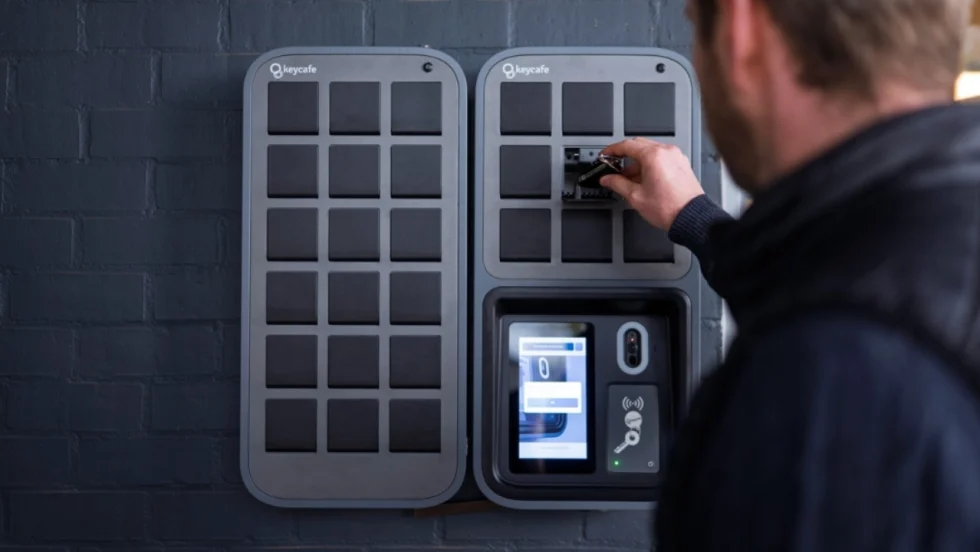
Lost keys can mean delayed jobs, idle vehicles and unexpected replacement costs. See how small fleets are using digital key management to keep vehicles moving and improve accountability.
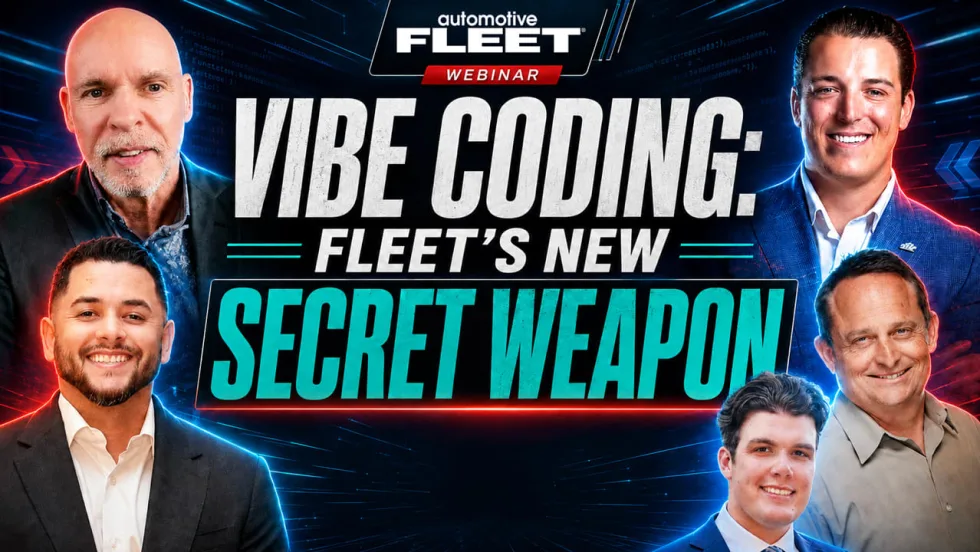
A new Automotive Fleet webinar explores how fleet managers are using AI and vibe coding to automate routine work and create simple operational tools without traditional programming skills.
Managing vehicles may not be your full-time job, but the costs, risks, and responsibilities are still very real. Business Fleet In Motion is here to help small and growing businesses make smarter fleet decisions without needing a full fleet department.
No fleet department? The work still has to get done. Learn how to prioritize your most critical vehicles, catch problems before they become downtime, and build a simple routine that keeps your small fleet moving.