


How Small Fleets Can Stop Losing Time to Lost Keys
Lost keys can mean delayed jobs, idle vehicles and unexpected replacement costs. See how small fleets are using digital key management to keep vehicles moving and improve accountability.
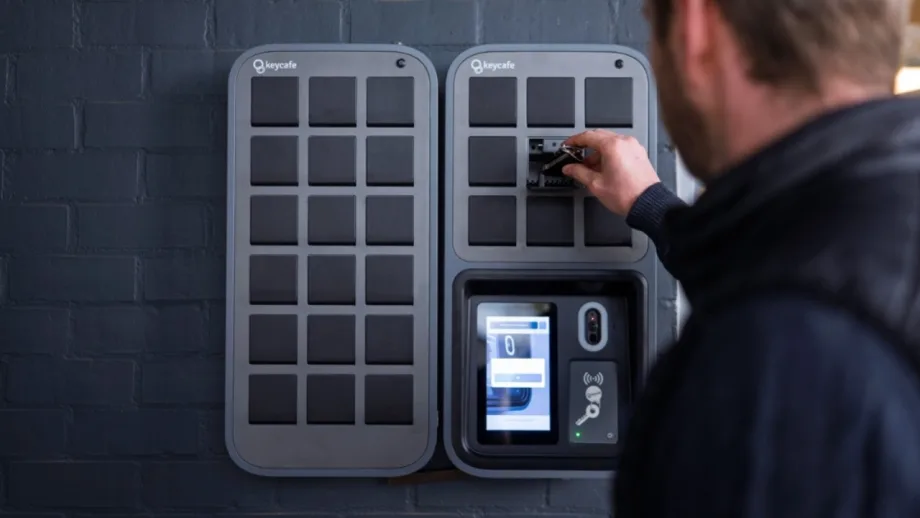
Electronic key cabinets give authorized employees a consistent place to retrieve and return vehicle keys while automatically recording each interaction.
Keycafe
- Digital key management helps small fleets reduce delays caused by lost keys.
- The use of digital systems contributes to vehicle efficiency and operational continuity.
- Implementing digital solutions increases accountability within fleet operations.
*Summarized by AI
A driver arrives to start a route, and the assigned vehicle key isn't where it should be. No one is certain who last used the vehicle. Ten minutes later, the key turns up in a coat pocket, a desk drawer, or with a technician who took the vehicle for a quick errand.
For fleets running 10 to 50 vehicles, that scenario repeats often enough to affect scheduling, labor hours and vehicle availability. Many operations still manage keys with pegboards, sign-out sheets or unlocked drawers, even while running telematics, fleet management software and digital maintenance records.
The Real Cost of a Missing Key
Modern smart keys and proximity fobs are significantly more expensive to replace than traditional metal keys. Between the hardware, programming, and labor, a single replacement commonly runs $250 to $700 depending on make and model.
Those costs accumulate in operations where multiple people share access to the same vehicles. SERVPRO, a restoration contractor serving the San Jose area with a fleet of 25 vehicles and roughly 30 employees, previously kept keys in an open box that anyone could access. Office Manager Connie Doran said the operation had no way of tracking who took a key or who had last seen it. The company attributed misplaced keys, delayed job starts and recurring replacement and re-keying costs to the arrangement.
When Lost Keys Become Lost Time
Replacement cost is measurable, but lost time can be the bigger operational issue. A missing key can ripple through several parts of the workday:
- Delayed dispatch: Drivers idle while keys are located, pushing back first stops and compressing the rest of the schedule.
- Underused assets: Vehicles sit unavailable not because they are out of service, but because no one can access them.
- Maintenance bottlenecks: Units scheduled for service miss appointment windows when keys can't be handed off on time.
- No accountability trail: Without a record of who took which vehicle and when, damage, fuel discrepancies, and toll or citation assignment become difficult to resolve.
What Digital Key Control Changes
Digital key management systems replace open boards and drawers with electronic key cabinets that release individual keys only to authorized users.
Electronic key cabinets can grant access by PIN, mobile app, or NFC credential and automatically log each pickup and return with a timestamp and user ID. Managers can assign permissions by role, restrict specific vehicles to trained or licensed operators, and pull access history without reconstructing it from paper logs. Keycafe's MS5 SmartBox is one example of this type of system.
For fleets with multiple yards, branches, or after-hours operations, the systems also support unattended vehicle handoffs. A driver or contractor can retrieve a key outside business hours using credentials issued remotely.
The biggest differences between manual and electronic key control come down to access, tracking, and accountability.
Function | Manual Key Board | Electronic Key Cabinet |
|---|---|---|
Access control | Open to anyone on site | Restricted by user and vehicle |
Handoff record | Handwritten or none | Automatic, timestamped |
After-hours pickup | Requires staff on site | Remote credential issued |
Audit trail | Manual reconstruction | Exportable access history |
Key loss follow-up | Guesswork | Last user identified |
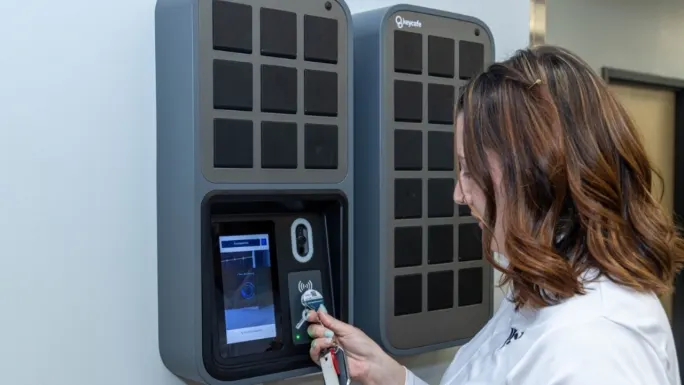
Digital key control creates a record of who accessed each vehicle key and when, helping fleets reduce guesswork when keys are shared among multiple employees.
Keycafe
What to Consider Before Making the Switch
For a smaller fleet, the right setup depends less on bells and whistles and more on how vehicles are actually shared and dispatched. Fleets should also consider who actually needs access to each vehicle and whether permissions need to change by shift, job function, or location. Fleet managers evaluating these systems generally weigh:
- Capacity and expansion: key slots relative to current fleet size and projected growth
- Integration: whether access data can be exported to or synced with existing fleet management software
- Location strategy: a single central cabinet versus units at each yard or branch
- Credential method: matching PIN, app, or badge access to how the workforce already operates
- Connectivity: cellular or Wi-Fi requirements at parking and storage locations
What Better Key Control Looks Like in Practice
Organizations that have digitized key control report fewer replacement purchases, faster morning dispatch, and clearer accountability for vehicle use. At SERVPRO of Campbell, staff now take and return keys using individual PIN codes, with access levels assigned by role.
"The crews come in, they know exactly where the keys are to start the day," Doran said. Managers are notified of each key interaction and can check who accessed which key and when. One-time bookings also allow contractors to retrieve keys without a manager on site.
Key management is a small piece of fleet administration, but for operations where vehicle availability drives revenue, the minutes recovered on each handoff add up across a year.

Keycafe | Business Fleet
About the Author: Nicole Arasaki is a Marketing Coordinator at Keycafe, specializing in the automotive dealership sector. Her work focuses on industry research, content development, and examining the operational and technological challenges shaping modern dealership environments. This article was authored and edited in accordance with Business Fleet editorial standards and style. Opinions expressed may not reflect those of BF.
Quick Answers
Lost keys can lead to delayed jobs, idle vehicles, and incur unexpected replacement costs, which can negatively impact productivity and profitability for small fleets.
*Summarized by AI
More Operations

Growing Fleets, Bigger Challenges | Business Fleet Brief
From growing pains and weather risks to workers' comp, new vehicles, and telematics gaps, this month's Business Fleet Brief covers what small fleets need to know.
Read More →
Your Business Grew, Did Your Fleet Management Program Grow With It?
Small fleets often grow faster than the processes supporting them. Here’s how to recognize when informal fleet management has stopped working and what to formalize first.
Read More →
Small Fleet Lessons That Can Make a Big Difference | Business Fleet Brief
From used-vehicle costs and lost keys to safety tech and replacement planning, this Business Fleet Brief breaks down practical lessons that can make a big difference for small fleets.
Read More →
Automotive Fleet Opens 2026 Personal Use Survey for Commercial Fleet Managers
Less than two weeks left! Commercial and corporate fleet managers are invited to share how their organizations handle company vehicle personal-use policies, charges, and driver eligibility.
Read More →
You Do Not Have to Be a Big Business to Build the Next Generation
Small businesses may not have the biggest budgets or the biggest fleets, but they do have something powerful. They are close to the communities they serve, and that makes them uniquely equipped to help shape the next generation of automotive and fleet talent.
Read More →
How to Build Custom Fleet Tools With AI and Vibe Coding [Webinar]
A new Automotive Fleet webinar explores how fleet managers are using AI and vibe coding to automate routine work and create simple operational tools without traditional programming skills.
Read More →
You May Be a Fleet Manager (Even If No One Told You)
Managing vehicles may not be your full-time job, but the costs, risks, and responsibilities are still very real. Business Fleet In Motion is here to help small and growing businesses make smarter fleet decisions without needing a full fleet department.
Read More →
Fleet Management Without a Fleet Department?
No fleet department? The work still has to get done. Learn how to prioritize your most critical vehicles, catch problems before they become downtime, and build a simple routine that keeps your small fleet moving.
Read More →
Why the IRS Raised Its Mileage Rate in the Middle of 2026
Fuel-price volatility drove the rare increase to 76 cents per mile, the fifth midyear adjustment since 2000.
Read More →
What Fleet Legends Wish Every Small Fleet Manager Knew
Twelve fleet leaders share the lessons they learned the hard way on leadership, communication, relationships, and building a stronger fleet.
Read More →