


Safety Drives Black Box Use in Fleets
Event data recorders act as electronic driving instructors. Experts say they can reduce accidents by 20-30%.
Study shows that drivers consciously alter their driving habits because they are aware of the EDR's presence in the vehicle.
Photo: Work Truck
In-vehicle event data recorders—black boxes—were originally installed to improve airbag performance based on the severity of the collision. Because EDRs record events such as throttle position, velocity change, abrupt braking, steering wheel angle, and accelerator pedal position, they have also become a tool to help investigators reconstruct accidents. According to a recent Associated Press article, 15% of the nation’s 200 million passenger vehicles today, and all General Motors vehicles after 2004, are equipped with black boxes.
The National Highway Traffic Safety Administration (NHTSA) has proposed standards for data collected by EDRs, while the National Transportation Safety Board recommended last year that automakers be required to install them on all passenger vehicles. At the same time, state governments have passed, or are considering, legislation that limits how the data can be used.
Aftermarket EDR Systems
Aftermarket EDR systems use the same technology to help prevent accidents. These systems monitor driving behavior, fuel, engine diagnostics, and hours driven, and can be used with GPS to track vehicles. The fleet manager can configure EDR information to create a driver profile that can be used to manage risk.
On average, the use of event data recorders in fleets can reduce collisions by 20-30%, according to Rusty Haight, a traffic collision reconstruction expert. He maintains that by installing a passive device (the EDR), an active component is created (drivers’ awareness of their behavior). In other words, drivers consciously alter their driving habits because they are aware of the EDR's presence in the vehicle.
Black Boxes in Fleets
Kathleen Konicki, director of associate safety at Nationwide Insurance Co. in Columbus, Ohio, is a proponent of fleet EDR use. She says that for more than three years, Nationwide’s fleet of 5,900 Ford passenger cars, minivans, and SUVs has been equipped with the Witness Box from Independent Witness, Inc.
“The overriding objective was to try to understand the relationship between crash forces and bodily injury,” says Konicki. “We also wanted to study whether or not there was in fact a ‘halo effect’ for fleet car drivers. In other words, did they change their driving behaviors because there was a black box in their car?”
Konicki predicts a 30-50% reduction in the frequency of crashes among drivers whose vehicles are equipped with black boxes.
James Graham, corporate risk manager at Premiere, Inc., in New Iberia, La., says that his Witness Box saves him roughly $80 a job. His fleet has been using the Witness Box for two months.
“Maybe 10% of the fuel I use is on the road,” he says. “The rest of it is on the job site where the truck is continuously running. I can now use that data to apply for tax reimbursements.”
At more than 30 jobs a month, Graham estimates he’ll save more than $2,000 a month total. Graham also reports 100% compliance with seatbelt use and says he hardly sees any speeding anymore.
Graham says that, because his drivers are aware of the device, vehicle-monitoring systems train good driving habits that will carry over into personal vehicle use as well.
“We’ve had drivers call in and say something just happened before we even got the message,” he says. “So, they’re conscious of the fact that we’re going to call them, and that we’re going to check on them.”
The instant recording and dispatch of events allow fleet managers and safety operators to confront driver problems early on, rather than having to wait for a monthly report when an incident could be easily forgotten. Because of the ability to address an individual’s driving behavior immediately, Graham notes that it is more likely for that driver to change their behavior before it leads to a complication or accident.
“We don’t want to figure out fixes after (an accident),” he says. “We want to figure out ways to change people’s behavior and prevent it.”
Hard Data Backs Up Drivers
At Richmond Ambulance Authority, in Richmond, Va., drivers were at first skeptical about the idea of being monitored. However, shortly after installing the Road Safety International EDR, an accident occurred in which the other party claimed the ambulance did not use its emergency lights and siren before speeding through a red light, says Jerry Overton, executive director. After pulling the real-time data from the computer, it was proven that the ambulance did use its lights and siren, and that it came to a full stop at the intersection. After this incident, drivers were no longer hesitant about EDR use.
Not only do emergency medical technicians (EMT) know they are being monitored, but a driving program in association with the vehicle’s onboard computer enables EMTs to anticipate the ambulance’s surrounding parameters.
Since implementing Road Safety, accidents per 100,000 miles have been reduced by more than 50%, says Overton.
Originally posted on Work Truck Online
More Operations
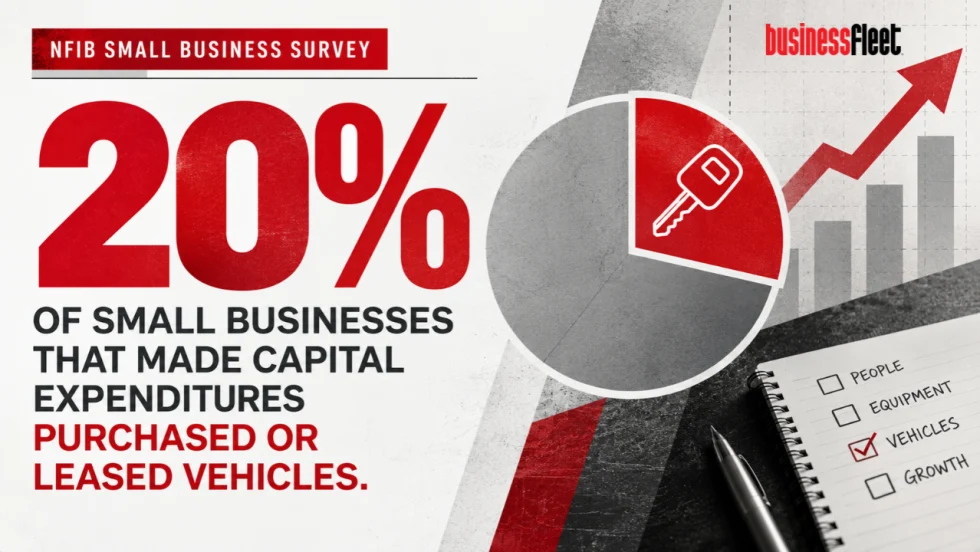
Small Business Vehicle Purchases Slip as Owners Pull Back on Expansion
New NFIB survey data shows fewer small businesses purchasing or leasing vehicles as inflation, hiring challenges, and borrowing costs weigh on expansion plans.
Read More →
Growing Fleets, Bigger Challenges | Business Fleet Brief
From growing pains and weather risks to workers' comp, new vehicles, and telematics gaps, this month's Business Fleet Brief covers what small fleets need to know.
Read More →
Your Business Grew, Did Your Fleet Management Program Grow With It?
Small fleets often grow faster than the processes supporting them. Here’s how to recognize when informal fleet management has stopped working and what to formalize first.
Read More →
Small Fleet Lessons That Can Make a Big Difference | Business Fleet Brief
From used-vehicle costs and lost keys to safety tech and replacement planning, this Business Fleet Brief breaks down practical lessons that can make a big difference for small fleets.
Read More →
Automotive Fleet Opens 2026 Personal Use Survey for Commercial Fleet Managers
Less than two weeks left! Commercial and corporate fleet managers are invited to share how their organizations handle company vehicle personal-use policies, charges, and driver eligibility.
Read More →
You Do Not Have to Be a Big Business to Build the Next Generation
Small businesses may not have the biggest budgets or the biggest fleets, but they do have something powerful. They are close to the communities they serve, and that makes them uniquely equipped to help shape the next generation of automotive and fleet talent.
Read More →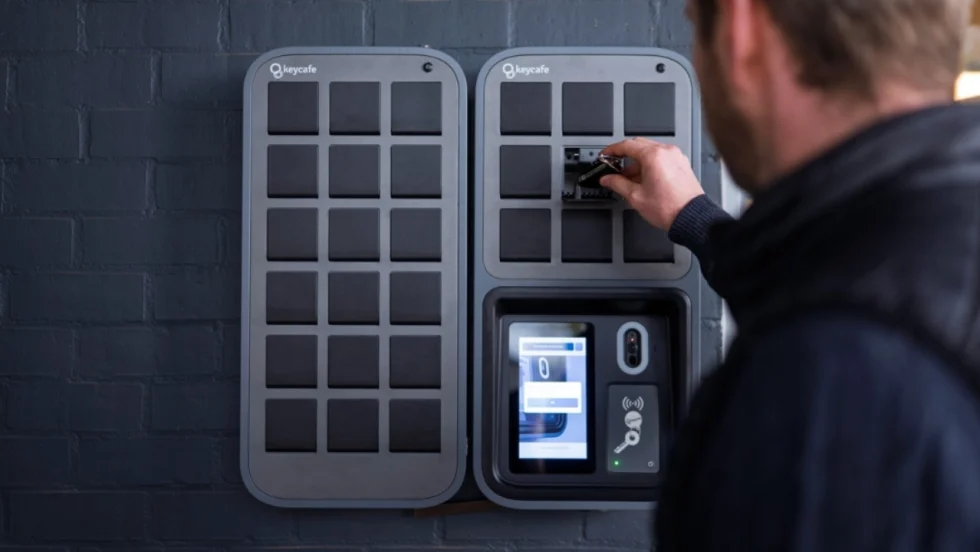
How Small Fleets Can Stop Losing Time to Lost Keys
Lost keys can mean delayed jobs, idle vehicles and unexpected replacement costs. See how small fleets are using digital key management to keep vehicles moving and improve accountability.
Read More →
How to Build Custom Fleet Tools With AI and Vibe Coding [Webinar]
A new Automotive Fleet webinar explores how fleet managers are using AI and vibe coding to automate routine work and create simple operational tools without traditional programming skills.
Read More →
You May Be a Fleet Manager (Even If No One Told You)
Managing vehicles may not be your full-time job, but the costs, risks, and responsibilities are still very real. Business Fleet In Motion is here to help small and growing businesses make smarter fleet decisions without needing a full fleet department.
Read More →
Fleet Management Without a Fleet Department?
No fleet department? The work still has to get done. Learn how to prioritize your most critical vehicles, catch problems before they become downtime, and build a simple routine that keeps your small fleet moving.
Read More →