


Understanding & Negotiating a TRAC Lease
Any small business owner contemplating a TRAC lease needs to understand the mechanics of the lease and how to effectively negotiate one.
Negotiating a fleet lease agreement is, above all else, a matter of common sense.
Photo: Work Truck
Fleet managers use TRAC leases to manage costs and reduce risk when operating work trucks and commercial vehicles. This guide explains how TRAC leases work, how settlements are calculated, and what to negotiate so your fleet stays protected.
What is a TRAC Lease?
“TRAC” is an acronym for “terminal rental adjustment clause.” In a TRAC lease, a vehicle’s original cost (called “capitalized cost”) is amortized in equal monthly installments, known as “reserve for depreciation.” After a minimum required term (usually 12 months), the lessee may terminate the lease at any time.
Upon termination, the lessor (or sometimes the lessee) sells the vehicle, and the proceeds are then applied to the unamortized balance of the original cost, called “book value.” Any excess book value is returned to the lessee from the lessor, while the lessee pays the lessor any shortfall from the book value.
TRAC Lease Settlement Example
Here’s an example of how this mechanism works: The vehicle’s capitalized cost is $18,000, and the lessee opts for a reserve for depreciation of two percent of the capitalized cost per month, which equals $360. If the lessee retires the vehicle after 30 months, the total built-up reserve for depreciation over the 30 months would be $10,800, leaving a book value of $7,200.
Assuming that either the lessor or the lessee sells the vehicle for $8,000, this exceeds the book value by $800, so the $800 is returned to the lessee from the lessor. However, if the vehicle is sold for only $6,400, which is $800 short of the remaining book value, the lessee owes the lessor $800.
A TRAC lease can be negotiated individually or governed by a document known as the “master lease agreement.” The agreement spells out the details of the lease, covering and defining ownership of the vehicles, the terms of the leases, and the surrender of vehicles.
It also covers the payment of rental, vehicle delivery dates, the operation of leased vehicles, insurance coverage, additional or replacement vehicles, and the disposition of terminated leased vehicles by the lessor and the lessee. Legal aspects are also discussed, such as lessor financing and what happens in the event of default.
Key TRAC Lease Terms Fleet Managers Should Know
The first item to negotiate is the vehicle’s capitalized cost, a function of dealer invoice cost for most smaller fleets and factory invoice cost for large fleets. The cap cost includes “holdback,” usually equal to three percent of MSRP (Manufacturers Suggested Retail Price). Pricing is often expressed as “factory invoice less X dollars,” with the “X” coming out of the holdback.
The lease rate factor expressed as a percentage applied to the capitalized cost consists of three parts:
depreciation reserve
money cost
lessor’s administrative fee.
Other factors, such as minimum time in service, vehicle ordering, vehicle delivery, lease documentation, and sale of off-lease vehicles, should be agreed upon by the lessor and the lessee before the signing of an agreement.
Negotiating a fleet lease agreement is, above all else, a matter of common sense. All fees and costs are negotiable, the contract should outline the responsibilities of each party, and performance targets should be included.
TRAC leases offer flexibility for fleets, especially those running work trucks, vans, and service vehicles. Understanding how capitalized cost, depreciation reserve, and settlement values work can help fleet managers negotiate better agreements and reduce lifecycle risk.
Top 4 TRAC Lease Questions for Fleet Managers
What is the difference between a TRAC lease and a closed-end lease? A TRAC lease is tied to resale value. When the lease ends, the vehicle is sold and the final sale price is compared to the remaining book value. If it sells for more, the lessee gets the surplus. If it sells for less, the lessee pays the difference.
A closed-end lease works differently. The lessee simply returns the vehicle at the end of the term, as long as mileage and condition requirements are met. There’s no resale risk or reward.
Who owns the vehicle in a TRAC lease? The lessor retains ownership throughout the entire lease. The lessee operates the vehicle and handles maintenance and insurance, but the title stays with the lessor until the vehicle is sold at the end of the lease.
How is depreciation calculated in a TRAC lease? Depreciation is based on the vehicle’s capitalized cost and the monthly depreciation reserve selected by the lessee. That reserve builds over time and determines the book value at termination. For example: An $18,000 vehicle with a 2% reserve builds $360 in depreciation per month, reducing the book value as the months go on.
What happens if the resale value is lower than book value? If the vehicle sells for less than the remaining book value, the lessee pays the difference to the lessor. If it sells for more, the lessee receives the surplus. This shared risk and reward is the core of how TRAC leases work.
About the Author: Terry Flesia is a former feature editor for Bobit.
Originally posted on Work Truck Online
More Operations

Small Fleet Lessons That Can Make a Big Difference | Business Fleet Brief
From used-vehicle costs and lost keys to safety tech and replacement planning, this Business Fleet Brief breaks down practical lessons that can make a big difference for small fleets.
Read More →
Automotive Fleet Opens 2026 Personal Use Survey for Commercial Fleet Managers
Less than two weeks left! Commercial and corporate fleet managers are invited to share how their organizations handle company vehicle personal-use policies, charges, and driver eligibility.
Read More →
You Do Not Have to Be a Big Business to Build the Next Generation
Small businesses may not have the biggest budgets or the biggest fleets, but they do have something powerful. They are close to the communities they serve, and that makes them uniquely equipped to help shape the next generation of automotive and fleet talent.
Read More →
How Small Fleets Can Stop Losing Time to Lost Keys
Lost keys can mean delayed jobs, idle vehicles and unexpected replacement costs. See how small fleets are using digital key management to keep vehicles moving and improve accountability.
Read More →
How to Build Custom Fleet Tools With AI and Vibe Coding [Webinar]
A new Automotive Fleet webinar explores how fleet managers are using AI and vibe coding to automate routine work and create simple operational tools without traditional programming skills.
Read More →
You May Be a Fleet Manager (Even If No One Told You)
Managing vehicles may not be your full-time job, but the costs, risks, and responsibilities are still very real. Business Fleet In Motion is here to help small and growing businesses make smarter fleet decisions without needing a full fleet department.
Read More →
Fleet Management Without a Fleet Department?
No fleet department? The work still has to get done. Learn how to prioritize your most critical vehicles, catch problems before they become downtime, and build a simple routine that keeps your small fleet moving.
Read More →
Why the IRS Raised Its Mileage Rate in the Middle of 2026
Fuel-price volatility drove the rare increase to 76 cents per mile, the fifth midyear adjustment since 2000.
Read More →
What Fleet Legends Wish Every Small Fleet Manager Knew
Twelve fleet leaders share the lessons they learned the hard way on leadership, communication, relationships, and building a stronger fleet.
Read More →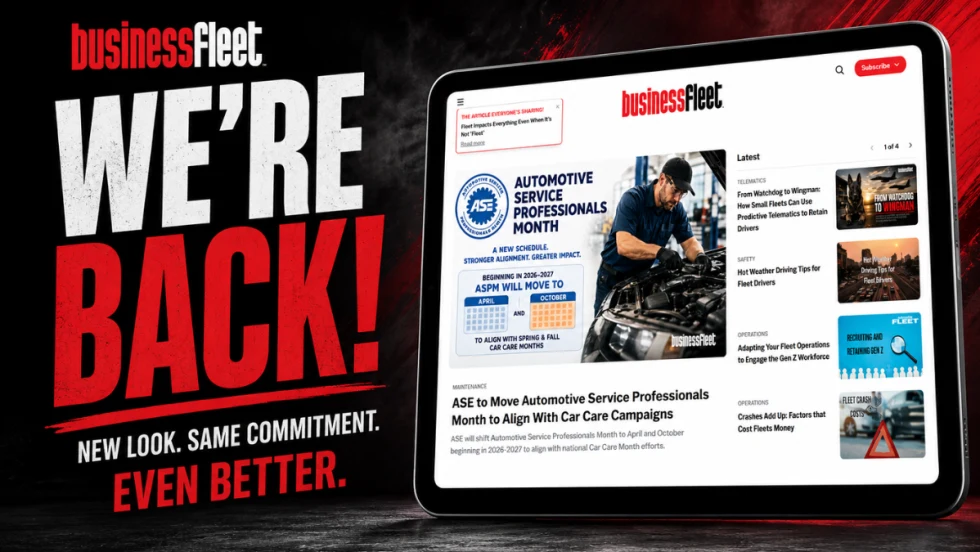
We're Back! Business Fleet Returns With a Fresh New Look
Check out our redesigned website with a faster experience and a renewed commitment to serving small fleet professionals.
Read More →