


Use MVRs To Hire Safe Drivers
Motor vehicle records are the number one factor in determining who drives your company vehicles. Third-party vendors and the Internet have made obtaining them much easier.


Every state has a motor vehicle department with a set procedure to obtain motor vehicle records.
Photo: Work Truck
- Motor vehicle records (MVRs) are crucial for selecting safe drivers for company vehicles.
- The availability of MVRs through third-party vendors and the Internet simplifies the hiring process.
- Monitoring MVRs helps ensure that company vehicles are operated by responsible drivers.
*Summarized by AI
Driving behavior is the biggest contributor to road injuries and fatalities. A renowned study of motor vehicle crashes by Indiana University found that driver action, or failure to act, in the seconds before a crash was responsible for about 77 to 95 percent of collisions.
That makes the motor vehicle record (MVR)—the written indicator of driving behavior—the number one factor in determining whether an employee or potential employee drives a company car. Reviewing MVRs, and establishing a system to obtain them, not only keeps insurance rates down, it mitigates liability exposure and the potential for jury awards.
“If people take the time to evaluate MVRs and have minimum eligibility requirements established,” says Jim York, manager of Zurich Risk Engineering’s transportation team, “they’ve taken a giant leap in better managing their risk.”
At one time insurance brokers were allowed to provide companies copies of MVRs as a courtesy. However, the Gramm-Leach-Bliley Act of 1999 and amendments to the Fair Credit Reporting Act have defined motor vehicle records as non-public information.
Today an insurance carrier will check MVRs and use them internally to evaluate insurability, but specific driving record information cannot be passed on to the client.
Without this convenience, some employers add new drivers to the company’s auto policy without checking MVRs first. This leaves the company vulnerable to a rate-increase surprise, or worse—the company could be unexpectedly dropped from the carrier. Thus it’s now up to you, the employer, to obtain MVRs.
Obtaining the MVR
Every state has a motor vehicle department with a set procedure to obtain motor vehicle records. Many have a form to download and mail in with a processing fee, though turnaround times can be up to two weeks. Some states allow instantaneous access to MVRs directly through their Web sites. A few states offer employers automated systems like California’s “Employer Pull Notice” program.
These notification programs involve setting up an account and then enrolling each driver over the Internet or by mail. After enrollment the employer is mailed each driver’s three-year driving record history. Reports are generated automatically every 12 months thereafter, including a notification of expiration of drivers’ licenses 30 days prior. If a violation appears in the interim, a printout is mailed immediately to the employer. In California the DMV charges a $5 one-time fee per driver to enroll in the program and $1 for a printout.
Third-Party Vendors
For those who rank dealing with state DMVs right below a visit to the dentist, third-party vendors provide MVRs as well. These services are especially helpful for processing out-of-state MVR requests and circumventing long DMV wait times. For an added fee, they alleviate the need to go through different record retrieval procedures for multiple states. Customer support is on hand to provide explanations of the myriad of different violation codes for in-state and out-of-state reports—and getting a live body on the phone takes a lot less time.
After setting up an account with a private company such as iiX, for example, employers gain virtually instant access to motor vehicle records to every state via the Internet or by fax.
When Do You Run an MVR?
When in the hiring process should you obtain and review the MVR? Some companies request driver applicants to bring a copy of their MVR to the interview. That policy emphasizes the importance of the driving record and helps weed out some risky drivers early. However, it isn’t always practical with long DMV turnaround times and hiring deadlines. Other companies will make a conditional offer of employment, contingent upon an acceptable MVR and background check.
Regardless of when you run the check, under the Fair Credit Reporting Act, the policy of obtaining and evaluating MVRs must be stated in a separate release form. The release should be worded so that the applicant’s signature grants permission to have the motor vehicle record checked immediately, and periodically thereafter
“By making that part of the application process, you’re setting a tone right away that driver safety is an important thing,” says Phil Moser, national sales manager for Advanced Driver Training Services. “It’s part of creating that safety culture.”
Employee Drivers
It is good business practice to check all drivers’ motor vehicle records once a year, and as needed throughout the year if an accident or violation occurs. Some companies check MVRs concurrently with salary reviews. Insurance carriers check drivers’ MVRs on their client’s policies 60 days prior to the renewal of the policy,
A wise practice, says Raymond Gooley, vp, limousine program manager of Managing Agency Group, is to run your own checks 90 days before the renewal. This allows time to deal with an unsafe driver and perhaps get that person into a defensive-driver program.
Who Gets Checked?
Do you check the records of all employees doing company business in any vehicle, even the accounting clerk going to the bank? For practicality purposes, some companies elect only to check employees considered regular business drivers (ones who drive over 5,000 miles a year for work).
Other companies check all employees doing any driving for company business. If you have a workable system already in place, checking all drivers isn’t that much more of a hassle or expense—and it further minimizes your liability.
According to a recent survey by the National Association of Fleet Administrators (NAFA), 87.8 percent of fleets allow family members to drive company vehicles for personal use. If your policy allows employees’ family members to drive a company vehicle, you must check MVRs for each family member as well.
Why? Under the legal theory of negligent entrustment, you are responsible for the negligent acts of anyone who drives that company vehicle. You can be sued even if your employee’s son causes an accident in the company car on a Saturday night. Research indicates that the fatality rate for teenage drivers is 10 times higher than among the safest group of drivers, those between the ages of 45-55. The requirement to check family members’ MVRs should be stated in the application as well.
Originally posted on Work Truck Online
More Safety
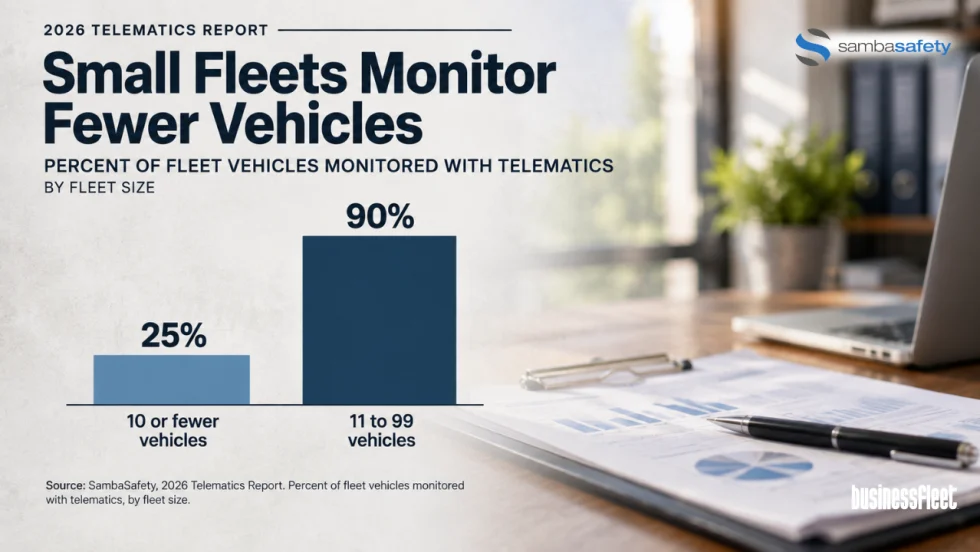
Small Fleets Lag in Telematics Coverage as Industry Moves Beyond Adoption
SambaSafety’s 2026 Telematics Report finds fleets with 10 or fewer vehicles monitor a much smaller share of their vehicles than larger operations, as the industry shifts its focus from collecting data to using it.
Read More →
Back-to-School Traffic Is Not the Risk Fleets Think It Is
Back-to-school traffic does not always mean more crashes. New Empiric Earth data shows why fleets should focus on when and where risk changes.
Read More →
Small Fleet, Big Exposure: How to Reduce Workers’ Comp Risks
For small fleets, one crash can trigger far more than vehicle damage. Here’s how stronger driver safety policies, training, maintenance, and technology can help reduce workers’ comp exposure.
Read More →
Who Makes the Call When Winter Weather Gets Dangerous?
Winter weather can quickly change a small fleet’s plans. Knowing when to reroute, delay, or stop can matter just as much as preparing the vehicles themselves.
Read More →
API Issues Refueling Safety Guidelines
The American Petroleum Institute offers a list of safe vehicle refueling guidelines, including ways to avoid potential problems with static electricity discharges in fall, winter, and early spring.
Read More →
Winter Fleet Prep: Expert Tips to Keep Vehicles Running Smoothly
Cold weather can expose weak batteries, tires, fuel systems, and maintenance gaps fast. Use this winter fleet checklist to prepare trucks and drivers before temperatures drop.
Read More →
8 ADAS Maintenance Tips for Small Business Fleets From Bendix
A dirty camera, bad alignment, or one loose connection could quietly knock your fleet’s ADAS offline. Here’s what Bendix says to check.
Read More →
Developing Budget-Friendly Driver Safety Programs
From driver training and safety meetings to one-on-one coaching and incentive programs, several small fleets share how they have developed a safety culture with their drivers using low- to no-cost resources.
Read More →
A 20-Minute Safety Check for Small Fleets Before Operation Safe Driver Week
No safety department? No problem. Here's a practical checklist small fleet managers can use before Operation Safe Driver Week begins.
Read More →
Why Small Fleets Keep Getting Tripped Up by ELD Compliance
Roadcheck revealed a hard truth: most ELD violations aren't intentional. They're caused by small mistakes that can cost fleets time, money, and trust.
Read More →