


Comparing Vans by Lifecycle Cost
This analysis shows that ownership costs for vans with similar powertrains, GVWR, and capacities can vary by manufacturer as much as $9,000.


When the Ford Transit Connect landed on U.S. shores in 2009, there should’ve been a Paul Revere warning: “The van revolution is coming!” In the years following, new models have grown the commercial van market exponentially compared to overall fleet sales.
Sales of compact and full-size vans are expected to top 500,000 units in the U.S. this year, according to Kelley Blue Book estimates.
Today, fleet operators can choose between large Euro-style unibody vans such as Mercedes-Benz Sprinter, Ford Transit, and Ram ProMaster, as well as body-on-frame models like Nissan NV and General Motors’ G-Series stalwarts Chevrolet Express and GMC Savana.
On the smaller side, the compact van market comprises Ford Transit Connect, Nissan NV200, Ram ProMaster City, and Chevrolet City Express. Mercedes even created a tweener segment when it introduced the midsize Metris van in 2015. (In fairness, we gave the Metris its own category.)
Each of these models has a myriad of capacities, payloads, roof heights, wheelbases, trim levels, and upfits to address almost any work application.
To ease what could be seen as a paradox of choice, Business Fleet presents this cost comparison for 2016-MY cargo van models based on data from Vincentric. Vincentric calculated its standard eight cost elements: depreciation, financing, fees and taxes, fuel, insurance, maintenance, opportunity cost, and repairs. This analysis covers a five-year period with an average of 20,000 miles a year.
Observations
In terms of a strict analysis of ownership costs, the models with the best five-year total cost of ownership (TCO) are the four compact vans. This isn’t surprising, as their initial costs, fuel totals, and overall depreciation are the lowest. The overall TCO winner is Nissan NV200.
In fact, two of Nissan’s larger van models — Nissan NV 1500 and 2500 — record the lowest TCO in the ½- and ¾-ton categories. Ford Transit T350 (low roof, 148-in. wheelbase) wins the 1-ton category.
The TCO for Nissan NV 1500 and 2500 come close to the lifecycle costs of the compact vans. Those larger models offer about three times more payload, towing, and cargo volume than their smaller brothers. In the right fleet application, acquiring vans with the greater capacities could far outweigh the minimal overall cost increase.
Sticking with large vans, moving further up the ladder by weight and capacity will drive up initial costs, fuel, and maintenance expense, which generally correlates with a rise in TCO. Here, a cost comparison of the same class of vans by each manufacturer is helpful. Ownership costs for vans with similar powertrains, GVWR, and capacities can vary by manufacturer as much as $9,000.
Taking this one step further, operators can pinpoint a desired TCO and then ascertain the capabilities of the models that meet that figure. By looking across manufacturers, operators have options to choose “a lot of van for the money.”
Initial cost has only a general correlation with TCO. (Vincentric’s “market price” is calculated as the invoice price, plus the destination, and minus published fleet incentives.) Many vans with low initial costs return a higher TCO — due primarily to higher depreciation.
Low fuel expense, the second largest cost after depreciation, is not always an indicator of lower TCO. The Nissan NV is a prime example — on the low end of fuel economy because of its truck frame, NV models fare very well in TCO.
Diesel models uniformly have lower total fuel costs than their gas-powered brothers. But this savings does not necessarily translate into a lower overall TCO. Higher initial costs, slightly higher maintenance costs, and substantially higher average depreciation than gas models drive up overall costs.
Results May Vary
As they say, “individual results may vary.” This theoretical exercise should be taken with some caveats, as a multitude of real-world variables come into play such as model availability, proximity to franchised dealer servicing, annual mileage, driving performance, vehicle reliability, safety features, and other vehicle-specific options availability.
As well, the Vincentric market price would not reflect individual negotiations on any model in a given market. Any discount could tip the scales to a favorable TCO not reflected here.
Originally posted on Work Truck Online
More Fuel
NHTSA Finalizes Rule Resetting Fuel Economy Standards: What Small Fleets Should Know
Will your next work vehicle cost less to buy but more to fuel? NHTSA's new fuel economy rule puts both numbers in play.
Read More →
WEX Brings Standard Fleet's Connected Vehicle Platform to Fleet Customers
This week’s product launch with Standard Fleet’s connected vehicle platform reflects WEX Venture Capital's strategy of turning startup innovation into customer solutions. Standard Fleet is now available to WEX fleet customers.
Read More →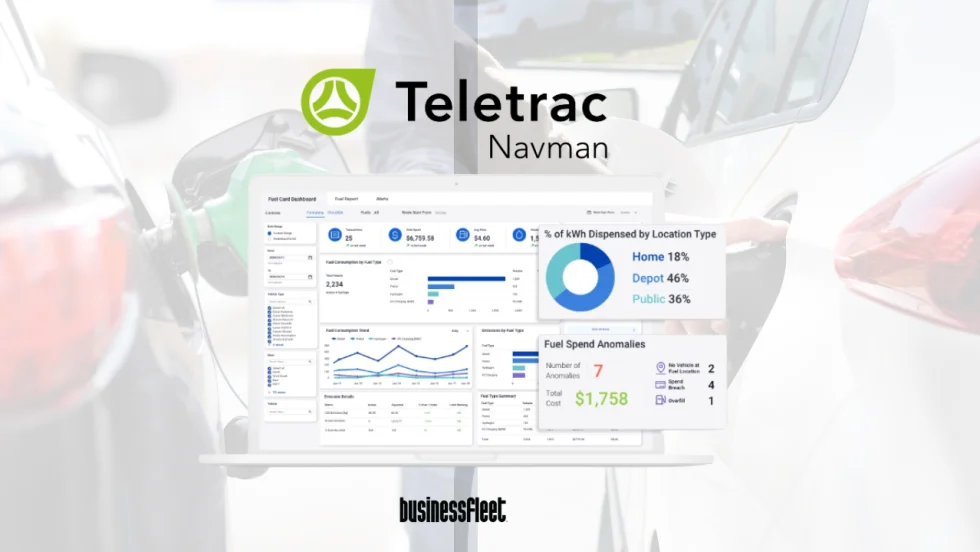
Teletrac Navman Adds Mixed-Energy Tracking to TN360
Energy Hub combines fuel card data, EV charging activity, reimbursements, and vehicle energy use in one dashboard for fleets operating gasoline, hybrid, and electric vehicles.
Read More →
Fillip Fleet Brings Digital Fuel Management to Small Business Fleets in the U.S.
Fillip Fleet launches in the U.S., offering small business fleets digital fuel cards, spend controls, and fast onboarding without vehicle minimums.
Read More →
How Drivers Can Improve Fuel Efficiency
By knowing and practicing some driving and maintenance tips, drivers can increase their trucks’ gas mileage, boost their vehicles’ overall performance, and save money for the company.
Read More →
Choosing a Fuel Card for Your Fleet: 6 Features to Consider
Fuel cards are a useful tool for fleets to stay organized and improve driver efficiency. Try out these tips for choosing the right card for your fleet!
Read More →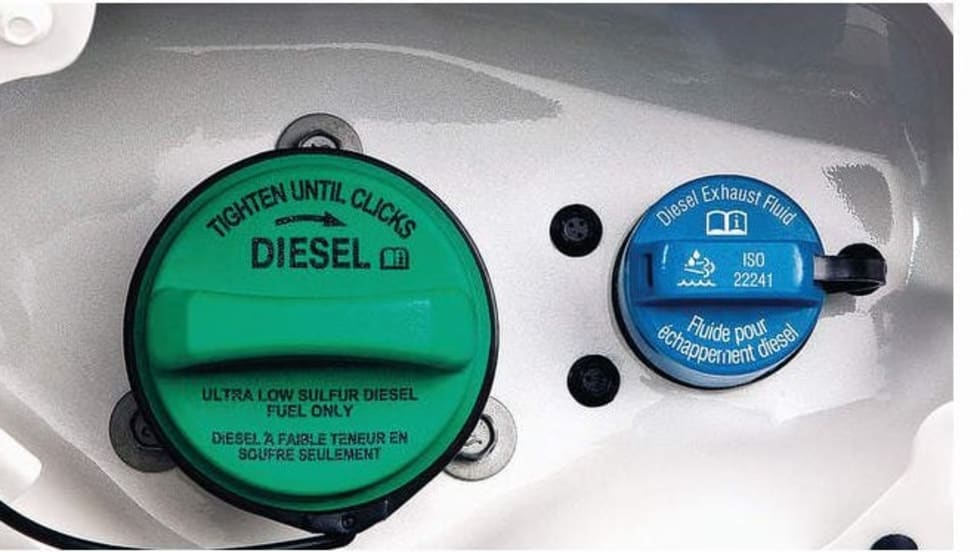
How to Purchase, Store & Handle Diesel Exhaust Fluid
Diesel engine vehicles can be damaged by using low quality diesel exhaust fluid (DEF). Repairs can be very expensive with long downtime possible, and damage could void the manufacturer’s warranty.
Read More →
Navigating the Rise in IRS Mileage Reimbursement for Fleet Management
Budgeting for fleet vehicles is more pronounced than ever. Here is how to navigate IRS mileage reimbursement for fleet management.
Read More →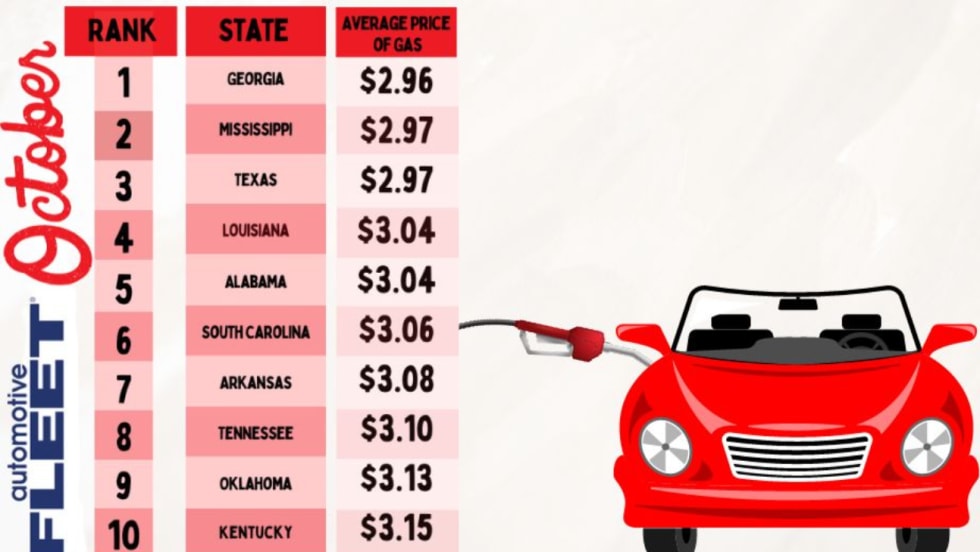
2023 Gas & Diesel Updates for October
With how often fuel costs change based on any number of factors, how much has it changed within one month?
Read More →
ICE Technology Isn’t Dead — Look for These Gains Ahead
A new report provides a summary of comprehensive research focused on improving the internal combustion engine efficiency and emissions.
Read More →