


Facilitating Employee Vehicle Purchases
Your company's biggest cost in providing company vehicles is depreciation. The best way to control and reduce this cost is by selling out-of-service vehicles directly to your employees.
by Bob Cavalli
March 1, 2001
What if you were able to sell the vehicle directly to an end user? You can; your out-of-service business vehicles can be sold to the driver or other employees.
Photo: Work Truck
6 min to read
Sometimes, we get caught up in the minutiae of the job at hand, and miss the big picture. The people who manage business fleets often spend too much time worrying about whether to replace a shock absorber, or buy one tire or two.
The fact is that, while these expenses do indeed require monitoring, depreciation can be as much as 60% or more of the total holding cost of providing vehicles. Tracking and controlling depreciation costs can thus provide the biggest opportunity for savings. Negotiating the lowest possible up front cost is certainly part of this task; however, selling vehicles at the highest possible price is the real key to reducing depreciation.
The Basics of Employee Vehicle Purchases
In simple terms, depreciation is the difference between the original cost of an asset and the proceeds from its sale. There are any number of methods businesses can use to dispose of out-of-service vehicles. They can be traded in against the purchase or lease of a replacement. They can be sold at auction to the highest bidder, or the sale can be negotiated directly with a wholesaler.
While each of these methods is useful, each also has a single, large drawback: the buyer is not the final user. In each case, the vehicle will be resold, sometimes more than once, before the ultimate buyer is found. And at each step along this road, the seller must make some kind of profit. Each is a middleman who, though they speed up the selling process, reduces the proceeds you can expect to receive.
What if you were able to sell the vehicle directly to an end user? You can; your out-of-service business vehicles can be sold to the driver or other employees.
Understanding Pricing for Employee-Vehicle Sales
There are, overall, two markets that purchase vehicles -- retail and wholesale. Wholesale buyers (auctions, wholesalers, brokers, etc.) buy vehicles to resell them for a profit. Retail buyers buy vehicles to drive them.
If you're buying (or leasing) vehicles at wholesale prices, a wholesale resale is adequate for your purposes. But when an employee needs to buy a used vehicle, they will do so on the retail market, and this is where the advantage can be found.
For example, suppose you purchased a car for the business at a fleetprice of $20,000, depreciated it at a rate of 2% ($400) per month (a very common practice), and replaced it after 36 months in service. You would have booked a reserve for depreciation of $14,400 ($400 x 36 months), and have an undepreciated value of $5,600 to cover with the sale. A retail buyer would have likely paid several thousand dollars more than $20,000 to purchase the same car, and a retail used vehicle buyer a good deal more than $5,600 to purchase the same used vehicle on the retail market.
Assume, now, that the retail price for the used car is $7,000. You might sell the vehicle to your driver, or another employee, for $6,250. This would serve the dual purpose of achieving a gain on the sale of the vehicle by your business of $650, while at the same time saving your employee $750 versus his or her purchasing a car like it in the retail market. While the numbers are assumptions, the concept is real, and is a clear win-win situation.
Pricing vehicles in such a manner (somewhere between the retail and wholesale markets) is known as "wholetail" pricing, and is commonly used in the fleet industry.
The Vehicle Sale Process
Dave Ziletti, owner of Commonwealth Cash Register, a Richmond, Va., company which sells, installs, and services retail touch screen systems, uses his employees as his primary market for selling the company's cars.
"We're a small company," he said, "so I use a great deal of flexibility in pricing."
CCR has 16 vehicles, all cars, and replaces two or three each year.
"We buy our cars, so I can have complete control over the resale price," Ziletti said. "When we have one for sale, I check what we've got to cover on the books, and compare that to local newspaper ads for the same or similar cars." He then establishes an employee sale price which falls somewhere in between.
"On some occasions, if the car has been depreciated well below even the wholesale price, I'll knock our price down even more," Ziletti explained. "As long as we can book some gain for the company, the driver wins as well."
Getting the word out to employees is important. In a small, local company, this is relatively simple. Available vehicles can be posted in the office, viewed in the parking lot, even test-driven. But for larger companies, or those (large and small) in which vehicles are geographically spread, it's a bit more challenging to reach the full market.
Some methods include:
- Listing the vehicle in an employee newsletter
- Including information on available vehicles in paycheck envelopes
- Posting vehicles on the company website
Whatever method is used, it is important to make sure that pricing, condition, and maintenance history are readily available to all potential buyers.
Lang Williams, operating manager of Douglas Exteriors, a painting contractor in eastern Pennsylvania, makes certain that every driver gets a price on his used vehicles.
"We've got several vans which are garaged with the driver," he said, "in some cases miles from our offices. I make sure that before a replacement is picked up, the driver gets a price."
If the driver isn't interested, Williams sends an e-mail to every employee notifying them that the van is available for purchase, the price, and letting them know that a complete service and repair record is available.
"Our employees appreciate that we sell the vehicles at prices that are lower than they would buy the same vehicles for on the retail market," he said, "and that we don't hide anything. They can see any and all records of repair, true mileage, and, if possible, drive the van themselves."
Some Caveats to Employee-Vehicle Sales
While selling vehicles to employees makes good business sense, it is important to make sure that the sale is properly documented, and the terms of sale are clear.
It is strongly recommended that vehicles be sold "as is/where is, no warranty," and that this is clearly posted on the vehicle, as well as defined in a bill of sale.
Sometimes, used vehicle warranties can be purchased for the vehicle, and included in the resale price.
It is also important to practice full and complete disclosure to all buyers, preferably in writing. Keep detailed preventive maintenance records, so that if there is a mechanical failure, and the component is still covered under the vehicle's warranty, the claim cannot be voided for lack of maintenance. Make certain that any and all repairs, particularly major mechanical repairs (engine, transmission, etc.), are disclosed.
Finally, if the vehicle has been in an accident, no matter how minor, show the buyer the repair records; in some states, if there has been a repair of frame damage, the title of the vehicle must be so designated.
Originally posted on Work Truck Online
More Operations

Is Your Fleet Making Your Business Money or Quietly Costing It?
Your vehicles keep your business moving, but are they helping your bottom line? From underused vehicles and unexpected downtime to the real cost of completing a job, here's how to find out whether your fleet is working as hard as your business needs it to.
Read More →
Les Schwab Tires Launches Foundation With $100,000 for Community Recovery
Les Schwab Tires launches a foundation with $100,000 to support recovery for Silver Rail Elementary and the Bend community following a school shooting.
Read More →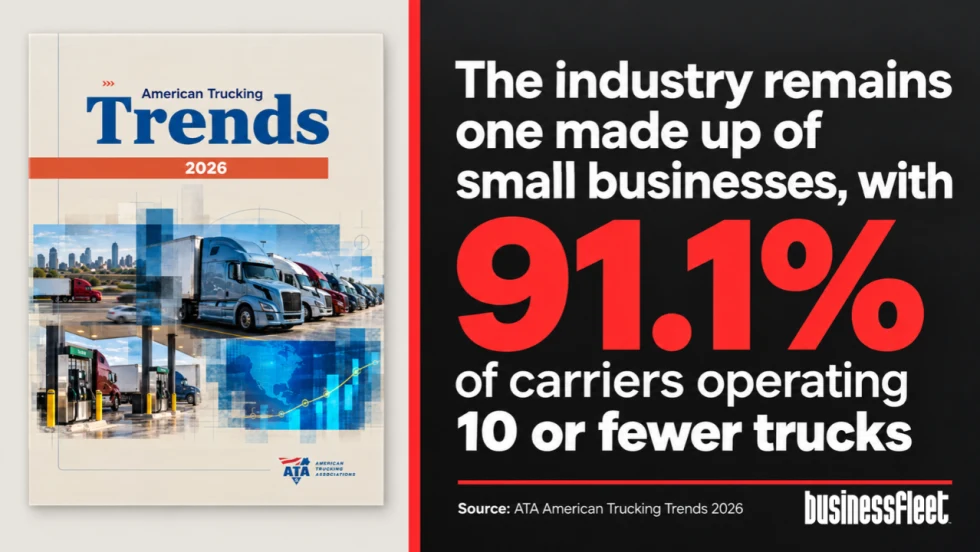
Small Carriers Make Up 91% of Trucking Industry as Freight Revenue Rises
The latest American Trucking Associations report shows modest gains in freight tonnage and revenue, with businesses operating 10 or fewer trucks accounting for most carriers.
Read More →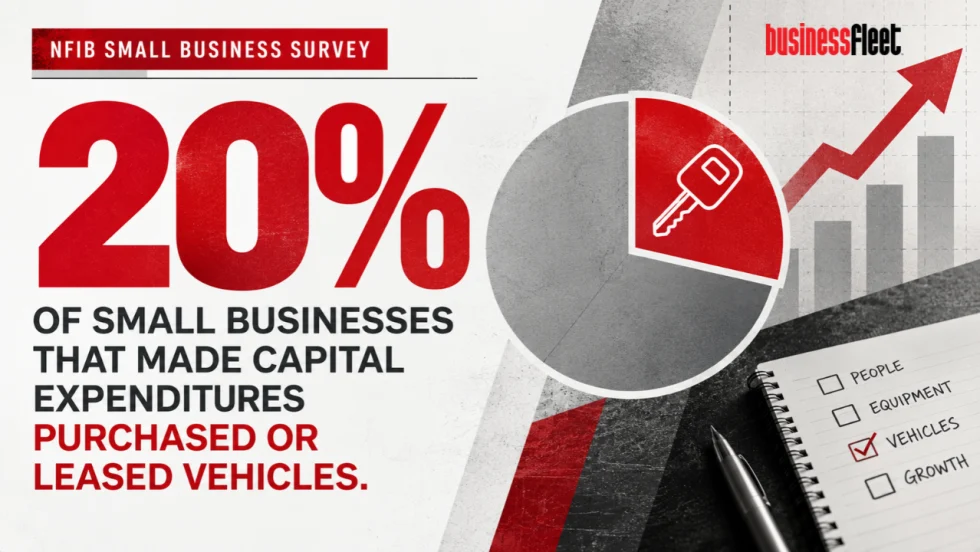
Small Business Vehicle Purchases Slip as Owners Pull Back on Expansion
New NFIB survey data shows fewer small businesses purchasing or leasing vehicles as inflation, hiring challenges, and borrowing costs weigh on expansion plans.
Read More →
Growing Fleets, Bigger Challenges | Business Fleet Brief
From growing pains and weather risks to workers' comp, new vehicles, and telematics gaps, this month's Business Fleet Brief covers what small fleets need to know.
Read More →
Your Business Grew, Did Your Fleet Management Program Grow With It?
Small fleets often grow faster than the processes supporting them. Here’s how to recognize when informal fleet management has stopped working and what to formalize first.
Read More →
Small Fleet Lessons That Can Make a Big Difference | Business Fleet Brief
From used-vehicle costs and lost keys to safety tech and replacement planning, this Business Fleet Brief breaks down practical lessons that can make a big difference for small fleets.
Read More →
Automotive Fleet Opens 2026 Personal Use Survey for Commercial Fleet Managers
Less than two weeks left! Commercial and corporate fleet managers are invited to share how their organizations handle company vehicle personal-use policies, charges, and driver eligibility.
Read More →
You Do Not Have to Be a Big Business to Build the Next Generation
Small businesses may not have the biggest budgets or the biggest fleets, but they do have something powerful. They are close to the communities they serve, and that makes them uniquely equipped to help shape the next generation of automotive and fleet talent.
Read More →
How Small Fleets Can Stop Losing Time to Lost Keys
Lost keys can mean delayed jobs, idle vehicles and unexpected replacement costs. See how small fleets are using digital key management to keep vehicles moving and improve accountability.
Read More →Subscribe to Our Newsletter