


More News: Fleet Telematics 2023: A Saturated Market?
How AI in Fleet Maintenance Decreases Downtime
Artificial intelligence in maintenance workflows can increase safety, reduce costs, and achieve new levels of efficiency. Here are three ways how, including how to power ChatGPT to manage fault code descriptions.
by Jessica Kim, Pitstop
October 12, 2023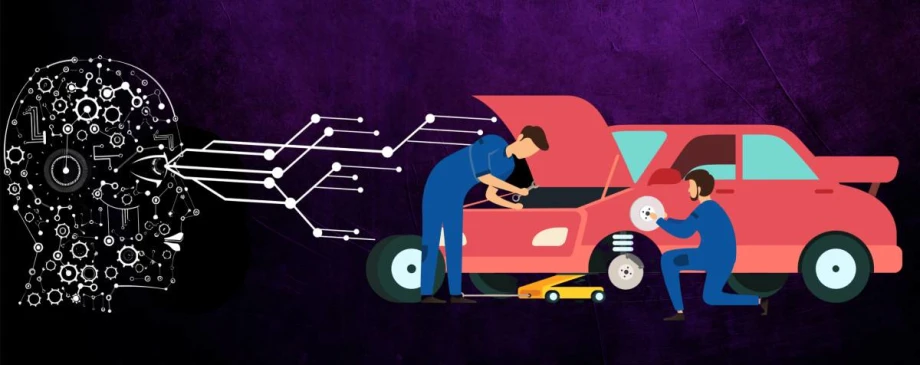
For a fleet of 300 vehicles, a fleet manager would take on average 37.5 hours to analyze or review each trip and alert the vehicles in one day — just for one day of trips. An AI-driven fleet maintenance solution can analyze that amount of information in six minutes.
Photo: Canva
5 min to read
For those of us within the fleet industry, we are at an exciting inflection point where fleet management is experiencing a profound transformation, and at the center of this evolution lies Artificial Intelligence (AI). As technology has continued to advance, it has made way for fleets to harness technology that was once never accessible to us.
No longer do fleets have to rely solely on manual processes led by intuition and heavy paper trails to oversee a fleet; today, AI is providing fleet managers with powerful tools to optimize their entire operations, and arguably the most impactful place to start with AI is within fleet maintenance. AI is emerging as a game-changer for fleet managers worldwide and now is the time to harness it.
Fleets that couple artificial intelligence with their maintenance workflow can lead to increased safety, reduced costs, and achieving unprecedented levels of efficiency. Here are the 3 core advantages of AI in fleet maintenance:
1. The Power of Data
Today, many fleets face the common and growing challenge of data overload. From the introduction of telematics and additional technology hardware such as dashcams, vehicle data has seen overwhelming growth. That’s why the core of AI's impact on fleet maintenance is its ability to digest the vast amounts of data generated by vehicles and operational processes. AI fleet software can collect, process, and analyze this data in real time, providing fleet managers with invaluable insights into their operations.
Whether monitoring vehicle health or analyzing digital work orders and scheduling, AI can transform raw data into actionable intelligence, enabling more informed and efficient decision-making.
Did you know across a fleet of 300 vehicles, there is an average of 7200 alerts received per day. Of course, that vast amount of data is far too large and intimidating to manually sift through, despite many knowing that there is significant value in harnessing vehicle data to avoid accidents, unplanned downtime or other general disruptions and expenses to the fleet operations. If a fleet manager were to review each individual alert to find the critical ones, it would take him or her on average 37.5 hours. AI-driven fleet maintenance solutions analyze that amount of data in 6 minutes, providing information that would have previously been overlooked due to the expansive amount.
2. ChatGPT for Fleets
For many, 2023 will be the year remembered for ChatGPT. The hype is real with the tool that can save writers, businesses, and individuals hours in a day by simply typing in a query or question into the search bar. ‘Rewrite this email to be more professional,’ ‘what are some tips to overcome XYZ?’ The various ways we can utilize ChatGPT are endless.
But now, fleet managers can specifically harness ChatGPT within predictive maintenance software like Pitstop. Once overwhelming and confusing, fault codes get simplified with easy-to-understand and act-upon definitions generated by ChatGPT. To achieve this, Pitstop’s data science team conducted an extensive testing and fine-tuning process that ChatGPT underwent before being seamlessly integrated to ensure accuracy and reliability. When a fleet’s internal database (from telematics, OEM, etc.) lacks a description for a specific fault code, ChatGPT steps in to provide the missing information and definition, enabling quicker and more informed decision-making.
With ChatGPT-Powered Fault Code Descriptions fleet managers, technicians and drivers gain access to comprehensive code descriptions, significantly improving their ability to diagnose and resolve vehicle issues promptly. Making remote diagnostic effortless and efficient, ensuring you stay ahead of the curve in optimizing your fleet’s performance.
3. Predictive Maintenance
One of the most significant advantages AI offers fleet managers is predictive maintenance. It’s like looking into an accurate, technology-driven crystal ball, where AI algorithms analyze vehicle data, such as engine performance, sensor readings, and historical maintenance records, to predict when components are likely to fail. In a recent study we did with over 200 fleet professionals, DPF failure was the number one cause of vehicle breakdowns. Imagine having the ability to predict when a derate would occur, weeks in advance? That is predictive maintenance.
This proactive approach makes static preventive maintenance outdated, where over-maintenance of healthy vehicles is common, leading to unnecessary expenses and downtime spent in the shop. Now, AI allows fleet managers to schedule maintenance and repairs before a breakdown occurs. When coupled with predictive insights, traditional PM schedules become dynamic, allowing the full use of current resources to a fleet’s most efficient level, reducing downtime, and minimizing maintenance costs.
Supercharging Rather Than Replacing Humans
In an argument against AI, many worry that it will replace their roles within the organization, so it is important to highlight that AI is only beneficial if there are users to harness it. That means it will never replace fleet managers but instead empower them.
By automating redundant tasks and pushing out actionable insights, AI frees up significant time for fleet managers to focus on more valuable “human” tasks such as team and customer engagement, strategic planning, and more. At a maintenance level, with descriptive and predictive alerts, AI gives technicians superpowers, saving 3+ hours of diagnostic time per event.
This directly puts time back in technicians’ hands to fix the problems rather than just find them. The idea is that AI should complement human expertise, boosting fleet managers as well as technicians to be their most effective.
Conclusion
As more data comes in through the advancement of technology, AI and predictive insights will grow only more powerful and mainstream. We are at the wave of change now, where AI systems will integrate increasingly with other emerging technologies, and it is no better time to utilize it.
Fleet managers who embrace AI will find themselves at the forefront of innovation, equipped with the tools to navigate the challenges and opportunities of the future. The road ahead is paved with data-driven insights, optimized operations, and a brighter, more sustainable future for fleet management.
Originally posted on Automotive Fleet
More Operations

Growing Fleets, Bigger Challenges | Business Fleet Brief
From growing pains and weather risks to workers' comp, new vehicles, and telematics gaps, this month's Business Fleet Brief covers what small fleets need to know.
Read More →
Your Business Grew, Did Your Fleet Management Program Grow With It?
Small fleets often grow faster than the processes supporting them. Here’s how to recognize when informal fleet management has stopped working and what to formalize first.
Read More →
Small Fleet Lessons That Can Make a Big Difference | Business Fleet Brief
From used-vehicle costs and lost keys to safety tech and replacement planning, this Business Fleet Brief breaks down practical lessons that can make a big difference for small fleets.
Read More →
Automotive Fleet Opens 2026 Personal Use Survey for Commercial Fleet Managers
Less than two weeks left! Commercial and corporate fleet managers are invited to share how their organizations handle company vehicle personal-use policies, charges, and driver eligibility.
Read More →
You Do Not Have to Be a Big Business to Build the Next Generation
Small businesses may not have the biggest budgets or the biggest fleets, but they do have something powerful. They are close to the communities they serve, and that makes them uniquely equipped to help shape the next generation of automotive and fleet talent.
Read More →
How Small Fleets Can Stop Losing Time to Lost Keys
Lost keys can mean delayed jobs, idle vehicles and unexpected replacement costs. See how small fleets are using digital key management to keep vehicles moving and improve accountability.
Read More →
How to Build Custom Fleet Tools With AI and Vibe Coding [Webinar]
A new Automotive Fleet webinar explores how fleet managers are using AI and vibe coding to automate routine work and create simple operational tools without traditional programming skills.
Read More →
You May Be a Fleet Manager (Even If No One Told You)
Managing vehicles may not be your full-time job, but the costs, risks, and responsibilities are still very real. Business Fleet In Motion is here to help small and growing businesses make smarter fleet decisions without needing a full fleet department.
Read More →
Fleet Management Without a Fleet Department?
No fleet department? The work still has to get done. Learn how to prioritize your most critical vehicles, catch problems before they become downtime, and build a simple routine that keeps your small fleet moving.
Read More →
Why the IRS Raised Its Mileage Rate in the Middle of 2026
Fuel-price volatility drove the rare increase to 76 cents per mile, the fifth midyear adjustment since 2000.
Read More →Subscribe to Our Newsletter