


A How Not-To Guide: Missing Out on EV Fleet Funding and Getting the Infrastructure Wrong
How Increased CAFE Standards Will Affect Fleets
The year 2026 will mark a turning point with multiple regulations converging to push for greater fuel economy in cars and trucks.
by Tim Cengel, Union Leasing
August 3, 2023
Several new regulations are coming to fruition that will impact automakers.
Photo: Automotive Fleet
4 min to read
You may have noticed that electric vehicle adoption is often debated and sometimes heated. Regardless of the debate, we’ve likely gone too far to turn back now.
With the regulatory pressures ramping up over the coming years, the automakers will have no choice but to continue massive investments and transition to more EV models in the future.
Especially when it comes to cars and trucks. In 2026 you will see the impact of several regulations coming together to put immense pressure on the automakers to increase fuel economy across their fleet.
CAFE and ZEV Standards: A Shift in Auto Industry
First, NHTSA sets the Corporate Average Fuel Economy (CAFE) standards. The rule announced on April 1 states that the industry fuel economy of 49mpg will be in place for passenger cars and light trucks in the model year 2026.
A recently proposed rule from NHTSA adds that car manufacturers would be required to achieve a 2% per year increase in fuel efficiency for the 2027-2032 model years, while light trucks would need a 4% per year improvement during the same period.
This represents a substantial increase over today’s average of around 30 mpg. A recent article in the Detroit News stated General Motors and Stellantis had paid over $300 million in fines to NHTSA last year, so there are big implications to missing the mark on CAFE.
In addition to CAFE, the California Air Resource Board (CARB) drives the zero-emission vehicle (ZEV) standards.
Last year, the Biden Administration reinstated CARB’s waiver to allow states to set their standards, which are more strict than Federal Standards.
In 2026, 35% of vehicles sold will be required to emit zero emissions. By 2035 that ramps up to 100%.
Currently, EV sales are higher in California than in the rest of the country. In 2022, nearly 16% of new vehicle sales in California were EVs, substantially higher than around 5% for the rest of the country.
There will be an enormous impact if states that have not adopted the California ZEV program agree to follow the same 35% standard.
The Next Few Years Will Shape the EV Industry
It’s been reported that Tesla sold $1.78 billion in carbon credits to automakers in 2022 helping it offset its failure to meet carbon emissions.
So, 2026 is a big year with CARB and CAFE putting immense pressure on automakers to reconfigure their fleet to meet the new requirements.
This is already happening with some OEMs that have changed the fleet mix this past year.
Fleets can expect the following changes in the next few years:
Those OEMs that build high mpg trucks and vans will continue to change their mix across the fleet to avoid being penalized. It’s been reported that Tesla sold $1.78 Billion in carbon credits to automakers in 2022 helping them offset their failure to meet carbon emissions. This means the fines they faced from CARB were even higher.
A larger quantity and variety of EV models will be introduced to meet the 35% ZEV standard starting in 2026.
A reduction in the number of internal combustion models coming to market as powertrain investments are focused on EV models.
Less allocation for V8 engines in light-duty pickups and vans. We hear that the Big Three are limiting the number of V8 engines allocated to dealers and customers.
Dealers will not stock higher mpg vehicles, especially in ZEV states. A recent Stellantis report, it will not stock gas Wranglers in ZEV states.
As we move toward 2026, you may have to purchase or deliver those high mpg vehicles outside of ZEV states. I have recently had to divert certain orders or the OEM would cancel them.
We already see reduced incentives or higher prices on high mpg models and expect that to continue. This could become a strategy to discourage their use.
Karl Brauer, executive analyst at iseecars.com, added, “We’re already seeing a shift in vehicle availability, with non-hybrid Jeep Wranglers and Grand Cherokees not being sent to California and 13 other states with California emissions standards. We’ll see more of this distribution pattern in the coming years, with ZEVs slowly gaining distribution and availability prominence over internal combustion vehicles.”
The situation may reverse if consumers fail to adopt these vehicles, leading to automakers facing a growing inventory of unsold ZEVs.
“A change in the political climate could also reverse course, as we’ve seen recently. But unless and until market or political forces change the EV transition it will be increasingly difficult to purchase traditional gasoline-powered vehicles with V8 or V6 engines,” Brauer said.
Originally posted on Automotive Fleet
More Green Fleet

Fleet Forward Conference Introduces One-Day Passes for 2026
New one-day registration gives fleet professionals the flexibility to attend Tuesday, Wednesday, or Thursday, with passes available for $199 through Sept. 18.
Read More →
Teletrac Navman Adds Mixed-Energy Tracking to TN360
Energy Hub combines fuel card data, EV charging activity, reimbursements, and vehicle energy use in one dashboard for fleets operating gasoline, hybrid, and electric vehicles.
Read More →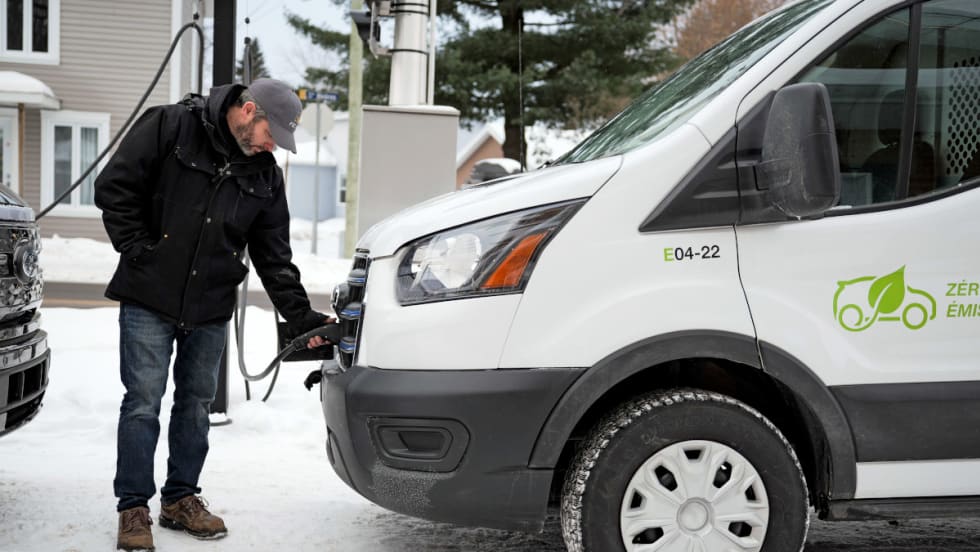
Ford Pro e-Telematics Helps Fleet Track E-Transit Efficiency
Canadian electrical contractor Fize Electrique shares how it uses Ford Pro e-Telematics to drive and track efficiency in the battery-electric Fords in its fleet, mostly comprised of E-Transit vans, even in the brutal cold of winter.
Read More →
How to Maximize Benefits of PHEVs In Fleets
Plug-in hybrid vehicles can reduce fleets’ carbon emissions as well as range anxiety. This analysis shows the positive impacts of proper PHEV use, and the negative environmental and financial consequences if your drivers aren’t plugging them in.
Read More →
How To Reimburse Electric Vehicle Drivers for Charging at Home
Calculating reimbursement for at-home EV charging requires lots of precision, but several options are available ease the process for fleets.
Read More →
Buying vs. Leasing Electric Vehicles: Pros & Cons
As your fleet plans out its electrification roadmap, consider whether buying or leasing EVs make sense for your needs. Here’s what to consider.
Read More →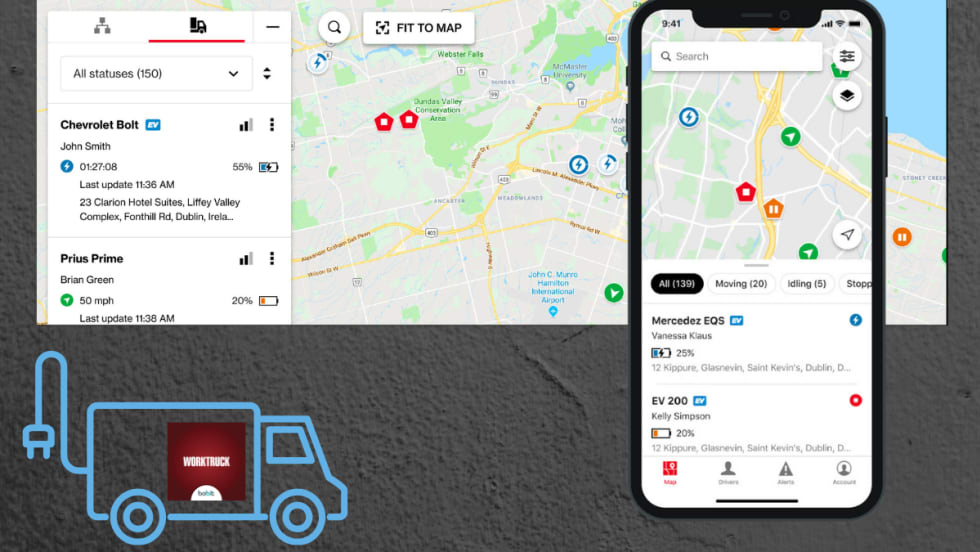
Verizon Connect Adds New EV Features to Reveal
Beginning next month, Verizon Connect Reveal customers in the U.S. and Canada will be able to more effectively support various vehicle types – both gasoline-powered and EVs – in one pane of glass.
Read More →
Jeep Reveals Plan for SUV Electrification
With an eye on becoming a zero-emission SUV leader, Jeep unveils its plans for four new all-electric SUVs in North America and Europe by 2025.
Read More →
Canoo Vehicles Added to Fleet Forward Tour Dallas
Attendees will be able to ride along in the electric Canoo Lifestyle Vehicle (LV) and the Canoo Lifestyle Delivery Vehicle (LDV), along with electric passenger cars, trucks, and vans from eight other automakers.
Read More →
What to Know Before You Choose an Alt-Fuel Vehicle
What are the pros, cons, and costs of the primary alternative-fuel options for your fleet?
Read More →Subscribe to Our Newsletter