


Lease, Purchase, or Reimburse?
When making the decision, look at the details--and your company's needs and preferences.
While leasing generally offers savings and convenience, it may not fit every situation.
Photo: Work Truck
Editor's Note: This article was originally published several years ago and is maintained for archival purposes. While the decision to lease, purchase, or reimburse employees for business vehicle use remains relevant, the financial examples, vehicle costs, financing arrangements, and industry practices discussed reflect the time of publication. Lease accounting standards, tax considerations, insurance requirements, and employer liability associated with employee-owned vehicles have also evolved. Readers should consult current fleet management resources and qualified financial, tax, and insurance professionals before making vehicle acquisition or reimbursement decisions.
Whether to lease or own company vehicles, or reimburse employees for driving their own cars and trucks, hinges on myriad details, many of which differ according to companies' needs and preferences.
While leasing generally offers savings and convenience, it may not fit every situation. And while fleet ownership may offer control and flexibility, there are times it can make more sense to pay employees a vehicle allowance to drive their own.
The Benefits of Leasing Company Vehicles
Leasing can offer commercial businesses no down payments, preservation of cash, lower monthly payments, more easily acquired new vehicles, newer cars at less cost as well as the convenience of one-stop shopping for related needs, such as insurance, maintenance and financing.
Among the most persuasive arguments for leasing, according to Bob Zeller, vice president sales of the auto division at AMI Leasing in Worcester, Mass., "is that there is no major capital expenditure by the company. Every time they need a company vehicle, they don't have to lay out $20,000. There is no use of the company credit lines."
Such "off-balance sheet financing" treats leases as operating expenses rather than as depreciating loans, and in some case may have tax advantages. "It doesn't have any negative effect on their overall financial picture," Zeller said.
There are also administrative advantages. Fleet operators do not need separate purchasing or selling organizations or to rely on a dealer.
"We do that on their behalf," said Zeller, whose firm manages and leases 30,000 vehicles, ranging from compact cars to tractor-trailer trucks. "The typical fleet we deal with usually has 50 drivers scattered throughout the United States...We can centrally order that vehicle and get it to a delivering dealer near the driver's home.
"In the case of a purchase, you'd probably have to negotiate with each individual dealer where you are going to purchase," said Zeller. Leasing firms offer other economies of scale, just as do dealers. "Certainly (customers) can take advantage of our buying power since I buy thousands and thousands of cars in a given year, and I pass along my savings to the user," Zeller said. "The difference is anywhere between $1,000 to $2,000" per vehicle.
Drawing on the expertise of a leasing firm not only frees fleet operators from negotiation and management, but it often provides savings through consulting services.
"As a lease provider, we do a significant amount of consulting work on providing the proper vehicles to lease," Zeller said. "When to recycle, and time and mileage are very important. And we also provide other services over and above a lease such as maintenance, insurance, and fuel."
Leasing agencies, like dealers, also can provide or arrange for "gap" insurance to cover the difference between theft insurance and a vehicle's residual value.
"These are all things convenient to a fleet manager to oversee the vehicles and much more cost effective than them doing it on their own," Zeller said.
Leasing agencies often can also more quickly arrange for replacement vehicles in the case of theft or accident, as well as draw on the advantage of volume transactions to get leases 15 percent or 30 percent less than if a fleet operator were to negotiate his own.
When Owning Fleet Vehicles Makes More Sense
One downside to leasing is that for tax purposes some companies need a write-off from depreciation of a purchase. Leases typically are reflected as operating expenses.
There are other factors that can favor ownership over leasing, as Kevin Jamieson, owner of Royal Maid service in Palm Harbor, Fla., discovered with his fleet of 19 Escorts and Cavaliers.
"We looked at leasing and...have leased in the past and found that generally speaking employees don't look after company cars, even more so when they are being leased," Jamieson said.
Wear and tear on vehicles, coupled with extra mileage beyond the amount covered in the lease, adds on costs at the end of a lease's term. One option is to increase the monthly payments to absorb the extra costs, but that offsets the advantage of lower payments.
"At the end of three years you (must pay) two grand or $3,000 to give the car back," Jamieson said.
Instead, Jamieson has opted to purchase his fleet, and keep the cars six to seven years while financing the purchases over four or five years.
"We always put $2,000 down and buy for 48 or 60 months for about $240" a month, he said. "It's a longer-term payment, but if I'm leasing, I never stop paying for them anyway. If I'm buying, I find that I'm getting two years' (use) with no payments."
The extra mileage and additional years of use for each car tend to require more maintenance, but still Jamieson has found that "the most I've ever paid (in maintenance and repairs) on one car was $3,600 over the lifetime of the car; $600 or $700 is more typical."
Considering the year or two of use with no payments, and the amount that can be due at the end of a lease, Jamieson said owning "for me is a no-brainer. I run a profitable business and it works for me."
"Most of my employees find they are driving a nice car with air conditioning, a radio and cassette player. None of my vehicles are older than '99, so they are driving a modern car. Most have electric windows, so they are happy," he said.
"Most of my employees who drive, because that car is allocated to them and the company is paying for it, they are more likely to take pride of ownership, rather than with a leased vehicle that they are going to turn in after three years. It doesn't always work, of course, but it's certainly a factor."
Jamieson spends about $800 annually per car to insure his vehicles. "I don't know if insurance is different with ownership or leasing, although they specify the insurance coverage you need" when leasing.
"I look after the maintenance so I know the cars will be available every day," Jamieson said. "I'm fortunate in that I sit right next door to a firestone garage where I get a discount."
"It's been more than five years since we leased," Jamieson said. "We started up leasing. It seemed the obvious choice, but I found otherwise."
Royal Maid Service also has 12 affiliated, individually owned companies with eight to 12 vehicles each that have contract agreements to use the company's name. "It's up to them to lease or purchase, but they choose to buy," Jamieson said.
Similarly, Ilex Construction and Development, a high-end custom home builder in Baltimore, Md., owns 32 vehicles, according to Vice President Taylor S. Classen.
"We reviewed leasing, but because of the number of miles we put on our vehicles it was just not prudent," he said, "based on what the residual value would be."
Ilex's pickup trucks and vans are spread between two offices 60 miles apart, and each logs between 30,000 to 35,000 miles a year while experiencing a fair amount of wear and tear from hauling equipment and supplies to construction sites.
"The biggest factor is the number of miles we put on," Classen said. "Men are driving day in and day out. Some of our job sites might be 100 miles from our peoples' houses. Mileage is the key."
"Three different leasing companies ran numbers for me and the lease (payment) was very close to the (purchase) payment based on the fact that the interest was very, very low," Classen said.
"When the interest (on purchases) went to zero percent I bought six more vehicles. It could make more sense (to lease) if we didn't put this many miles on, and if we get to a point that the free interest goes back up," Classen conceded.
What would it take for Classen to consider leasing? "If we had vehicles that were only driven 12,000 miles and I knew they would be very well-maintained."
But Classen might consider leasing when it is time to replace the company-owned Ford Explorer he drives because he logs far fewer miles than do Ilex's men in the field.
When Employee Vehicle Reimbursement Is an Option
The third option, reimbursing employees who use their own vehicles, has little appeal for Royal Maid Service but does in certain circumstances for Ilex Construction.
Reimbursement provides companies with "minimum outlay and they have no tie to the asset in the event that they should terminate an employee or an employee leaves. They don't have to be concerned of what to do with the asset after he leaves," Ilex's Classen noted.
Classen has found, however, that for Ilex project managers who work out of the office and do not log as many miles as other employees, it is more reasonable to pay a car allowance than to lease.
"Insurance is very expensive and that was one of the deciding factors of moving to the car allowance," he said. "You also have the liability issue if somebody has an accident in a company vehicle as opposed to a personal vehicle."
When the company provided project manager's vehicles, "I was left with a vehicle poorly maintained, in very bad shape and not used for the intended use," Classen said. "So now I use a car allowance for my project managers."
Classen would like to move more in the direction of car allowances and away from ownership because it reduces the company's insurance liability and shifts responsibility for maintenance and insurance to employees.
"Somebody has to set up the maintenance of the vehicle. One person has to pick up the person who takes the car to the dealer," Classen said.
Employees had "no problem whatsoever" with the switch to owning their vehicles because "the allowance was very fair," Classen said, while declining to give a specific figure. "In addition, I helped out with a down payment."
How Company Vehicles Support Business Branding
Whether owned, leased or reimbursed, fleet vehicles can double as advertising venues.
"A lot of maid services let their (employees) use their own vehicles. They don't want the hassle of maintaining a fleet," Royal Maid Service's Jamieson said. "But beat up old cars don't do the image of the company any good dripping oil on peoples' driveways. I don't know how you would factor in that cost. It's an advertising cost or a lost opportunity cost."
All Royal Maid Service vehicles are marked with the company logo. Consequently, "We get at least 30 percent of our business from our mark on the vehicles," Jamieson said. "We drive into a subdivision and we get two or three calls."
Originally posted on Work Truck Online
More Leasing & Buying
Matthew Cole Takes President Role at Wheels
Wheels’ new president brings a background spanning Ford, Johnson Controls, Visteon, and Aptiv as the fleet management company focuses on growth and client relationships.

Mike Albert Names First Non-Family CEO in Company History
Mike Albert Fleet Solutions names Marty Kuhn CEO as the company expands its data-driven approach to fleet management and consulting.

Union Leasing Transitions to Moventum Fleet Management Brand
Union Leasing rebrands as Moventum Fleet Management as the company expands its focus on fleet lifecycle and operations.

Buying vs. Leasing Electric Vehicles: Pros & Cons
As your fleet plans out its electrification roadmap, consider whether buying or leasing EVs make sense for your needs. Here’s what to consider.

Athene is Lead Investor in the Combination of LeasePlan USA with Wheels Donlen
Wheels Donlen’s parent company has signed a Stock Purchase Agreement to acquire LeasePlan USA, and subsequently combine the business with Wheels Donlen to create a unified fleet management business.

IFS Serves an Array of Global Customers and OEMs
Founded to meet the needs of international organizations for high-quality cars and trucks, International Fleet Sales offers comprehensive services from vehicle specifications to warranty administration.

ALD Automotive and LeasePlan In Merger Talks
Two of the world’s largest leasing companies are considering combining forces to create a global mobility leader.
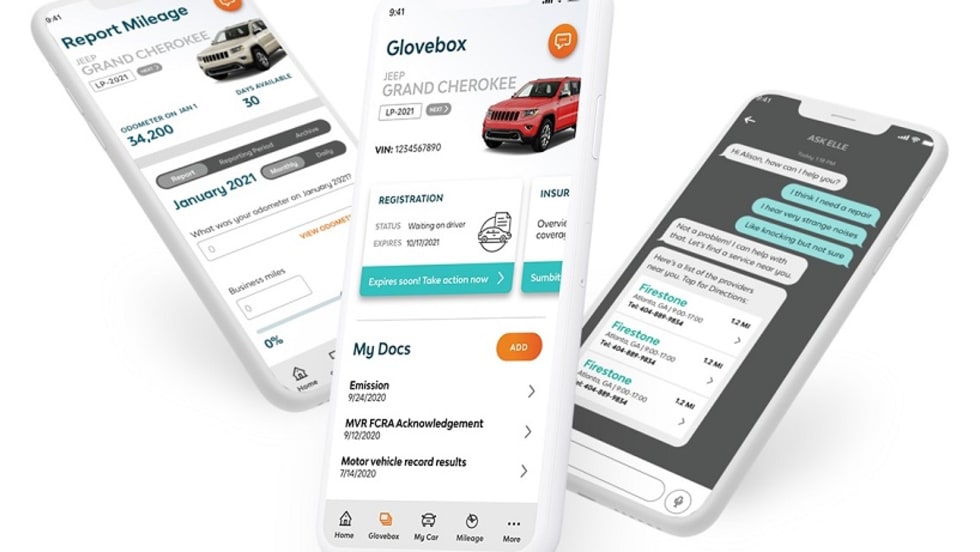
LeasePlan Updates its Driver Mobile App
The app features a completely redesigned user interface built on a new, more flexible platform, and is designed to empower drivers to be more productive, freeing up time spent managing tasks and vehicle-related deadlines.
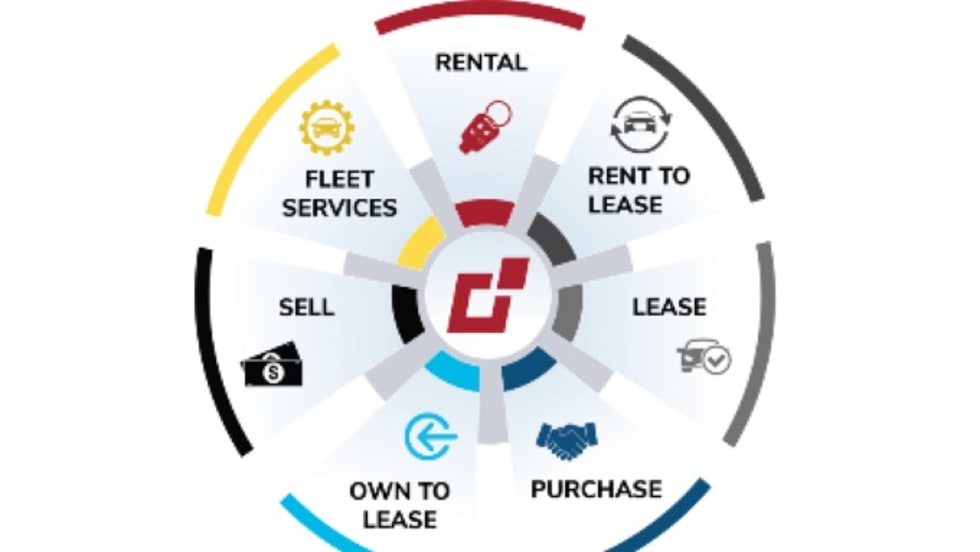
Merchants Fleet Expands Last-Mile Fleet Program
Merchants Fleet and OneRail are launching a national fleet rental and leasing program for its logistics partners, which will enable business growth for the logistics partners through reduced vehicle costs.

How to Stay out of Trouble When Your Closed-End Lease Ends
A closed-end lease works great for small fleets that don’t want the financial worry of the vehicle at resale. For lessees, success entails proper management of vehicle condition and mileage, as well as communicating with the lessor should driving patterns change.