


Unlock the Full Potential of Telematics: Modern Uses Beyond Tracking
Making Your Telematics Investment Pay Off
Vehicle tracking and driver monitoring systems can help you run a more efficient and economical fleet.
by Phillip J. Britt
July 1, 2002
Though there were initially some comments about "Big Brother is watching," taking this approach has led to acceptance of the technology.
Photo: Work Truck
7 min to read
Burden Brothers, a mechanical contracting company based in Dallas, Texas, wanted to control expenses and manage the performance of its 15-vehicle fleet to maximize its return on investment.
"Late starts, long lunches, and early finishes used to eat up a lot of time and made job costing more difficult than necessary," said Wesley Baker, Burden Brothers president.
So Burden Brothers bought the Vehicle Management Information System (VMI) from Richardson, Texas-based Minorplanet Systems USA. VMI's data collection unit stays on the vehicle and relays vital information to a base station at the customer's workplace. By using a global positioning system (GPS) with minute-by-minute tracking, VMI can monitor a vehicle's speed, stops and starts (excessive driver breaks), and adherence to a predetermined route (unauthorized vehicle usage). The system can also tell how long a vehicle has been idling, increasing fuel costs and vehicle wear and tear. These features, and many more, are captured on easy-to-read reports generated daily.
VMI improved the company's job costing accuracy by tracking the fleet's vehicles. With this accuracy, Burden Brothers expects to realize more than $130,000 in annual fleet savings, according to Baker.
"We had been looking at different asset tracking/fleet monitoring systems for better than a year," Baker said. "This had certain features, like minute-by-minute tracking, that the others didn't have."
Baker wanted minute-by-minute tracking to tell where his fleet operators were at any given time to ensure they were where they needed to be. When unmonitored, it's too tempting for an employee not to show up at a job site on time, take off early, or take excessive break time, Baker said.
Beyond ensuring productivity from personnel, asset tracking technology also enables the company to monitor the use of the vehicles to control costs of fuel, maintenance, and insurance.
"The insurance exposure would be immeasurable if a company vehicle was involved in an accident somewhere it wasn't supposed to be," Baker said.
"Improving productivity is one of the best ways to compete," Baker added. "We have shaved half an hour of unproductive time daily from each one of our trucks."
The additional productivity led to additional revenue of $21 per truck per day, projected to be $52,500 over a calendar year.
Multiple Value that Exceeds Cost
The Burden Brothers case is just one example of how an increasing number of business fleets use asset tracking technology to maximize performance.
"The advancements in technology and decrease in cost has made it possible for small fleets to realize multiple values from these technologies that exceed their cost," said Kirk Pouttu, Minorplanet Systems marketing director.
Fleets are also using asset tracking technology to:
Ensure driver and vehicle safety by tracking vehicle location and use as desired.
Reduce unnecessary labor expenditures by optimizing routes.
The technology has evolved from where it was just a few years ago as the wireless infrastructure and applications have improved and the cost for wireless communication dropped sharply. The price of the asset hardware and software, following the trend of many other technologies, has also reached the point where an increasing number of small fleet operators can use it.
Tight Budget? No Problem
Some of the technology is still expensive, but there are ways for even those on a tight budget to use asset tracking.
For example, the Tulsa, Okla., transit system recently started using a handful of automated counting systems to gauge passenger use throughout the system. The transportation company has only five units, which cost $100,000, for all of its routes. However, by rotating the units between all 80 of its vehicles, the transit authority expects to be able to map passenger usage throughout the entire system, according to William Cartwright, chief financial officer and assistant general manager.
"Rotating units is one way that smaller fleets can use these systems," said Cartwright, who first saw the units in use with the St. Louis municipal transit system.
The units record where and when passengers get on and off the monitored buses. This will enable Tulsa Transit to deploy its fleet more efficiently, adding buses to routes that need them and reducing buses on under-utilized routes.
"With the old fare box system, we could only tell that passengers got on and off, not where and when they got on and off," Cartwright said.
Tulsa Transit takes information from the mobile systems on a daily basis. The systems also offer a real-time tracking option, via a wireless local area network for companies that want the same information immediately rather than at the end of the day. There are other benefits as well, Cartwright added.
Fleet owners cited better customer service as one of the top benefits of asset tracking technology. Now, more than ever before, customers want to know they are getting full service for their investments.
Therefore, companies like Multimedia Advertising of Woodbridge, Ontario, which had previously used cell phones to track drivers of its nine mobile billboard units, can now provide customers with better proof of service. Customers could call the drivers to ensure they were where they were supposed to be, but that put the onus on the customer to do the monitoring.
Tool for Managing Driver Performance
"It does three things for us," Mike Gillessie, Motomedia vice president of sales operations, said of the asset tracking system from Mobile Knowledge, Toronto. "It provides proof of performance; it maps out where our vehicles are in 15-minute increments so that we know that drivers have been on their assigned routes. It's a tool for managing drivers' performances. Drivers know they are being tracked by us." There have been no problems with the drivers since the units were installed, though there were only a few beforehand, Gillessie said.
"It's also a sales tool," Gillessie added. "It gives our customers confidence that they know what they are getting. Particularly after September 11, customers want a comfort level with how they spend their money."
Providing this type of proof of performance gives Motomedia a leg up on its competition when prospecting and signing clients, Gillessie said.
Knowing the Exact Location
Glenn Weddel, general manager for Cam-Scott Transport Ltd., agrees. Cam-Scott provides refrigerated trucks, trailers, and drivers for food transportation in the Toronto area. The company's largest client, Maple Leaf Foods, randomly checks asset tracking reports from the AirIQ units to ensure that it gets an hour's work for an hour's pay.
Using these units is more reliable than arming drivers with cell phones, Weddel added, because knowledge of the exact location means better customer service. Half the company's nearly 200 vehicles are dedicated to particular clients, like Maple Leaf Foods, while the other half runs a variety of routes throughout Ontario.
Despite the best efforts of the company, drivers are occasionally late. But it's much better to be proactive, calling a customer ahead of time to let him know that a shipment will be late, then waiting for a customer to call to inquire where his shipment is, Weddel said.
Even though the drivers still have cell phones, they may underestimate how long it will take them to reach their destination. By knowing the driver's exact location, the dispatcher can call the customer with a good estimate of how late a driver might be, rather than the driver saying he'll be an hour late and then showing up two hours late, further angering the customer.
There are also plenty of newer asset tracking technologies on the market, but most of them don't have any proof of history as to their performance or return on investment.
Technology is only a tool, rather than a solution in and of itself, according to Dierks and Guy Annable, director of business development for Mobile Knowledge reseller BAKA Traak-It. That's why Mobile Knowledge, for example provides a product that resellers can customize for different business customers' needs.
Big Brother?
Baker adds that a company adding asset tracking technology needs to tread carefully when introducing it to employees. A competing company recently installed a similar product and has had nothing but problems, according to Baker. Many of these problems stemmed from failure to discuss the technology with employees.
Baker discussed the technology with the employees before installing it and didn't check the units for 30 days after they had been installed to instill trust that the asset tracking wasn't just a way to keep an eye on employees.
Though there were initially some comments about "Big Brother is watching," taking this approach has led to acceptance of the technology.
"Our most productive technicians appreciate the fact the system helps ensure that everyone is pulling their weight," Baker said. "It's a boost for morale. Our employees are more attentive and responsive since we have put the system in, and our customers are receiving incrementally better service as a result."
Weddel agrees that employees should be told about the technology but suggests that fleet owners look for devices without exterior antennae, which serve as constant reminders of the monitoring. Drivers will try to get around the tracking if they can. Self-contained units that don't have any external components are less likely to tempt the driver to beat the system.
Originally posted on Work Truck Online
More Operations

Small Fleet Lessons That Can Make a Big Difference | Business Fleet Brief
From used-vehicle costs and lost keys to safety tech and replacement planning, this Business Fleet Brief breaks down practical lessons that can make a big difference for small fleets.
Read More →
Automotive Fleet Opens 2026 Personal Use Survey for Commercial Fleet Managers
Less than two weeks left! Commercial and corporate fleet managers are invited to share how their organizations handle company vehicle personal-use policies, charges, and driver eligibility.
Read More →
You Do Not Have to Be a Big Business to Build the Next Generation
Small businesses may not have the biggest budgets or the biggest fleets, but they do have something powerful. They are close to the communities they serve, and that makes them uniquely equipped to help shape the next generation of automotive and fleet talent.
Read More →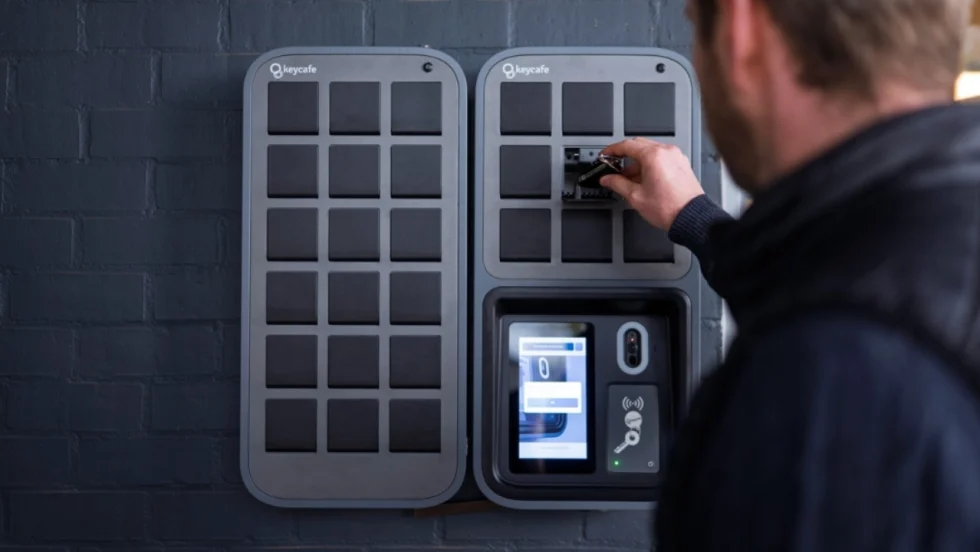
How Small Fleets Can Stop Losing Time to Lost Keys
Lost keys can mean delayed jobs, idle vehicles and unexpected replacement costs. See how small fleets are using digital key management to keep vehicles moving and improve accountability.
Read More →
How to Build Custom Fleet Tools With AI and Vibe Coding [Webinar]
A new Automotive Fleet webinar explores how fleet managers are using AI and vibe coding to automate routine work and create simple operational tools without traditional programming skills.
Read More →
You May Be a Fleet Manager (Even If No One Told You)
Managing vehicles may not be your full-time job, but the costs, risks, and responsibilities are still very real. Business Fleet In Motion is here to help small and growing businesses make smarter fleet decisions without needing a full fleet department.
Read More →
Fleet Management Without a Fleet Department?
No fleet department? The work still has to get done. Learn how to prioritize your most critical vehicles, catch problems before they become downtime, and build a simple routine that keeps your small fleet moving.
Read More →
Why the IRS Raised Its Mileage Rate in the Middle of 2026
Fuel-price volatility drove the rare increase to 76 cents per mile, the fifth midyear adjustment since 2000.
Read More →
What Fleet Legends Wish Every Small Fleet Manager Knew
Twelve fleet leaders share the lessons they learned the hard way on leadership, communication, relationships, and building a stronger fleet.
Read More →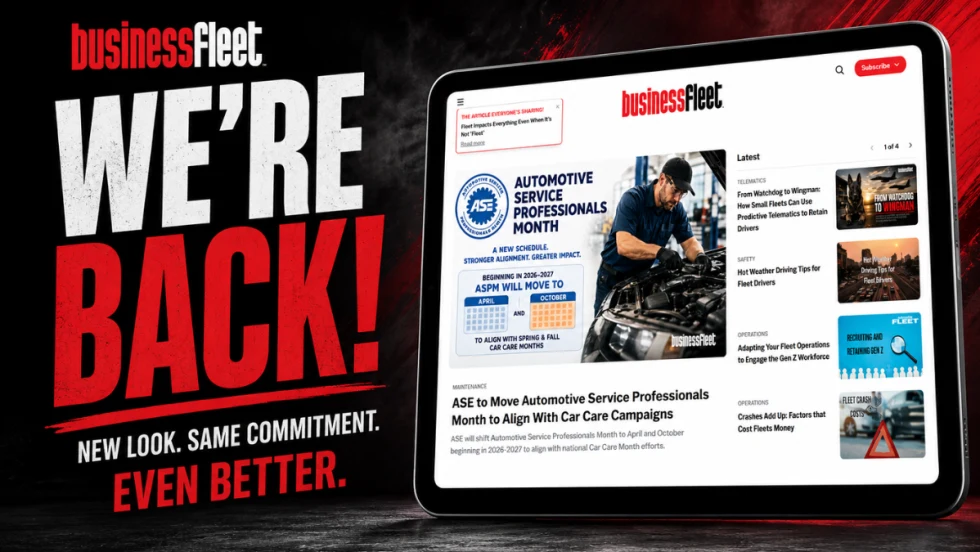
We're Back! Business Fleet Returns With a Fresh New Look
Check out our redesigned website with a faster experience and a renewed commitment to serving small fleet professionals.
Read More →Subscribe to Our Newsletter