


Paving the Way for Sustainable Fleet Management
Why embracing uncertainty and a willingness to learn are key when transitioning your fleet to EVs.

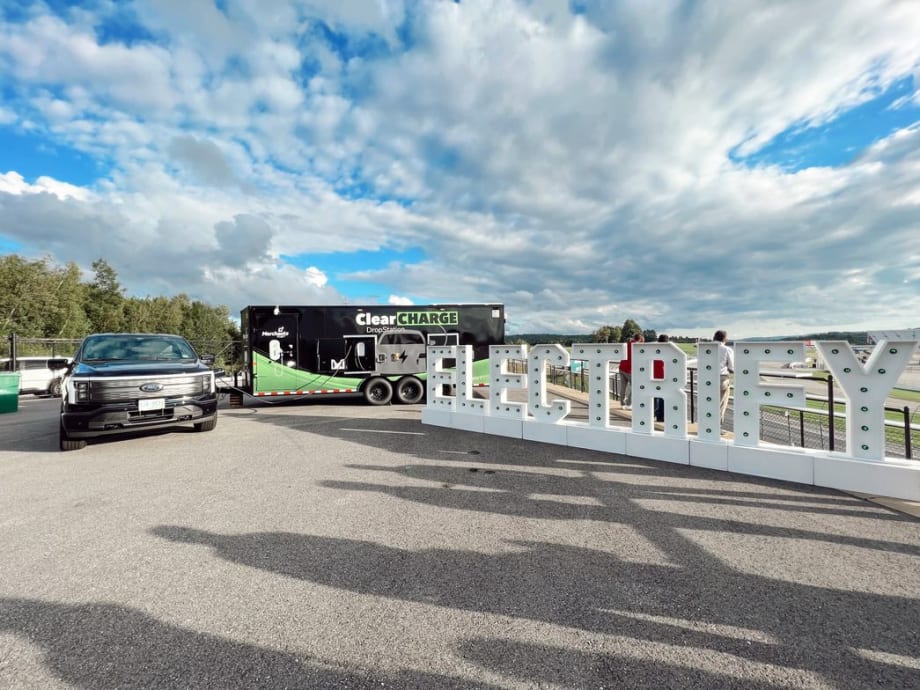
ClearCharge, a new mobile EV charging solution, uses Pioneer e-Mobility's e-Boost product. The charging station, which contains chargers of varying levels, is powered in part by renewable propane.
Photo: Automotive Fleet

Sustainability can be achieved in many forms — whether it’s through taking steps to reduce waste in your fleet garage, or in curbing emissions through transitioning to electric vehicles.
Photo: Canva/Automotive Fleet
In the rapidly evolving landscape of fleet management, sustainability is often front and center of the operation’s vision.
Sustainability can be achieved in many forms — whether it’s through taking steps to reduce waste in your fleet garage, or in curbing emissions through transitioning to electric vehicles. While the latter may have many steps, it’s a process that’s becoming easier as the industry leans toward a more widespread adoption of EVs.
Hari Nayar, Vice President of Electrification and Sustainability at Merchants Fleet, calls the transition to EVs “actually very easy — with proper planning.”
Getting From Point A to Point B in Electrification
While many would say the infrastructure planning is perhaps the most difficult part of the transition process, Nayar argues the entire process can be complicated without the proper planning.
“If you have not planned to get electric vehicles, let's say, in calendar year 2023, and you're making that spot decision today, you're not going to get your vehicles. That's just a function of the supply chain and overall production numbers for EVs. On the same token, if you have made decisions to get EVs and your EVs are on your way in 2023, but you did not make decisions on infrastructure, then you're not going to get infrastructure in 2023,” Nayar said.
When Merchants Fleet’s team is helping its clients with vehicle procurement, they look at an operation’s existing fleet, the types of vehicles in the fleet, its geography for its fleet operations, and economics. Then, the team builds a plan to help transition a portion of the existing fleet to EVs in those areas where EVs are viable.
This same process can be applied to your EV transition. Start where the switch to electric makes sense.
Sustainability Takes Time
Change can’t always happen overnight. When fleets don’t have the option to install permanent charging infrastructure, or if they are waiting on that infrastructure to be delivered, they often must resort to alternative charging strategies of which temporary infrastructure is becoming a viable option.
These temporary — or in some cases — portable chargers can be powered sustainably. The ClearCharge DropStation, which was on display at the 2023 Merchants Fleet Summit, is one such system.
It can be deployed practically anywhere, does not need a grid hook-up, and can run on a blend of renewable propane if such fuel is available in the deployed region.
When you use renewable propane, your carbon intensity is so low that the entire system produces clean electricity — in most cases — even better than the utility grid.
Small steps to curb emissions can still make a big impact. The transportation sector is the largest source of greenhouse gas emissions in the U.S., accounting for 29% of total U.S. emissions in 2021, according to the latest data from the Environmental Protection Agency. Around one in five vehicles on the road belongs to a fleet.
“There is tremendous opportunity for us to have a positive impact on the environment by transitioning fleets, which also oftentimes have some of the heavier emitters, to vehicles with low or zero emissions,” said Ted Lague, director of Environmental, Social, and Governance (ESG) for Merchants Fleet.
Advice on Adjusting to Change
Accepting and adjusting to change can be rocky for some, whether it’s because of a lack of funds, adapting to the new technology, or a lack of belief in the need for it. When people are skeptical of the technology, Lague recommends fleet managers and stakeholders be open to hearing from them.
“I welcome it. Rather than being resistant, listen to what they’re saying, lean in, and have a conversation. The more we can have conversations on both sides of the house, the greater we're going to understand each other's opinions and progress successfully,” Lague said.
Still, he understands the resistance can sometimes revolve around up-front costs and profitability.
“These aren't just things that are nice to do. They're driving business results,” Lague added. “If you're doing it for the sake of no other reason to make a profit, go ahead, do it. But realize that there's going to be a positive impact on the environment and people as well.”
Nayar compares adopting EVs to the learning curve many people had when moving away from cell phones with a dial pad to cell phones with a touchscreen. The difference, though, is that the choice of which type of cell phone you’d like is personal. Whereas fleet operations are more of an organizational level decision.
His advice? Learn as much as you can and then get the process rolling, even though there will be bumps in the road.
“There is a huge element of uncertainty when it comes to EVs and electrification. We are talking about the largest transition in power train technology that has come about in the transportation sector. Consequently, there are unknowns, uncertainties, and reliability issues with early systems. It is important to educate oneself and your organization on what is available, what can work, and what can fail – as you start the transition. This is where my team assists our clients – starting with education and then building and supporting the transition,” Nayar said.
Addressing Challenges in Fleet Electrification
For smaller fleets, the process of electrifying can be a challenging one. Nayar recommends starting with the vehicles that are the easiest to electrify.
“You have to really look at your fleet and your overall business as a whole to understand, which is the lowest hanging sustainability fruit that you can tackle,” Nayar said. “It may not be that your fleet is your biggest bang for the buck from a sustainability standpoint. You may be able to have other levers within your business operations that you can [start with].”
Another challenge fleets may run into is a higher cost of electricity. Certain pockets of the country face higher electricity costs than others, making the total cost of ownership for an EV look less appealing on paper. There are several steps fleets can take to avoid these higher costs. These can include better managing your building loads, managing charging through software controls, and overlaying artificial intelligence functions on your fleet operations, Nayar explained.
An easy first step would be to start discussing this with your local utility provider to gain a clear understanding of available electrical capacity and funds for EV chargers and infrastructure installation. Knowing what is available helps you start to build a roadmap for what is possible.
Looking ahead, Nayar believes the conversation around EV hurdles will shift from range anxiety to energy management & utilization optimization of EVs. Educating oneself and piloting now will help fleets be proactive to tackle change in larger quantities down the road.
The Bottom Line: Embracing New Ideas Can Lead to Success
The journey toward sustainability through the adoption of EVs requires a strategic blend of foresight, adaptability, and a commitment to continuous learning along the way. As the industry pivots toward EVs, these three things can help fleet managers adopt the new technology successfully.
Originally posted on Automotive Fleet
More Operations

Small Fleet Lessons That Can Make a Big Difference | Business Fleet Brief
From used-vehicle costs and lost keys to safety tech and replacement planning, this Business Fleet Brief breaks down practical lessons that can make a big difference for small fleets.
Read More →
Automotive Fleet Opens 2026 Personal Use Survey for Commercial Fleet Managers
Less than two weeks left! Commercial and corporate fleet managers are invited to share how their organizations handle company vehicle personal-use policies, charges, and driver eligibility.
Read More →
You Do Not Have to Be a Big Business to Build the Next Generation
Small businesses may not have the biggest budgets or the biggest fleets, but they do have something powerful. They are close to the communities they serve, and that makes them uniquely equipped to help shape the next generation of automotive and fleet talent.
Read More →
How Small Fleets Can Stop Losing Time to Lost Keys
Lost keys can mean delayed jobs, idle vehicles and unexpected replacement costs. See how small fleets are using digital key management to keep vehicles moving and improve accountability.
Read More →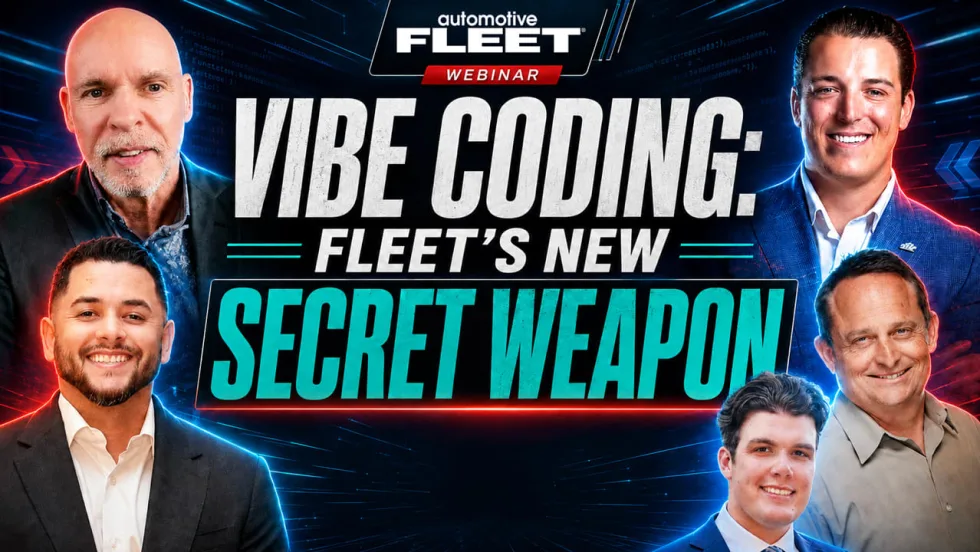
How to Build Custom Fleet Tools With AI and Vibe Coding [Webinar]
A new Automotive Fleet webinar explores how fleet managers are using AI and vibe coding to automate routine work and create simple operational tools without traditional programming skills.
Read More →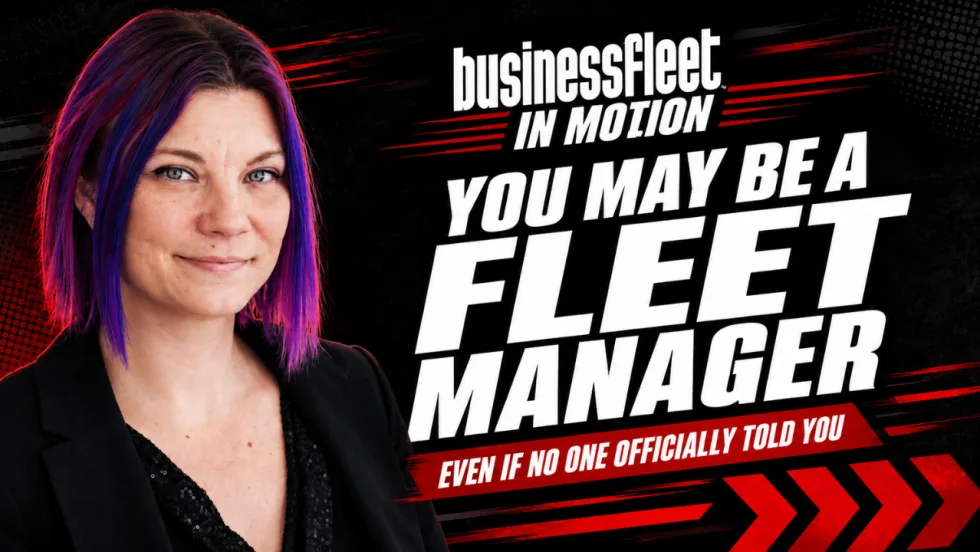
You May Be a Fleet Manager (Even If No One Told You)
Managing vehicles may not be your full-time job, but the costs, risks, and responsibilities are still very real. Business Fleet In Motion is here to help small and growing businesses make smarter fleet decisions without needing a full fleet department.
Read More →
Fleet Management Without a Fleet Department?
No fleet department? The work still has to get done. Learn how to prioritize your most critical vehicles, catch problems before they become downtime, and build a simple routine that keeps your small fleet moving.
Read More →
Why the IRS Raised Its Mileage Rate in the Middle of 2026
Fuel-price volatility drove the rare increase to 76 cents per mile, the fifth midyear adjustment since 2000.
Read More →
What Fleet Legends Wish Every Small Fleet Manager Knew
Twelve fleet leaders share the lessons they learned the hard way on leadership, communication, relationships, and building a stronger fleet.
Read More →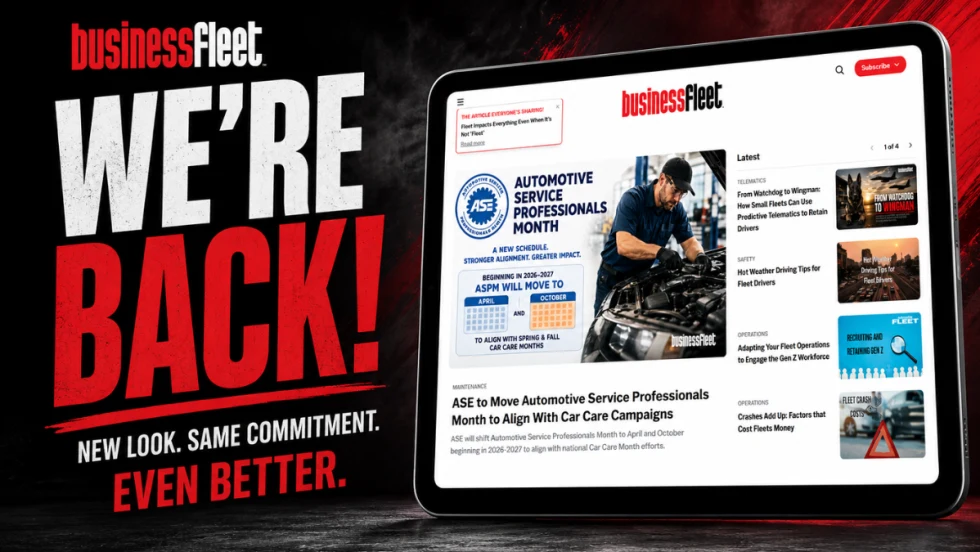
We're Back! Business Fleet Returns With a Fresh New Look
Check out our redesigned website with a faster experience and a renewed commitment to serving small fleet professionals.
Read More →