


Spoils of Truck Wars Go To Loyal Buyers
Domestic automakers are bending over backwards to prove their value. The loyal work-truck buyer may stand to benefit the most.

Powerful full-size trucks from leading manufacturers like GM, Ford, and Dodge, designed to handle tough jobs with enhanced performance, increased payload capacities, and improved fuel efficiency.
Photo: Work Truck
General Motors and Ford’s much-publicized image problems are producing real benefits for fleet customers, especially work-truck buyers. In an effort to address a perceived quality gap with Japanese manufacturers, GM recently extended its powertrain warranty to five years or 100,000 miles with no deductible, and it’s fully transferable.
This move follows Ford’s decision in July to extend its powertrain warranties by up to two years on 2007 Ford, Lincoln, and Mercury models.
It’s amazing to think that an automaker could nearly double its warranty in one fell swoop—after all, the days of the two-year/24,000-mile warranty aren’t that far behind.
Work Truck Buyers: Real Winners in Warranty Extensions
While fickle consumers may be trading in domestic SUVs for Japanese crossovers, work truck buyers have the same needs to tow and haul as always. These buyers were loyal to Ford or GM even when the companies were diversifying into smaller vehicles.
However, they are now the ones reaping the benefits of the 100,000-mile warranty, rather than the average consumer who would have traded in a vehicle long before hitting such mileage.
Full-Size Pickup Competition Heats Up
The full-size pickup segment is also seeing significant benefits. Toyota fired the first shot in the pickup wars in February by announcing the 2007 Tundra, which is now 10 inches longer, 5 inches taller, and 4 inches wider than its predecessor. Payload capacity has also increased to more than 10,000 lbs.
Crossing the 10,000-lbs payload threshold was a big deal, but GM responded in August with the launch of the 2007 Chevy Silverado and GMC Sierra. GM understands that the success of its new truck generation is crucial, given that it sold 935,000 full-size pickups in 2005.
As a result, GM pushed the entire pickup program forward by 13 weeks to launch the full line in just five months—compared to the two years it took for the previous generation rollout.
GM’s New Generation of Pickups
The new GMT900 platform full-size pickups feature:
A payload of 10,500 lbs.
Eight powertrain combinations.
Five suspension packages.
Three box lengths.
Two distinct interiors.
Combined fuel economy of 20 miles per gallon on 300+ horsepower engines.
Ford and Dodge Step Up
Ford, not to be left behind, responded by increasing the 2007 F-150’s payload capacity to 10,500 lbs, matching GM, and adding 600 lbs of towing capacity. In addition, Ford lowered sticker prices across all trim levels, with some cuts as high as $1,400. Ford is also introducing a new clean-burning diesel engine that promises more horsepower, better fuel economy, and a quieter ride.
Meanwhile, Dodge is re-entering the commercial truck arena with its 2007 Dodge Ram 3500 Chassis Cab. Dodge claims the new Ram Chassis Cab has:
The highest single-rear-wheel GVWR in its class at 10,200 lbs.
Best rear frame steel strength at 50,000 psi.
Largest standard fuel tank at 52 gallons.
Best-in-class standard V-8 power (330 horsepower HEMI).
Best-in-class interior cab room of 121.7 cubic feet for Quad Cab models.
The starting price for the Ram 3500 Chassis Cab is $22,535. The competition is fierce.
Perception vs. Reality: The Domestic Quality Conundrum
It’s ironic that domestic automakers are scrambling to add value to their products in response to perceived poor quality. In reality, the quality gap between domestic and foreign brands is small, if not nonexistent. In J.D. Power’s Vehicle Dependability Study, brands like Volkswagen and Land Rover often perform poorly—yet these foreign brands erase quality concerns with innovative marketing campaigns.
Ask a 28-year-old urban professional if they know that Buick, Lincoln, and Mercury consistently perform well in quality surveys, and you’ll likely get a blank stare. For work truck buyers, though, the focus remains on tangible benefits like unbeatable warranties, rather than marketing perception.
It almost makes one nostalgic for the days of the “This is not your father’s Oldsmobile” campaign.
Originally posted on Work Truck Online
More Operations

Growing Fleets, Bigger Challenges | Business Fleet Brief
From growing pains and weather risks to workers' comp, new vehicles, and telematics gaps, this month's Business Fleet Brief covers what small fleets need to know.
Read More →
Your Business Grew, Did Your Fleet Management Program Grow With It?
Small fleets often grow faster than the processes supporting them. Here’s how to recognize when informal fleet management has stopped working and what to formalize first.
Read More →
Small Fleet Lessons That Can Make a Big Difference | Business Fleet Brief
From used-vehicle costs and lost keys to safety tech and replacement planning, this Business Fleet Brief breaks down practical lessons that can make a big difference for small fleets.
Read More →
Automotive Fleet Opens 2026 Personal Use Survey for Commercial Fleet Managers
Less than two weeks left! Commercial and corporate fleet managers are invited to share how their organizations handle company vehicle personal-use policies, charges, and driver eligibility.
Read More →
You Do Not Have to Be a Big Business to Build the Next Generation
Small businesses may not have the biggest budgets or the biggest fleets, but they do have something powerful. They are close to the communities they serve, and that makes them uniquely equipped to help shape the next generation of automotive and fleet talent.
Read More →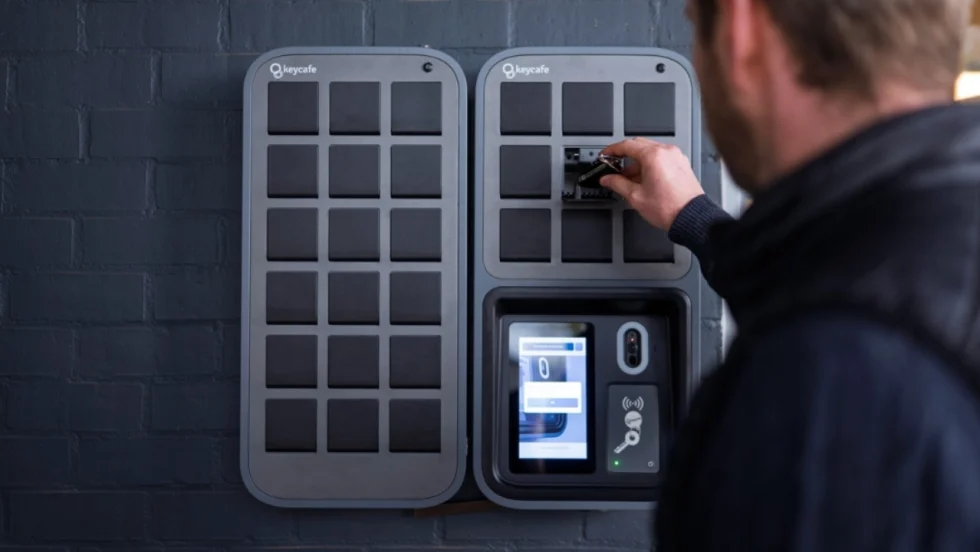
How Small Fleets Can Stop Losing Time to Lost Keys
Lost keys can mean delayed jobs, idle vehicles and unexpected replacement costs. See how small fleets are using digital key management to keep vehicles moving and improve accountability.
Read More →
How to Build Custom Fleet Tools With AI and Vibe Coding [Webinar]
A new Automotive Fleet webinar explores how fleet managers are using AI and vibe coding to automate routine work and create simple operational tools without traditional programming skills.
Read More →
You May Be a Fleet Manager (Even If No One Told You)
Managing vehicles may not be your full-time job, but the costs, risks, and responsibilities are still very real. Business Fleet In Motion is here to help small and growing businesses make smarter fleet decisions without needing a full fleet department.
Read More →
Fleet Management Without a Fleet Department?
No fleet department? The work still has to get done. Learn how to prioritize your most critical vehicles, catch problems before they become downtime, and build a simple routine that keeps your small fleet moving.
Read More →
Why the IRS Raised Its Mileage Rate in the Middle of 2026
Fuel-price volatility drove the rare increase to 76 cents per mile, the fifth midyear adjustment since 2000.
Read More →