


Strategic Procurement Threatens to Fundamentally Change Fleet Management
Corporate procurement departments are becoming the engines of change in fleet management at Fortune 500 companies. The emergence of strategic sourcing in the 1990s is rapidly altering corporate purchasing and increasingly forcing change in fleet purchasing and the supplier selection process.


Today, strategic sourcing is one of the hottest trends in corporate procurement.
Photo: Bobit
Corporate procurement departments are becoming the engines of change in fleet management at Fortune 500 companies. The emergence of strategic sourcing in the 1990s is rapidly altering corporate purchasing and increasingly forcing a change in fleet purchasing and the supplier selection process.
In a recent study, Archstone Consulting documented the growing influence of procurement departments in vendor selection, contract negotiations, service level agreements, and ongoing supplier management. The research by Archstone Consulting reveals that procurement is now often the major driver in close to 90 percent of all outsourcing initiatives.
According to the company’s white paper, “procurement clearly has the skills and knowledge to manage complex supplier selections and negotiations. In addition, procurement is most often made responsible for managing the ongoing relationship and will have an increasing role going forward.”
Chilling words for fleet managers, who increasingly are finding themselves reassigned to corporate procurement departments.
Reverse Auctions Turn Fleet into a Commodity
One technology promoted by purchasing departments to reduce procurement costs is a reverse auction, which allows bidders to watch in real-time as competing suppliers make bids. Participating suppliers submit lower bids against one another until the buyer accepts a bid. Initially, commodities were purchased in reverse auctions. However, for the past four years, reverse auctions have been used to negotiate pricing for fleet management services and new-vehicle acquisitions.
The potential problem with reverse auctions is that low-cost bidding runs the risk of ultimately lowering the overall quality of fleet management services. A common refrain I hear from fleet managers is that purchasing departments seek to make themselves look good to management by demanding the lowest cost from suppliers, but then it is up to the fleet department to pick up the pieces when the inevitable service problems develop.
In terms of using a reverse auction for vehicle pricing negotiations, the biggest problem is that vehicles are not like commodities since they do not share common option packages or configurations. Vehicles are highly configurable and different models do not match up identically among different manufacturers. In the case of traditional full-size vans, where there are currently only two manufacturers, some question the need for reverse auctions.
The Growing Dominance of Strategic Sourcing
Today, strategic sourcing is one of the hottest trends in corporate procurement. Strategic sourcing initiatives re-examine the way a corporation conducts its business and are tasked to identify opportunities to consolidate purchasing volume to obtain reduced pricing from key supplier partners. The migration of large corporations to strategic sourcing is becoming a powerful change agent at large fleets.
A strategic sourcing fleet group typically includes a cross-functional team, which brings the fleet manager together with representatives from other departments in the company. The presumed benefit of a cross-functional team is a more thorough examination of the fleet purchasing and supplier selection process from a wider range of interests and perspectives.
Although these cross-functional teams may bring a fresh perspective to fleet management, they also tend to lack real-world expertise of fleet requirements, sometimes leading to wrong, and perhaps very costly, decisions. Unfortunately, at some companies, the fleet manager doesn’t have as powerful a voice as other members of the strategic sourcing committee, despite the fact that decisions are made that impact fleet operations.
Strategic sourcing groups are often single-focused in their goal. Frequently, the single focus is cost cutting. The assembled sourcing group may be very good at buying, but the non-fleet members often do not understand the subtleties involved in the service relationships between the corporate fleet department and its partner fleet suppliers. In addition, procurement groups often work on several projects simultaneously, limiting the amount of time they can devote to understanding the complexities of fleet management.
A competent fleet manager can easily save a company millions of dollars by implementing the right fleet policies and selecting the right fleet suppliers. However, this ability may be inhibited in the future unless fleet managers exert their expertise and influence within strategic sourcing groups and retain an important say in the RFP and supplier selection process.
Originally posted on Automotive Fleet
More Leasing
Matthew Cole Takes President Role at Wheels
Wheels’ new president brings a background spanning Ford, Johnson Controls, Visteon, and Aptiv as the fleet management company focuses on growth and client relationships.
Read More →
Mike Albert Names First Non-Family CEO in Company History
Mike Albert Fleet Solutions names Marty Kuhn CEO as the company expands its data-driven approach to fleet management and consulting.
Read More →
Union Leasing Transitions to Moventum Fleet Management Brand
Union Leasing rebrands as Moventum Fleet Management as the company expands its focus on fleet lifecycle and operations.
Read More →
Buying vs. Leasing Electric Vehicles: Pros & Cons
As your fleet plans out its electrification roadmap, consider whether buying or leasing EVs make sense for your needs. Here’s what to consider.
Read More →
Athene is Lead Investor in the Combination of LeasePlan USA with Wheels Donlen
Wheels Donlen’s parent company has signed a Stock Purchase Agreement to acquire LeasePlan USA, and subsequently combine the business with Wheels Donlen to create a unified fleet management business.
Read More →
IFS Serves an Array of Global Customers and OEMs
Founded to meet the needs of international organizations for high-quality cars and trucks, International Fleet Sales offers comprehensive services from vehicle specifications to warranty administration.
Read More →
ALD Automotive and LeasePlan In Merger Talks
Two of the world’s largest leasing companies are considering combining forces to create a global mobility leader.
Read More →
LeasePlan Updates its Driver Mobile App
The app features a completely redesigned user interface built on a new, more flexible platform, and is designed to empower drivers to be more productive, freeing up time spent managing tasks and vehicle-related deadlines.
Read More →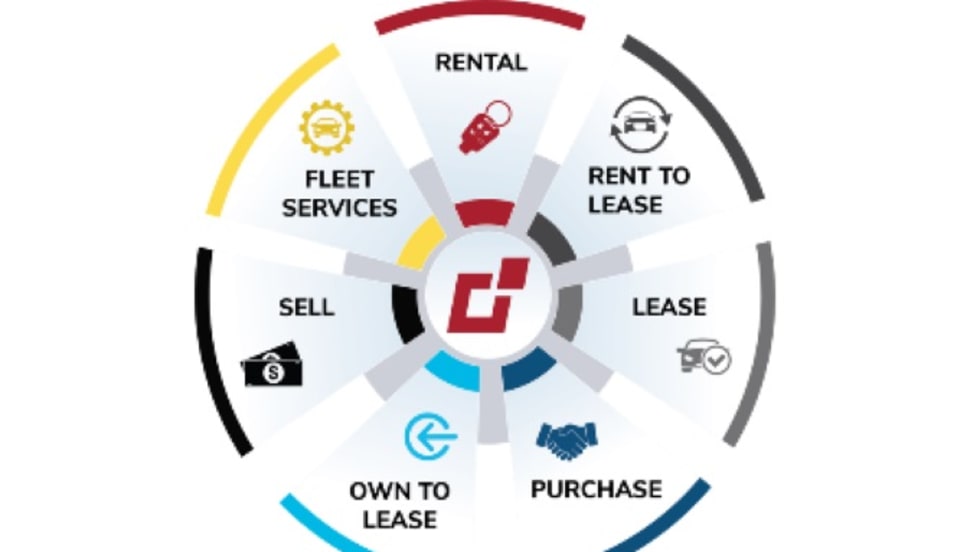
Merchants Fleet Expands Last-Mile Fleet Program
Merchants Fleet and OneRail are launching a national fleet rental and leasing program for its logistics partners, which will enable business growth for the logistics partners through reduced vehicle costs.
Read More →
How to Stay out of Trouble When Your Closed-End Lease Ends
A closed-end lease works great for small fleets that don’t want the financial worry of the vehicle at resale. For lessees, success entails proper management of vehicle condition and mileage, as well as communicating with the lessor should driving patterns change.
Read More →