


The Baby Boomer Driving Dilemma
Retirement-age baby boomers are staying in the workforce in droves. Are you prepared to keep them in your fleet?
July 1, 2007


Fleet safety programs that apply to all drivers—regardless of age—can help reduce legal risk and keep everyone safer on the road.
Photo: Work Truck
4 min to read
Baby Boomers aren’t going softly into that good night. Perhaps they didn’t fund their retirement, they need to work to maintain their lifestyle, or they’re simply afraid of getting bored.
Retirement-age boomers are staying in the workforce in droves, and this presents a potential dilemma to fleets. As the number of older drivers doubles in the next two decades, the number of elderly road fatalities is predicted to triple.
Smart companies know the value of older employees and their tremendous wealth of experience. But for those who will drive, how do you maintain a safe fleet while avoiding age discrimination? The Age Discrimination in Employment Act (ADEA) states that employees and job applicants aged 40 years and older are protected from employment discrimination based on age.
On the flip side, the Supreme Court has found that the ADEA does not protect those under 40. In other words, it is not illegal to discriminate against someone for being "too young." Hiring and maintaining fleet drivers, though, can be tricky.
Hypothetical Hot Spots
Refusing to hire a driver or disallowing fleet privileges for an existing employee based on age is clearly illegal — even with a briefcase full of statistics showing that elderly drivers are more likely to get in an accident. But many cases are not so easily definable.
Will you get in trouble if you make your drivers take a cognitive or skills test or a physical once they reach 65 years? You could, says Paul Farrell, president of SafetyFirst, a safety hotline and driver training company.
“If I were the driver’s attorney I’d ask if you are applying the test to all fleet drivers,” Farrell says. “I’d ask to look back at your records.” Farrell says this could be viewed as age discrimination.
But if you applied the test to every driver, regardless of age, you have a good defense. What if you fire your elderly driver as a direct result of a crash? Are you exposed?
A written policy covering all drivers, demonstrating that an accident is grounds for termination, is a good first defense, but not the last one.
“Now you would have to look back in history and see if you followed the rules,” Farrell says. “Did the owner’s son who failed the test or had an accident get canned? If not, now we’re back in court again. Like everything else in business, it’s a matter of consistently applying your policies.”
Farrell brings up a tricky real-world scenario involving a client. The company maintains a profile of active drivers that assigns points to traffic violations and crashes, with a threshold for termination. The company then adds extra points for infractions caused by drivers less than 25 years of age and more than 65.
The company defends its policy with, again, statistics that show a higher preponderance for crashes in these age groups. Additionally, the company does not immediately dismiss because of the scoring system, but will coach and train all employees who reach a certain threshold.
Farrell says the company’s defense is not airtight. Excluding the younger drivers, the company is still differentiating the older drivers by giving their crashes and violations more weight.
Keeping Safe and Mitigating Exposure
The first big step is to screen, train, discipline and reward all drivers under one set of standards, regardless of age. Make this not only part of your written policy, but be sure you have historically followed these procedures.
Use consistency in your safety tools as well, whether it’s analyzing Telematics exception reports, “How’s My Driving” complaints or motor vehicle record data.
If you wish to target an older driver with a specialized training program, offer it on a voluntary basis. If offered sensitively and voluntarily, most employees won’t object and will take the training. It will limit your legal exposure as well, Farrell says. Be sure to document that the employee volunteered for the program.
Talk to corporate council on the right approach to employee issues as they relate to fleet. There are 50 states and 50 jurisdictions, and even laws specific to counties.
Consider scheduled physical exams. This bases driver safety on physical and mental fitness, not age. Everyone ages differently. Many 70-year-olds are in better shape than those 20 years younger.
Managing Risk Without Age Discrimination in Your Fleet
The Department of Transportation requires that anyone driving a commercial vehicle in interstate commerce gets a physical every two years. If that’s the minimum requirement for a truck driver, Farrell contends, wouldn’t it be good for the driver of an executive car? The exam takes some of the decision-making off the employer.
“Let the doctor make a medical diagnosis,” Farrell says. “Let the doctor judge whether the employee is fit to drive. Don’t try to interfere with that process.”
In a larger sense, when everyone is working with their doctor to stay healthy, the driver — and management — can feel confident that they are fit to stay behind the wheel even as they enter the risk group.
Originally posted on Work Truck Online
More Safety
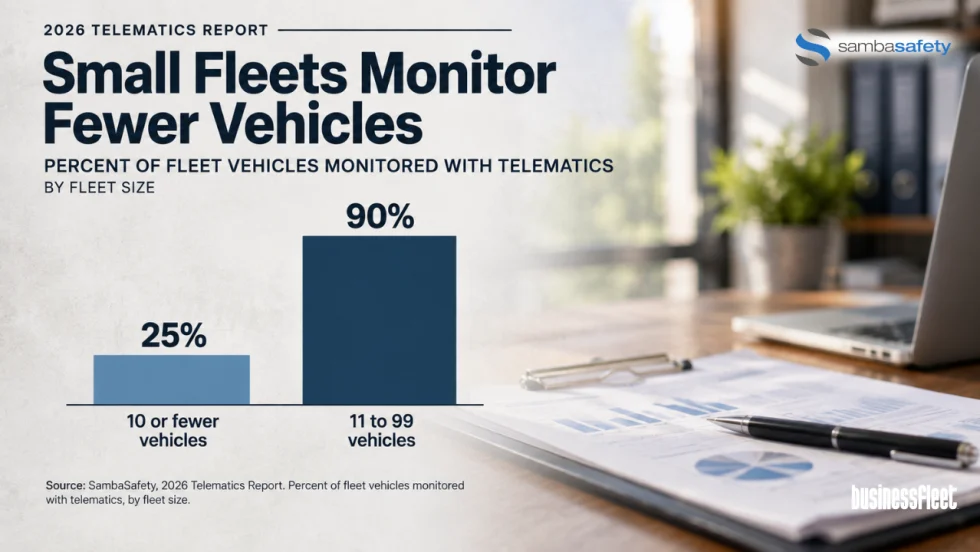
Small Fleets Lag in Telematics Coverage as Industry Moves Beyond Adoption
SambaSafety’s 2026 Telematics Report finds fleets with 10 or fewer vehicles monitor a much smaller share of their vehicles than larger operations, as the industry shifts its focus from collecting data to using it.
Read More →
Back-to-School Traffic Is Not the Risk Fleets Think It Is
Back-to-school traffic does not always mean more crashes. New Empiric Earth data shows why fleets should focus on when and where risk changes.
Read More →
Small Fleet, Big Exposure: How to Reduce Workers’ Comp Risks
For small fleets, one crash can trigger far more than vehicle damage. Here’s how stronger driver safety policies, training, maintenance, and technology can help reduce workers’ comp exposure.
Read More →
Who Makes the Call When Winter Weather Gets Dangerous?
Winter weather can quickly change a small fleet’s plans. Knowing when to reroute, delay, or stop can matter just as much as preparing the vehicles themselves.
Read More →
API Issues Refueling Safety Guidelines
The American Petroleum Institute offers a list of safe vehicle refueling guidelines, including ways to avoid potential problems with static electricity discharges in fall, winter, and early spring.
Read More →
Winter Fleet Prep: Expert Tips to Keep Vehicles Running Smoothly
Cold weather can expose weak batteries, tires, fuel systems, and maintenance gaps fast. Use this winter fleet checklist to prepare trucks and drivers before temperatures drop.
Read More →
8 ADAS Maintenance Tips for Small Business Fleets From Bendix
A dirty camera, bad alignment, or one loose connection could quietly knock your fleet’s ADAS offline. Here’s what Bendix says to check.
Read More →
Developing Budget-Friendly Driver Safety Programs
From driver training and safety meetings to one-on-one coaching and incentive programs, several small fleets share how they have developed a safety culture with their drivers using low- to no-cost resources.
Read More →
A 20-Minute Safety Check for Small Fleets Before Operation Safe Driver Week
No safety department? No problem. Here's a practical checklist small fleet managers can use before Operation Safe Driver Week begins.
Read More →
Why Small Fleets Keep Getting Tripped Up by ELD Compliance
Roadcheck revealed a hard truth: most ELD violations aren't intentional. They're caused by small mistakes that can cost fleets time, money, and trust.
Read More →Subscribe to Our Newsletter