


The Wireless Revolution in Business Fleets
It's no time to be a technophobe.

Fleet managers embrace the wireless revolution as GPS technology transforms business operations, driving efficiency and innovation in modern vehicle management.
Photo: Work Truck
The wireless revolution is finally taking over business fleets. It is beginning to change the way we do business. It is hard to imagine a future in which vehicles won’t be reachable.
Yet it is still easy to avoid technology-based business solutions because a) you fear them, b) they’re not in the budget, and c) your business has been getting by just fine as is. It’s time to come to terms with all three.
Addressing Privacy Concerns
The recent discussion, at least in the media, has focused on how location-based technology has impinged on our privacy. Don’t take Big Brother lightly. Private fleets are not immune, especially businesses with independent contractors or unionized drivers.
But the controversy holds more water in public and consumer applications, such as using RFID tags to track school children (Sutter County, Calif.) and rental car companies using GPS to fine drivers for exceeding speed limits (Turner v. American Car Rental).
Handling Driver Concerns
I’ve talked to many small business owners about driver fallout after installation. The usual pattern is this: some drivers complained, and some even quit. Those drivers were replaced, and at the end of the day, efficiencies improved.
Be upfront with your drivers. Educate them properly. Let them in on the data. Consider incentives using GPS metrics. Your employees will come to accept and rely on the system.
The Future of GPS Technology
Don’t worry too much that GPS technology will become obsolete and you’ll be left with a Betamax under your dashboard. Clem Driscoll, the market research leader in the field, told me an issue in the last few years has been converting units using cellular digital packet data to one of the newer cellular broadband networks such as GPRS.
This has actually limited market growth as companies have concentrated on the conversion rather than new business. The conversions happened fairly seamlessly. Companies are going to multi-mode devices that use more than one network type.
Other technologies, such as nascent WiFi Position Systems, may one day compete. But WPS won’t work in areas with few hotspots (i.e., outside cities) and they still send data real-time over the same costly wireless networks.
Budget Constraints and Fleet Integration
An obstacle to fleet integration is that companies simply haven’t budgeted for this new technology. Providers are keenly aware of this. As a result, some offer 36-month lease programs that bundle hardware, installation, and wireless charges into a monthly fee.
Others are going further and partnering with fleet leasing and management companies to bundle systems and fleet services. Networkcar, PHH, and most recently Guidepoint Systems and Donlen have formed partnerships. Expect more.
The Risk of Choosing the Wrong Provider
Do worry if a GPS system provider will be around in two years. Recently I pulled out information for 10 telematics companies I encountered at a convention last year. Three are gone. This may be about the same number of R.I.P.s as in most growth tech industries.
Yet a GPS system is not a $250 Betamax, and when your provider goes out of business, you’re stuck. All GPS systems are proprietary. A new white-knight provider won’t start tracking your vehicles with the old system.
Protecting Your Investment
How do you protect yourself? As stressed in this issue, ask the right questions: How large is the provider’s customer base? Is it a regional or a national company? How long has the company been in business? Does the company use standards-based formats (XML, XTML) that can integrate with routing and dispatch systems?
Why You Need to Be in the Game
Do worry if you’re not in the game at all. Driscoll’s 2005-06 Mobile Resource Management Systems Market Study says that penetration of GPS applications in fleets is still only 7%. The growth rate, however, is 25% per year. Small fleets, especially delivery and service, are the drivers.
If you are not using technology in a relentless, cutthroat push to streamline processes, speed up customer response times, and cut costs—especially fuel—your competitors sure are.
That doesn’t mean rushing out and purchasing a system. It means understanding the technology enough to know if a system is, or isn’t right for you. Embrace it—because it isn’t going away.
Originally posted on Work Truck Online
More Telematics & Tech

Samsara Driver Perks Gives Small Fleets a Ready Made Driver Benefit
Small fleets can offer drivers discounts from more than 50 brands without building or managing their own employee rewards program.
Read More →
Smith System Says Small Fleets Need a Safety Cadence Not More Data
Smith System’s new Driver Risk Management program aims to help smaller fleets turn telematics and camera data into a repeatable coaching process without building a dedicated safety department.
Read More →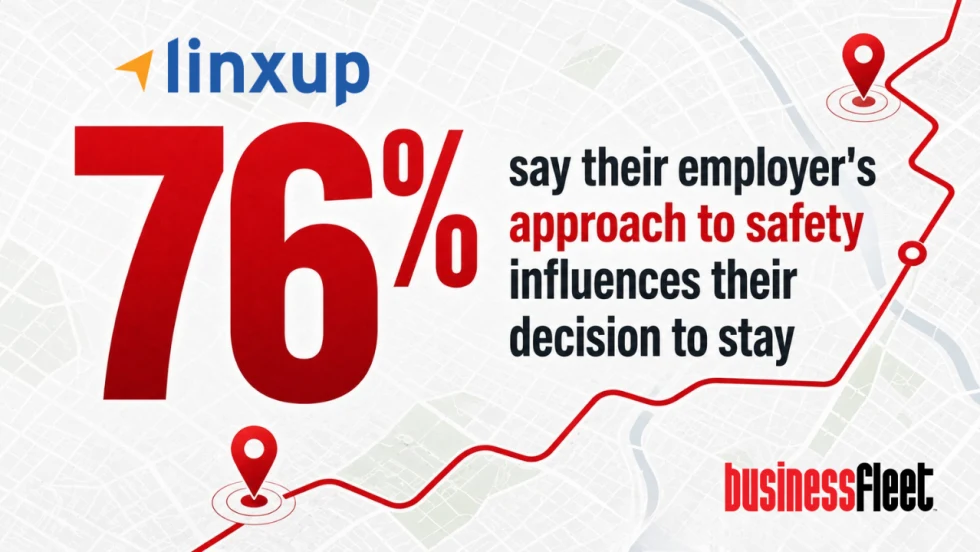
Dash Cams May Be Doing More Than Protecting Your Fleet Vehicles
Dash cams and GPS tracking may do more than improve safety. New survey findings link fleet technology to driver protection, employee retention, and customer confidence.
Read More →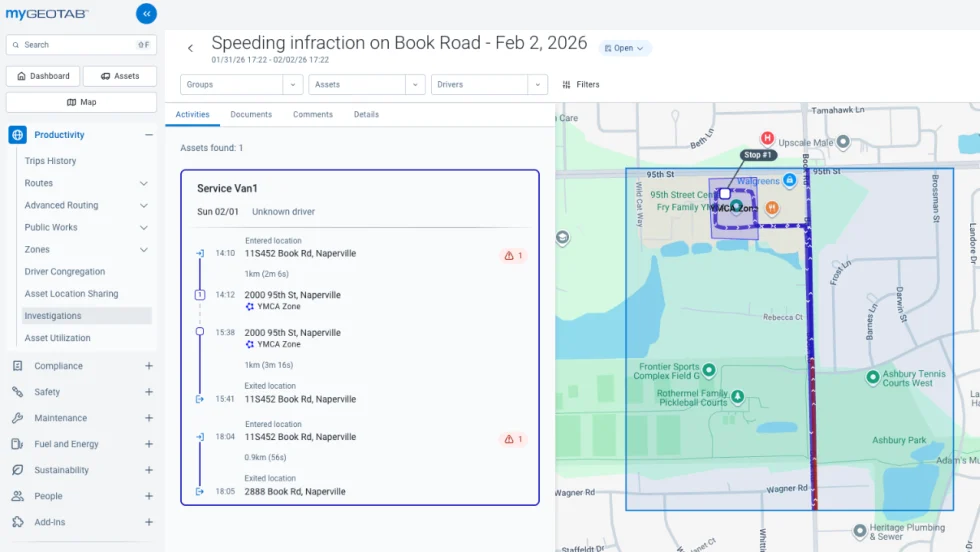
Geotab Adds Investigation Tools to Cut the Post-Incident Paper Chase
When a company vehicle is involved in a crash or complaint, Geotab Investigations brings telematics data, photos, reports, and other records into one case workflow.
Read More →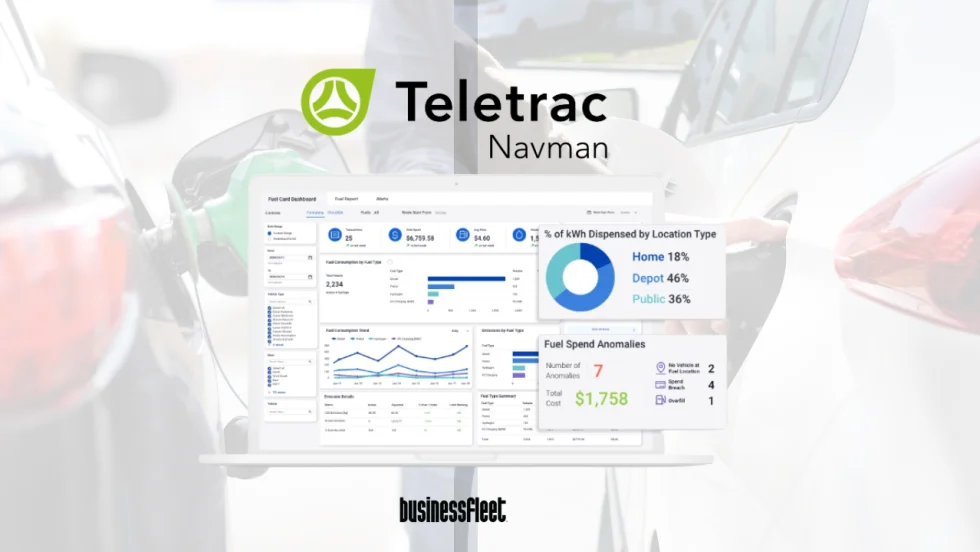
Teletrac Navman Adds Mixed-Energy Tracking to TN360
Energy Hub combines fuel card data, EV charging activity, reimbursements, and vehicle energy use in one dashboard for fleets operating gasoline, hybrid, and electric vehicles.
Read More →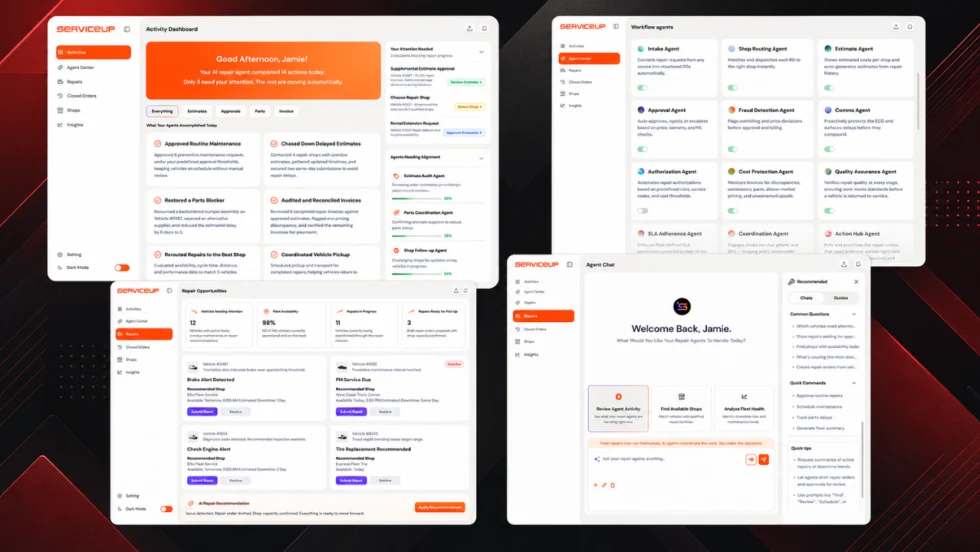
ServiceUp Brings Automated Repair Coordination to Small Fleet Operators
New AI repair agents handle shop calls, estimate reviews, status checks, and invoice validation so business owners can spend less time coordinating vehicle repairs.
Read More →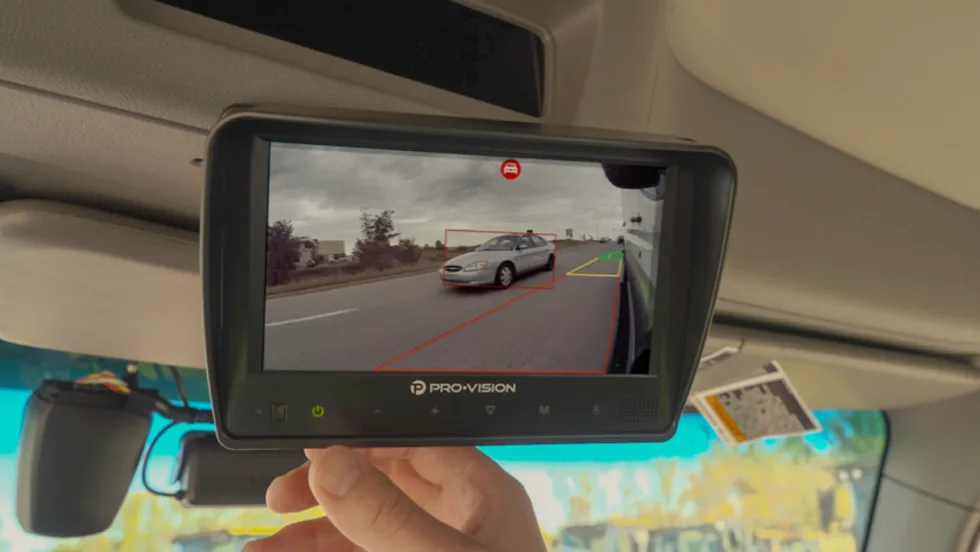
Pro-Vision Expands AI Fleet Safety Beyond the Cab
Pro-Vision's new AI camera and processing module extend real-time exterior hazard detection while integrating with leading fleet telematics platforms.
Read More →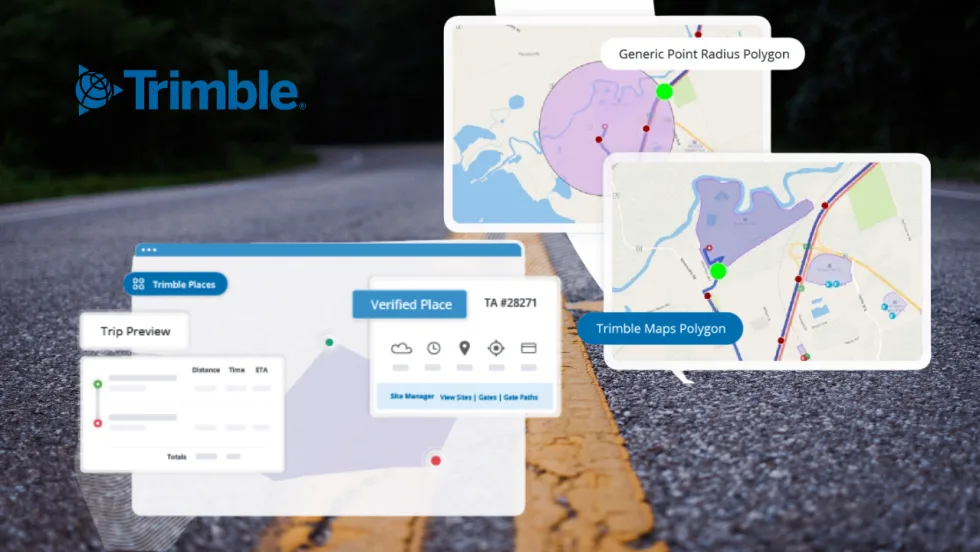
Trimble to Add Hotel Booking Capabilities to Fleet Products Through Engine Partnership
Trimble is adding hotel-booking capabilities to its fleet tools, helping drivers and small fleets find lodging faster during trips and breakdowns.
Read More →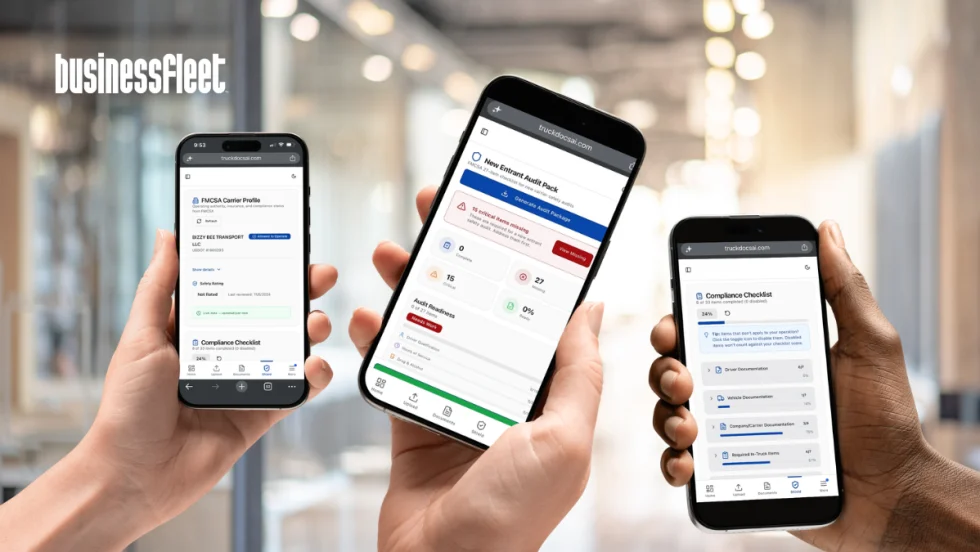
TruckDocsAI Launches AI-Powered Compliance Platform for Owner-Operators and Small Fleets
Can AI simplify DOT compliance? TruckDocsAI launches a new platform for owner-operators and small fleets facing audit pressures.
Read More →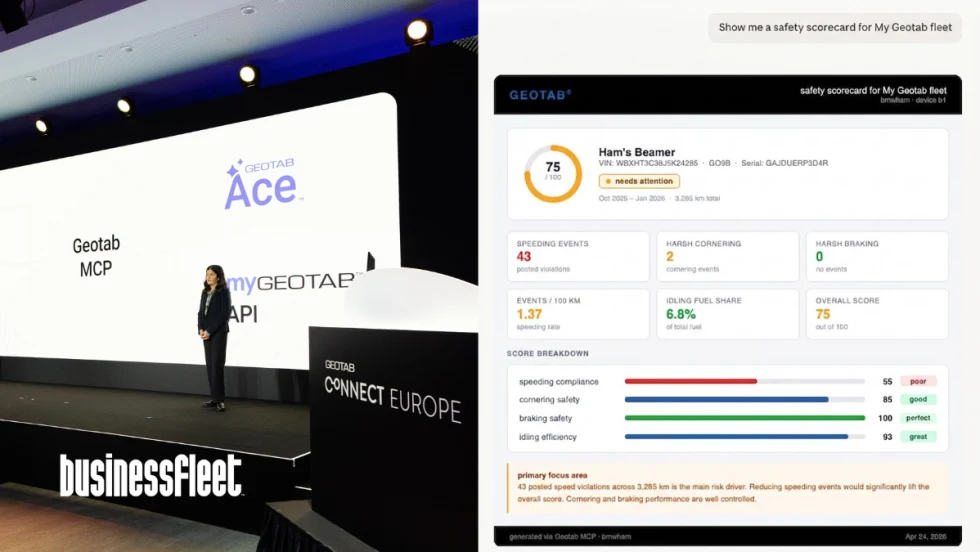
Geotab Says Fleet AI Success Depends More on Data Than the AI Model Itself
Geotab's new AI connector links fleet data with ChatGPT and other platforms, helping organizations turn AI investments into business results.
Read More →