


Looking Ahead: 2023 Remarketing Trends: Changing Times
Vehicle Options and Upgrade: Where is Your Money Best Spent?
From a purely financial standpoint, engine and trim level upgrades are a good bet. Safety and utility options are not.
by Terry Flesia
May 1, 2005
When you’ve chosen your vehicle, do your homework. Pick up a used vehicle guide to see how those options fare at resale. Configuring the vehicle may save you a few hundred bucks on the back end.
Photo: Work Truck
4 min to read
You’re thinking about buying fleet vehicles with a few extra-cost options. Or perhaps you’d like to offer a trim-level upgrade as an incentive for your drivers. Your employees will appreciate the added performance, safety, utility, comfort, or convenience.
But from a purely financial standpoint, does spending the money on these extras make sense? We analyzed factory-installed, extra-cost options on 2002 models and their values at resale after 36 months using Black Book, a national wholesale used vehicle guidebook.
We also studied the values of base models and trim-level upgrades in four segments simultaneously.
The Value of Vehicle Options
Entertainment packages, fancy wheels, power seats, and leather all command a premium to some degree. These options provide comfort, convenience, and an extra dash of style—and they’re all options the buyer can see.
A sun or moonroof is generally a good bet—it averages the highest return percentage in the intermediate sedan segment.
“Sunroofs historically have a high payback,” says Tom Webb, chief economist for Manheim Auctions, Inc. Webb noted the case of a manufacturer remarketing large numbers of a particular model to the auction. “Since the cars were coming from rental, they assumed it was unimportant whether they had a sunroof or not,” Webb says. “When it came time to sell those units at auction, they realized their values were much poorer [without sunroofs]. So they contracted us to install them.”
Utility, Safety Are Poor Sellers
Utility features such as running boards, electric rear window defrosters, roof racks, and engine block heaters do not return anything at resale in all segments.
Safety options fare poorly as well. Antilock brakes, side-impact airbags, locking differential rear axles, and stability-control systems return nothing at resale. If a safety option prevents an accident, the benefit outweighs any cost. So, it may seem odd that safety options do not sell well, as shown by the used-car buyer’s unwillingness to pay any premium for side-impact airbags or antilock brakes.
Why? The benefits of these internal safety modifications may be harder to grasp than other visible options. An authority on the automotive aftermarket says consumers may feel that the base model is already manufactured well enough to protect them without these costly extras.
The history of safety belt implementation gives us more perspective on the issue. Seat belts, probably the most critical vehicle safety innovation, were first introduced as an option in the late 1950s. Yet, at the time, only about 2% of the new-car-buying public were willing to pay a premium for them.
The response was so poor that manufacturers stopped offering seat belts as an option. The safety belt became standard after the government mandated in the early 1960s that all passenger cars be equipped with them. Even then, the public resisted, as studies showed that only about one in eight drivers buckled up.
One by one, the states finally began passing laws making safety belt use mandatory. Today, despite reams of safety statistics and the threat of a ticket, usage is only around 80%. Safety is a hard sell.
Engine Upgrades Fare Well
Engine upgrades always return some value of the original cost. The engine upgrade on the Impala shows a return of only 28%, while the upgrade on the Camry returns 57%.
Why? The upgrade from the base Impala engine, a 3.4L V-6, to a slightly larger 3.8L engine is more dramatic. The Camry upgrade is also more dramatic, from a four-cylinder engine to a V-6, thus warranting a greater percentage of return on original cost.The pickups also show a return on engine upgrades.
The optional 5.9L V-8 gasoline engine on the Dodge Ram returns 41% of the original cost at three years. The Ford 5.4L V-8 gas engine upgrade brings in 27% of its original price.
The diesel engine upgrade in pickups offers the greatest return on investment of any option studied. According to Black Book, the 6.6L Duramax diesel engine on the 2002 Chevy Silverado 1500-3500 series returns 112% of its original cost.
The Dodge Ram ST 1500-3500 series' 5.9L turbo-diesel returns 102%, while the Ford 150 through 350 XL series diesel returns a league-leading 116%.
Why? Webb notes that diesels are scarcer than gas engines. Used pickups are often bought as work trucks, so the buyer recognizes the diesel engine's value in terms of better fuel economy and durability.
Webb cautions, however, that newly popular pickup options such as DVD players and leather seats may have less value at resale because they aren’t needed for a work application.
Know the Rate of Depreciation
Webb says a good rule of thumb on the value of options is to compare the depreciation on the entire vehicle with the depreciation on the option. A car retains 50% of its value after three years. If the option maintains 50% of its value or greater, you’re ahead of the game.
Although we’ve provided some general wisdom, the values of options and upgrades at resale vary significantly from model to model. When you’ve chosen your vehicle, do your homework. Pick up a used vehicle guide to see how those options fare at resale. Configuring the vehicle may save you a few hundred bucks on the back end.
About the Author: Terry Flesia is a former editor with Bobit.
Originally posted on Work Truck Online
More Operations
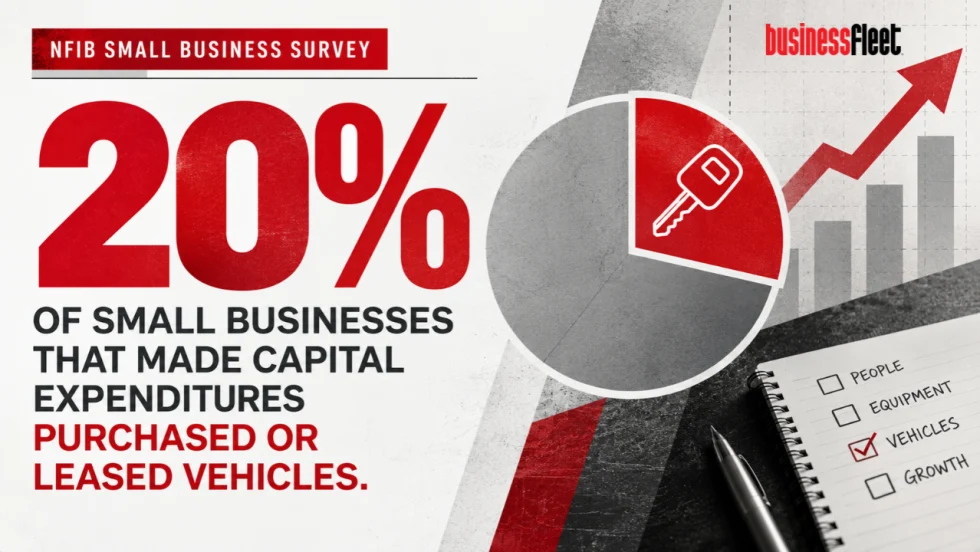
Small Business Vehicle Purchases Slip as Owners Pull Back on Expansion
New NFIB survey data shows fewer small businesses purchasing or leasing vehicles as inflation, hiring challenges, and borrowing costs weigh on expansion plans.
Read More →
Growing Fleets, Bigger Challenges | Business Fleet Brief
From growing pains and weather risks to workers' comp, new vehicles, and telematics gaps, this month's Business Fleet Brief covers what small fleets need to know.
Read More →
Your Business Grew, Did Your Fleet Management Program Grow With It?
Small fleets often grow faster than the processes supporting them. Here’s how to recognize when informal fleet management has stopped working and what to formalize first.
Read More →
Small Fleet Lessons That Can Make a Big Difference | Business Fleet Brief
From used-vehicle costs and lost keys to safety tech and replacement planning, this Business Fleet Brief breaks down practical lessons that can make a big difference for small fleets.
Read More →
Automotive Fleet Opens 2026 Personal Use Survey for Commercial Fleet Managers
Less than two weeks left! Commercial and corporate fleet managers are invited to share how their organizations handle company vehicle personal-use policies, charges, and driver eligibility.
Read More →
You Do Not Have to Be a Big Business to Build the Next Generation
Small businesses may not have the biggest budgets or the biggest fleets, but they do have something powerful. They are close to the communities they serve, and that makes them uniquely equipped to help shape the next generation of automotive and fleet talent.
Read More →
How Small Fleets Can Stop Losing Time to Lost Keys
Lost keys can mean delayed jobs, idle vehicles and unexpected replacement costs. See how small fleets are using digital key management to keep vehicles moving and improve accountability.
Read More →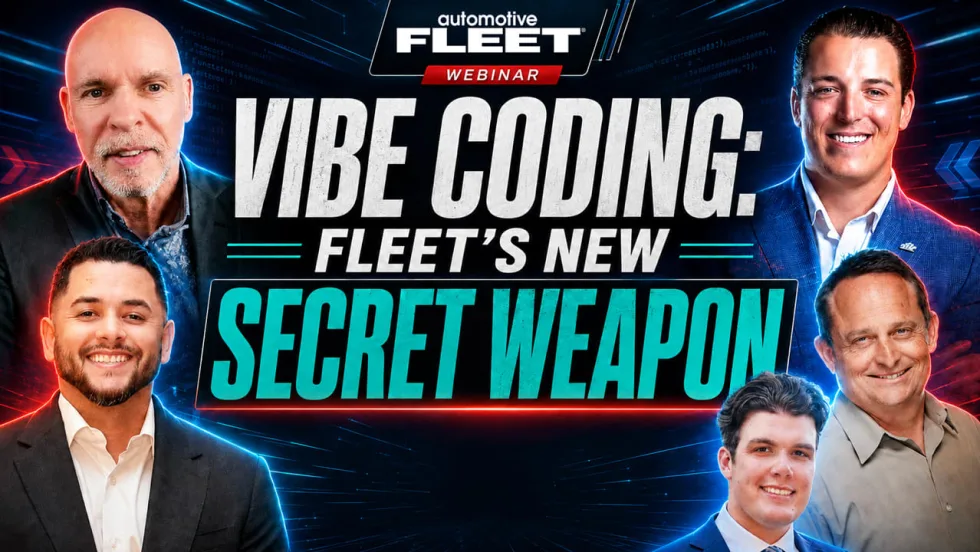
How to Build Custom Fleet Tools With AI and Vibe Coding [Webinar]
A new Automotive Fleet webinar explores how fleet managers are using AI and vibe coding to automate routine work and create simple operational tools without traditional programming skills.
Read More →
You May Be a Fleet Manager (Even If No One Told You)
Managing vehicles may not be your full-time job, but the costs, risks, and responsibilities are still very real. Business Fleet In Motion is here to help small and growing businesses make smarter fleet decisions without needing a full fleet department.
Read More →
Fleet Management Without a Fleet Department?
No fleet department? The work still has to get done. Learn how to prioritize your most critical vehicles, catch problems before they become downtime, and build a simple routine that keeps your small fleet moving.
Read More →Subscribe to Our Newsletter