


Is it Time to Rethink How Drivers Are Paid?
With the ELD rule affecting miles driven, and drivers’ duties increasingly including more than just driving the vehicle, what can be done to more accurately and fairly reflect a driver’s workday?


Recording and analyzing this type of detail involves technology, from full-blown telematics systems and mobile workforce solutions to smartphone apps, but it doesn’t have to be expensive.
Photo via Pexels.
Surveys reveal that fleets under the Electronic Logging Device (ELD) rule are driving fewer miles since the mandate took effect, resulting in less productivity and a smaller paycheck for those drivers who are paid by the mile. Meanwhile, the nationwide driver shortage only exacerbates the issue. We all know drivers’ duties include more than just driving the vehicle, to varying degrees and depending on the application. Is it time to pay closer attention to the non-driving part of a driver’s route or workday, and rethink compensation accordingly?
The term “activity-based pay” isn’t new; you may be more familiar with the terms productivity- or performance-based pay. Whatever the nomenclature, the idea assumes greater importance today, as fleet operators are increasingly tasked to find greater efficiencies in routing and shipping processes and fleet-related activities in general. As well, technology allows us to measure productivity more precisely than ever before.
Most for-hire drivers are still paid by the mile, while most private fleets use an hourly rate. Some pay per delivery. While many schemes incentivize for productivity in some form, reorganizing any of them to focus primarily on productivity is a considerable undertaking. How and where do you start?
The first step is to look at the key factors that determine your profitability and how your drivers contribute to that bottom line, says Jerry Robertson, CTO at Bolt System, a provider of fleet management and trucking dispatch software. The next step is to understand all activities — to a level of detail you may not have considered — on a route or during the driver’s workday and come up with a plan to measure each activity.
What should be measured? In addition to daily start and end times, details can be captured around each stop such as travel time to and from each stop, pre- and post-trip inspections, arrival time compared to scheduled time, time spent on a loading dock, number of parcels delivered, condition of merchandise, and even fueling and paperwork.
Recording and analyzing this type of detail involves technology, from full-blown telematics systems and mobile workforce solutions to smartphone apps, but it doesn’t have to be expensive. Apps in this field are available for GPS-enabled smartphones and tablets. The tech-enabled could write an app in house, Robertson says.
Integrating the data to stream into your office systems is a bigger task, Robertson says. However, the hardest part will be deciding what to measure, particularly as 10 routes run by 10 different drivers will deliver 10 different scenarios. The key is to understand the measurements for each route and set a baseline.
Patterns will emerge from each route, which will provide insights into why certain issues are reoccurring, Bolt says. Better or worse performance will become apparent quickly, conjuring the adage that 20% of employees do 80% of the work. But if you can measure it, you can reward that 20% and nudge the others in the right direction. “If you’re monitoring events that drivers are now getting paid for, your drivers are more likely to do them in a timely fashion,” Robertson says.
The system must be able to record anomalies and circumstances beyond the driver’s control, such as breakdowns or delays at a location. “At least now you can identify the issue,” Robertson says, adding that consistent problems identified generating from the customer may lead to a decision to cease doing business with that customer.
As with the introduction of any new system, driver buy in — before deployment — is crucial. Fleets must have a clear sense of what they hope to accomplish and communicate these goals to drivers. Focus on the positive: Help drivers understand they could be better compensated by including non-driving activities, Bolt says.
“Will you solve everything? No,” Robertson says. “Will you go a long way toward your drivers having a better expectation of how they’re measured to get paid? Yes.”
It’s no secret that the job title of “driver” is facing disruption. The daily duties of a driver are transforming into areas other than miles traveled behind the wheel. It’s essential to capture, measure, and understand these events now, as these non-driving duties will only increase until the driver job title itself may someday no longer exist.
More Blog Posts
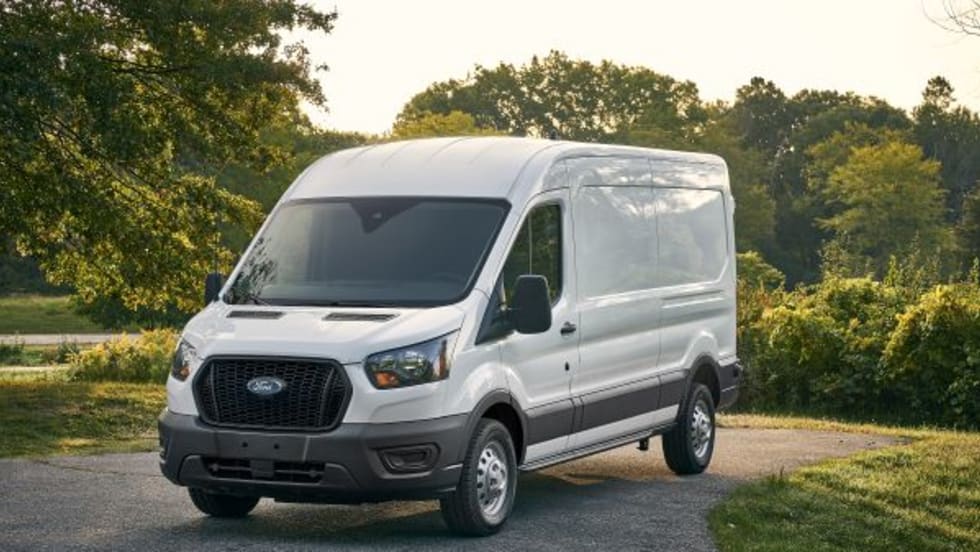
2021 Ford Transit Offers Versatility for Fleets
For the 2021-MY, Ford made ergonomic enhancements for drivers and added an available Parcel Delivery Package. This follows a major refresh in 2020, which added a Crew version, a new standard engine, standard active safety technologies, and embedded telematics to the Transit van family.
Read More →
Recognizing the Other Essential Drivers
Vocational and business fleet drivers don’t get the attention that truckers do. Yet they too are on the front lines, and their jobs often bring them into uncontrolled environments every day.
Read More →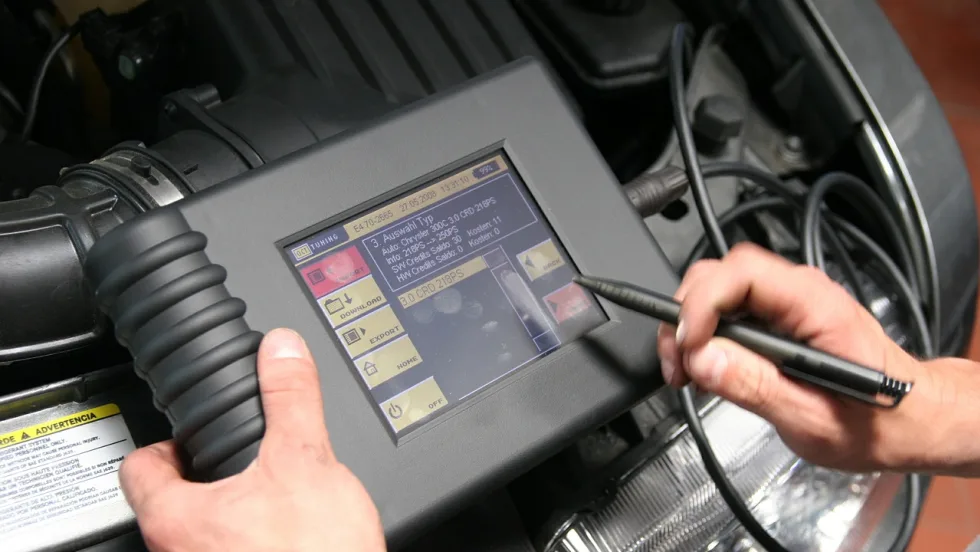
It’s Time to Formulate an ADAS Game Plan
As proliferation of Advanced Driver Assistance Systems (ADAS) increases, skilled labor, equipment, and training costs will increase as well. Fleet operators can’t mitigate these financial burdens by cutting corners on ADAS recalibration and repairs.
Read More →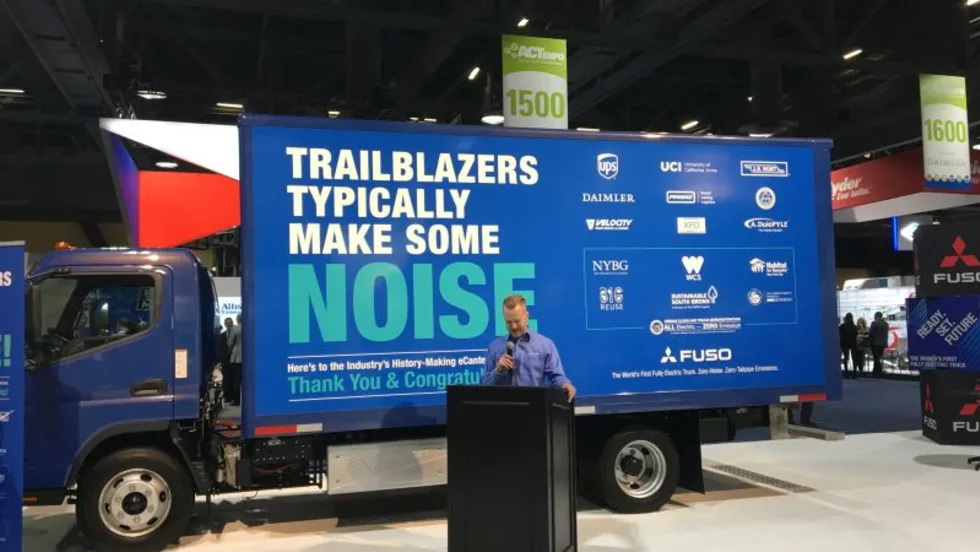
The Future is Electric, But…
With an increasing emphasis on emissions reductions mandates, will fleet operators get caught between clean technologies on their way out and an electric future that hasn’t yet arrived?
Read More →
6 Trend Lines from the 2019 Work Truck Show
From giant leaps in torque and towing to heavy duty truck personalization and chassis cab styling, these trends emerged from this year’s Work Truck Show in Indianapolis.
Read More →
They’re Coming for Your Diesel
In Southern California and other parts of the world, regulators are coalescing to ban, or severely curtail, diesel vehicles. There’s a growing disconnect with the mandates to green the environment and the availability of products and technologies to get us there.
Read More →
Hey Cannabis Companies, Welcome to Fleet
An industry is forming, and it needs help with fleet. In the meantime, the fleet industry should know that these new businesses are navigating extraordinary circumstances, which is forcing them to be better fleet operators pretty darn quick.
Read More →
Takeaways from the Fleet Forward Conference
Most attendees — from established fleets and vendors to new players that were only formed five years ago — didn’t know anyone. But that’s exactly the point.
Read More →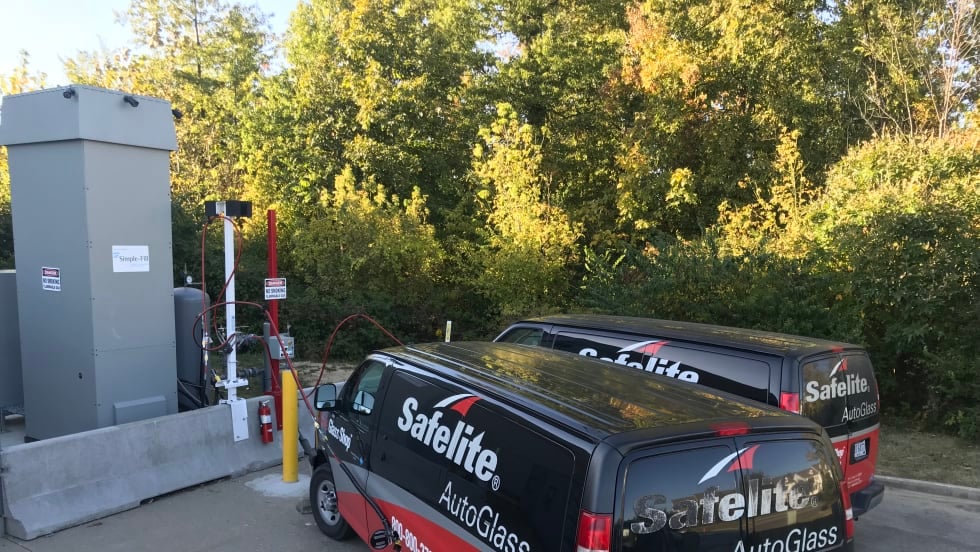
Whatever Happened to CNG?
While the light-duty market for compressed natural gas vehicles has almost evaporated, new near zero emissions technology and drastic reductions in infrastructure costs have reinvigorated the market for medium- and heavy-duty applications — even for smaller fleets.
Read More →
6 Takeaways from the 2018 International Car Rental Show
Technological solutions are finally moving from reality to theory, peer-to-peer platforms are being redefined, China has the biggest room for growth, while Sixt’s U.S. aspirations have only just begun.
Read More →