



Related: Advanced Safety Technologies: Comprehension, Implementation, Training
It’s Time to Formulate an ADAS Game Plan
As proliferation of Advanced Driver Assistance Systems (ADAS) increases, skilled labor, equipment, and training costs will increase as well. Fleet operators can’t mitigate these financial burdens by cutting corners on ADAS recalibration and repairs.
March 2, 2020
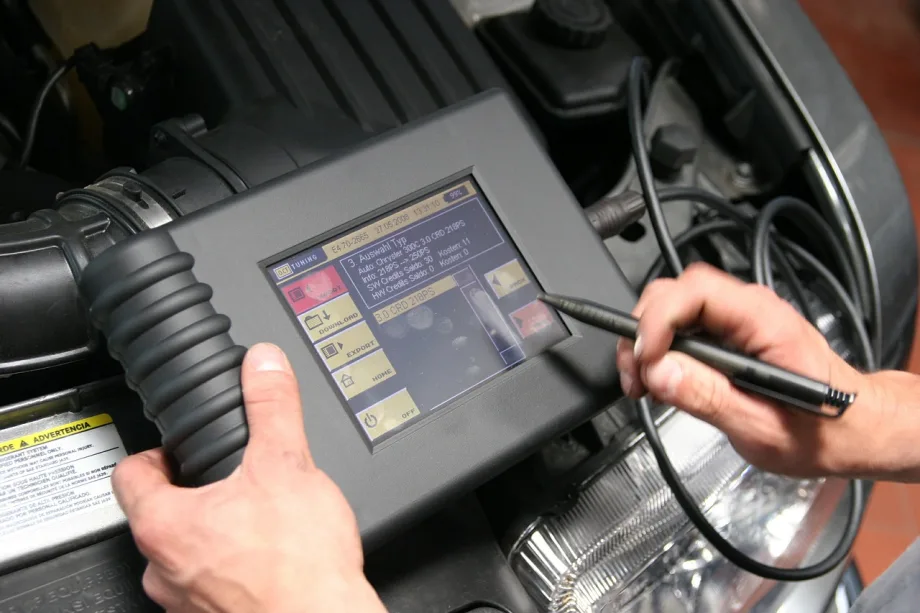
Vehicle parts are no longer only made up of metals and plastics, they now include sophisticated electronics, cameras, and sensors.
Photo via Delphinmedia/Pixabay.
4 min to read
Vehicles today are computers on wheels. With about 100 million lines of code, that’s more than twice that of an F-35 fighter jet or the Large Hadron Collider, the largest energy particle collider and the largest machine in the world.
Advanced Driver Assistance Systems (ADAS) are responsible for an increasing percentage of that code. Technologies such as blind spot detection, forward collision warning, and adaptive cruise control are now available on mainstream models. Soon they won’t even be an option, as 20 automakers have committed to making automatic emergency braking (AEB) standard on virtually all their models by Sept. 1, 2022.
As such, vehicle parts are no longer only made up of metals and plastics, they now include sophisticated electronics, cameras, and sensors. Replacing a windshield, repairing a bumper, performing a front-end alignment, or merely a loss of voltage or disconnection of electrical circuits could necessitate ADAS recalibration. These systems must be repaired to ensure they return to OEM-certified working order. The fact that the technology isn’t readily visible to the naked eye makes it more complicated.
Data from Mitchell, a major provider of collision repair diagnostics, shows that average repair costs grew from $2,904 in the third quarter of 2016 to $3,413 in the fourth quarter of 2019. (Insurance claims across this period show even greater increases.) Meanwhile, scanning and calibration frequencies have both jumped even more dramatically.
The repair industry, already saddled with a shortage of automotive service technicians, has not yet caught up with the rate of ADAS penetration. A 2019 survey by the Equipment and Tool Institute (ETI) found that 62% of new car dealers responded that they are equipped to handle ADAS diagnosis, repairs, and recalibrations, while only 26% of independent repair shops said they were equipped.
Certainly, fleet operators have a lot more than just bigger repair bills to worry about: An improperly repaired sensor on an AEB system could fail to judge the distance to a vehicle in front of it, causing a crash that results in injuries, deaths, and massive financial liabilities. What should you do?
Fleet operators of all shapes and sizes need to formulate an ADAS game plan.
The plan starts when you spec your fleet by understanding the ADAS on each model. With increasing proliferation, this might be easy to miss. After identifying your vehicles’ ADAS technologies, you must make sure that your repair facility — whether in-house or outsourced — has the training and equipment to handle ADAS.
It’s time to double down on technicians’ education. Do they meet current OEM and I-CAR (Inter-Industry Conference on Auto Collision Repair) training and certifications?
All major auto manufacturers now have position statements on their vehicles’ requirements for ADAS recalibrations and repairs. Access them and understand them, then confer with your technicians on the details.
For instance, both Ford and General Motors require a pre-repair diagnostic scan during the assessment phase of collision service as well as a diagnostic scan after the repairs are completed. This is to not only verify the repairs were made correctly, but also ensure that new faults have not been introduced during repairs.
You must also ensure that your technicians have the right tools to recalibrate ADAS, as the great majority of scan tools aren’t equipped to properly handle ADAS in vehicles from 2019 and 2020 model years, just as ADAS proliferation spiked. Of course, the newer the vehicle, the higher the complexity.
Owing to the newness of the technology, case law involving ADAS has not produced any clear precedents. Yet lawsuits regarding collisions in which a repair deviated from an OEM’s specifications have yielded enormous damage awards. It’s not a stretch to make the same connection with the mishandling of ADAS repair and recalibrations.
Certainly, more ADAS is good for all of us: A study by AAA estimates that ADAS technologies have the potential to prevent a combined total of about 40% of all passenger vehicle crashes.
Yet ADAS can’t prevent all crashes. The need to scan and recalibrate systems will increase, just as skilled labor, equipment, and training costs continue to increase as well. Fleet operators will look to mitigate these financial burdens — but can’t do so by cutting corners on ADAS recalibration and repairs.
Topics:ADAS
More Blog Posts

2021 Ford Transit Offers Versatility for Fleets
For the 2021-MY, Ford made ergonomic enhancements for drivers and added an available Parcel Delivery Package. This follows a major refresh in 2020, which added a Crew version, a new standard engine, standard active safety technologies, and embedded telematics to the Transit van family.
Read More →
Recognizing the Other Essential Drivers
Vocational and business fleet drivers don’t get the attention that truckers do. Yet they too are on the front lines, and their jobs often bring them into uncontrolled environments every day.
Read More →
The Future is Electric, But…
With an increasing emphasis on emissions reductions mandates, will fleet operators get caught between clean technologies on their way out and an electric future that hasn’t yet arrived?
Read More →
6 Trend Lines from the 2019 Work Truck Show
From giant leaps in torque and towing to heavy duty truck personalization and chassis cab styling, these trends emerged from this year’s Work Truck Show in Indianapolis.
Read More →
They’re Coming for Your Diesel
In Southern California and other parts of the world, regulators are coalescing to ban, or severely curtail, diesel vehicles. There’s a growing disconnect with the mandates to green the environment and the availability of products and technologies to get us there.
Read More →
Hey Cannabis Companies, Welcome to Fleet
An industry is forming, and it needs help with fleet. In the meantime, the fleet industry should know that these new businesses are navigating extraordinary circumstances, which is forcing them to be better fleet operators pretty darn quick.
Read More →
Takeaways from the Fleet Forward Conference
Most attendees — from established fleets and vendors to new players that were only formed five years ago — didn’t know anyone. But that’s exactly the point.
Read More →
Is it Time to Rethink How Drivers Are Paid?
With the ELD rule affecting miles driven, and drivers’ duties increasingly including more than just driving the vehicle, what can be done to more accurately and fairly reflect a driver’s workday?
Read More →
Whatever Happened to CNG?
While the light-duty market for compressed natural gas vehicles has almost evaporated, new near zero emissions technology and drastic reductions in infrastructure costs have reinvigorated the market for medium- and heavy-duty applications — even for smaller fleets.
Read More →
6 Takeaways from the 2018 International Car Rental Show
Technological solutions are finally moving from reality to theory, peer-to-peer platforms are being redefined, China has the biggest room for growth, while Sixt’s U.S. aspirations have only just begun.
Read More →Subscribe to Our Newsletter