


Driving Near Big Commercial Trucks [Fleet Video Safety Tip]
Here is some advice from Driver Solutions and American Trucking Associations on how to share the road with big trucks.

![Driving Near Big Commercial Trucks [Fleet Video Safety Tip]](https://assets.bobitstudios.com/image/upload/f_auto,q_auto,dpr_auto,c_limit,w_920/Screen-Shot-2014-03-06-at-12-50-13-PM_1776060432275_lin8qt.png)
Photo: Driver Solutions
Here’s a video, produced by Driver Solutions, offering six tips on how to share the road more safely with drivers of big trucks. You may want to pass this advice along to your fleet drivers as a friendly reminder.
Additionally, here’s some advice from American Trucking Associations on why you should never follow a truck too closely.
When following behind a truck, leave yourself 20 to 25 car lengths behind it. This may seem like a long distance, but large trucks obscure visibility far more than smaller vehicles. That much room is needed so that you have enough time to react if road conditions suddenly change. A good rule of thumb to ensure that you’ve left yourself enough room is to look for the truck’s side mirrors. If you can see them, then you are in a good place.
You also need to maintain this amount of space because of potential debris. Road debris like lumber or a ladder might have no impact on a large truck. But if that debris was suddenly in front of you because the truck drove over it and you were following too closely, it could have a devastating impact.
On congested roadways, traffic often slows down suddenly. If you are traveling too closely behind a truck you cannot see the slow-down coming.
At highway speeds everything happens very fast. Accidents up ahead or right in front of a truck require fast reactions. Leaving enough space in front of you will allow for that response.
Here are a couple ATA tips on passing a big commercial truck:
When passing a truck and moving back into its lane, make sure you can see the truck’s headlights in your rearview mirror before you cut back in. That allows the truck enough space to slow down or stop if something happens up ahead. A fully loaded tractor trailer can weigh up to 80,000 pounds and take the length of a football field to stop. Most passenger cars weigh around 3,000 pounds and have a much shorter stopping distance. Just because you can stop in time doesn’t mean that the truck behind you can if you’ve cut too close in front of it.
You may wonder why trucks leave space in front of them in heavy traffic. It’s so they have enough stopping distance. Don’t fill in that space and take up that safety buffer that the driver is trying to maintain.
Originally posted on Automotive Fleet
More Operations

Growing Fleets, Bigger Challenges | Business Fleet Brief
From growing pains and weather risks to workers' comp, new vehicles, and telematics gaps, this month's Business Fleet Brief covers what small fleets need to know.
Read More →
Your Business Grew, Did Your Fleet Management Program Grow With It?
Small fleets often grow faster than the processes supporting them. Here’s how to recognize when informal fleet management has stopped working and what to formalize first.
Read More →
Small Fleet Lessons That Can Make a Big Difference | Business Fleet Brief
From used-vehicle costs and lost keys to safety tech and replacement planning, this Business Fleet Brief breaks down practical lessons that can make a big difference for small fleets.
Read More →
Automotive Fleet Opens 2026 Personal Use Survey for Commercial Fleet Managers
Less than two weeks left! Commercial and corporate fleet managers are invited to share how their organizations handle company vehicle personal-use policies, charges, and driver eligibility.
Read More →
You Do Not Have to Be a Big Business to Build the Next Generation
Small businesses may not have the biggest budgets or the biggest fleets, but they do have something powerful. They are close to the communities they serve, and that makes them uniquely equipped to help shape the next generation of automotive and fleet talent.
Read More →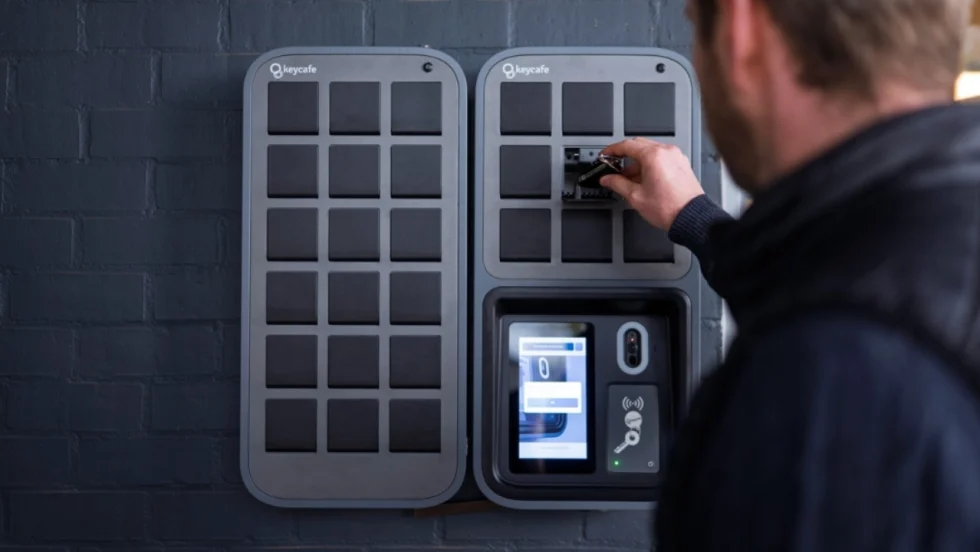
How Small Fleets Can Stop Losing Time to Lost Keys
Lost keys can mean delayed jobs, idle vehicles and unexpected replacement costs. See how small fleets are using digital key management to keep vehicles moving and improve accountability.
Read More →
How to Build Custom Fleet Tools With AI and Vibe Coding [Webinar]
A new Automotive Fleet webinar explores how fleet managers are using AI and vibe coding to automate routine work and create simple operational tools without traditional programming skills.
Read More →
You May Be a Fleet Manager (Even If No One Told You)
Managing vehicles may not be your full-time job, but the costs, risks, and responsibilities are still very real. Business Fleet In Motion is here to help small and growing businesses make smarter fleet decisions without needing a full fleet department.
Read More →
Fleet Management Without a Fleet Department?
No fleet department? The work still has to get done. Learn how to prioritize your most critical vehicles, catch problems before they become downtime, and build a simple routine that keeps your small fleet moving.
Read More →
Why the IRS Raised Its Mileage Rate in the Middle of 2026
Fuel-price volatility drove the rare increase to 76 cents per mile, the fifth midyear adjustment since 2000.
Read More →