



Related article: Corporate EV Fleets: Results From The Road
Electric Vehicles Adoption Will Take Longer Than Expected
Work Truck Week 2021: While the path to EVs looks promising, fleet operations must carefully evaluate many factors and navigate challenges before reaching a 100% conversion.
March 10, 2021
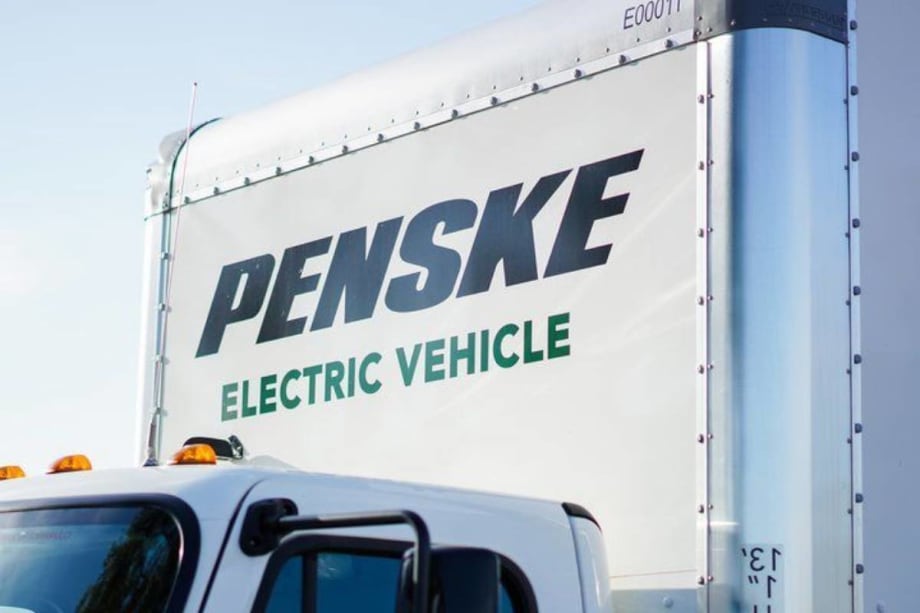
Penske runs six DC fast charging stations at cities in Southern California, which helps it develop the data and insights on running an electric truck fleet.
Photo: Penske
7 min to read
The widespread excitement and enthusiasm among fleet operations that propel the push toward electric vehicles must yield to planning and patience for the long-term, a fleet executive told attendees March 9 at the Work Truck Week 2021 conference.
“This is going to take some time,” said Paul Rosa, the senior vice president of procurement and fleet planning for Penske Truck Leasing. “You need to be ready but you also need to be patient.”
In a session titled “Navigating Historic Industry Transformation: A Journey to Zero,” Rosa calculated some realistic timelines for mass adoption of EVs. He also detailed the step-by-step questions and challenges that fleet managers and operators will inevitably face in adjusting to such a sweeping global ground transportation shift. While he focused on trucks, many of the concepts apply to car, van, and bus fleets as well.
Rosa predicted the journey to full scale fleet electrification will involve many surprises, unknowns, and unexpected delays. The technology behind EVs still needs to mature. A more realistic destination is full adoption and adequate charging infrastructure by 2040, barring any unforeseen diversions or problems, he said.

Paul Rosa, the senior vice president of procurement and fleet planning for Penske Corp., led a session at WTW 21 on Navigating Historic Industry Transformation: A Journey to Zero.
Photo: Penske
Rosa pointed out that given the intense media coverage of the growing interest in electric vehicles, prospective buyers may misunderstand the messaging. “I hear customers feel like they need to move yesterday. The zero emission race is not a sprint. We have enthusiasm, but it won’t be a short, quick race to 100%. I don’t even see it as a marathon. We need the endurance of one, but I don’t see any end points.”
A Timeline Based On Math
There are 4.5 million Class 4-8 trucks on the road today in the U.S. in both private and public sector fleets. About 600,000 trucks on average in those classes are built each year. If you were to do the math based on those numbers, it would take at least eight to nine years to turn over the U.S. commercial truck fleet to zero emission trucks at the current average production capacity at 100% — for 100% adoption, Rosa said. A slow adoption rate would yield a 13% share of electric trucks in the U.S. market by 2035, whereas the fastest one would create a 38% share.
“In 2030 we should be ready for the eight to nine-year stretch to build 100% EV trucks,” Rosa predicted. Timing will be determined by regulation, equipment unknowns, and infrastructure challenges. “What is lurking out there? Hopefully no unexpected surprises that dramatically slow us down.”
The EV truck solution has actually been lingering for more than a century. What may surprise many electric vehicle enthusiasts is that while the mass interest in EVs may seem new, the concept dates to the early 1900s. The GMC Sentinel, and another model that had hub powered motors in each wheel, were among the first versions of electric trucks.
Taking The Steps Toward Electrification
Rosa emphasized that Penske, like all other major fleet operations, has a lot to figure out as it pursues the long-term transition to zero emission electric trucks. Penske Truck Leasing has about 75,000 vehicles in its truck rental fleet, while Penske overall runs 328,000 vehicles at 3,400 locations with 33,000 employees.
The industry is now at the stage of being reshaped by more collaboration, joint ventures, mergers, acquisitions, partnerships and startups, with established companies positioned to provide stability for the industry. Power services, battery companies, equipment manufacturers, and various suppliers are all joining forces and cooperating, Rosa said. “New relationships will steady our journey.”
Meanwhile, customers have many questions and uncertainties, on such issues as vehicle availability, conversions, upfitting, usage, payload, charging times, maintenance costs, and residual value of EVs. Rosa outlined the big four issues facing EV adopters:
Range: Is range sufficient? Will it work with desired payloads? Now, range overall is limited because of technology yet to fully evolve. Vehicles are slowly gaining range through feature such as regenerative braking, but progress will still take time.
Weight: Payloads tend to be limited by battery weight. “You can add battery for more range but the price of that is less payload capacity,” Rosa said.
Costs: Batteries still drive the bulk of the costs of EVs, and as the technology and durability improve, the costs must be figured out. Can you justify the costs when they are multiple times those of diesel trucks?
Charging: When and where are the chargers and are there enough for long-range over-the-road trips? What are charging availability, the cost of electricity, and fleet building modifications required? How will customers use public charging? If you don’t have an over the road solution, does that work for the drivers of your operation? Is there opportunity charging? When will people take time to charge? Are there enough public spots in an area?“If you focus on buying the truck without resolving charging infrastructure, then you have setbacks,” Rosa said. “You must have a solid vehicle strategy and quickly implement charging facility solutions or you will fall behind. It does you no good to have a costly EV parked when you can’t charge it.”
Renewing The Power Sources
Powering EVs involves a balanced, connected arrangement among infrastructure network, charging facilities, and power sources. Electricity derived solely from renewable sources instead of carbon likely won’t be a reality until 2040 at the earliest, Rosa said, so meanwhile energy sources will remain diverse.“Until clean energy is expanded, we have to rely on today’s resources,” Rosa said. “When can utility companies get to these projects? It can take months and years before demand rises.”
Battery makers are pursuing leasing, swapping, recycling and storing as ways to provide clean energy, he added.
What EV Facilities Will Fleets Need?
In evaluating facilities, Rosa detailed how every operation must look at certain criteria: Does it have space to park and charge units? Can you grow your fleet? Is the property capable of bringing in power needed and desired? Is the property owned or leased, and if leased, is the landlord willing to invest in EV facilities? How long will your operation be there? Do electrical panels have to be upgraded? How much time does it take to obtain permits? What is the cost of the upgrade project(s)? Is grant funding available and for how long?
Once those questions are addressed, more crop up: What is the best site design? How will the facility be constructed? What is the testing program? Do you have charging capable of serial and/or singular hook-ups? What is the timing of charging needs for vehicles? What is backup power for blackouts? Will you have a generator and onsite battery storage?
Larger fleets of 25+ trucks can involve extensive upgrading and exponential costs, Rosa warned. To illustrate the planning and precision needed for infrastructure, Rosa detailed how Penske, for example, runs six DC fast charging stations at cities in Southern California. The fastest possible charge for a Class 8 tractor is about four hours. “You can’t charge all 20 trucks at the same time at charging stations.”
One full battery charge on 20 trucks uses as much electricity as an average home uses in a year. “One of these trucks, charged every day, annually will use electricity to equivalent to what 12 homes use in a year.”
Developing A Prudent EV Plan
Customers are excited about EV adoption and wish it could happen faster, but the first steps involve preparation, he said. “You have to be prepared and you must have a plan. Zero emissions is the goal.”He advised fleet operations to develop strategies for vehicles, facilities and charging. “You need all three to be answered. Education yourself and stay informed because it’s all changing often.” Fleet operators should find trusted, knowledgeable sources to advise and guide their processes.
In the next few years, Rosa foresees more collaboration, partnerships and mergers.Data connectivity will shape the direction for companies as it becomes a huge driver of decision making and helps fleets become more cost effective, efficient and safer.
Vehicle technology, design, performance and spec options will improve as well while battery density will increase leading to less weight and lower costs. That likely will lead to declining costs for EVs.
Another hopeful sign is that fleet drivers tend to love electric trucks. He said they have been overwhelmingly positive in their comments, praising EVs for being easy to drive, providing a smooth quiet ride with steady braking, and climbing hills faster.
Despite a long and challenging journey, the EV transition to the 100% mark has left the harbor, heading out for two decades of development. That means fleet operators must form and keep updating plans, learn and adapt with patience, and seek the best resources to in making decisions along the way.
Originally posted on Charged Fleet
More Green Fleet

Fleet Forward Conference Introduces One-Day Passes for 2026
New one-day registration gives fleet professionals the flexibility to attend Tuesday, Wednesday, or Thursday, with passes available for $199 through Sept. 18.
Read More →
Teletrac Navman Adds Mixed-Energy Tracking to TN360
Energy Hub combines fuel card data, EV charging activity, reimbursements, and vehicle energy use in one dashboard for fleets operating gasoline, hybrid, and electric vehicles.
Read More →
Ford Pro e-Telematics Helps Fleet Track E-Transit Efficiency
Canadian electrical contractor Fize Electrique shares how it uses Ford Pro e-Telematics to drive and track efficiency in the battery-electric Fords in its fleet, mostly comprised of E-Transit vans, even in the brutal cold of winter.
Read More →
How to Maximize Benefits of PHEVs In Fleets
Plug-in hybrid vehicles can reduce fleets’ carbon emissions as well as range anxiety. This analysis shows the positive impacts of proper PHEV use, and the negative environmental and financial consequences if your drivers aren’t plugging them in.
Read More →
How Increased CAFE Standards Will Affect Fleets
The year 2026 will mark a turning point with multiple regulations converging to push for greater fuel economy in cars and trucks.
Read More →
How To Reimburse Electric Vehicle Drivers for Charging at Home
Calculating reimbursement for at-home EV charging requires lots of precision, but several options are available ease the process for fleets.
Read More →
Buying vs. Leasing Electric Vehicles: Pros & Cons
As your fleet plans out its electrification roadmap, consider whether buying or leasing EVs make sense for your needs. Here’s what to consider.
Read More →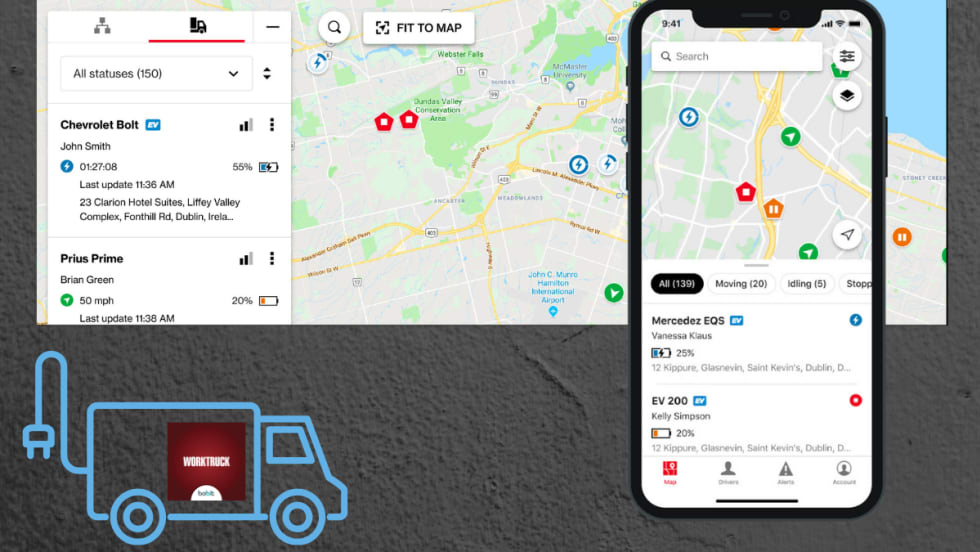
Verizon Connect Adds New EV Features to Reveal
Beginning next month, Verizon Connect Reveal customers in the U.S. and Canada will be able to more effectively support various vehicle types – both gasoline-powered and EVs – in one pane of glass.
Read More →
Jeep Reveals Plan for SUV Electrification
With an eye on becoming a zero-emission SUV leader, Jeep unveils its plans for four new all-electric SUVs in North America and Europe by 2025.
Read More →
Canoo Vehicles Added to Fleet Forward Tour Dallas
Attendees will be able to ride along in the electric Canoo Lifestyle Vehicle (LV) and the Canoo Lifestyle Delivery Vehicle (LDV), along with electric passenger cars, trucks, and vans from eight other automakers.
Read More →Subscribe to Our Newsletter