


There's No Excuse for Bad Driving
Nearly every driver has a reason to justify speeding, talking on a cell phone while at the wheel, or following too closely. A safe driving training expert rebuffs those excuses.

What you do behind the wheel can change so many lives — your’s and your family’s, other drivers and their family’s lives.
Photo: Work Truck
The actions and safe driving behavior of those operating your vehicle fleet are often justified with excuses, excuses, excuses. Every driver has them. Excuses why they need to use their cell phone while driving. Excuses why they can’t keep a safe following distance. Excuses why they speed. If business drivers would honestly confess some of the things they have done while driving, it would probably make most fleet and safety managers cringe.
Here are a few examples of “confessions” from drivers and the excuses they provide to validate the way they drive.
CONFESSION 1: “I use my phone on a regular basis while I am driving.”
The typical excuse for using the phone while driving is: “Driving is downtime. My schedule is so hectic, it’s the only time I have to catch up on my phone calls.”
RESPONSE 1: Using Your Phone
Bunk! Driving is not “down time.” Actually, driving is a multitask job. You must do several things at once to operate a vehicle safely. If you are on the phone while driving, the task of driving will not receive the attention it deserves.
Studies have shown that drivers who are on the phone while driving are as likely to crash as a person with blood alcohol concentration of 0.08 percent. That is the point at which people are considered intoxicated in all 50 states in the U.S. and all the provinces in Canada. There aren’t many people who would say it is okay to drive while drunk. However, some people become indignant if asked to hang up the cell phone while driving.
Many drivers believe it is safe to phone and drive if they use a hands-free device. While keeping two hands on the wheel is better than one-handed driving, this isn’t the primary safety concern in using a phone while driving. Not paying attention to driving is what makes this practice so unsafe. The same studies that discovered phoning and driving is equivalent to drunk driving have found the use of a hands-free device is just as risky as using a hand-held device. It is the distraction of the phone call that creates the hazard.
As for the argument that using a hands-free device while driving is no more unsafe than talking to a passenger, studies have shown that this assertion is not true. It takes more cognitive ability to carry on a phone conversation than to converse with a passenger. Additionally, if something happens on the road during a driver passenger conversation, the passenger stops talking, thereby eliminating the distraction of the conversation.
When a driver’s schedule is so hectic the only time he or she can make phone calls is while driving, another major safety issue must be addressed — the overloaded schedule. Drivers should build time into their schedules to conduct phone calls while safely and legally parked. After the calls are completed, safe drivers put the phone away, let the calls go to voicemail, and focus on the task of driving.
CONFESSION 2: “I don’t maintain a safe following distance.”
The excuse that usually goes along with this confession is: “I tailgate so that other cars don’t pull into the space between me and the car I’m following.”
RESPONSE 2: Safe Following Distances
Drivers from all areas delight in telling horror stories of certain roads they travel on which traffic and drivers are so bad, it is impossible to maintain a safe following distance. The truth is, no matter what highway or byway, traffic is congested and drivers are aggressive everywhere. All drivers have to deal with this reality.
Rear-end collisions are the most common crash every year. They occur for two reasons: inattention while driving (see confession #1) and following too closely.
The proper distance to maintain on a dry road is at least two seconds of space. When the rear of the vehicle in front of you passes a mark, count one-thousand-one, one-thousand-two. If the front of your vehicle reaches that mark before one-thousand-two, you are following too closely.
There are times when it is difficult to maintain that space. Just as a driver gains a safe space, somebody pulls in front and takes it away. It can be frustrating and there is no magical solution. To maintain a safe following distance, drivers must put forth a diligent and consistent effort. Once a driver becomes used to maintaining a safety cushion to the front, it becomes a natural habit.
Remember to adjust the following distance for different weather conditions. On a wet road surface, a safe following distance is at least four seconds. At the beginning of a snowfall, increase the distance to six seconds. If snow becomes heavy, or in icy conditions, park the vehicle. There are three ways to control a vehicle — steering, braking, and accelerating. None of these control methods works on a snow-covered or icy surface. Even if you think you can control your vehicle in these conditions, what’s stopping another car from sliding into you? It is best to simply get off the road.
CONFESSION 3: “I consistently travel at speeds well above posted speed limits.”
A few excuses accompany this confession:
Excuse 1. “When I am late for an appointment, I increase my speed so that I get there on time.”
Excuse 2. “I keep up with the flow of the traffic. If they speed, I speed.”
RESPONSE – EXCUSE 1: I'm late for an Appointment
People who constantly run late need to evaluate their time management skills. A driver who is always late for appointments must build more travel time into his or her schedule. In reality, speeding rarely helps make up time. Any ground gained by speeding is quickly eliminated at the next red light or traffic jam.
When you are running late, it seems every light is red, you get behind a school bus that must pick up children every 15 feet, or you have a police car following you. With every red light and school bus stop, the pressure to get to your appointment increases, pressure that leads to speeding and unnecessary risks.
When running late for an appointment, safely park yourvehicle and call ahead. Under a worst-case scenario, the appointment must be rescheduled. The best-case, and more likely, scenario is the person with whom you have the appointment says, “No problem, see you when you get here.”
Calling ahead eliminates the urge to speed and drive recklessly. It takes the pressure off. The truth is, the person you are meeting doesn’t want you to risk a traffic crash simply because you were trying to arrive on time.
RESPONSE – EXCUSE 2: Keeping Up with the Traffic Flow
“I keep up with the flow of traffic” is not a legitimate excuse for speeding. No vehicle code ever written states drivers are allowed to speed as long as everybody else is speeding. If a driver is “going with the flow” and the flow is speeding, that driver can be stopped or the violation. You may feel that fact isn’t fair, but in reality, you were speeding. Use your common sense. Be aware of the driving environment, be cognizant of your speed, and decide what actions are safe.
Drivers Must Make a Decision
We all have excuses for why we drive badly. The truth is, we tend to justify our dangerous driving habits. What must be considered is what can happen as a result of our unsafe driving. What you do behind the wheel can change so many lives — your’s and your family’s, other drivers and their family’s lives.
When driving a vehicle, your main focus should be on driving. Your goal should be to arrive at your destination safely. You have a decision to make when you get behind the wheel. Decide to be safe. Enough with the excuses!
It's easy to take action on solutions that impact driver behavior if you take the time to research and learn more today!
Originally posted on Automotive Fleet
More Safety
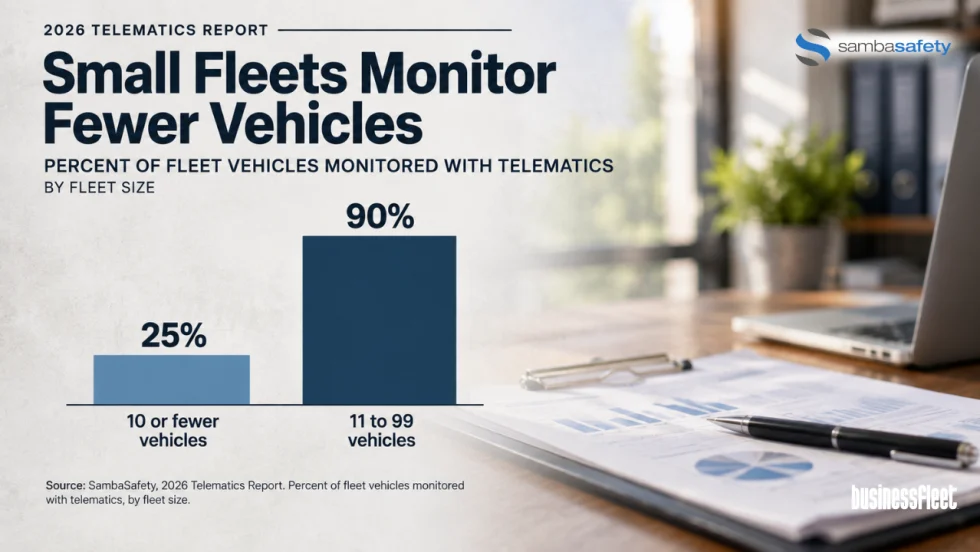
Small Fleets Lag in Telematics Coverage as Industry Moves Beyond Adoption
SambaSafety’s 2026 Telematics Report finds fleets with 10 or fewer vehicles monitor a much smaller share of their vehicles than larger operations, as the industry shifts its focus from collecting data to using it.
Read More →
Back-to-School Traffic Is Not the Risk Fleets Think It Is
Back-to-school traffic does not always mean more crashes. New Empiric Earth data shows why fleets should focus on when and where risk changes.
Read More →
Small Fleet, Big Exposure: How to Reduce Workers’ Comp Risks
For small fleets, one crash can trigger far more than vehicle damage. Here’s how stronger driver safety policies, training, maintenance, and technology can help reduce workers’ comp exposure.
Read More →
Who Makes the Call When Winter Weather Gets Dangerous?
Winter weather can quickly change a small fleet’s plans. Knowing when to reroute, delay, or stop can matter just as much as preparing the vehicles themselves.
Read More →
API Issues Refueling Safety Guidelines
The American Petroleum Institute offers a list of safe vehicle refueling guidelines, including ways to avoid potential problems with static electricity discharges in fall, winter, and early spring.
Read More →
Winter Fleet Prep: Expert Tips to Keep Vehicles Running Smoothly
Cold weather can expose weak batteries, tires, fuel systems, and maintenance gaps fast. Use this winter fleet checklist to prepare trucks and drivers before temperatures drop.
Read More →
8 ADAS Maintenance Tips for Small Business Fleets From Bendix
A dirty camera, bad alignment, or one loose connection could quietly knock your fleet’s ADAS offline. Here’s what Bendix says to check.
Read More →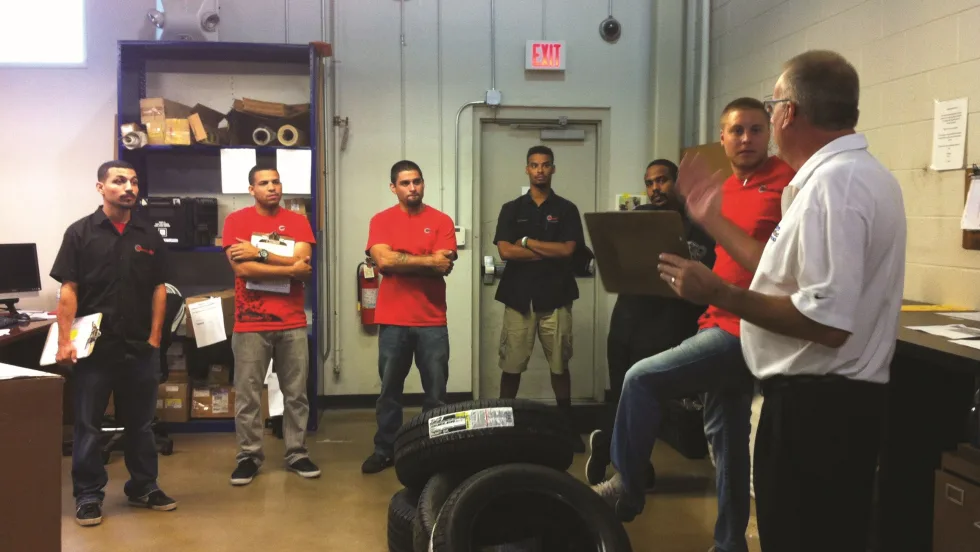
Developing Budget-Friendly Driver Safety Programs
From driver training and safety meetings to one-on-one coaching and incentive programs, several small fleets share how they have developed a safety culture with their drivers using low- to no-cost resources.
Read More →
A 20-Minute Safety Check for Small Fleets Before Operation Safe Driver Week
No safety department? No problem. Here's a practical checklist small fleet managers can use before Operation Safe Driver Week begins.
Read More →
Why Small Fleets Keep Getting Tripped Up by ELD Compliance
Roadcheck revealed a hard truth: most ELD violations aren't intentional. They're caused by small mistakes that can cost fleets time, money, and trust.
Read More →