


6 Market Predictors for 2014
In their fourth quarter conference calls, Avis Budget Group and Hertz gave an outlook on fleet costs, the used car market, fleet optimization strategies and potential acquisitions. Hertz shed light on the fallout from that excess fleet.

The conference calls for the public car rental companies, Avis Budget Group and Hertz, are always good places to mine nuggets of what the future holds in car rental. Of course it’s not a complete picture, because the biggest player, Enterprise Holdings, is a private company.
Here’s an analysis of Avis and Hertz’s statements from their fourth quarter and full-year 2013 results.
1. Why was Hertz over fleeted, and what’s the fallout?
Hertz said its over-fleeting situation in the third and fourth quarters of 2013 was caused in part by integration issues with Dollar Thrifty, combined with weaker-than-expected demand in July and August as well as the government sequestration in September and October. Hertz said it decided to rent the excess fleet rather than sell those units into the seasonally weak used car market. Hertz went so far as to say the over fleeting caused it to miss its earnings guidance for last year.
That surplus fleet had an industrywide effect on car rental pricing in the fourth quarter.
Overall, Avis reported flat pricing year over year in the fourth quarter in North America, with leisure holding steady but commercial pricing declining slightly. As mentioned in previous quarters, Avis is looking to shift its commercial business mix to mid-market and small businesses, which have higher revenues per day.
Hertz said pricing was down 1.4% in the U.S. overall in the fourth quarter, though the “Hertz Classic Brand” (that’s what they’re calling it now) held its own on airport.
Was this over fleeting a perfect storm that caught Hertz by surprise? We can only assume so. Regardless, Hertz says it is right fleeted today, and that rental demand is greater than its fleet capacity.
2. How does pricing look moving forward?
Hertz also attributed the recent unfavorable pricing to its new discount segments Dollar Thrifty and also its deep-discount startup Firefly, which now has 22 airport locations in leisure markets. This mix shift — along with growth in insurance replacements — would dampen prices but create better margins due to lower costs.
According to both companies, pricing in the first months of 2014 is faring much better, though Easter’s shift from March to April will skew the numbers in April’s favor.
Though both companies expect better pricing this year, Hertz isn’t baking a price increase into its 2014 forecast, perhaps being overcautious in relation to what transpired in the fourth quarter.
3. What factors will keep pricing afloat?
Better pricing will come as a result of a few factors, and the first isn’t fun: fleet costs are going up (more on that later), and when they do, it naturally forces price increases.
Second, as Hertz completes the Dollar Thrifty integration, Hertz expects to take cars out of the market, which should drive utilization increases and pricing. In fact, Hertz expects to be back in the 80%-plus utilization range later this year.
The third factor is process improvement initiatives.
Hertz rules over four brands now: “Hertz Classic,” Dollar, Thrifty and Firefly. Hertz said it has only just begun to optimize its price structure across all four brands, made possible by a new counter pricing optimization system.
On its call, Avis mentioned a new “fleet optimization system,” as well, which is designed to help make better decisions on vehicle hold periods, the timing of fleet purchases and disposals and putting the right car in the right place at the right time — all this, it is hoped, will raise prices.
Lastly, volume looks good across the board, which should bode well for prices, too.
4. What happened to the synergies from the various company integrations?
These last two years in car rental saw unprecedented consolidation, with Hertz buying Dollar Thrifty and Avis buying Zipcar and Payless. The benefits have taken some time to manifest, however.
Avis reiterated that it expects $50 to $70 million in synergies through the Zipcar integration. Zipcar is now available at 28 airport locations in North America and Europe, and Zipcars are available at 50 Avis and Budget urban locations. Avis has begun to offer Zipcars to Avis and Budget commercial customers. One-way rentals are on the way.
Avis says Zipcar has started to share “hundreds of cars” in several cities with traditional Avis and Budget rental operations. Those synergies will be realized by the end of 2015, Avis says. Avis reportedly lowered Zipcar's depreciation, insurance, interest, maintenance and overhead costs.
However, Avis reported total revenue for Zipcar of $246 million for 2013. Membership grew 11% to 863,000 at year’s end. Using easy math, this calculates to about $285 per member per year. I checked Zipcar’s revenue for 2012, and it doesn’t compare favorably. With revenues of $278 million on 777,000 members, revenue per member was $316.
Maybe Avis was successful in lowering Zipcar’s cost structure, but this integration hasn’t yet paid off when it comes to revenue per member.
On the Payless front, Avis said it is beginning to “cascade” cars from the fleets of Avis and Budget to Payless. In fact, Avis plans to have all of Payless’ fleet to be former Avis and Budget cars by the end of 2014.
On the Avis call, an investor asked if the company would consider a new acquisition. Avis Chief Executive Officer Ron Nelson responded that the company would consider a “tuck-in” acquisition in the $30 million to $40 million range, but nothing that would consume more than $125 million of yearly cash flow.
That statement would tell you that Avis is standing pat for now with any acquisition of the large independents remaining.
Of course, Hertz made news not with an integration but a separation, with its announcement regarding its intention to divest of its equipment rental unit HERC.
5. What does the used car market look like in 2014?
The used car market has deflated from its historical highs of 2011 and 2012, and car rental companies have calculated this into higher fleet costs. Both Hertz and Avis are counting on declines in residual values of 2% for 2014.
Nonetheless, the used car market looks relatively stable this year, at least so far.
Avis said the used car market has been solid in the first two months of the year, tracking similarly to a positive Manheim Index. Hertz also reported “market conditions which we believe have been favorable compared to our expectations,” and better than Black Book said the market would perform.
Both companies are continuing to work on improving the process and method of car sales.
Avis said its direct-to-dealer AutoNation initiative nets $300 to $400 more per unit than if sold at a traditional auction. By shrinking the time to sale, Avis is primarily saving in fees and interest. Avis admits this is less than 10% of its risk car sales volume, or about 15,000 to 20,000 cars a year at this point.
Hertz is growing its retail sales lots. It had about 35 lots open in 2013 and expects to grow that to 125 by the end of 2014. Hertz’s numbers are similarly small. In 2013, Hertz sold 27,000 units — about 15% of sales volume — through its retail lots and also through its online direct-to-consumer channel, Rent2Buy. Hertz hopes to increase the non-auction channels to 30% in 2014.
6. How high will fleet costs go?
For 2013, Avis reported average fleet costs of $299 per month, a whopping 25% increase over 2012. It just goes to show what a great used car market it was two years ago. Avis expects fleet costs in 2014 to be $300 to $310 per unit in North America, mostly due to declines on prices of used vehicles.
Hertz expects its monthly fleet costs to be $260 per unit, driven by the same 2% decline in residual values that Avis predicted.
Avis and Hertz say fleet cost comparisons will be the least favorable in the first quarter, improving through the year. In Hertz’s case, fleet costs will improve with its expected increased utilization and its fleet-sharing initiatives and the implementation of its price optimization bearing fruit.
Though mitigated by fleet cost increases, the good news is that both Avis and Hertz expect rental car revenues to increase in 2014 by 4% to 8% based on higher rental volume and slightly better pricing.
More Blog Posts
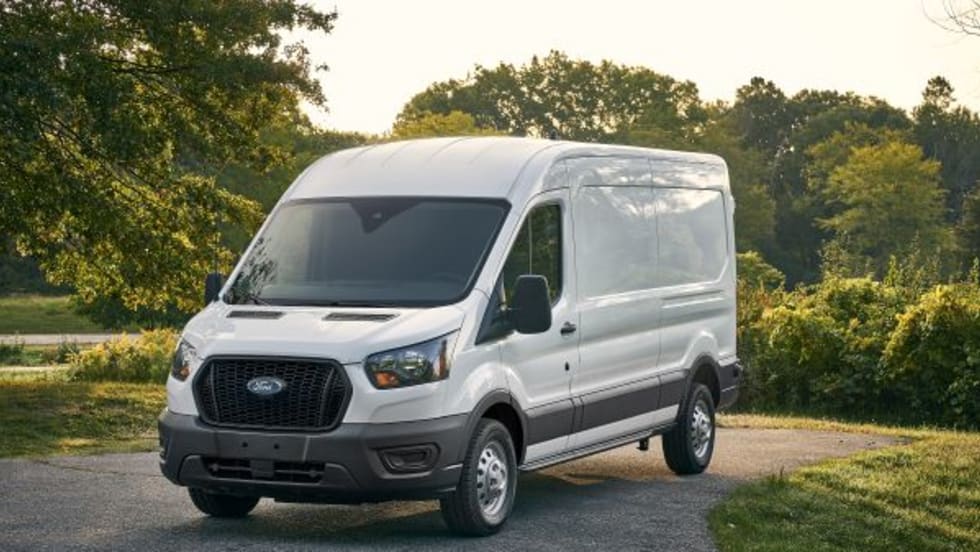
2021 Ford Transit Offers Versatility for Fleets
For the 2021-MY, Ford made ergonomic enhancements for drivers and added an available Parcel Delivery Package. This follows a major refresh in 2020, which added a Crew version, a new standard engine, standard active safety technologies, and embedded telematics to the Transit van family.
Read More →
Recognizing the Other Essential Drivers
Vocational and business fleet drivers don’t get the attention that truckers do. Yet they too are on the front lines, and their jobs often bring them into uncontrolled environments every day.
Read More →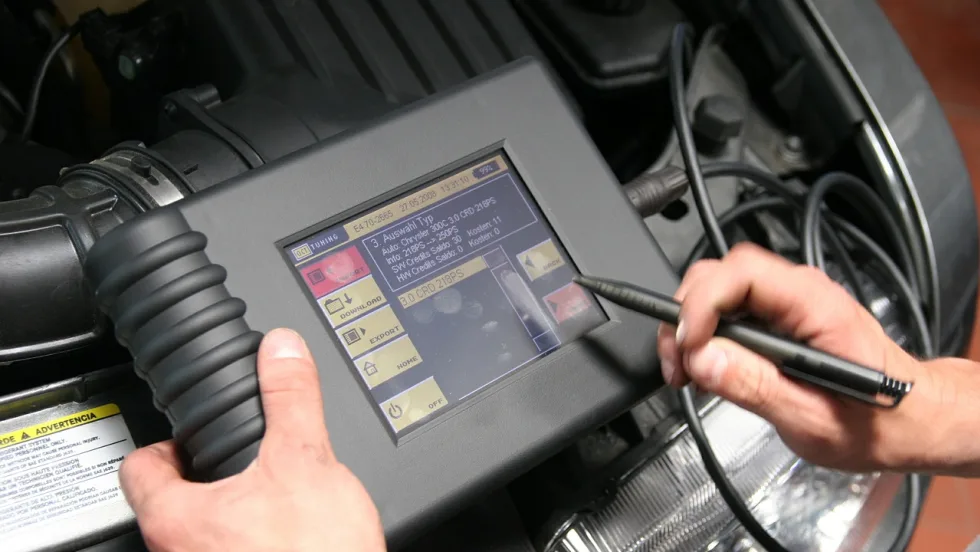
It’s Time to Formulate an ADAS Game Plan
As proliferation of Advanced Driver Assistance Systems (ADAS) increases, skilled labor, equipment, and training costs will increase as well. Fleet operators can’t mitigate these financial burdens by cutting corners on ADAS recalibration and repairs.
Read More →
The Future is Electric, But…
With an increasing emphasis on emissions reductions mandates, will fleet operators get caught between clean technologies on their way out and an electric future that hasn’t yet arrived?
Read More →
6 Trend Lines from the 2019 Work Truck Show
From giant leaps in torque and towing to heavy duty truck personalization and chassis cab styling, these trends emerged from this year’s Work Truck Show in Indianapolis.
Read More →
They’re Coming for Your Diesel
In Southern California and other parts of the world, regulators are coalescing to ban, or severely curtail, diesel vehicles. There’s a growing disconnect with the mandates to green the environment and the availability of products and technologies to get us there.
Read More →
Hey Cannabis Companies, Welcome to Fleet
An industry is forming, and it needs help with fleet. In the meantime, the fleet industry should know that these new businesses are navigating extraordinary circumstances, which is forcing them to be better fleet operators pretty darn quick.
Read More →
Takeaways from the Fleet Forward Conference
Most attendees — from established fleets and vendors to new players that were only formed five years ago — didn’t know anyone. But that’s exactly the point.
Read More →
Is it Time to Rethink How Drivers Are Paid?
With the ELD rule affecting miles driven, and drivers’ duties increasingly including more than just driving the vehicle, what can be done to more accurately and fairly reflect a driver’s workday?
Read More →
Whatever Happened to CNG?
While the light-duty market for compressed natural gas vehicles has almost evaporated, new near zero emissions technology and drastic reductions in infrastructure costs have reinvigorated the market for medium- and heavy-duty applications — even for smaller fleets.
Read More →