


8 Ways Fleets Are Adapting to Urban Migration
In the new mobility eco-system, goods, services, and people still need to be moved — the hard part will be figuring out how and where fleets will take advantage.

America is migrating into its cities, where population growth is outpacing the rest of the country exponentially. The work of fleets — moving goods, services, and people — plays a critical role. How are fleets adapting to this new urbanization? Walking the expo hall and taking in the seminars at the annual ACT (Advanced Clean Transportation) Expo, held this year in Long Beach, Calif., provided insight.
With this urbanization, local governments are tasked with mitigating increasing congestion and pollution while improving accessibility and livability. Commercial trucks emit 50% of diesel particulate matter and 65% of greenhouse gas emissions, though they comprise less than 20% of vehicles on the road. In cities’ close quarters, the problem is exacerbated.
One consequence for fleets is the adoption of electric fleet vehicles in city centers, in spite of lower oil prices and its negative effect on the consumer market for EVs. Transit agencies in Long Beach, Calif. and the San Gabriel Valley in north Los Angeles County are fleeting up with all-electric buses supplied by Chinese manufacturer BYD. The San Gabriel Valley Transit Authority is installing induction plates at bus stops to keep buses charged on the road.
While traditional fuel isn’t going away anytime soon, carriers are figuring out how to match the use case with the vehicle and powertrain — diesel fuel for long hauls, hybrid trucks for regional deliveries, and all-electric trucks for in-city deliveries. Volvo is testing a truck that runs on both diesel fuel and electric power. Entering a city center, the truck crosses a “geofence” defined by a telematics system and switches automatically to electric.
Shippers are experimenting with ways to avoid bringing large trucks into cities altogether, such as dropping off a shipping container at the edge of a city and offloading packages for delivery on electric bicycles and tricycles.
As for drones, they won’t be part of the solution in cities. While delivery drones are under testing now, the FAA requires that drones maintain a three-mile line of site — impossible in urban canyons.
Manufacturers are designing trucks for urban environments. Low-cab forward (LCF) models have increased sales in part because of their versatility in cities. Isuzu recently announced a new Class 6 LCF model, the Isuzu FTR, designed specifically to meet the demands of city fleet use — low average speeds, multiple stops, narrow streets, and tight corners.
Hino’s 195h offers similar functionality with a hybrid powerplant. Specific hybrid and electric incentives in New York City and Chicago and in states such as California and Maryland are helping to drive adoption. Driver shortages will continue to be an issue, and these trucks don’t require a commercial driver’s license.
Fleets will be first adopters in testing the network that connects vehicles to other vehicles and to infrastructure. “Connected vehicles” will not be driverless, yet — but they’re coming much sooner. As fleets buy and cycle vehicles the quickest, the U.S. Department of Transportation expects fleets of all types — rental, commercial, and government — to take part in pilot programs setting up in New York City, Tampa Fla., and Wyoming. The DOT will release specific vehicle-to-vehicle (V2V) and vehicle-to-infrastructure (V2I) guidance this summer.
Fleets will become service providers to address the problem of “urban deserts,” economically depressed areas with fewer resources for fresh food, health care, education, and banking. Purpose-built buses and vans are bringing those services directly to areas in need.
City planners are working with fleets to solve “first mile” and “last mile” mobility issues. Municipalities are looking to downsize public buses from large, 60-person haulers to smaller vans to be able to accommodate those first and last miles to and from other public options. A key challenge is to create a “mobility marketplace,” in which fare tokens can be transferred between transportation types using a smartphone app.
Auto manufacturers are providing fleet to drivers in transportation networks. General Motors will soon rent cars on a weekly basis to Lyft drivers in four cities. BYD will rent its e6 long-range electric crossover to Uber drivers in New York City, while carsharing startup Evercar exists solely to rent Nissan Leafs to drivers in the “on-demand economy” in Los Angeles, San Francisco, and Indianapolis.
Manufacturers are growing their proprietary carsharing programs with owned fleet. Daimler’s car2go and Mercedes-Benz Rent, BMW’s DriveNow and Audi on demand are managed by the manufacturer with vehicles under their marques. Ford’s Peer-2-Peer Car Sharing program will allow 14,000 customers in seven cities to rent their Ford Credit-financed vehicles for short-term rentals.
These partnerships are tied together under the heading of “mobility” with an eye toward the future of reduced car ownership and driverless cars. Indeed, the educational focus of this year’s ACT Expo seemed to pivot toward mobility; this is happening at other transportation conferences.
Lyft and Uber have disrupted transportation by using personal vehicles for what used to be handled by an owned fleet. But in the migration away from personal ownership of vehicles, the model as it exists today falls apart. Goods, services, and people still need to be moved, and some entity still needs to own, manage, and maintain the transportation devices. This could fall on fleets — the hard part will be figuring out how and where to take advantage.
More Blog Posts
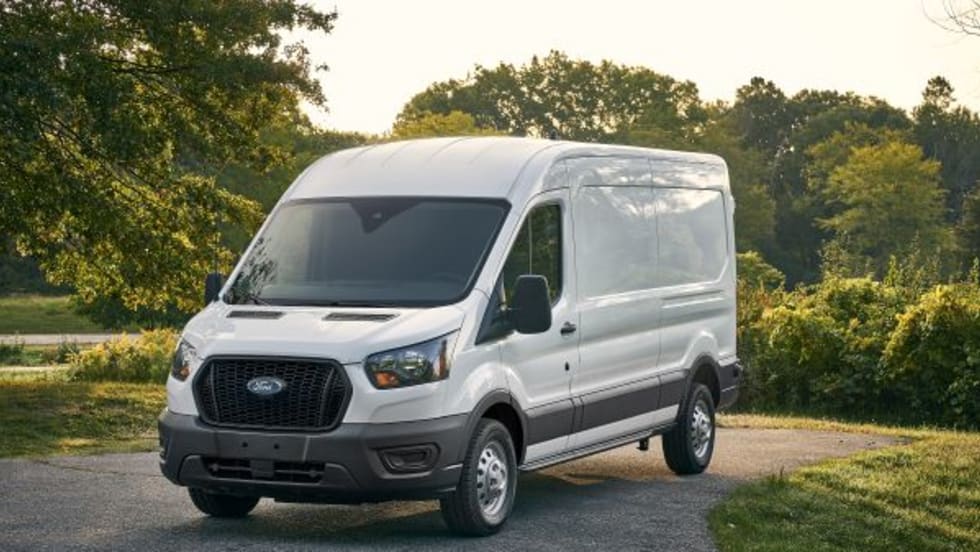
2021 Ford Transit Offers Versatility for Fleets
For the 2021-MY, Ford made ergonomic enhancements for drivers and added an available Parcel Delivery Package. This follows a major refresh in 2020, which added a Crew version, a new standard engine, standard active safety technologies, and embedded telematics to the Transit van family.
Read More →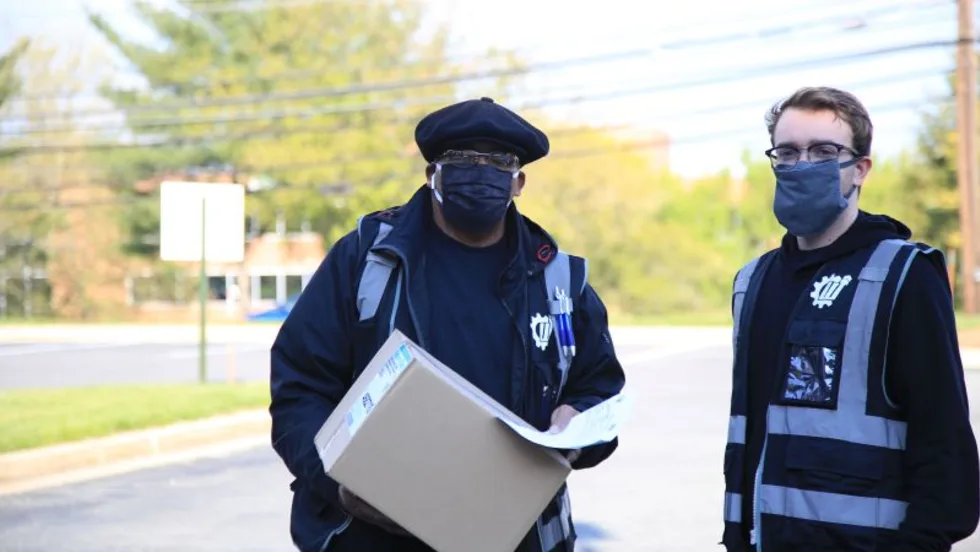
Recognizing the Other Essential Drivers
Vocational and business fleet drivers don’t get the attention that truckers do. Yet they too are on the front lines, and their jobs often bring them into uncontrolled environments every day.
Read More →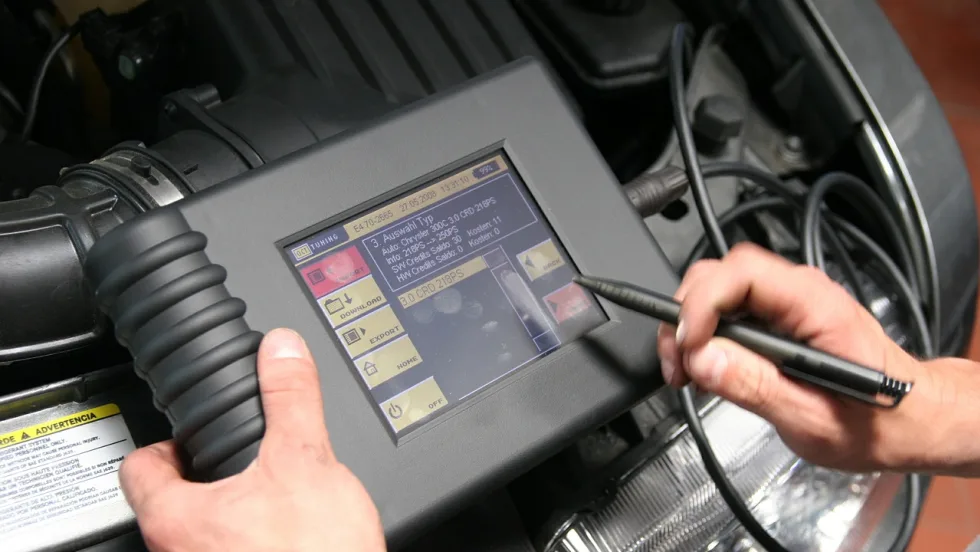
It’s Time to Formulate an ADAS Game Plan
As proliferation of Advanced Driver Assistance Systems (ADAS) increases, skilled labor, equipment, and training costs will increase as well. Fleet operators can’t mitigate these financial burdens by cutting corners on ADAS recalibration and repairs.
Read More →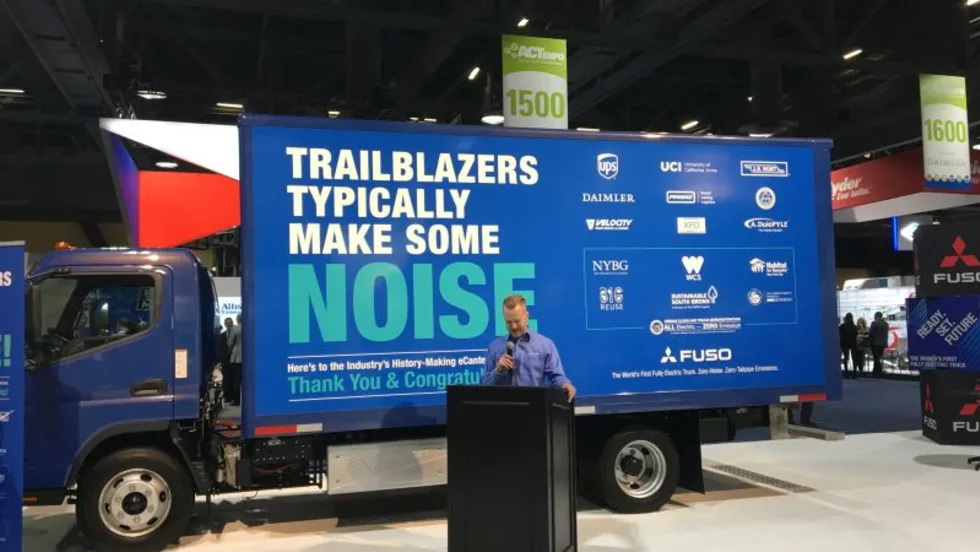
The Future is Electric, But…
With an increasing emphasis on emissions reductions mandates, will fleet operators get caught between clean technologies on their way out and an electric future that hasn’t yet arrived?
Read More →
6 Trend Lines from the 2019 Work Truck Show
From giant leaps in torque and towing to heavy duty truck personalization and chassis cab styling, these trends emerged from this year’s Work Truck Show in Indianapolis.
Read More →
They’re Coming for Your Diesel
In Southern California and other parts of the world, regulators are coalescing to ban, or severely curtail, diesel vehicles. There’s a growing disconnect with the mandates to green the environment and the availability of products and technologies to get us there.
Read More →
Hey Cannabis Companies, Welcome to Fleet
An industry is forming, and it needs help with fleet. In the meantime, the fleet industry should know that these new businesses are navigating extraordinary circumstances, which is forcing them to be better fleet operators pretty darn quick.
Read More →
Takeaways from the Fleet Forward Conference
Most attendees — from established fleets and vendors to new players that were only formed five years ago — didn’t know anyone. But that’s exactly the point.
Read More →
Is it Time to Rethink How Drivers Are Paid?
With the ELD rule affecting miles driven, and drivers’ duties increasingly including more than just driving the vehicle, what can be done to more accurately and fairly reflect a driver’s workday?
Read More →
Whatever Happened to CNG?
While the light-duty market for compressed natural gas vehicles has almost evaporated, new near zero emissions technology and drastic reductions in infrastructure costs have reinvigorated the market for medium- and heavy-duty applications — even for smaller fleets.
Read More →