


A New Way to Finance Rental Fleets?
With the cost of capital at a staggering 12-15 percent today, two rental car company announcements to lease fleet vehicles provide an indication as to how deals will get done moving forward.

With the wholesale market on the rebound and the Chrysler bankruptcy judge ordering Chrysler to honor repurchase agreements (and GM likely to follow), figuring out how to finance fleet is the rental car industry's most pressing need right now.
The halcyon days of cheap credit are over. There was no disaster in car rental; no one had to liquidate entire fleets. But with a virtually insolvent bond industry, the backstop to the securitization market is gone-as is 4-5 percent cost of funds.
With the struggles of the entire automotive industry, the cost of capital is a staggering 12-15 percent, a chasm of millions of dollars for the major RACs compared to the halcyon days of cheap credit. How will fleets get financed moving forward?
Marty Young and Tom Pernsteiner of Loughlin Meghji + Company, who specialize in corporate strategy and debt restructuring and have considerable experience in the automotive sector, have an idea.
With the demise of securitization, Young and Pernsteiner say that financing will come from one of two sources - asset-based loan (ABL) facilities, or the OEMs themselves.
Asset-based loans have not shown up yet in car rental, but they're coming. "This is a position that the traditional banks are very comfortable with," says Young.
(Do not confuse asset-based loans with asset-backed commercial paper, which was a function of the securitization market.)
Before, a lot of loans weren't made because if the cash flow wasn't there to service them, no one wanted to do the deal. (And we all know how much cash is available in car rental operations.) But in the last 10 years the concept became popular knowing that you could still do the deal as long as you had enough of an equity cushion through assets that could be liquidated. The concept was applied to retailers like Circuit City, as well as other companies with healthy receivables and inventories such as consumer products.
This type of loan works if you can run an efficient liquidation. Hence, a nice fit with rental fleets.
In terms of financing source number two, the OEMs, two recent developments give some indication of where the industry might be going.
Hertz recently announced it is working on a deal with two "investment grade" manufacturers (read: non American) to lease as much as 20 percent of its fleet. Avis Budget announced a similar, yet smaller lease deal.
Leasing? Though small RACs have been leasing for years, does leasing make sense for the big guys?
Unlike a traditional risk sale or repurchase program, in these new lease deals the manufacturer will hold title to the car. This allows for better financing terms, as a lot of the risk burden is alleviated for the manufacturer because it has the right to yank the cars immediately without a repossession or court hassle.
And with manufacturers holding onto titles they're better able to control mileage and term, further mitigating risk. "There is some wisdom in a metered approach, especially with the market the way it is right now," Young says. "Regardless of industry, if you can move to some form of metering, you may pay more for it, but it won't be something that will crush you as you should be able to pass cost onto customers or else just turn it off."
This brings up some interesting dynamics. With anticipated mileage caps on these deals, cents-per-mile overages incurred by the RACs will quickly eat away at rental profits. (Will this then force a return to per-day mileage caps on the rental?)
Also, how would the manufacturers treat damage at the time of turnback? Will they be pickier about dents and dings than when accepting a repurchase unit?
Most commercial leases are written for 36 months or more-short-term leases saddle the lessee with the biggest depreciation hit in the life of the vehicle. But these rental leases will most likely be written for a year, if that, which seemingly doesn't make economic sense for the RAC.
But this is where the OEM meets the RAC halfway in the deal. It's now getting even costlier for manufacturers to have all those cars sitting around, and they're looking for creative ways to get them on the road. (One manufacturer recently sold thousands of new cars at auction!) A subsidized lease deal to rental fleets through a captive finance company is one way of doing this.
Young thinks that as precious as capital is right now, these lease deals will be around for awhile.
In the future, the model will fit an asset-based loan formula: an ABL will assign a liquidation value to the cars and based on that value the banks will advance a certain percentage. The rest would be made up through some sort of subordinate financing facility.
Young says the cost of debt capital for a good ABL-with good asset coverage and good cash flow-is 7-8 percent, or 8-10 percent when factoring the cost of equity component. It's a far cry from securitization at 5 percent, but pretty good in this market, under the circumstances.
Comments?
More Blog Posts
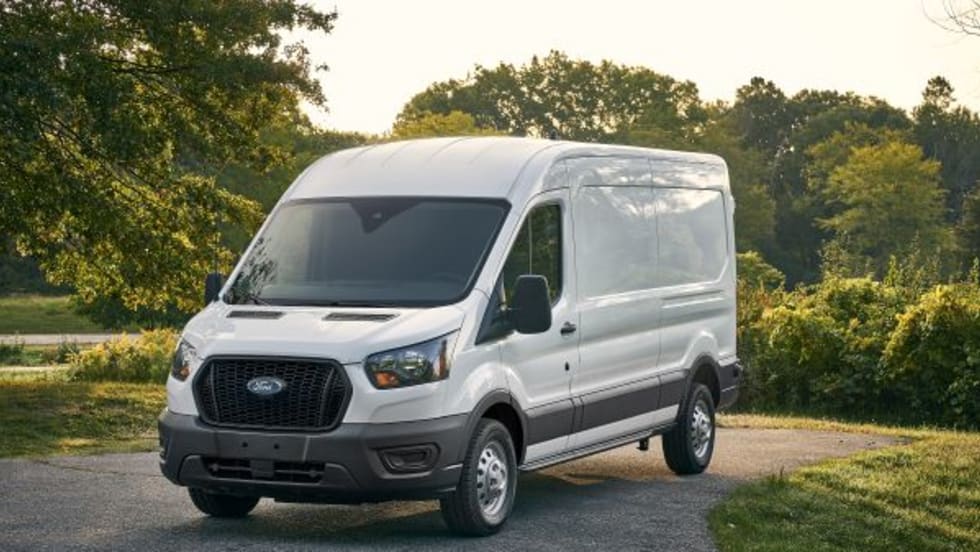
2021 Ford Transit Offers Versatility for Fleets
For the 2021-MY, Ford made ergonomic enhancements for drivers and added an available Parcel Delivery Package. This follows a major refresh in 2020, which added a Crew version, a new standard engine, standard active safety technologies, and embedded telematics to the Transit van family.
Read More →
Recognizing the Other Essential Drivers
Vocational and business fleet drivers don’t get the attention that truckers do. Yet they too are on the front lines, and their jobs often bring them into uncontrolled environments every day.
Read More →
It’s Time to Formulate an ADAS Game Plan
As proliferation of Advanced Driver Assistance Systems (ADAS) increases, skilled labor, equipment, and training costs will increase as well. Fleet operators can’t mitigate these financial burdens by cutting corners on ADAS recalibration and repairs.
Read More →
The Future is Electric, But…
With an increasing emphasis on emissions reductions mandates, will fleet operators get caught between clean technologies on their way out and an electric future that hasn’t yet arrived?
Read More →
6 Trend Lines from the 2019 Work Truck Show
From giant leaps in torque and towing to heavy duty truck personalization and chassis cab styling, these trends emerged from this year’s Work Truck Show in Indianapolis.
Read More →
They’re Coming for Your Diesel
In Southern California and other parts of the world, regulators are coalescing to ban, or severely curtail, diesel vehicles. There’s a growing disconnect with the mandates to green the environment and the availability of products and technologies to get us there.
Read More →
Hey Cannabis Companies, Welcome to Fleet
An industry is forming, and it needs help with fleet. In the meantime, the fleet industry should know that these new businesses are navigating extraordinary circumstances, which is forcing them to be better fleet operators pretty darn quick.
Read More →
Takeaways from the Fleet Forward Conference
Most attendees — from established fleets and vendors to new players that were only formed five years ago — didn’t know anyone. But that’s exactly the point.
Read More →
Is it Time to Rethink How Drivers Are Paid?
With the ELD rule affecting miles driven, and drivers’ duties increasingly including more than just driving the vehicle, what can be done to more accurately and fairly reflect a driver’s workday?
Read More →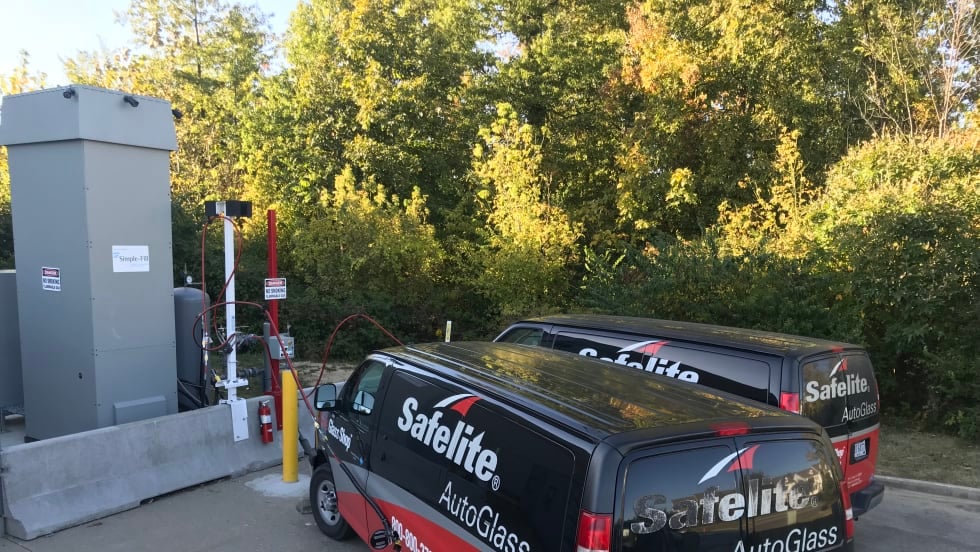
Whatever Happened to CNG?
While the light-duty market for compressed natural gas vehicles has almost evaporated, new near zero emissions technology and drastic reductions in infrastructure costs have reinvigorated the market for medium- and heavy-duty applications — even for smaller fleets.
Read More →