


Actual Car Quality versus Perceived Quality
Perception is reality. This statement is none truer than when it comes to attitudes about cars.

At a kid's birthday party, I once tried to tell a bunch of moms that there is no correlation between kid's hyperactivity and sugar. "Look it up," I said. It's a myth.
I got some stone-faced stares and the conversation turned to dangerous toys in Happy Meals.
Similarly, try to tell a Volkswagen owner that Buicks traditionally score higher in respected quality surveys. You'll get the same stares.
Perception is reality. This statement is none truer than when it comes to attitudes about cars. To back this up, check out Automotive Lease Guide's Perceived Quality Study.
Wait, there's a survey that measures the mere perception of quality? How cynical, you say. How cynical, and yet how influential and real. The perception of quality helps to drive billions of dollars in car sales, and it helps to keep people making and selling those cars employed.
In the Perceived Quality Study (PQS), consumers were polled on their beliefs regarding several quality indicators for the mainstream car brands. (Luxury marques were not ranked.) The latest study, released in June, puts Toyota on top, followed by Honda, Nissan, Subaru, Volkswagen and Mazda. All other brands, 21 of them, fell somewhere below what ALG benchmarks as "industry average."
Toyota and Honda deserve their ranking; they have the actual quality scores and high residual values to back that up.
But the picture gets cloudy for many other brands, and in a few cases, perception is the opposite of reality in the quality department.
Enter Volkswagen. It ranks fourth in perceived quality yet is under the industry average in the just-released J.D. Power and Associates Initial Quality Study (IQS).
In J.D. Power's 2009 Vehicle Dependability Study (VDS), which measures problems experienced by original owners of three-year-old vehicles, VW places next to last out of 37 nameplates, just ahead of Suzuki.
Mazda scores a top five in PQS yet scores 25 out of 37 in IQS and 33 out of 37 in VDS.
Nissan, third in PQS, is in the middle of the pack for IQS and VDS. Fourth ranked Subaru does rank above the average for VDS but ranks 27 in IQS.
Conversely, a few notable American nameplates have excellent quality scores yet lag in perceived quality. Buick is a perennial rock star in VDS and ranks the highest this year, tied with Jaguar. Yet it suffers in perceived quality. Mercury suffers an even more egregious slight.
Ford is getting some love in the perceived quality department; its trucks rank the highest of the American brands. And overall, Ford came in second to Hyundai in year-over-year change in perceived value. The American brand is faring well in both IQS and VDS.
Granted, there are a few notable instances of a lack of correlation between short- and long-term quality scores. Jaguar, first in VDS, is 29 in IQS. How do Jags go from problem child to problem free?
It points out the issues with qualifying a whole brand. One major problem on a single model can put a dent in initial quality, especially for smaller brands. Such is the case with the Jaguar XF.
If a mom tells you her daughter is hyper because of the sugar in the cake, that statement is suspect. But if a VW owner says he has not had any problems with his Passat, then should anyone care about the brand's overall score? I can tell you I've had no mechanical issues with my Mazda3 in four years of ownership.
But here is where perception gets real, dollars-and-sense real. Take the perceived quality scores and compare them with ALG residual values.
ALG analyzed its own numbers and PQS scores to show the strong correlation with perceived quality and retained value.
The top six in perceived value all rank in the top six in residual value.
Yet the same can't be said, necessarily, for actual quality and residual value.
The MINI came in dead last in the latest IQS study, yet Mini Cooper is always at the top of the class in retained value. Buick, Chevrolet, Ford and Mercury rank high in actual quality but under industry average in residual value rankings. In one anomaly, Suzuki ranks 8 in residual value but near last in PQS.
ALG talks about how important "emotional appeal" is to perceived quality. VW did well by marketing that white daisy in the cup holder. Makes you feel all cuddly. And nothing beats the MINI for emotional appeal.
As ALG points out, many other factors are in play when it comes to value retention: smart lifecycle management (i.e. consistent redesigns), aligning supply and demand, managing incentive spending and restricting sales to rental fleets are also vital motivators of brand strength.
And then there are "spillover historical beliefs" of American cars having poor quality. Those beliefs have been spilling over for far too long.
More Blog Posts
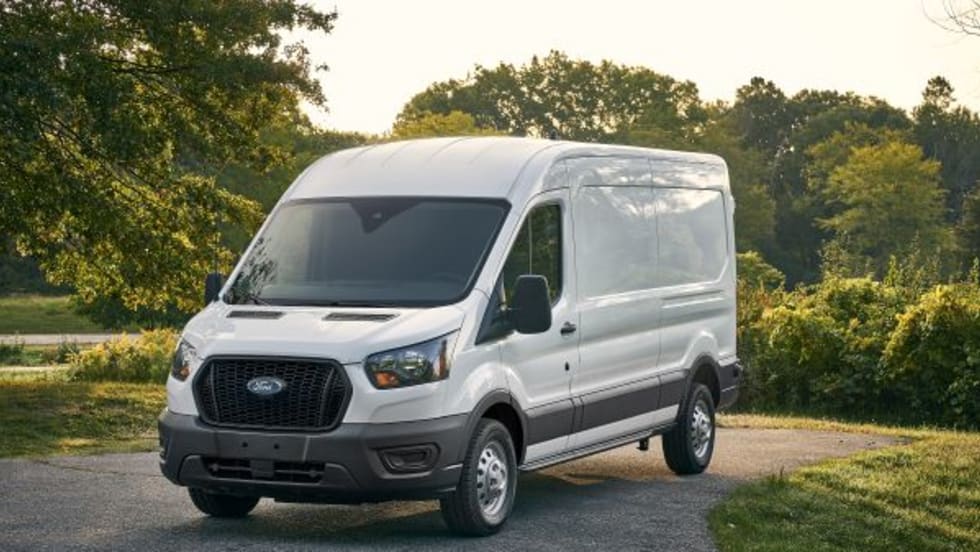
2021 Ford Transit Offers Versatility for Fleets
For the 2021-MY, Ford made ergonomic enhancements for drivers and added an available Parcel Delivery Package. This follows a major refresh in 2020, which added a Crew version, a new standard engine, standard active safety technologies, and embedded telematics to the Transit van family.
Read More →
Recognizing the Other Essential Drivers
Vocational and business fleet drivers don’t get the attention that truckers do. Yet they too are on the front lines, and their jobs often bring them into uncontrolled environments every day.
Read More →
It’s Time to Formulate an ADAS Game Plan
As proliferation of Advanced Driver Assistance Systems (ADAS) increases, skilled labor, equipment, and training costs will increase as well. Fleet operators can’t mitigate these financial burdens by cutting corners on ADAS recalibration and repairs.
Read More →
The Future is Electric, But…
With an increasing emphasis on emissions reductions mandates, will fleet operators get caught between clean technologies on their way out and an electric future that hasn’t yet arrived?
Read More →
6 Trend Lines from the 2019 Work Truck Show
From giant leaps in torque and towing to heavy duty truck personalization and chassis cab styling, these trends emerged from this year’s Work Truck Show in Indianapolis.
Read More →
They’re Coming for Your Diesel
In Southern California and other parts of the world, regulators are coalescing to ban, or severely curtail, diesel vehicles. There’s a growing disconnect with the mandates to green the environment and the availability of products and technologies to get us there.
Read More →
Hey Cannabis Companies, Welcome to Fleet
An industry is forming, and it needs help with fleet. In the meantime, the fleet industry should know that these new businesses are navigating extraordinary circumstances, which is forcing them to be better fleet operators pretty darn quick.
Read More →
Takeaways from the Fleet Forward Conference
Most attendees — from established fleets and vendors to new players that were only formed five years ago — didn’t know anyone. But that’s exactly the point.
Read More →
Is it Time to Rethink How Drivers Are Paid?
With the ELD rule affecting miles driven, and drivers’ duties increasingly including more than just driving the vehicle, what can be done to more accurately and fairly reflect a driver’s workday?
Read More →
Whatever Happened to CNG?
While the light-duty market for compressed natural gas vehicles has almost evaporated, new near zero emissions technology and drastic reductions in infrastructure costs have reinvigorated the market for medium- and heavy-duty applications — even for smaller fleets.
Read More →