


GM Talks Fleet, the Future in Tucson
Highlights of General Motor’s annual product preview included details on the industry’s first front-center airbag, vibrating seats for safety, fuel economy technology, an all-new rear-wheel drive sedan for Chevy and how fleet managers are heroes (finally).

As is tradition, the automakers hold their annual product previews this time of year. General Motors’ show took place last week among the cacti on the hills overlooking of Tucson. What follows isn’t a comprehensive overview; it’s a quick hit of things to come and all around interesting stuff from GM’s world.
Ed Peper, head of GM fleet and commercial, emceed the show. Peper, who has run fleet for about four months, brought an up-close-and-personal vibe to this year’s meeting. He stressed the relationships between the General Motors’ fleet team and its customers with an “it’s business, and it’s personal” message.
Peper is no stranger to many in fleet, with some 28 years of tenure at GM that includes running sales operations at Cadillac and Chevrolet. During the event, Peper was promoted to vice president, fleet and commercial sales. (See announcement for other personnel changes.) We’re waiting for an invitation to the backyard celebration barbecue, Ed!
The relationship message carried through in two unique ways: First, GM highlighted a series of fleet managers that use GM product in “Stories from the Road,” which was broadcast during the general meetings. The vignettes had high production value — broadcast commercial quality — and did a good job in commemorating the folks that run fleet, with a special focus on how they help their specific communities. Who says fleet managers aren’t heroes and movie stars?
Another bit of personalization, and work for a good cause, came during the ride and drive. For driving vehicles in different car classes, participants and were able to designate a donation, on behalf of GM, to one of four charities, commemorated by rubber bracelets for the donors.
On to the products — and again, this is just a quick hit of facts and impressions, but go to the links for further info. While it’s been building for a few years, this year, you really get the sense that GM has transformed itself from a company better appreciated for its truck line into one that now equally serves the sedan market with a breadth of products and a focus on fuel economy.
A scant three years ago, only about 16% of the vehicles GM sold achieved at least 30 mpg on the highway. Today, 40% of its lineup gets 30mpg/hwy and sales of its vehicles that get 30 mpg or better on the highway topped 100,000 last month. And here’s the interesting part — the lion’s share of that savings comes from squeezing substantial fuel savings out of the good ol’ internal combustion engine, without sacrificing room, power and ability to haul.
For instance:
In the first quarter of 2013, Buick will introduce the Encore, a new small luxury crossover, which is expected to get 30 mpg highway. The Encore’s front passenger seat folds flat to extend the cargo length.
The Chevy Sonic gets 40 mpg/hwy on 138 hp and a 1.4L turbo, the only turbo in its class. I drove it at this product preview and was impressed by the surprising amount of front and rear leg room.
The Chevy Cruze Eco gets 42 mpg hwy, with more cargo than Civic Corolla or Ford Focus and is actually classified as a midsize car. We’re waiting for the 2.0L diesel in 2013.
And Cadillac is getting the message. GM projects that the forthcoming Cadillac XTS — Cadillac’s biggest new launch in years — will get 28 mpg highway with plenty of rear leg room and an enormous 18 cubic feet of trunk space (four golf bags!), beating Mercedes E350, Audi A6 and all BMWs on both counts. And it cranks out 304 horsepower from a 3.6L V6.
Cadillac’s new BMW 3-Series fighter, ATS, is the lightest vehicle in its class, weighing 200 lbs less than the 3-Series, which should translate into fuel savings. The Cadillac ATS is available this fall.
But what really moves the fuel economy needle is eAssist, GM’s game-changing start-stop technology that debuted as standard on the Buick LaCrosse and is offered on the Buick Regal. At the ride and drive I hunted down a LaCrosse because I remembered the driving pleasure — smooth, sure acceleration in an understated, luxurious package. And it gets 36 mpg/hwy. That rivals Honda Fit in fuel economy, but in a full-size car. The all-new 2013 Chevy Malibu and 2014 Chevy Impala will offer eAssist as well. Start-stop technology should be government mandated from now on. I’m serious. A little bit.
Let’s turn to safety and technology, together, because they are forever entwined (unless you’re talking about road reflectors, which are the greatest low-tech safety invention ever).
GM’s big safety news is the industry’s first front-center airbag. This airbag actually deploys between the driver and front passenger and is designed to protect during passenger-side crashes, as well as during rollovers. The front center airbag will be standard on the 2013 Buick Enclave, and standard on the 2013 GMC Acadia and Chevy Traverse with power seats.
Cadillac is introducing a Safety Alert Seat on the new XTS and the 2013 SRX crossover this fall. The seat warns drivers by vibrating directionally when potential dangers occur, such as when drifting from a traffic lane or pulling out from a blind parking spot. (Could this new vibration goose thrill seekers into bad behavior? We’ll wait and see.) The seats are part of a package of active safety systems that also include Side Blind Zone Alert and Rear Cross Traffic Alert. In air combat parlance, Cadillac’s “got your six.”
Later this year Cadillac will also introduce CUE (Cadillac User Experience), which I didn’t get to test but folks are talking about it as a game changer when it comes to infotainment systems. It was voted one of the top gadgets of CES 2012. GM uses terms such as capacitive screen and haptic feedback, which dumbed down means it’s got an iPhone-like touchscreen that senses the driver’s hand before it touches the screen. There’s a lot more to it that we’ll save for later.
In other tech news, OnStar has opened up its cloud platform to third-party developers. Its first client was peer-to-peer car sharer RelayRides to allow GM OnStar subscribers to share their vehicles using OnStar technology. Let’s see what other goodies developers can cook up.
OnStar provides a cool mobile app for fleets using the Chevy Volt. Demonstrated by Google’s fleet on video, the app gives the range and state of charge of every Volt on the road or as it is being charged.
And if you want to look even further out, I sat in on a seminar called, “The Human/Machine Interface,” which got into the forward-thinking technological safety features that may one day make it into vehicles. In the near future, look for in-cab cameras that track eye movement and alert for drowsiness. Further out, we might have EEG monitors in the headliner that record our brain’s electrical activity to tell if a driver is in a “high workload position.” Look for heads-up displays to identify and highlight objects (such as a deer darting into the road) in red on your windshield.
Also, the electronics world is moving away from LCD and toward AMOLED (active-matrix organic light-emitting diode). The technology is flexible and transparent; in vehicles it may help in blind spot monitoring by actually displaying “threats” on one of the curved pillars in the car.
And here is a quick hit of tidbits collected during the preview:
- GMC buyers are the youngest of GM’s four brands.
- GM believes total light-duty vehicle sales in 2012 will shake out at 14.0 million to 14.5 million. That’s conservative, compared to a poll of the “blue chip” sales forecasts, which average about 15.1 million right now.
- In August, look for a new gmfleet.com, which will offer better navigation, improved shopping and service and a mobile app.
- All Chevrolets will have a new “Ecologic” window label for MY 2013 that identifies the vehicle’s environmental, driving and recycling characteristics.
- When the new Impala comes out in spring 2013, fleets will have the opportunity to acquire the 2012-model Impala through May 2013. Same deal with the new Malibu — fleets can get their hands on the previous model a few months into the new Malibu’s run.
- Buick and GMC’s IntelliLink infotainment system can now be configured with a navigation system, which was not possible previously.
- For 2013, the fleet-only Chevy Captiva has an ethanol E85 option.
- The Cadillac ATS commercial during the Super Bowl was the most watched spot in U.S. history.
- Buick Verano’s residual values are higher than Audi A4, Lexus IS and Acura TSX.
- The Super Sport is back! Chevy will introduce the Chevy SS full-size performance sedan in late 2013. It will be Chevy’s first all-new rear-wheel drive sedan in 17 years.
More Blog Posts
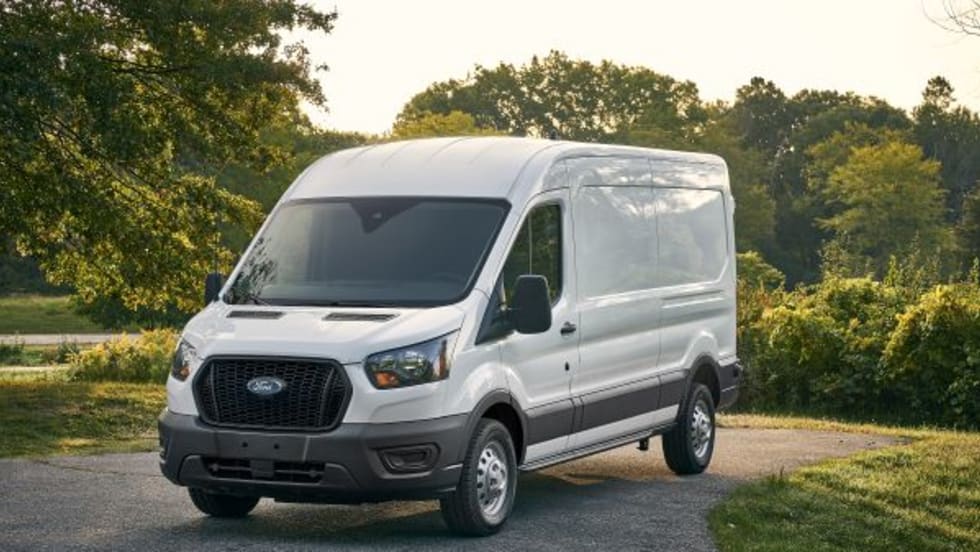
2021 Ford Transit Offers Versatility for Fleets
For the 2021-MY, Ford made ergonomic enhancements for drivers and added an available Parcel Delivery Package. This follows a major refresh in 2020, which added a Crew version, a new standard engine, standard active safety technologies, and embedded telematics to the Transit van family.
Read More →
Recognizing the Other Essential Drivers
Vocational and business fleet drivers don’t get the attention that truckers do. Yet they too are on the front lines, and their jobs often bring them into uncontrolled environments every day.
Read More →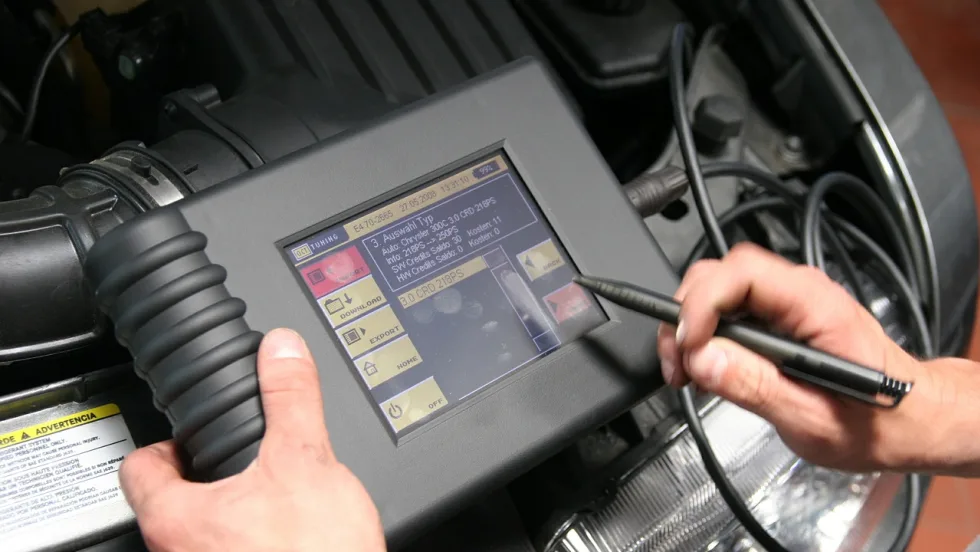
It’s Time to Formulate an ADAS Game Plan
As proliferation of Advanced Driver Assistance Systems (ADAS) increases, skilled labor, equipment, and training costs will increase as well. Fleet operators can’t mitigate these financial burdens by cutting corners on ADAS recalibration and repairs.
Read More →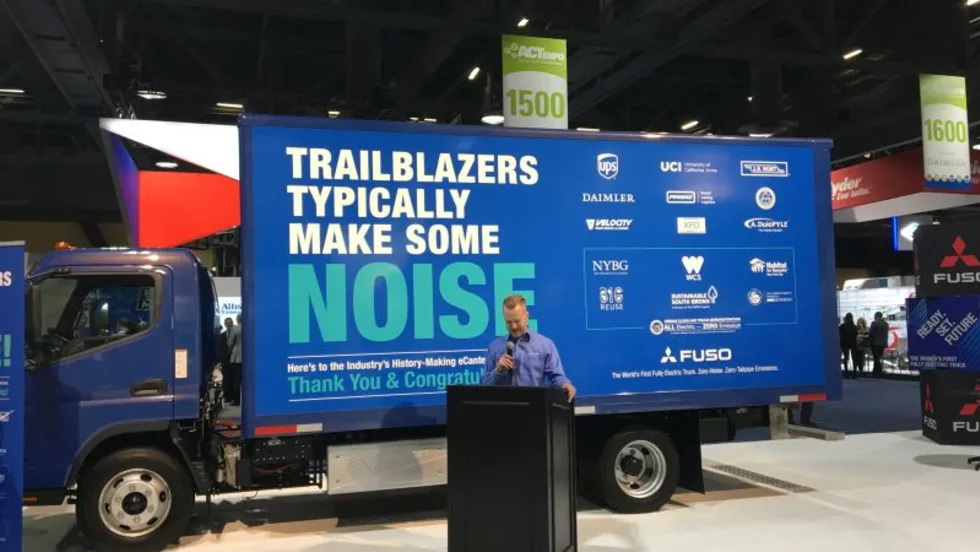
The Future is Electric, But…
With an increasing emphasis on emissions reductions mandates, will fleet operators get caught between clean technologies on their way out and an electric future that hasn’t yet arrived?
Read More →
6 Trend Lines from the 2019 Work Truck Show
From giant leaps in torque and towing to heavy duty truck personalization and chassis cab styling, these trends emerged from this year’s Work Truck Show in Indianapolis.
Read More →
They’re Coming for Your Diesel
In Southern California and other parts of the world, regulators are coalescing to ban, or severely curtail, diesel vehicles. There’s a growing disconnect with the mandates to green the environment and the availability of products and technologies to get us there.
Read More →
Hey Cannabis Companies, Welcome to Fleet
An industry is forming, and it needs help with fleet. In the meantime, the fleet industry should know that these new businesses are navigating extraordinary circumstances, which is forcing them to be better fleet operators pretty darn quick.
Read More →
Takeaways from the Fleet Forward Conference
Most attendees — from established fleets and vendors to new players that were only formed five years ago — didn’t know anyone. But that’s exactly the point.
Read More →
Is it Time to Rethink How Drivers Are Paid?
With the ELD rule affecting miles driven, and drivers’ duties increasingly including more than just driving the vehicle, what can be done to more accurately and fairly reflect a driver’s workday?
Read More →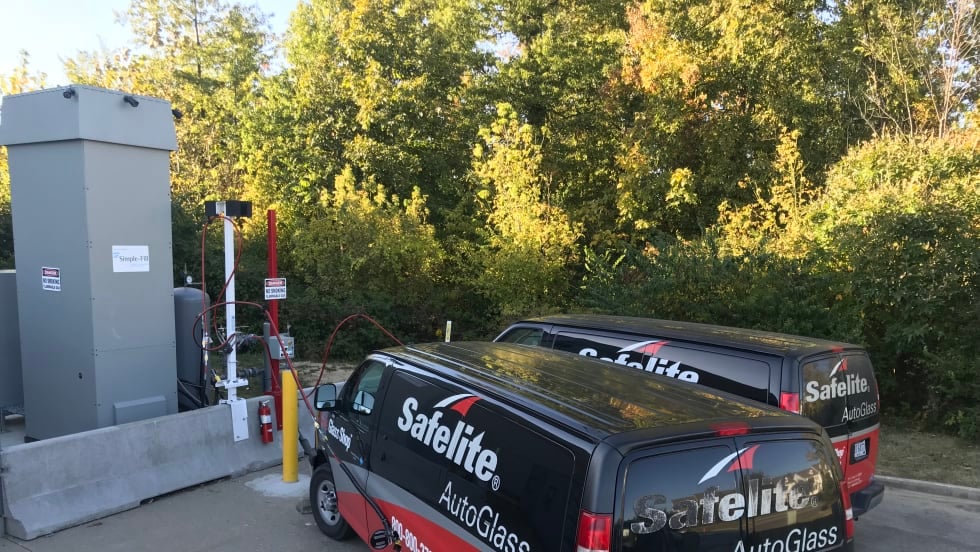
Whatever Happened to CNG?
While the light-duty market for compressed natural gas vehicles has almost evaporated, new near zero emissions technology and drastic reductions in infrastructure costs have reinvigorated the market for medium- and heavy-duty applications — even for smaller fleets.
Read More →