


Greening Your Fleet without Alt Fuels
These initiatives are often low-hanging fruit, and they won’t cost you much, if anything.

One of the goals of the Green Fleet Conference is to help fleets find practical ways to reduce carbon emissions. Implementing alternative-fuel and electric vehicles are part of that equation, but not the only part.
More than one fleet manager at the conference professed to keeping alt fuels on the sidelines for now with the threat that government subsidies will go away, though natural gas seems to be showing it can stand on its own. Yet most at the conference believe that the federal government tax credit for electric vehicle purchases was a dead man walking.
Here is a quick hit of strategies learned at the conference that fleets are implementing now. They don’t involve radical vehicle switches, but they do produce carbon emissions savings and help the bottom line.
Reduce idling by managing driver behavior.
Idling is a big deal, most obviously for truck fleets. A general rule of thumb for large trucks is an extra 10% in idle time equates to losing a percentage point in fuel economy savings. Battery-operated climate control systems work onboard, while truck stops offer electric hookups. Aftermarket products will warn the driver in the cabin for idling too much and then send a notification to headquarters.
But curtailing idling in light-duty vehicles can save fuel and carbon emissions as well, and it’s important to impart this message to drivers. “Reducing idling is a matter of education,” said Patricia Weikersheimer of Argonne National Laboratory. She relayed that if your car is stopped for more than 10 seconds, and you can safely shut the car off, you will save fuel.
Argonne has anti-idling resources that may help your fleet.
Move to smaller trucks and vans and refine your routing.
Benco Dental Supply — a large, privately-held dental supply company with a dispersed, high-mileage fleet — had range and infrastructure issues with alt-fuel vehicles. Instead, the company moved from larger cargo vans to new Ford Transit Connects and Nissan NV200s. The company had to rethink its cargo and routing. For larger items such as dentists’ chairs, Benco now ships from five warehouses to 70 satellite centers using a retail moving company.
At Aramark, its food and facilities fleet switched to smaller vans with the help of a thorough inventory analysis of each payload. Every piece of van inventory was laid out, recorded and weighed. The visual representation of parts on the ground made the process easier, said Tom Winnberg of Aramark. This led to better decision-making on which items could be restocked versus kept in the van when returning to base.
Aramark soothed driver apprehension with moving to a smaller van by engaging them at upfitter locations to better understand their issues and explain the importance of the initiative.
Have part-time drivers run less-traveled routes.
One fleet manager reorganized her drivers by making less-traveled routes strictly for part-time drivers. While the miles traveled stayed the same, it increased the number of part-time drivers.
Company policy dictates that part-time drivers cannot use fleet vehicles for personal use, which decreased wear and tear and fuel consumption on the company’s dime.
Use your Clean Cities coalition.
There are close to 100 Clean Cities coalitions in communities across the country, and their mission is to help fleets reduce petroleum use, through alt-fuel implementation but also through idle-reduction measures and general fuel economy improvements. Many Clean Cities coordinators also run fleets and will provide a myriad of resources, much of it without cost. Their website is a clearinghouse of information.
In the Clean Cities seminar, Robin Erickson of Utah Clean Cities said with one phone call, “We could bring an army, or one.” Colleen Crowninshield of Tucson Clean Cities and Laura Palombi of Michigan said they will help fleet managers “tap into a network of fleets to hear their success stories.”
Downsize your cylinders with smart driver management.
Downsizing from six to four cylinders on passenger vehicles can improve fuel economy by 15% or more, though you may face driver pushback. I spoke with three fleet managers of large passenger fleets about how to mitigate drivers’ reactions. One option is to give them more model choices; one added the Subaru Forester and it was a hit with drivers.
You could offer more options. Another fleet manager moved to a four-cylinder engine on the Chevy Equinox, but gives an AWD option to those in bad weather climates. She also gives drivers OnStar or satellite radio for free for a year to drivers (which the manufacturer offers anyway).
Another option is to move over to diesel. The fleet manager of a large medical lab moved from a Chevy Captiva to a VW Jetta Sportwagen TDI and is averaging 43 mpg.
These fleet managers all said that it’s important to let your drivers test the new four-cylinder cars, especially with the new six and seven speeds and turbocharging. They won’t be disappointed.
Look for the fuel savings when you acquire new vehicles.
This initiative is dictated more by the needs of fleets, but it points to the focus of car and truck makers to improve fuel economy independent of alt-power or alt-fuel. While representatives from the truck OEMs at Green Fleet spoke to varying degrees about their alt-fuel initiatives, each mentioned improvements in aerodynamics, idle shutdown systems, speed limiters and weight reduction.
Waste heat recovery is a new buzz phrase, in which exhaust gas is converted into mechanical power to lower carbon emissions. Mack’s “Super-Econodyne” technology is designed to run the truck at 65 miles per hour but at lower RPMs.
On the light-duty side, General Motors is targeting a 15% reduction in CO2 by 2016 through technologies such as direct injection and cylinder deactivation.
Navigant Research predicts gasoline prices to average $4.95 a gallon by 2017 and $6.06 by 2020, making the need for fleets to conserve fuel more pressing moving forward.
For an overall picture of green trends in fleet culled from the Green Fleet Conference, click here.
More Blog Posts
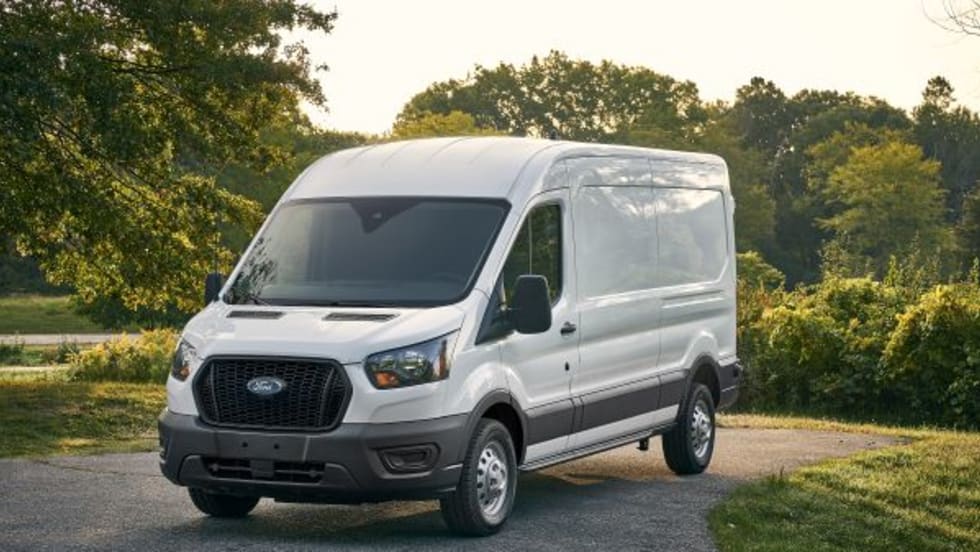
2021 Ford Transit Offers Versatility for Fleets
For the 2021-MY, Ford made ergonomic enhancements for drivers and added an available Parcel Delivery Package. This follows a major refresh in 2020, which added a Crew version, a new standard engine, standard active safety technologies, and embedded telematics to the Transit van family.
Read More →
Recognizing the Other Essential Drivers
Vocational and business fleet drivers don’t get the attention that truckers do. Yet they too are on the front lines, and their jobs often bring them into uncontrolled environments every day.
Read More →
It’s Time to Formulate an ADAS Game Plan
As proliferation of Advanced Driver Assistance Systems (ADAS) increases, skilled labor, equipment, and training costs will increase as well. Fleet operators can’t mitigate these financial burdens by cutting corners on ADAS recalibration and repairs.
Read More →
The Future is Electric, But…
With an increasing emphasis on emissions reductions mandates, will fleet operators get caught between clean technologies on their way out and an electric future that hasn’t yet arrived?
Read More →
6 Trend Lines from the 2019 Work Truck Show
From giant leaps in torque and towing to heavy duty truck personalization and chassis cab styling, these trends emerged from this year’s Work Truck Show in Indianapolis.
Read More →
They’re Coming for Your Diesel
In Southern California and other parts of the world, regulators are coalescing to ban, or severely curtail, diesel vehicles. There’s a growing disconnect with the mandates to green the environment and the availability of products and technologies to get us there.
Read More →
Hey Cannabis Companies, Welcome to Fleet
An industry is forming, and it needs help with fleet. In the meantime, the fleet industry should know that these new businesses are navigating extraordinary circumstances, which is forcing them to be better fleet operators pretty darn quick.
Read More →
Takeaways from the Fleet Forward Conference
Most attendees — from established fleets and vendors to new players that were only formed five years ago — didn’t know anyone. But that’s exactly the point.
Read More →
Is it Time to Rethink How Drivers Are Paid?
With the ELD rule affecting miles driven, and drivers’ duties increasingly including more than just driving the vehicle, what can be done to more accurately and fairly reflect a driver’s workday?
Read More →
Whatever Happened to CNG?
While the light-duty market for compressed natural gas vehicles has almost evaporated, new near zero emissions technology and drastic reductions in infrastructure costs have reinvigorated the market for medium- and heavy-duty applications — even for smaller fleets.
Read More →