


Have the Workplace Violence Conversation Now
The murder of a driver supervisor at a UPS facility last week marks a good time to address workplace violence — a subject that gets little attention before an incident has occurred.

A UPS driver supervisor and his co-worker were murdered last week at the hands of an ex-employee, a driver. The shootings were somewhat overshadowed by the now more infamous and gruesome workplace murder that took place two days later at a food processing plant in Moore, Okla.
While the UPS murder hits a little closer to our world in fleet, both perpetrators had just been fired from their jobs and had returned to their workplaces to take lives.
When is the right time to talk about violence in the workplace? Perhaps now is a good time.
After an incident, two of the many questions asked are: Did we see the signs, and could we have prevented it? “The warning signs are important, but what is equally important is knowing what to do if you observe [the signs], and how to intervene,” says Barry Nixon, executive director of the National Institute for the Prevention of Workplace Violence, a research and training company.
The first step, Nixon says, is to simply get to know your employees and co-workers better. “If you do that, when they’re acting out of the ordinary, you can understand that something is going on.”
That’s not easy in the real world, where management must balance genuine concern with the perception of intrusion. It’s easy for management to fall back on the attitude that the employee’s home life is not management’s concern, Nixon says. Or they may think they know their 20-year employee well enough and “he would never do anything like that.”
In an all-too-familiar refrain, family members of the UPS murderer — a 21-year veteran of the company — were shocked that anything like this could have ever happened. Unfortunately, human beings are capable of acting in ways that are very violent under heightened levels of stress or perceived threats,” Nixon says.
In the fleet world, regular driver meetings are a good forum to introduce the subject of workplace violence. An incident that’s made the news is a good time to bring it up; in the same way reviewing driving tactics in snow is raised at the start of winter.
It can be uncomfortable for supervisors to ask employees to share “what’s going on.” But sometimes, that’s exactly what’s needed. “Just by broaching the subject, you’d be surprised how much people are willing to share,” Nixon says. “A lot of times, they’ll open up — and then it’s a matter of getting them pointed in the direction of getting help with that particular issue.”
Certainly, gaining knowledge of a potential problem can become a burden; however, “This is an area where supervisors should not try to play amateur psychiatrist,” Nixon says. “In my experience, supervisors are not equipped to evaluate whether an employee is a threat. The best course of action is to observe and report to senior management or HR, if available.”
When it comes to employee-supervisor relations, there is a fine line between “tattling” and exposing a problem. “You’ve got to get everyone to understand that preventing workplace violence is everybody’s business, not just management’s,” Nixon says.
“We understand that being a snitch culturally might not be cool,” he says. “We train employees that more times than not, the information you bring forward will get them some help, as opposed to getting them in trouble. No one thinks that this guy might be the one to come back with a gun, but I try to get them to think about that.”
Understanding the warning signs before a violent incident isn’t easy. “Every situation is different and must be evaluated based on the unique individuals involved,” Nixon says, noting that a key factor across the board is to pay attention to a significant change in someone’s behavior. “That’s the neon sign that something’s going on.”
Nixon’s organization has put together a list of early warnings signs of workplace violence (as well as this fact sheet). Of the 13 signs on the list, the manifestation of one or two of them could be just a bad day. “It doesn’t always present itself in a clear picture,” he says. “But if you look back over a four-week period and you start to see multiples of these, then you need to really start paying attention.”
We face the challenge at Business Fleet and Auto Rental News that our readers, predominantly small business owners, are often too busy focusing on their core competencies, leaving fleet as an afterthought. Workplace violence could be viewed similarly, because it’s usually only top of mind when it happens.
But when it comes to workplace violence, it’s always a good time to talk.
“It’s classical,” Nixon says, “that after an incidence has occurred, to hear out of managements’ mouths that they never thought it would happen here.”
More Blog Posts

2021 Ford Transit Offers Versatility for Fleets
For the 2021-MY, Ford made ergonomic enhancements for drivers and added an available Parcel Delivery Package. This follows a major refresh in 2020, which added a Crew version, a new standard engine, standard active safety technologies, and embedded telematics to the Transit van family.
Read More →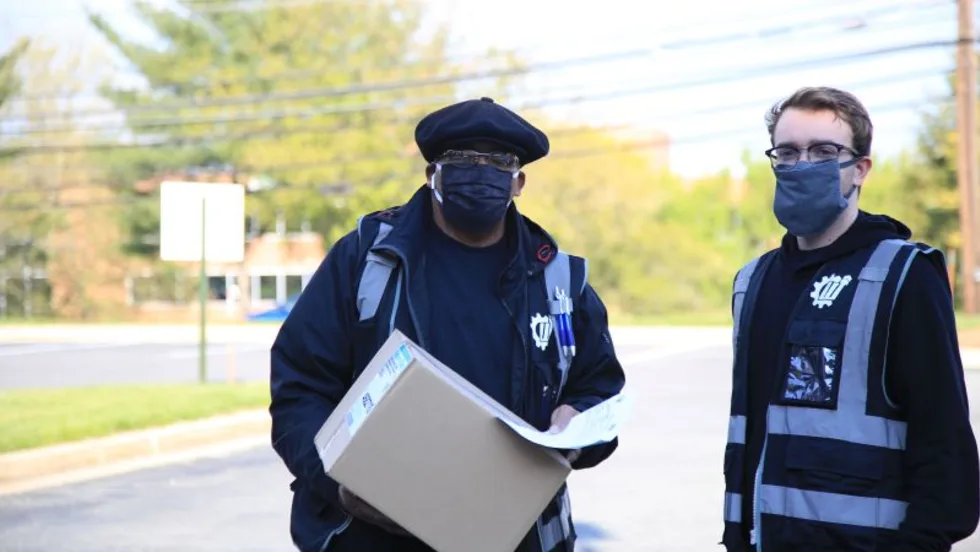
Recognizing the Other Essential Drivers
Vocational and business fleet drivers don’t get the attention that truckers do. Yet they too are on the front lines, and their jobs often bring them into uncontrolled environments every day.
Read More →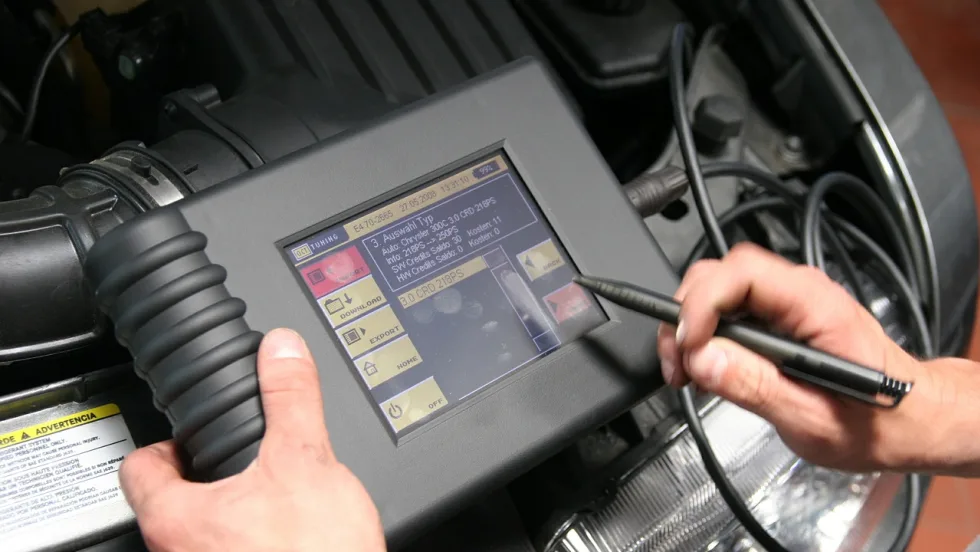
It’s Time to Formulate an ADAS Game Plan
As proliferation of Advanced Driver Assistance Systems (ADAS) increases, skilled labor, equipment, and training costs will increase as well. Fleet operators can’t mitigate these financial burdens by cutting corners on ADAS recalibration and repairs.
Read More →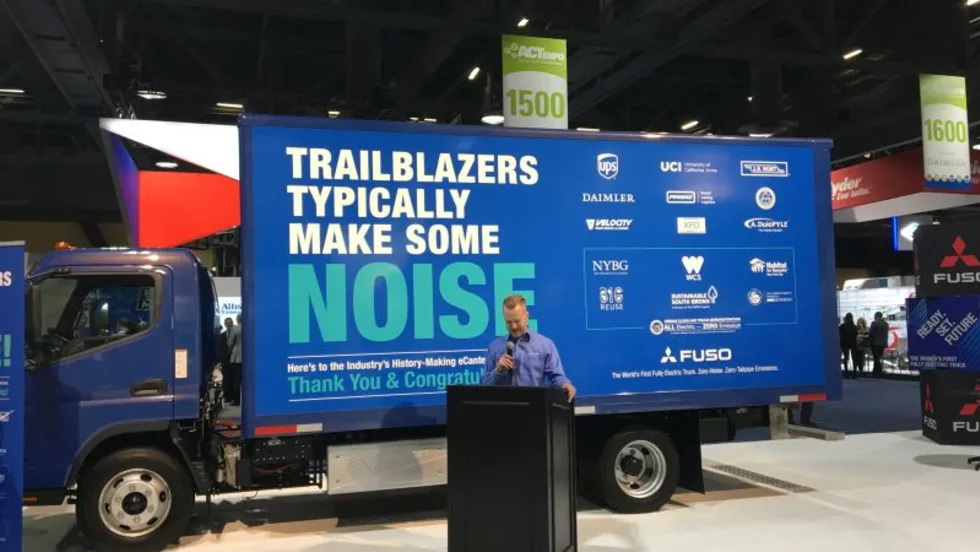
The Future is Electric, But…
With an increasing emphasis on emissions reductions mandates, will fleet operators get caught between clean technologies on their way out and an electric future that hasn’t yet arrived?
Read More →
6 Trend Lines from the 2019 Work Truck Show
From giant leaps in torque and towing to heavy duty truck personalization and chassis cab styling, these trends emerged from this year’s Work Truck Show in Indianapolis.
Read More →
They’re Coming for Your Diesel
In Southern California and other parts of the world, regulators are coalescing to ban, or severely curtail, diesel vehicles. There’s a growing disconnect with the mandates to green the environment and the availability of products and technologies to get us there.
Read More →
Hey Cannabis Companies, Welcome to Fleet
An industry is forming, and it needs help with fleet. In the meantime, the fleet industry should know that these new businesses are navigating extraordinary circumstances, which is forcing them to be better fleet operators pretty darn quick.
Read More →
Takeaways from the Fleet Forward Conference
Most attendees — from established fleets and vendors to new players that were only formed five years ago — didn’t know anyone. But that’s exactly the point.
Read More →
Is it Time to Rethink How Drivers Are Paid?
With the ELD rule affecting miles driven, and drivers’ duties increasingly including more than just driving the vehicle, what can be done to more accurately and fairly reflect a driver’s workday?
Read More →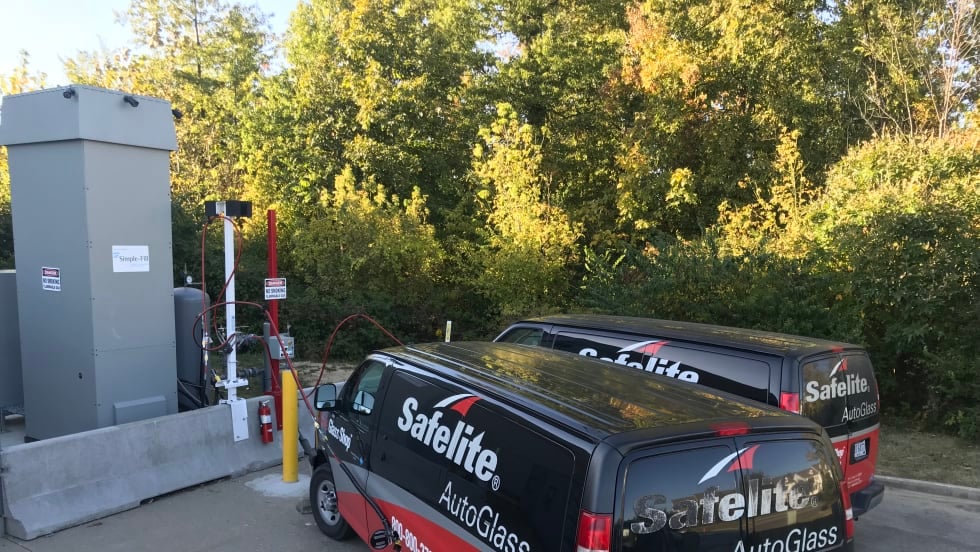
Whatever Happened to CNG?
While the light-duty market for compressed natural gas vehicles has almost evaporated, new near zero emissions technology and drastic reductions in infrastructure costs have reinvigorated the market for medium- and heavy-duty applications — even for smaller fleets.
Read More →