


Making the Case for In-House Maintenance
With a fleet of only 25 vehicles, this rain gutter installation company set up a service facility in-house and is realizing a 60% reduction in maintenance expense.

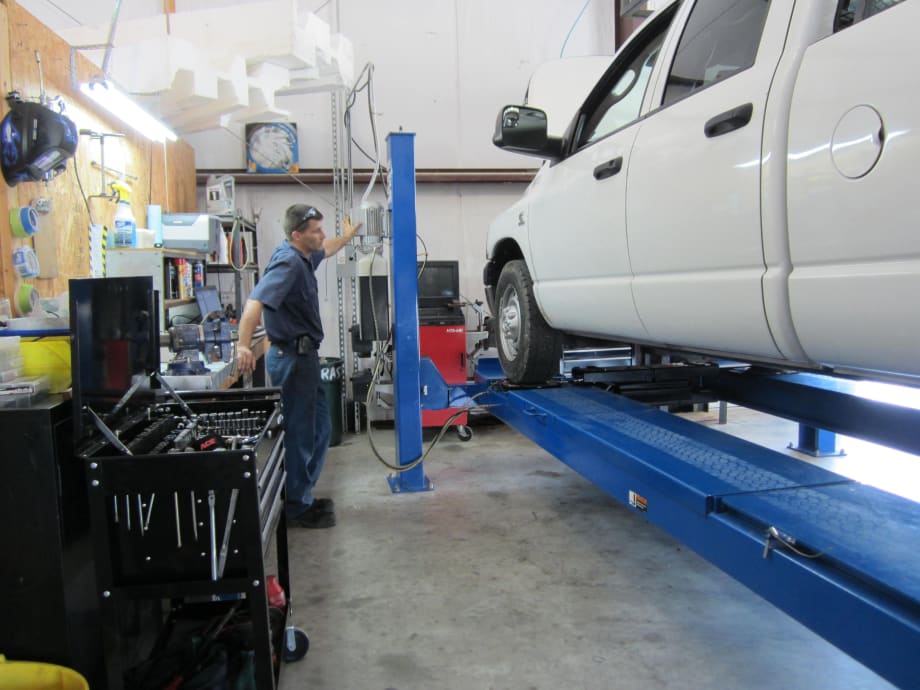
Kulp's shop hands had been successfully doing vehicle repairs, though Kulp decided to hire a trained mechanic. The mechanic started at one day a week, then moved to three days, and will soon come in full time.
For larger fleets, especially those with trucks used in heavy-duty or vocational situations, servicing fleet vehicles in-house is a no-brainer. For small fleets, however, the expense of a company-run maintenance facility would seem to surpass taking your vehicles to an outside shop on an as-needed basis.
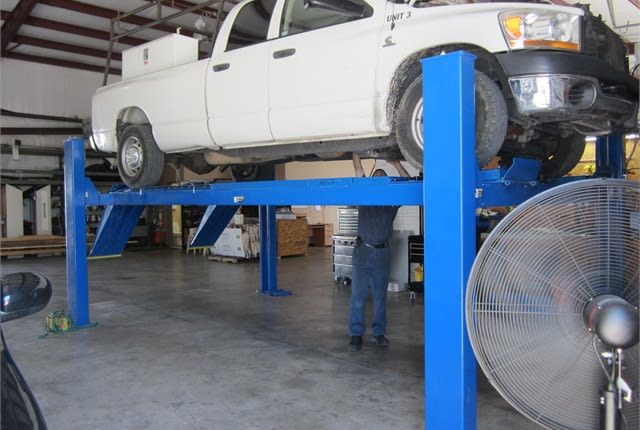
Dallas Gutter King's in-house maintenance initiative is centered around this vehicle lift, purchased for $12,000. Kulp admits he could have bought one used for half that price.
The maintenance facility operated within Dallas Gutter King belies that assertion. The rain gutter installation company runs a fleet of 25 standard work vehicles and, according to owner Gary Kulp, is saving some 60% in maintenance expense by doing most of it in-house.
Kulp runs a typical small service fleet: a mix of Ford E-series vans, Dodge/Mercedes Sprinter vans, propane-converted Ford F-150 pickups, Ford Rangers, Dodge diesel one-ton vans and sales sedans that include Nissan Cubes, a Scion xB, a Mercury Grand Marquis and a Chevy Impala.
The vehicles run from a 2003 Sprinter with 100,000 miles to 2012-model-year Cubes and a 2012 Impala. The local service vehicles put on an average of only 10,000 miles per year, while the ones traveling further do 20,000 to 25,000 miles. The sales vehicles average 30,000 miles, according to Kulp.
These commonplace work vehicles produce commonplace maintenance issues — flat tires, tire balancing and alignments, parts wear and tear and brakes and front ends — along with standard preventive maintenance (PM) needs and the occasional major part breakdown.
“We had a flat tire every other morning,” Kulp says. “It takes time to go to the tire shop. We could plug them onsite, but plugs are temporary and dangerous. I wanted the ability to deal with this onsite correctly at the time the problem is recognized.”
It all started in 2007 when Kulp purchased two used tire balance-and-mounting machines. The in-house maintenance initiative became a reality, however, when Kulp bought a brand-new vehicle lift two years later. A lift is the first component of maintenance, as it allows mechanics safe and easy access to a vehicle’s undercarriage. Kulp then added an alignment rack to the lift to perform wheel alignments.
Initially, Kulp allowed his shop manager and shop assistants to perform basic maintenance, such as oil and filter changes, tire rotations, tire rod replacements and other simple repairs. These basic repairs led to more involved repairs, including front-end work and even complete transmission replacements. “It’s surprising how much you can learn online and through YouTube,” he says. “It’s easy to do if you have a lift.”
Six months ago, Kulp determined he had enough work to hire a trained mechanic to come in once a week. The PM and repair work more than covered his mechanic’s wage, which is more than the national service center chains pay, Kulp says. One day a week quickly turned into three. “The overhead of operating a business is so high that mechanics (in retail maintenance shops) now have to bill $100 per hour or more, and there’s a markup on parts,” says Kulp. “Now I just pay my mechanic’s salary and the parts, and the savings are enormous.”
Kulp bought his lift for $12,000, though he admits he could’ve bought a used one for half that price. The two used balance-and-mounting machines cost $6,000. And Kulp buys parts online for about a third of the price of a repair shop, though timing is critical because parts can take up to seven days to ship.
Comparing standard repair costs to his in-house arrangement, wheel alignments that run $60 to $120 offsite are now done in house for 30 minutes of wages plus a few bucks to cover the depreciation of the equipment. Repairing a front end on a half-ton or one-ton pickup can run $900 to $1,500, whereas Kulp pays for four hours of labor and $200 in parts. Brake jobs can be done for $150 instead of $350 at a service center chain.
Kulp also points out the soft-cost savings, which include the personnel and logistics hassle of getting the vehicles to and from the repair facility and the dependency on the facility for servicing on its schedule.
"A work vehicle could be out for three or four days just because of a fuel filter, especially on a diesel vehicle. Not only are we not billing; I have a crew that’s not happy and looking for work elsewhere,” Kulp says, adding that his drivers were hesitant to mention a problem for fear that taking the truck out of service would disrupt their workday. “Now we hear about problems more quickly and they know that issues will be taken care of on the spot.”
Kulp's shop hands had been successfully doing vehicle repairs, though Kulp decided to hire a trained mechanic. The mechanic started at one day a week, then moved to three days, and will soon come in full time.
Kulp plans to bring the mechanic on full time this year to take the next step — long-term preventive maintenance. The plan is to have each vehicle in the shop about once a month for a complete service. “We’re anticipating more uptime on the vehicles because we’ll get to the big problems before they happen,” Kulp says. Kulp not only expects to extend the life of his tires by a third, but also extend vehicle life by as much as 70%.
For this small fleet, factoring in labor and parts costs savings with longer vehicle lives makes an in-house maintenance facility an easy choice. “In my opinion, if you have space in your shop to put in an auto lift and have more than 15 vehicles, you ought to bring in a part-time mechanic,” Kulp says.
More Blog Posts
2021 Ford Transit Offers Versatility for Fleets
For the 2021-MY, Ford made ergonomic enhancements for drivers and added an available Parcel Delivery Package. This follows a major refresh in 2020, which added a Crew version, a new standard engine, standard active safety technologies, and embedded telematics to the Transit van family.
Read More →
Recognizing the Other Essential Drivers
Vocational and business fleet drivers don’t get the attention that truckers do. Yet they too are on the front lines, and their jobs often bring them into uncontrolled environments every day.
Read More →
It’s Time to Formulate an ADAS Game Plan
As proliferation of Advanced Driver Assistance Systems (ADAS) increases, skilled labor, equipment, and training costs will increase as well. Fleet operators can’t mitigate these financial burdens by cutting corners on ADAS recalibration and repairs.
Read More →
The Future is Electric, But…
With an increasing emphasis on emissions reductions mandates, will fleet operators get caught between clean technologies on their way out and an electric future that hasn’t yet arrived?
Read More →
6 Trend Lines from the 2019 Work Truck Show
From giant leaps in torque and towing to heavy duty truck personalization and chassis cab styling, these trends emerged from this year’s Work Truck Show in Indianapolis.
Read More →
They’re Coming for Your Diesel
In Southern California and other parts of the world, regulators are coalescing to ban, or severely curtail, diesel vehicles. There’s a growing disconnect with the mandates to green the environment and the availability of products and technologies to get us there.
Read More →
Hey Cannabis Companies, Welcome to Fleet
An industry is forming, and it needs help with fleet. In the meantime, the fleet industry should know that these new businesses are navigating extraordinary circumstances, which is forcing them to be better fleet operators pretty darn quick.
Read More →
Takeaways from the Fleet Forward Conference
Most attendees — from established fleets and vendors to new players that were only formed five years ago — didn’t know anyone. But that’s exactly the point.
Read More →
Is it Time to Rethink How Drivers Are Paid?
With the ELD rule affecting miles driven, and drivers’ duties increasingly including more than just driving the vehicle, what can be done to more accurately and fairly reflect a driver’s workday?
Read More →
Whatever Happened to CNG?
While the light-duty market for compressed natural gas vehicles has almost evaporated, new near zero emissions technology and drastic reductions in infrastructure costs have reinvigorated the market for medium- and heavy-duty applications — even for smaller fleets.
Read More →