


Own the Fleet, Own the Future
In the dialogue surrounding new transportation paradigms, fleets have been off the public radar until recently. Here’s what’s going on, and a way for you to participate in the conversation.

Disruption. It used to be a bad thing, like “Who disrupted my nap?” Today, being a disruptor is a badge of pride — you’re a market shaker, a shepherd of change bringing new ideas to a stale industry. These days, you can’t open up a newspaper (I actually mean “content aggregator” in your browser) without seeing the word disruption in an article on transportation. The speed and scale of change has been breathtaking indeed.
But one important sector of transportation — fleet — isn’t as inherently disruptive as the consumer market. Let’s face it, fleet management isn’t as sexy as the CarPlay app or a Tesla in Ludicrous Mode. Fleet doesn’t get the splashy headlines, and that’s a good thing. What fleets do, merely, is move people and goods across this planet, facilitating billions in revenues for the industries they serve.
In these conversations surrounding new transportation paradigms, fleets have been off the public radar until recently. What those in fleet know, the rest of the world is finally understanding: If you own the fleet, you own the future.
Why? First, a future with fewer personally-owned vehicles means someone will have to own and manage this new ecosystem. While this is primarily a consumer offering, new smart mobility concepts are spreading from the consumer realm into business use.
Can businesses deploy carsharing strategically for their employees, or allow ride-hailing under a business account, to alleviate use of a portion of owned fleet? Can electric scooters be deployed to satisfy short delivery trips where parking is a hassle? Can vans be used to carpool during rush hours and then shared during the day — with employees and the general public? Vendors are deploying these systems now, and of course, there’s an app for that.
Fleets are playing a part in shared-use scenarios, which were at one time only found in traditional consumer carsharing applications. Using telematics and carsharing technology, these new systems are forming to serve residential and business complexes, downtown offices, universities, municipalities, and whatever type of community needs personal mobility for their members and workers.
These systems are new types of fleets, and the entities that run them need fleet management — from strengthening manufacturer relations and buying power to gaining spec’ing, residual value, fuel, maintenance, and remarketing strategies.
Auto manufacturers are now service providers too, and while they may not be asking for outsourced fleet management expertise (yet), their mobility divisions are made up of teams with backgrounds in traditional fleet disciplines.
Fleets are even gaining a foothold in the peer-to-peer world.
Technology is enabling the sharing of individual goods and services and inspiring a new way to think about utilization of assets. But while some high-profile peer-to-peer concepts such as Uber Freight have stalled, other peer-to-peer networks are now allowing fleet owners onto their systems. Why? They understand the reliability and efficiency of professional asset management.
What happens to the ride-hailing model if fewer drivers own their vehicles? Does it still make sense to drive for Uber or Lyft? I put this question to a Lyft operations manager recently. He said he believes the current model will grow for five years, and then Lyft will have to pivot.
How ironic. Transportation network companies — the biggest transportation disruptors of the 21st century — are facing disruption in the near future. And yet, the basic concept of fleet remains.
Certainly, the fleet industry will face disruption itself on the path to autonomous vehicles (whenever that future arrives). What happens when truck drivers’ job titles change to “load managers”? How do auto auctions respond when fewer vehicles go through the lanes? Will fleet departments at franchised dealers evolve into a new model?
As cities cope with urban population growth, they’re forming transportation management associations (TMAs), and their first points of contact are the businesses running vehicles in those cities. How can fleets sit at the table in transportation demand management (TDM) conversations?
With these concepts in mind, Bobit Business Media is launching the 2018 Fleet Forward Conference, taking place Oct. 8-10 in San Francisco.
Fleet Forward is, as the name implies, for fleets. Through networking and education, Fleet Forward will facilitate the inclusion of fleet stakeholders of all types in the smart mobility revolution, from intelligent transportation systems, shared and connected vehicles, and changing public policies on the path to autonomous vehicles.
Wherever you are on this path, in whatever stage of “disruption” you find yourself, join us in San Francisco. The end goal of Fleet Forward is to create more efficient fleets. As the fleet world changes and grows in exciting new directions, we’ll be there to help those fleets and their suppliers — in whatever new form they take — succeed.
More Blog Posts
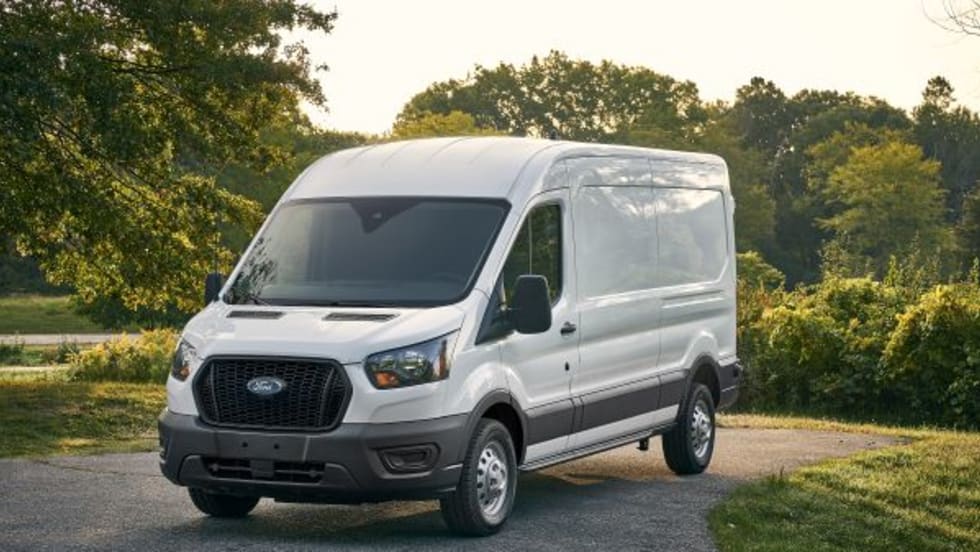
2021 Ford Transit Offers Versatility for Fleets
For the 2021-MY, Ford made ergonomic enhancements for drivers and added an available Parcel Delivery Package. This follows a major refresh in 2020, which added a Crew version, a new standard engine, standard active safety technologies, and embedded telematics to the Transit van family.
Read More →
Recognizing the Other Essential Drivers
Vocational and business fleet drivers don’t get the attention that truckers do. Yet they too are on the front lines, and their jobs often bring them into uncontrolled environments every day.
Read More →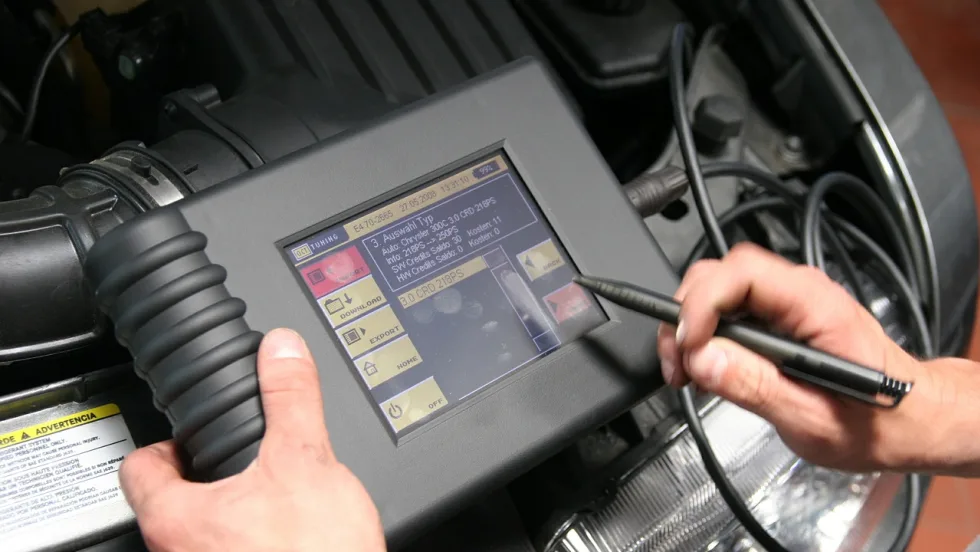
It’s Time to Formulate an ADAS Game Plan
As proliferation of Advanced Driver Assistance Systems (ADAS) increases, skilled labor, equipment, and training costs will increase as well. Fleet operators can’t mitigate these financial burdens by cutting corners on ADAS recalibration and repairs.
Read More →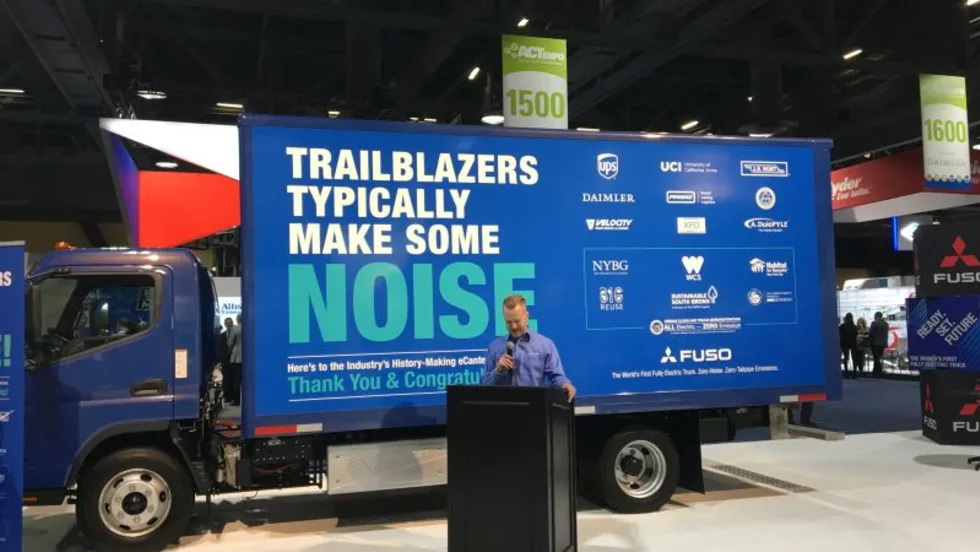
The Future is Electric, But…
With an increasing emphasis on emissions reductions mandates, will fleet operators get caught between clean technologies on their way out and an electric future that hasn’t yet arrived?
Read More →
6 Trend Lines from the 2019 Work Truck Show
From giant leaps in torque and towing to heavy duty truck personalization and chassis cab styling, these trends emerged from this year’s Work Truck Show in Indianapolis.
Read More →
They’re Coming for Your Diesel
In Southern California and other parts of the world, regulators are coalescing to ban, or severely curtail, diesel vehicles. There’s a growing disconnect with the mandates to green the environment and the availability of products and technologies to get us there.
Read More →
Hey Cannabis Companies, Welcome to Fleet
An industry is forming, and it needs help with fleet. In the meantime, the fleet industry should know that these new businesses are navigating extraordinary circumstances, which is forcing them to be better fleet operators pretty darn quick.
Read More →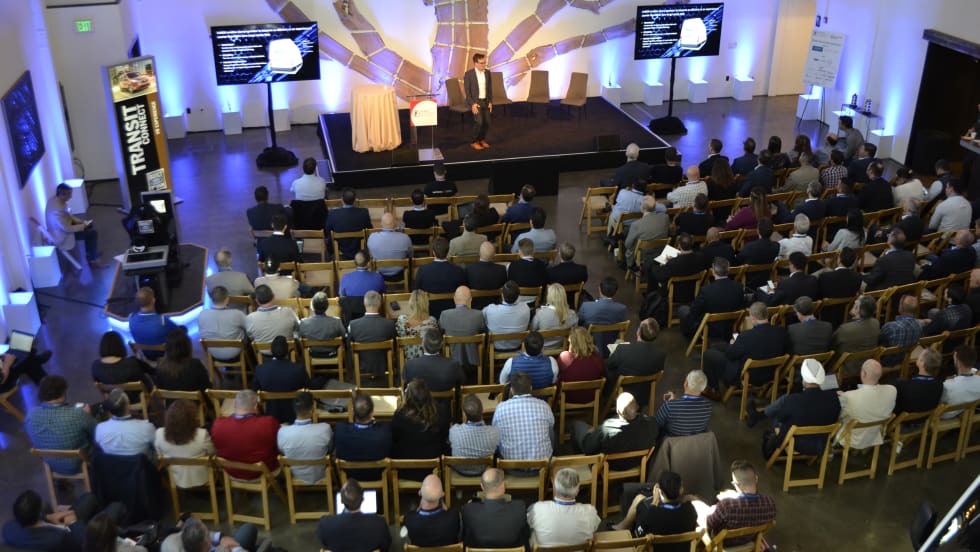
Takeaways from the Fleet Forward Conference
Most attendees — from established fleets and vendors to new players that were only formed five years ago — didn’t know anyone. But that’s exactly the point.
Read More →
Is it Time to Rethink How Drivers Are Paid?
With the ELD rule affecting miles driven, and drivers’ duties increasingly including more than just driving the vehicle, what can be done to more accurately and fairly reflect a driver’s workday?
Read More →
Whatever Happened to CNG?
While the light-duty market for compressed natural gas vehicles has almost evaporated, new near zero emissions technology and drastic reductions in infrastructure costs have reinvigorated the market for medium- and heavy-duty applications — even for smaller fleets.
Read More →