


Rethink Your Tool Hauler
If you’re hauling a lot of tools for your contracting business, dump your pickup and consider this type of custom-built rolling toolbox.

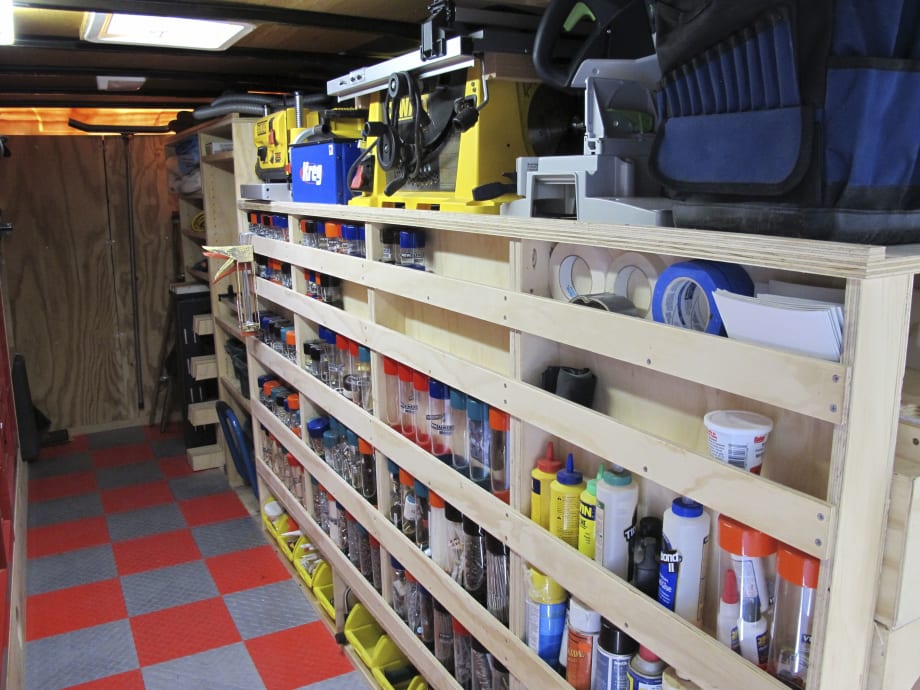
The shelves are built for maximum visibility and accessibility of tools and equipment. With a 3/4" inch lip shelf, "No matter what bump I go over I’ve never had a tool fall out," Paulk says.
“I’m of the opinion that a pickup truck is not a good tool hauler,” says Ron Paulk of Paulk Homes in Anacortes, Wash. If you’ve been hauling your tools in your truck for years, you’re probably thinking, what does this Ron Paulk guy know, anyway?
For 20 of the 25 years that Paulk has been in the residential design and build business, he’s used a trailer — not a pickup truck or van — as his rolling toolbox. Think about it: If you only actually use your tools and equipment for one fraction of your truck’s time on the road, why drag them everywhere?
Using a trailer keeps the truck open for hauling materials, debris or the family, Paulk says, adding that he spends less on fuel because his tools stay on the job site, not as extra weight in his constantly moving pickup. Instead, Paulk plants his tool trailer on job sites for the duration of the job, a few days to a few months. “It’s a mobile shop office,” he says. “It has everything I need and it’s locked and dry.”
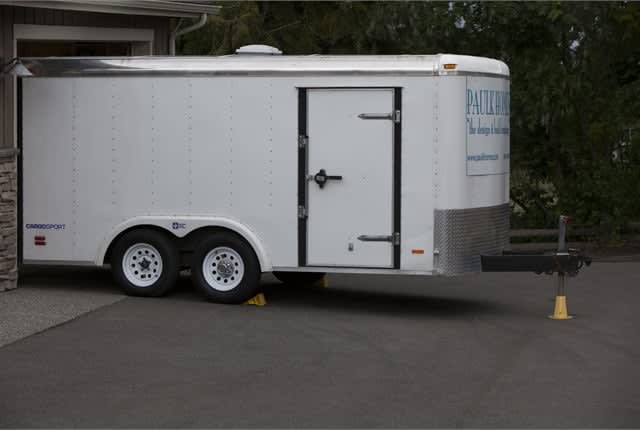
This 16-ft trailer stands at 6 feet, 3 inches and fits in an 8-foot garage door. Subsequent to the photo, Paulk had put a full vinyl wrap on the trailer that advertised his company.
Trailer registration is cheap, as is insurance, when it’s even required (check with your state). Trailer maintenance is virtually non-existent.
Paulk recognizes that maneuvering a tow trailer takes some practice, especially on tight job sites and steep driveways, but the alternative is a much more expensive, dedicated truck or van.
The Specs
Paulk has typically bought a medium-sized (16-foot) tandem-axle trailer that is easily pulled by a half-ton pickup. While his tools and equipment would never exceed the trailer’s payload capacity, he prefers tandem axle to comfortably accommodate any weight and for better road handling. Tandem axle trailers require trailer brakes by law.
In terms of trailer height, Paulk’s requirements include being able to stand in one while also fitting it into a garage with an 8-foot door. For Paulk, this necessitates a trailer height of 6 feet 3 inches, which accommodates his height and the trailer’s wheels, frame and roof vent. Trailers can be bought in increments of 3 inches.
In terms of options, Paulk prefers plywood lining, a ramp door ($600 extra) instead of barn doors and a side door ($350) for quick access. A backup camera is a good call too. A typical ladder rack can be installed on top to haul longer materials, but in Paulk’s case that invalidates his height requirement.
With those specs, a new trailer can be had for about $5,000, Paulk says, adding that there’s no reason to buy used because trailers tend to hold their value. Trailer brands to research include Pace, Haulmark, Wells Cargo and Interstate.
A Custom Interior
As a carpenter, Paulk custom builds his tool hauler interiors, including custom-sized cubby holes to store specific equipment and a work bench for minor tool assembly and repair. The cubbies are built with a ¾-inch lip that holds gear in place yet allows easy access — no bungees or tie-downs needed. Paulk uses clear, hard-plastic Viewtainer cylinders to keep smaller hardware organized and visible.
An option for those not so inclined is to buy one or two rolling toolboxes and mount them inside the trailer without the wheels, Paulk says, and look into trade-specific modular, adjustable shelf and drawer components from companies such as Adrian Steel.
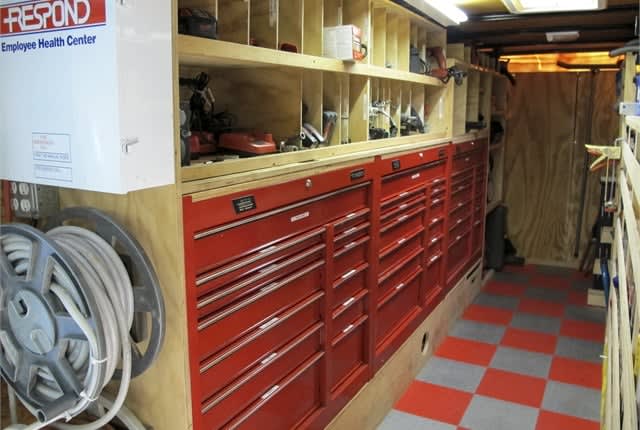
Paulk custom-built his shelving around two common rolling toolboxes, mounted without wheels.
The fully lit trailer is wired with 110v power and is able to connect to a job site via a 100-foot heavy-duty electrical cord accessible through the bottom of the trailer and stored in a garden hose reel. An air compressor has a permanent home in the trailer as well.
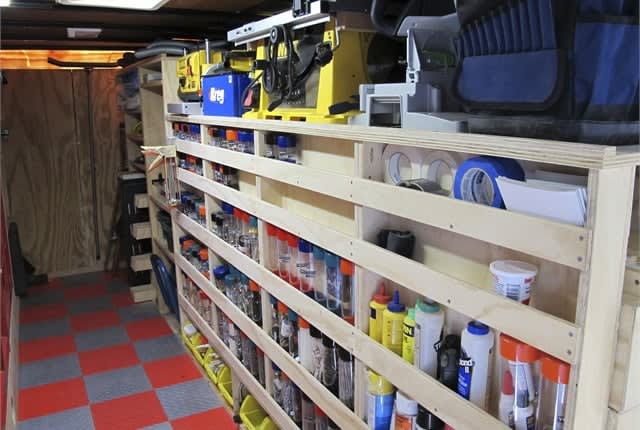
The shelves are built for maximum visibility and accessibility of tools and equipment. With a 3/4" inch lip shelf, "No matter what bump I go over I’ve never had a tool fall out," Paulk says.
The flat white walls of a trailer make for a good rolling billboard, and Paulk maximizes the space with a professional full vinyl wrap. That’s good advertising, though even better, he says, is when potential new clients get a look inside the trailer. “I can’t tell you the amount of work I’ve gotten from people saying if this guy is that organized, he must do good work,” he says.
To view a 3D rendering of one of Paulk’s “mobile toolboxes,” download the free version of the Trimble SketchUp program and search for “Paulk Mobile Wood Shop” in the SketchUp 3D warehouse. The rendering shows the interior of his box truck (not a trailer) though it gives viewers the complete specs of his cabinet, tool holder and cubby hole designs.
Visit this YouTube video below to see a video tour of Paulk’s Ultimate Tool Trailer.
More Blog Posts
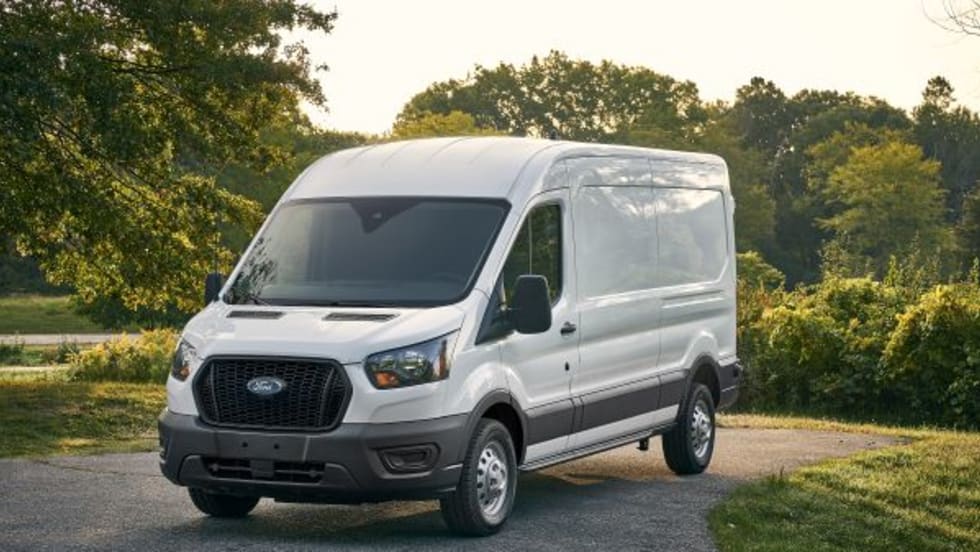
2021 Ford Transit Offers Versatility for Fleets
For the 2021-MY, Ford made ergonomic enhancements for drivers and added an available Parcel Delivery Package. This follows a major refresh in 2020, which added a Crew version, a new standard engine, standard active safety technologies, and embedded telematics to the Transit van family.
Read More →
Recognizing the Other Essential Drivers
Vocational and business fleet drivers don’t get the attention that truckers do. Yet they too are on the front lines, and their jobs often bring them into uncontrolled environments every day.
Read More →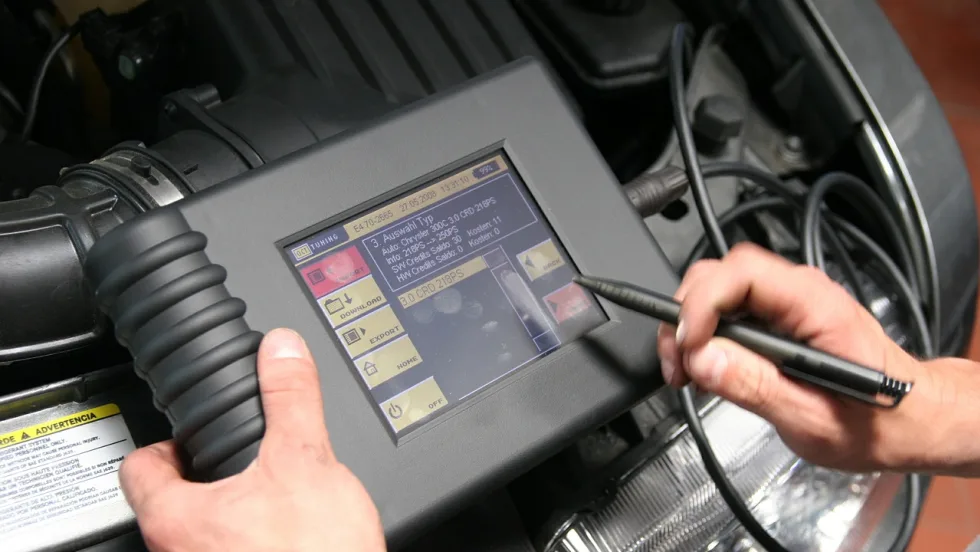
It’s Time to Formulate an ADAS Game Plan
As proliferation of Advanced Driver Assistance Systems (ADAS) increases, skilled labor, equipment, and training costs will increase as well. Fleet operators can’t mitigate these financial burdens by cutting corners on ADAS recalibration and repairs.
Read More →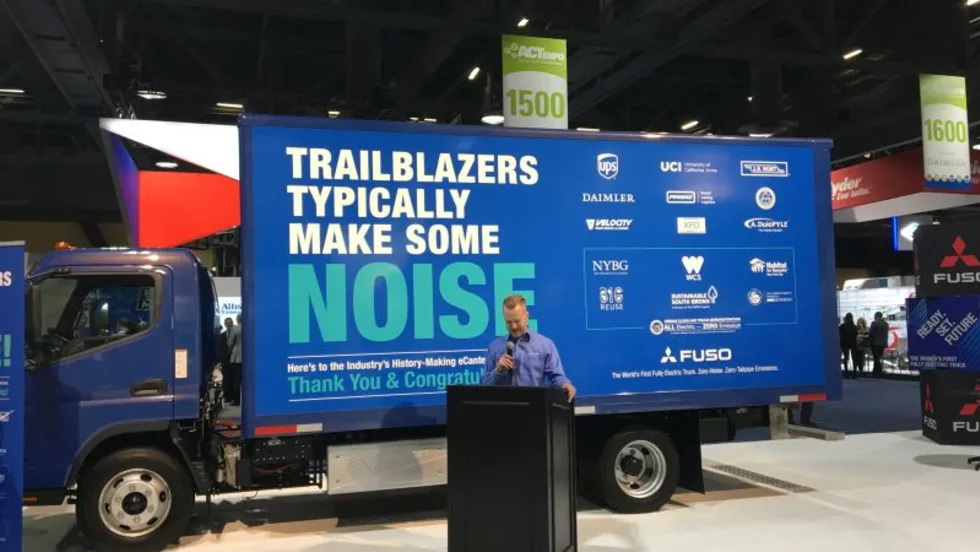
The Future is Electric, But…
With an increasing emphasis on emissions reductions mandates, will fleet operators get caught between clean technologies on their way out and an electric future that hasn’t yet arrived?
Read More →
6 Trend Lines from the 2019 Work Truck Show
From giant leaps in torque and towing to heavy duty truck personalization and chassis cab styling, these trends emerged from this year’s Work Truck Show in Indianapolis.
Read More →
They’re Coming for Your Diesel
In Southern California and other parts of the world, regulators are coalescing to ban, or severely curtail, diesel vehicles. There’s a growing disconnect with the mandates to green the environment and the availability of products and technologies to get us there.
Read More →
Hey Cannabis Companies, Welcome to Fleet
An industry is forming, and it needs help with fleet. In the meantime, the fleet industry should know that these new businesses are navigating extraordinary circumstances, which is forcing them to be better fleet operators pretty darn quick.
Read More →
Takeaways from the Fleet Forward Conference
Most attendees — from established fleets and vendors to new players that were only formed five years ago — didn’t know anyone. But that’s exactly the point.
Read More →
Is it Time to Rethink How Drivers Are Paid?
With the ELD rule affecting miles driven, and drivers’ duties increasingly including more than just driving the vehicle, what can be done to more accurately and fairly reflect a driver’s workday?
Read More →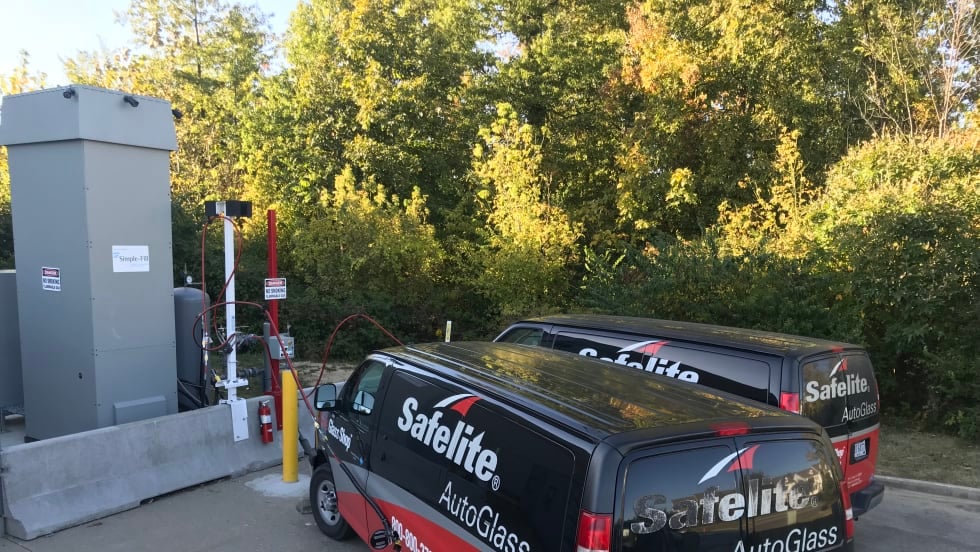
Whatever Happened to CNG?
While the light-duty market for compressed natural gas vehicles has almost evaporated, new near zero emissions technology and drastic reductions in infrastructure costs have reinvigorated the market for medium- and heavy-duty applications — even for smaller fleets.
Read More →