


Should Auto Recalls Be Delineated by Severity?
Analyzing recall data gets us closer to an answer.

Should auto recalls be delineated by severity?
The idea has been floated for years, though it has taken more urgency as legislation to ground recalls is bandied about in the House and Senate. The theory goes that creating a system of severity would require vehicles subjected to the most serious recalls be grounded immediately, while others would fall under another classification, ostensibly allowing for a longer time frame to repair.
In theory, it makes sense: Some recalls seem more directly related to the safety of the vehicles’ occupants — such as airbags, steering and powertrain — while others are not, such as sunroofs and detached warning labels.
This is in light of the fact that the entities beholden to the legislation, such as auto dealers, car rental companies and used car consignors, face a considerable burden in grounding and fixing a recalled vehicle. With the unprecedented spike in recalls in the last two years, these operators have been left stranded with unrepairable vehicles (for months, sometimes) when parts aren’t available. It’s a nasty hit to the bottom line of a small business.
Even more pressing from a safety standpoint is the notion of “recall fatigue” — as the sheer number of recalls causes sensory overload, there is a fear that completion rates could be negatively affected. A determination of severity may prompt consumers to act with greater urgency.
But could such a system of recall hierarchy work?
I decided to analyze recall data to get closer to an answer. I downloaded the publically available file of automobile recalls from the National Highway Traffic Safety Administration (NHTSA) from Jan. 1, 2014 to Sept. 9, 2015.
To make the list more manageable, I expunged recalls from tire manufacturers and those covering aftermarket parts. I limited the list to passenger vehicles, light-duty trucks and vans from major auto manufacturers. I grouped recall types where appropriate. This effort produced the enclosed list, which contains 35 types of recalls covering 70,604,442 vehicles.
And then I went about trying to rank the “severity” of the recall.
There are some no-brainer categories when it comes to the safe operation of a vehicle: airbags, electrical systems, brakes, power trains, steering, vehicle speed control, suspension, wheels and engines.
Other categories are a little murkier, such as structure, exterior lighting, equipment-electrical, equipment-adaptive and latches/locks/linkages. The categories that seemed to fall on the side of overly cautious include spare tires, “equipment-other labels” and “visibility-sunroof.”
Delving further into those I deemed “less severe,” I pulled this description from the structure category:
“In the event of an accident, the center storage console may not stay latched. … The storage compartment door may not remain closed in the event of a crash, increasing the risk of occupant injury.”
This description came from the exterior lighting category:
“Due to a wiring incompatibility, the front side marker lamps may not function. … Without the proper illumination of the side marker lamps, the vehicle may be less visible in night-time conditions, increasing the risk of a crash.”
This description is from what I’m calling the “overly cautious” category:
The affected vehicles may have a brake reservoir cap that does not have the required text advising owners which brake fluid the vehicle uses. … Without the correct brake reservoir label on the cap, someone may add the wrong brake fluid, causing damage to the brake system seals, resulting in brake fluid leaks, lengthened stopping distances and increasing the risk of a crash.”
In practical terms, an exploding airbag is riskier than a lack of text on a brake reservoir cap. Still, trying to rank recall severity is akin to playing God. The phrase “increasing the risk of a crash (or injury)” was inherent in almost all recall notices, from the alarming to the seemingly benign. If any component failure increases the risk of a crash, how can it be ranked as more or less safe as others? From a liability standpoint, zero is the acceptable threshold.
Would safety advocacy groups or the general public be comfortable with this ranking? More importantly, would NHTSA — the creator of these notices and the crash-risk language — allow ranking by severity?
Upon taking office last year, Mark Rosekind, NHTSA’s administrator, faced immediate pressure to take a tougher stance on safety, especially in light of the agency’s perceived regulatory lapses regarding the Takata airbag recalls and General Motors’ faulty ignition switches.
In light of this, a ranking of recalls by severity is unlikely to happen. Remember, NHTSA examines scores of safety issues and not all of them become recalls. The ones that make the cut have already passed the agency’s severity threshold.
Too, imagine the consumer who delayed fixing a “non-urgent” recall and was injured or killed as a result of the failure of a recalled component. This is not a chance NHTSA is willing to take.
Whether you’re for or against recall legislation, energies are best spent elsewhere.
From a real-world standpoint, the number of units affected for those destined for the most severe category dwarf those in the “less severe” categories by a 65-1 margin. Even if enacted, such a hierarchy would provide little practical relief indeed.
Major Auto Manufacturer Recalls 1/1/14 to 9/9/15 | ||
|---|---|---|
Recall Type | Number | Units Affected |
Electrical system | 50 | 21,384,249 |
Air bags | 69 | 17,003,130 |
Service brakes | 39 | 8,496,347 |
Power train | 42 | 4,988,011 |
Steering | 28 | 3,678,910 |
Fuel system | 28 | 3,222,036 |
Suspension | 18 | 2,365,876 |
Seat belts | 13 | 2,083,588 |
Seats | 11 | 1,349,997 |
Structure (Body, door, frame and members) | 10 | 1,132,154 |
Exterior lighting (headlights/taillights) | 9 | 1,023,903 |
Engine and engine cooling | 16 | 835,321 |
Tires (spare) | 4 | 543,951 |
Latches/locks/linkages | 7 | 498,843 |
Exterior lighting | 4 | 401,975 |
Visibility - power window devices | 3 | 327,694 |
Visibility wiper | 6 | 267,734 |
Engine | 6 | 249,038 |
Hybrid propulsion system | 3 | 203,486 |
Electronic stability control | 4 | 138,476 |
Vehicle Speed Control - Accelerator pedal | 6 | 118,198 |
Equipment - other labels | 11 | 59,679 |
Visibility defroster/defogger | 1 | 42,696 |
wheels/lugs/nuts/bolts | 5 | 35,454 |
visibility windhshield | 1 | 34,190 |
Equipment - electrical | 2 | 32,212 |
Parking brake | 3 | 32,212 |
Exterior lighting (tail lights) | 9 | 22,649 |
Visibility - sunroof | 5 | 12,253 |
Equipment | 1 | 10,137 |
Tires (Vehicle OEM recall) | 2 | 9,844 |
Equipment adaptive | 2 | 70 |
Child seat | 1 | 69 |
Trailer hitches | 1 | 56 |
Visibility – rearview mirrors | 1 | 4 |
Total | 421 | 70,604,442 |
More Blog Posts
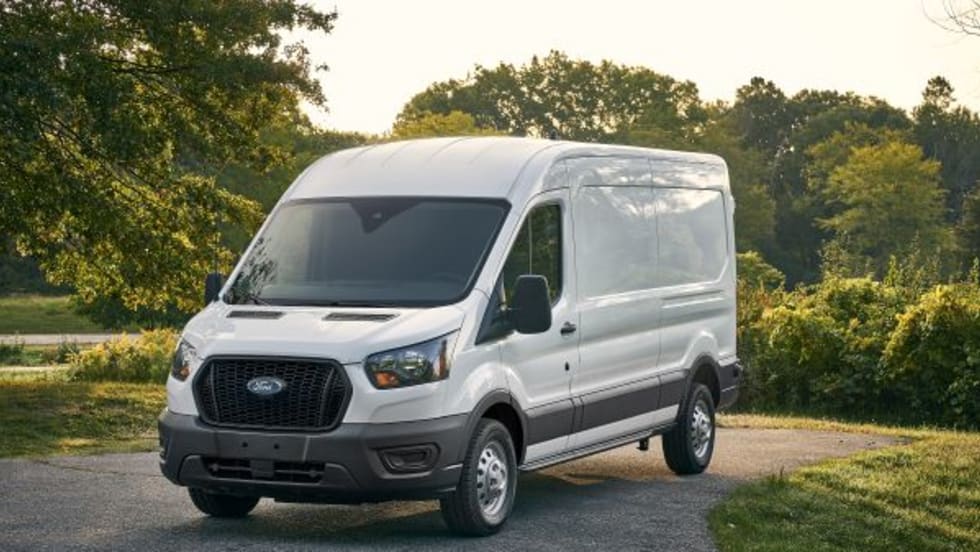
2021 Ford Transit Offers Versatility for Fleets
For the 2021-MY, Ford made ergonomic enhancements for drivers and added an available Parcel Delivery Package. This follows a major refresh in 2020, which added a Crew version, a new standard engine, standard active safety technologies, and embedded telematics to the Transit van family.
Read More →
Recognizing the Other Essential Drivers
Vocational and business fleet drivers don’t get the attention that truckers do. Yet they too are on the front lines, and their jobs often bring them into uncontrolled environments every day.
Read More →
It’s Time to Formulate an ADAS Game Plan
As proliferation of Advanced Driver Assistance Systems (ADAS) increases, skilled labor, equipment, and training costs will increase as well. Fleet operators can’t mitigate these financial burdens by cutting corners on ADAS recalibration and repairs.
Read More →
The Future is Electric, But…
With an increasing emphasis on emissions reductions mandates, will fleet operators get caught between clean technologies on their way out and an electric future that hasn’t yet arrived?
Read More →
6 Trend Lines from the 2019 Work Truck Show
From giant leaps in torque and towing to heavy duty truck personalization and chassis cab styling, these trends emerged from this year’s Work Truck Show in Indianapolis.
Read More →
They’re Coming for Your Diesel
In Southern California and other parts of the world, regulators are coalescing to ban, or severely curtail, diesel vehicles. There’s a growing disconnect with the mandates to green the environment and the availability of products and technologies to get us there.
Read More →
Hey Cannabis Companies, Welcome to Fleet
An industry is forming, and it needs help with fleet. In the meantime, the fleet industry should know that these new businesses are navigating extraordinary circumstances, which is forcing them to be better fleet operators pretty darn quick.
Read More →
Takeaways from the Fleet Forward Conference
Most attendees — from established fleets and vendors to new players that were only formed five years ago — didn’t know anyone. But that’s exactly the point.
Read More →
Is it Time to Rethink How Drivers Are Paid?
With the ELD rule affecting miles driven, and drivers’ duties increasingly including more than just driving the vehicle, what can be done to more accurately and fairly reflect a driver’s workday?
Read More →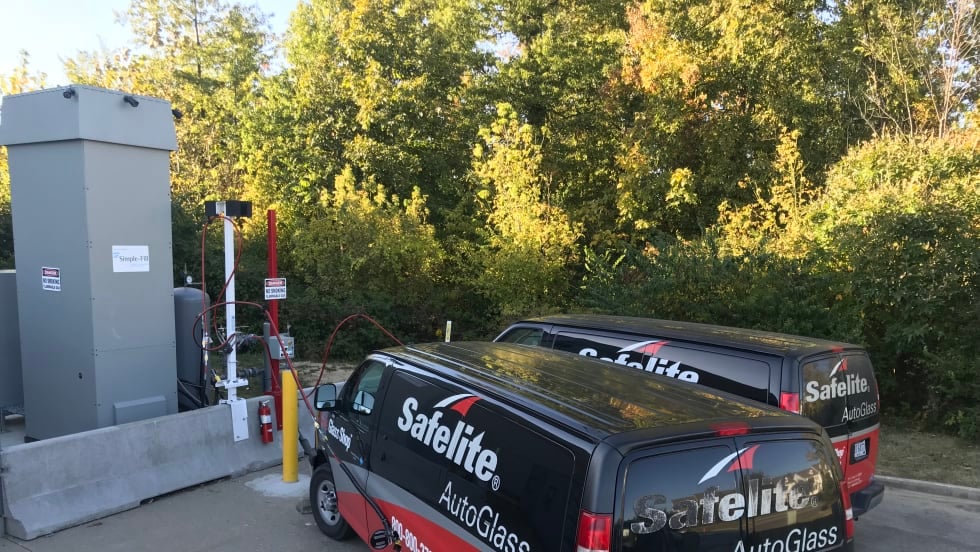
Whatever Happened to CNG?
While the light-duty market for compressed natural gas vehicles has almost evaporated, new near zero emissions technology and drastic reductions in infrastructure costs have reinvigorated the market for medium- and heavy-duty applications — even for smaller fleets.
Read More →