


Should the Public Be Scared of a Car Rental Oligopoly?
Consumers should be aware of the many forces at work that affect rental car rates.

With the Hertz and Dollar Thrifty merger almost past us, America is waking up to the fact that three car rental companies control 94% of the market. And the media is starting to call the car rental industry an oligopoly.
You guessed it, an oligopoly is essentially a market controlled by a small number of firms that thus control pricing. The concept isn’t quite as seductive as a monopoly, so you’ll never see Oligopoly, the board game; as much as Jim Cramer wishes there was one.
It’s in our American nature to take a skeptical view of rule by a few. But I say to car rental consumers, be not afraid - at least of that word. Car rental rates will go up, and they will go down. Before you assign anecdotal claims of rate increases to the new oligopoly just as you would a balmy winter day to global warming, you must understand the many forces at work that affect car rental rates.
Why rates could go up:
Pricing is dictated by competition, but it is also a function of the cost of the product. And the product has gotten more expensive. The cost to buy a car has gone up, and manufacturers are forcing higher-contented (and thus higher-priced) vehicles into rental fleets. The used car market has come back down to Earth, putting further pressure on holding costs. For the past two years, car rental companies had the luxury of lowering rates to gain a little market share because they could make it up when they sold the car. Not so today.
As well, pricing is influenced by supply and demand. The days of flooding the car rental market with cheap, unsold cars are over. With the right-sizing of the automotive industry, automakers are limiting sales into rental as a way to protect residual values. As a consequence, rental fleets are not oversupplied. With fewer cars, there’s less of a need to discount rates.
Technology and the science of fleet management are also playing a role: More sophisticated rate management and reservations forecasting have led to better utilization, which help to raise rates.
Why rates could go down:
The “value” segment of the market is growing the fastest by far, according to airport concessions data. With the growth of Fox and the emergence of a new player in Sixt, along with the rebirth of Advantage (thanks to the FTC), the leisure consumer has lower priced options.
And if the industry starts to get fat on profits, you’ll see more of a play for market share, which will drive down rates again. You’ll also see the smaller, cheaper brands getting fatter on the table scraps.
Why rates might not change much:
There are still eight consumer-facing car rental brands. Yes, three puppet masters pull the strings for those brands. Yet, unlike the airlines, consumers still have a matrix of “premium,” “mid-tier” and “value” options to choose from. They can still click the lowest price of those eight brands (in addition to seeking out an independent). The market will migrate down the chain as prices get higher.
In terms of the business segment, corporate pricing has been underwater for some time. The majority of that business will still be controlled by Avis, Hertz and National under corporate contracts. With the merger, Hertz should be able to keep more corporate business by allowing the cheaper customers to rent with Dollar Thrifty. However, those customers won’t necessarily be paying more; they’d just be switching to a brand that matches their price point.
Nor will the insurance replacement market change; it is and will continue to be dominated by Enterprise, which competes to some extent with other majors and many local players.
Yes, rates will change, but due to many factors. Before we chalk it all up to the effects of an oligopoly, let’s see what rates do across five or six quarters. And really, renting a car will always be a slim percentage of the overall travel spend. When car rental companies crow about a 2% move in better pricing, the rate change to the consumer ends up being about a dollar a day.
From an industry perspective, a healthy rate environment is a good thing. After all, renting a car has been the best bargain around for years. Isn’t it time that a rental car is valued at its real worth?
More Blog Posts
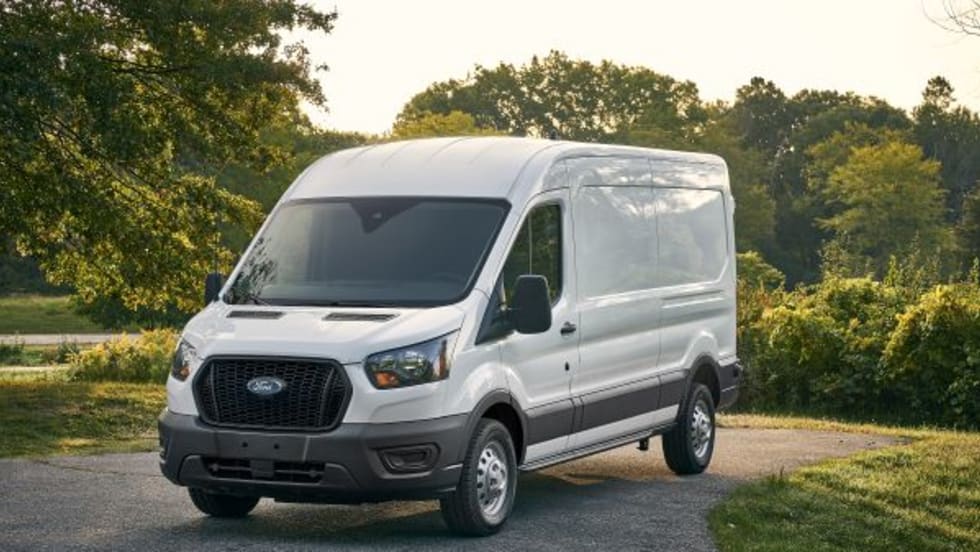
2021 Ford Transit Offers Versatility for Fleets
For the 2021-MY, Ford made ergonomic enhancements for drivers and added an available Parcel Delivery Package. This follows a major refresh in 2020, which added a Crew version, a new standard engine, standard active safety technologies, and embedded telematics to the Transit van family.
Read More →
Recognizing the Other Essential Drivers
Vocational and business fleet drivers don’t get the attention that truckers do. Yet they too are on the front lines, and their jobs often bring them into uncontrolled environments every day.
Read More →
It’s Time to Formulate an ADAS Game Plan
As proliferation of Advanced Driver Assistance Systems (ADAS) increases, skilled labor, equipment, and training costs will increase as well. Fleet operators can’t mitigate these financial burdens by cutting corners on ADAS recalibration and repairs.
Read More →
The Future is Electric, But…
With an increasing emphasis on emissions reductions mandates, will fleet operators get caught between clean technologies on their way out and an electric future that hasn’t yet arrived?
Read More →
6 Trend Lines from the 2019 Work Truck Show
From giant leaps in torque and towing to heavy duty truck personalization and chassis cab styling, these trends emerged from this year’s Work Truck Show in Indianapolis.
Read More →
They’re Coming for Your Diesel
In Southern California and other parts of the world, regulators are coalescing to ban, or severely curtail, diesel vehicles. There’s a growing disconnect with the mandates to green the environment and the availability of products and technologies to get us there.
Read More →
Hey Cannabis Companies, Welcome to Fleet
An industry is forming, and it needs help with fleet. In the meantime, the fleet industry should know that these new businesses are navigating extraordinary circumstances, which is forcing them to be better fleet operators pretty darn quick.
Read More →
Takeaways from the Fleet Forward Conference
Most attendees — from established fleets and vendors to new players that were only formed five years ago — didn’t know anyone. But that’s exactly the point.
Read More →
Is it Time to Rethink How Drivers Are Paid?
With the ELD rule affecting miles driven, and drivers’ duties increasingly including more than just driving the vehicle, what can be done to more accurately and fairly reflect a driver’s workday?
Read More →
Whatever Happened to CNG?
While the light-duty market for compressed natural gas vehicles has almost evaporated, new near zero emissions technology and drastic reductions in infrastructure costs have reinvigorated the market for medium- and heavy-duty applications — even for smaller fleets.
Read More →