


Tax Outrage in Rhode Island
If your car is damaged and another party is at fault, can you imagine getting taxed on the repair reimbursement?

New Englanders know a thing or two about "taxation without representation." So do car rental companies. Predatory excise taxes on car rental bills are increasingly being levied to pay for everything from football stadiums to light rail lines to performing arts centers.
A case in Rhode Island illustrates a sneak attack on a heretofore safe target for car rental companies--taxing damage repair reimbursements.
Here's the deal for those outside the industry: someone rents a car, and let's say the renter does not purchase the collision damage waiver. (The amount of the CDW, by the way, is always taxed.) The renter gets in an accident, and the person responsible for the accident has to pay the car rental company for the damages, through an insurance company or out of pocket.
In a case being handled by Moore McLaughlin, attorney at McLaughlin & Quinn, LLC in Providence, a U-Save car rental operator is being assessed the state sales tax for the amount being reimbursed to him for damage to the car.
Think about it--someone hits your car, does $5,000 in damage, pays you for it, and you end up owing the state $350 (7 percent) in taxes. Now multiply that times the number of damage repair reimbursements a car rental company receives in a year-the tax bill would be in the thousands.
In the great majority of instances the reimbursement comes from insurance companies. What will they say when asked to pay that tax? We can't print it here.
A Precedent-setting Case?
McLaughlin says there is no precedent in Rhode Island for such action, and other states that have tried this maneuver have failed in court. McLaughlin is taking the case through the system; however, he says in R.I. tax cases the appeals process does not necessarily favor the defendant. Ultimately, this case could have Rhode Island Supreme Court implications.
You know the old saying, "What happens in Rhode Island, stays in Rhode Island?" (Or did I coin the phrase after one night in a bar in Newport called Mudville's? At any rate...) This may not stay in Rhode Island. Not only will the tax authorities go after all car rental companies in the state, but other states may follow Rhode Island's precedent. Pretty scary.
McLaughlin has summarized the case below (subheads are mine). What are we going to do about this? Is another tea party in order?
Rhode Island Expands Sales Tax on Car and Equipment Rentals
The Rhode Island Division of Taxation has recently proposed to expand the sales tax on vehicle and equipment rentals in the state. In the course of a routine sales tax audit of a multi-state airport car rental company operating under the U-Save Car Rental franchise, the sales tax auditor and his manager have substantially expanded the reach of the Rhode Island sales tax, resulting in a significant detriment to all vehicle and equipment rental companies in Rhode Island, and possibly elsewhere.
Rhode Island imposes its sales tax on the charges associated with lease and rental of vehicles and equipment. The Rhode Island sales tax is imposed on the actual rental price of the vehicle or equipment as well as certain other charges. Specifically, the sales tax is imposed on the Collision Damage Waiver (CDW). The CDW is the insurance the customer can buy at the time the vehicle or equipment is rented. In many cases, the customer must purchase the CDW unless other proof of insurance is provided. The CDW is subject to the various sales and other vehicle and equipment rental taxes imposed by many other states, in addition to Rhode Island.
In this case, the taxpayer being audited is not suggesting that the CDW is not taxable. In fact, this taxpayer charged and collected the Rhode Island sales tax on the CDW and the RI Division of Taxation is not suggesting otherwise.
Taxing a Repair Reimbursement
The only point of dispute in this case arises where customers chose not to buy the CDW and the customers are ultimately responsible to indemnify the vehicle or equipment rental company for any damage sustained while the customer has possession of the vehicle or equipment.
In that scenario, the vehicle or equipment rental company has the vehicle or equipment repaired and charges the customer for reimbursement. In some cases the customer pays the amount directly. In most cases, however, the customer's insurance company or another party's insurance company is responsible for reimbursing the vehicle or equipment rental company for the cost of the repairs. Previous to this current audit, no published ruling or case in Rhode Island, nor the Rhode Island General Laws or Sales Tax Regulations, have supported taxing reimbursements in this manner.
Tying it to Insurance
The Rhode Island sales tax auditor relies on Regulation SU-92-62 (I) which states that the Rhode Island sales tax is "computed on the gross amount without any allowance for . . . insurance. . . ." This regulation seems to have been intended for long-term leases where the lessor requires the lessee to maintain adequate insurance and ensure so by collecting a portion of the insurance premium with each monthly payment, analogous to the bank which escrows a small amount in a homeowner's monthly payment for homeowner's insurance.
In the present case, however, the amounts being reimbursed to the vehicle and equipment rental companies are not "insurance." In fact, these amounts arise as a result of not purchasing the insurance. As a fallback position, the auditor merely maintains that any payment from the customer to the rental company must be pursuant to the rental agreement and is therefore part of the cost of renting the vehicle or equipment. As a result, everything must be taxed.
Financial Harm to Rental Companies
Informal inquiries of other vehicle and equipment rental companies in Rhode Island confirmed that this position by the Rhode Island Division of Taxation is novel in Rhode Island and would result in financial harm to the rental companies.
A survey of sales and similar taxes in other states has uncovered no other law, regulation or case that attempts to impose a tax on these types of reimbursements, except for a Pennsylvania Sales and Use Tax Ruling. Conversely, several cases in other states have specifically held that those states' sales, use or vehicle rental taxes do not apply to these types of reimbursements. See attached authority from Colorado, Nevada, Alaska, New York, and Illinois, all directly on point in contradiction to Rhode Island's expanded definition.
Even more peculiar in Rhode Island is the fact that the vehicle and equipment rental companies pay Rhode Island sales tax on a portion of the costs when the vehicles or equipment is repaired. So, in essence, Rhode Island is attempting to collect the sales tax twice on the same transaction. In sales tax parlance this doubling-up is known as "stacking" or "pyramiding." Reasonable tax policy avoids stacking and pyramiding.
A Fight to the State Supreme Court
The taxpayer in the present case feels very strongly that this new interpretation is incorrect and has vowed to fight this case all the way to the Rhode Island Supreme Court.
The next step is an administrative hearing before a state-employed hearing officer. In the event that the hearing officer can not be persuaded, the taxpayer may appeal the matter for de novo review to the Rhode Island Sixth Division District Court. The Rhode Island Sixth Division District Court handles cases ranging from tenant evictions to temporary restraining orders to sales tax appeals. If the taxpayer is unsuccessful at the Sixth Division District Court, the only forum remaining is an appeal directly to the Rhode Island Supreme Court. The entire process can take upwards of two years.
In the event the State is ultimately successful, sales tax experts predict that other vehicle and equipment rental companies in Rhode Island will be targeted by the Division of Taxation in an effort to raise much-needed funds to support the State's ever-increasing budget deficit. Then, as with many other legislative and non-legislative tax expansions, other states may adopt Rhode Island's position as their own and pursue vehicle and equipment rental companies in their own states.
More Blog Posts
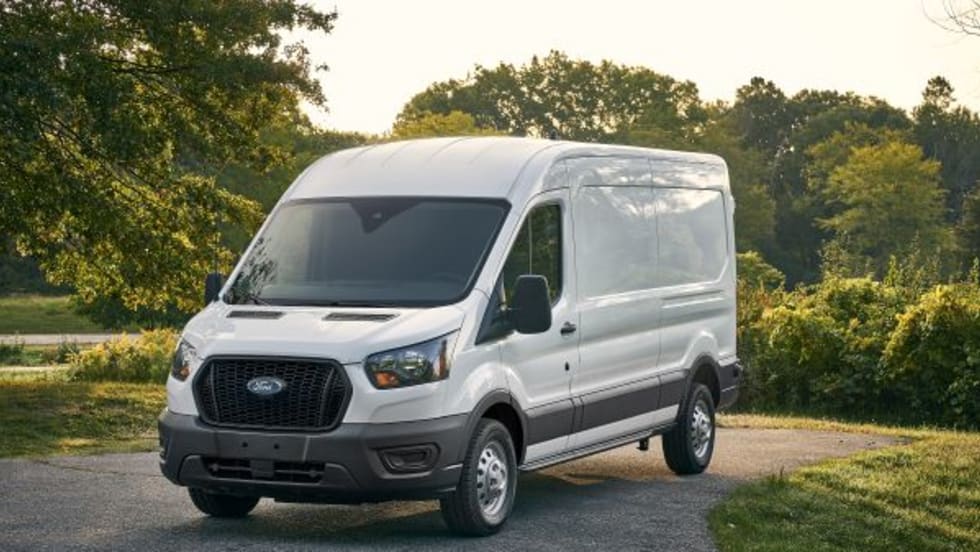
2021 Ford Transit Offers Versatility for Fleets
For the 2021-MY, Ford made ergonomic enhancements for drivers and added an available Parcel Delivery Package. This follows a major refresh in 2020, which added a Crew version, a new standard engine, standard active safety technologies, and embedded telematics to the Transit van family.
Read More →
Recognizing the Other Essential Drivers
Vocational and business fleet drivers don’t get the attention that truckers do. Yet they too are on the front lines, and their jobs often bring them into uncontrolled environments every day.
Read More →
It’s Time to Formulate an ADAS Game Plan
As proliferation of Advanced Driver Assistance Systems (ADAS) increases, skilled labor, equipment, and training costs will increase as well. Fleet operators can’t mitigate these financial burdens by cutting corners on ADAS recalibration and repairs.
Read More →
The Future is Electric, But…
With an increasing emphasis on emissions reductions mandates, will fleet operators get caught between clean technologies on their way out and an electric future that hasn’t yet arrived?
Read More →
6 Trend Lines from the 2019 Work Truck Show
From giant leaps in torque and towing to heavy duty truck personalization and chassis cab styling, these trends emerged from this year’s Work Truck Show in Indianapolis.
Read More →
They’re Coming for Your Diesel
In Southern California and other parts of the world, regulators are coalescing to ban, or severely curtail, diesel vehicles. There’s a growing disconnect with the mandates to green the environment and the availability of products and technologies to get us there.
Read More →
Hey Cannabis Companies, Welcome to Fleet
An industry is forming, and it needs help with fleet. In the meantime, the fleet industry should know that these new businesses are navigating extraordinary circumstances, which is forcing them to be better fleet operators pretty darn quick.
Read More →
Takeaways from the Fleet Forward Conference
Most attendees — from established fleets and vendors to new players that were only formed five years ago — didn’t know anyone. But that’s exactly the point.
Read More →
Is it Time to Rethink How Drivers Are Paid?
With the ELD rule affecting miles driven, and drivers’ duties increasingly including more than just driving the vehicle, what can be done to more accurately and fairly reflect a driver’s workday?
Read More →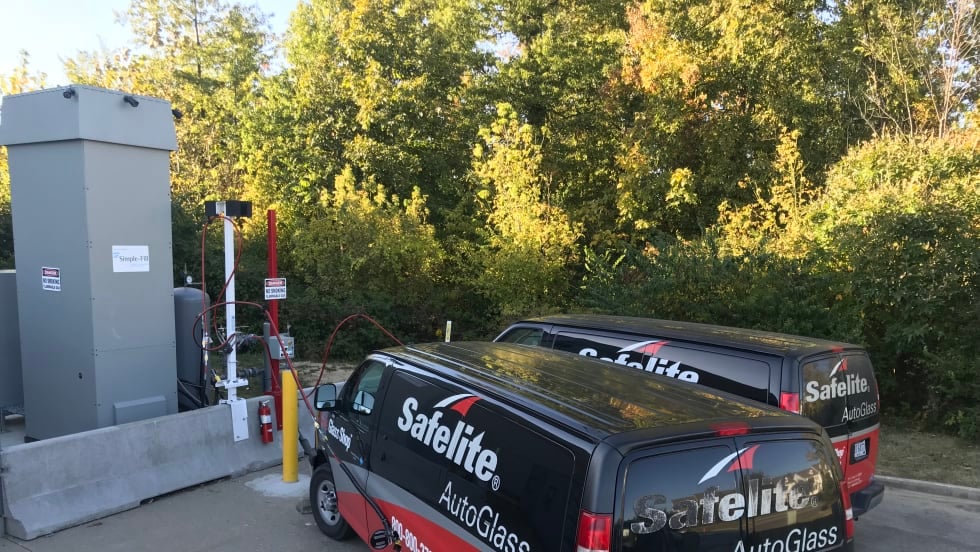
Whatever Happened to CNG?
While the light-duty market for compressed natural gas vehicles has almost evaporated, new near zero emissions technology and drastic reductions in infrastructure costs have reinvigorated the market for medium- and heavy-duty applications — even for smaller fleets.
Read More →