


The Silver Lining of Car Rental Consolidation
While the world concentrates on whether rental rates will rise, rates don’t rule the world.

This was one of those years in car rental we won’t see for a long time.
Hertz spent 2013 integrating Dollar Thrifty, while Franchise Services of North America was busy dancing with Hertz’s spurned stepdaughter Advantage, only to declare Advantage bankrupt within a year of its sale. Then Avis Budget Group bought Zipcar and Payless.
Consolidation shrinks the rows on our market data chart in our Fact Book once again. For fun, I checked the same chart from our 1999 Fact Book, which had 32 rows for 32 separate companies. This year’s Fact Book has 11 companies.
Amid the continued cries of “oligopoly,” the fear is that car rental rates will climb and, with less competition, the customer will suffer.
Rates in fact have risen, and this is a good thing for the industry. Our six-city survey of rate quotes conducted by Rate-Highway shows that rates are up in almost every month year over year since November 2012.
Nonetheless, Hertz only completed the deal for Dollar Thrifty in late November 2012. The rate hikes in our survey couldn’t have been directly caused by this consolidation. Combining fleets and back offices, and then leveraging it all, simply doesn’t happen that fast.
The point is that rates are governed in large part by a right-sized fleet, which started before this series of consolidations.
In light of rising rates and tighter fleets, has the customer suffered? If we accept the findings of the industry’s esteemed benchmark of customer satisfaction, this is not the case. Per J.D. Power & Associate’s annual survey of car rental customers at airports, overall customer satisfaction with the rental car experience was the highest in 2013, since the study’s current methodology was adopted in 2006. In the 2007 survey — the halcyon days before the Great Recession — the industry average was 750. This year’s average is 775.
Wait, there are only three major car rental companies now, yet rates are up and customer satisfaction has risen? Could consolidation be a boon not only to a company’s bottom line, but also to its customers?
In the 2007 J.D. Power survey — the year Enterprise bought National and Alamo — Enterprise scored highest; National was third and Alamo scored next to last. In this year’s survey, National ranked first, followed by Enterprise and Alamo. One could conclude that Alamo’s customers have benefitted from Enterprise’s operational excellence. Let’s hope Hertz will do the same with Dollar and Thrifty, and Avis with Payless and even Zipcar.
And this higher customer satisfaction is coming on the back of rental companies squeezing more profit out of each rental car. Our annual assessment of the car rental market shows that the car rental industry made $24.5 billion in the U.S. in 2013 on an average of 1.95 million rental cars in service — or $1,048 per unit, per month (RPU). In 2007, the industry made $21.5 billion on 1.86 million cars, for $964 RPU.
But this may be the silver lining for the car rental industry and its customers:
“More than one-third (35%) of customers cite low price as a top reason for selecting their rental car company,” writes J.D. Power in its 2013 survey analysis. “Yet, overall satisfaction is lowest among customers who select based on price. In comparison, overall satisfaction among customers who choose a rental car company based on good customer service is highest (828).”
As if that wasn’t enough, data from the Renter Rated system by CarRentalExpress — a benchmark for smaller and independent operators — shows that the companies with the best ratings don’t have the lowest rental rates.
True, smaller car rental companies are afraid of an oligopoly. They are keenly aware that major car rental companies enjoy a buying power advantage of $800 or more per car. But the smaller companies were always at a disadvantage, and thus should be planning their businesses and value propositions accordingly. Conversely, those smaller companies should be able to raise their own rates commensurately with the majors.
There will always be work to be done to improve car rental operations and customer service. But for now, I’ll take improvements in customer satisfaction and profitability over worrying about rates and the specter of consolidation.
More Blog Posts
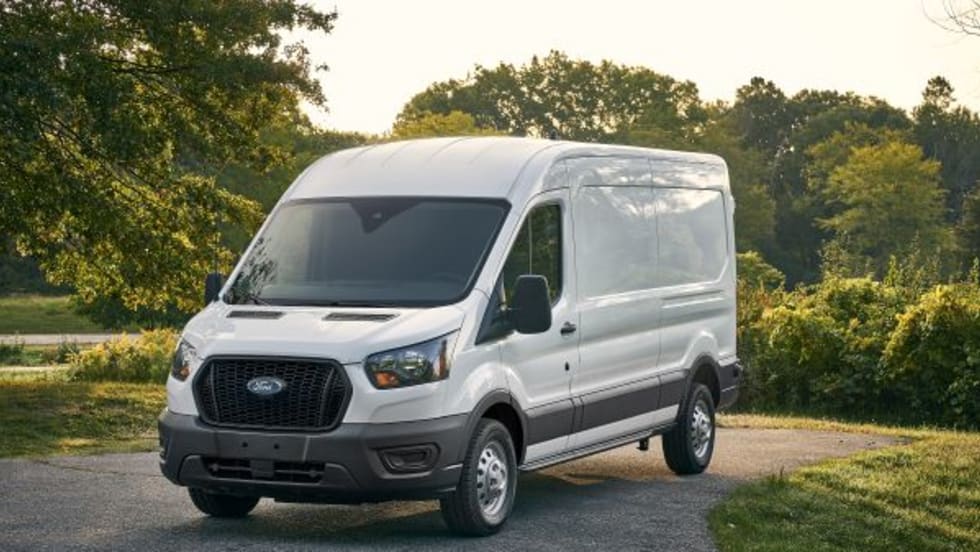
2021 Ford Transit Offers Versatility for Fleets
For the 2021-MY, Ford made ergonomic enhancements for drivers and added an available Parcel Delivery Package. This follows a major refresh in 2020, which added a Crew version, a new standard engine, standard active safety technologies, and embedded telematics to the Transit van family.
Read More →
Recognizing the Other Essential Drivers
Vocational and business fleet drivers don’t get the attention that truckers do. Yet they too are on the front lines, and their jobs often bring them into uncontrolled environments every day.
Read More →
It’s Time to Formulate an ADAS Game Plan
As proliferation of Advanced Driver Assistance Systems (ADAS) increases, skilled labor, equipment, and training costs will increase as well. Fleet operators can’t mitigate these financial burdens by cutting corners on ADAS recalibration and repairs.
Read More →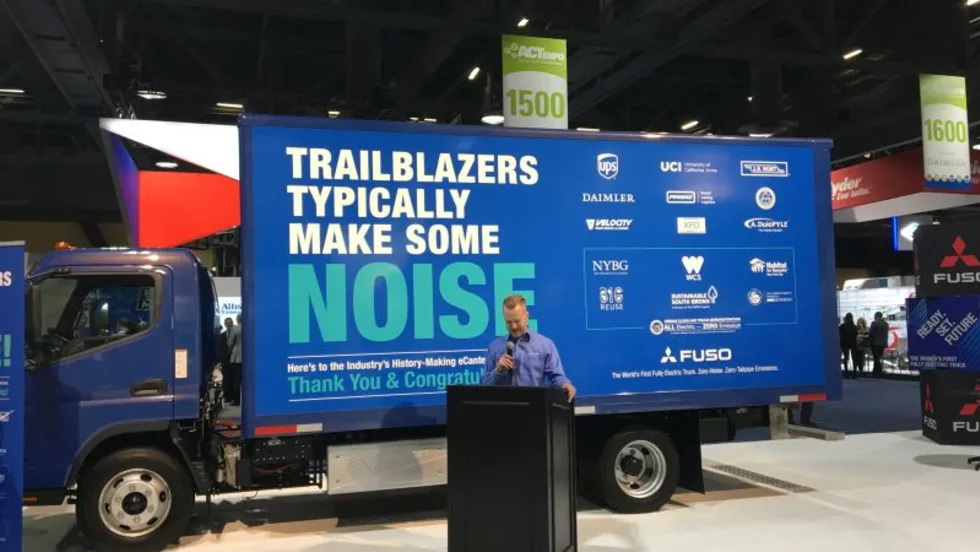
The Future is Electric, But…
With an increasing emphasis on emissions reductions mandates, will fleet operators get caught between clean technologies on their way out and an electric future that hasn’t yet arrived?
Read More →
6 Trend Lines from the 2019 Work Truck Show
From giant leaps in torque and towing to heavy duty truck personalization and chassis cab styling, these trends emerged from this year’s Work Truck Show in Indianapolis.
Read More →
They’re Coming for Your Diesel
In Southern California and other parts of the world, regulators are coalescing to ban, or severely curtail, diesel vehicles. There’s a growing disconnect with the mandates to green the environment and the availability of products and technologies to get us there.
Read More →
Hey Cannabis Companies, Welcome to Fleet
An industry is forming, and it needs help with fleet. In the meantime, the fleet industry should know that these new businesses are navigating extraordinary circumstances, which is forcing them to be better fleet operators pretty darn quick.
Read More →
Takeaways from the Fleet Forward Conference
Most attendees — from established fleets and vendors to new players that were only formed five years ago — didn’t know anyone. But that’s exactly the point.
Read More →
Is it Time to Rethink How Drivers Are Paid?
With the ELD rule affecting miles driven, and drivers’ duties increasingly including more than just driving the vehicle, what can be done to more accurately and fairly reflect a driver’s workday?
Read More →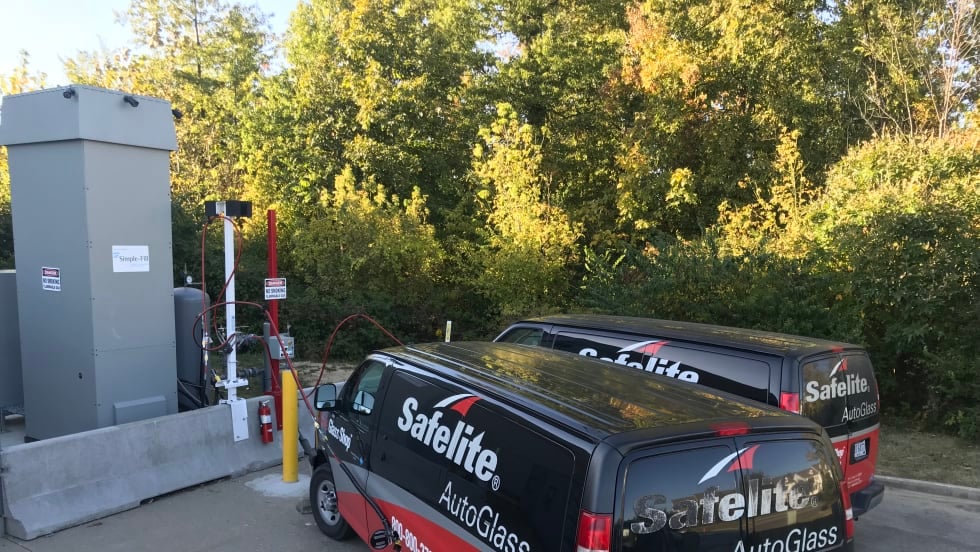
Whatever Happened to CNG?
While the light-duty market for compressed natural gas vehicles has almost evaporated, new near zero emissions technology and drastic reductions in infrastructure costs have reinvigorated the market for medium- and heavy-duty applications — even for smaller fleets.
Read More →