


Will Cars Become Transportation Appliances?
The cars are still the stars, but this year’s L.A. Auto Show revealed an auto industry at a crossroads.

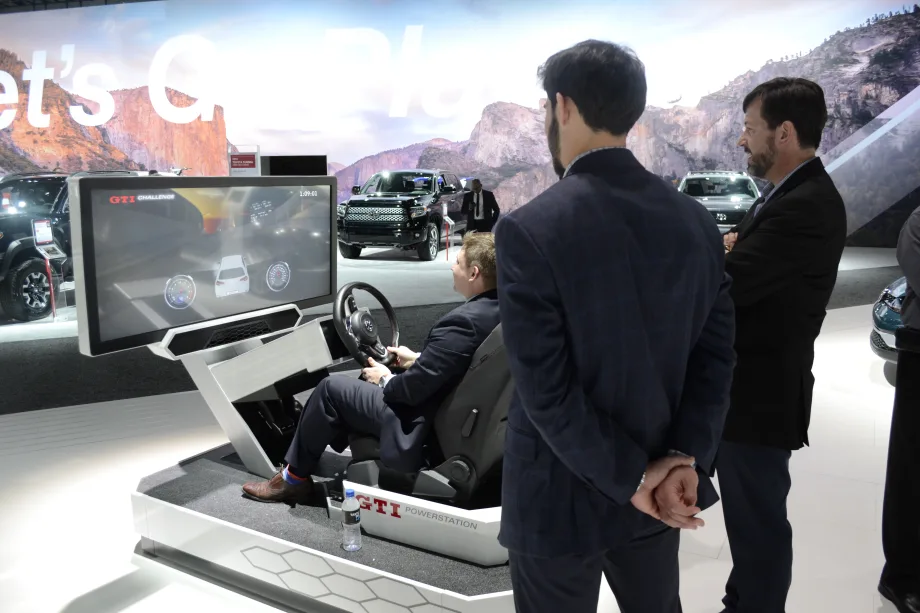
Media-ites drive a Volkswagen GTI - virtually - at the 2017 L.A. Auto Show. (Photo courtesy of Andy Lundin.)
In a sign of the times, the L.A. Auto Show is now AutoMobility LA, as everyone, it seems, is rushing to get out in front of the changes afoot in transportation (including me). When the show rebranded last year, no one bat an eyelash. Ironically, though, in news reports the media still refers to its name christened some 110 years ago.
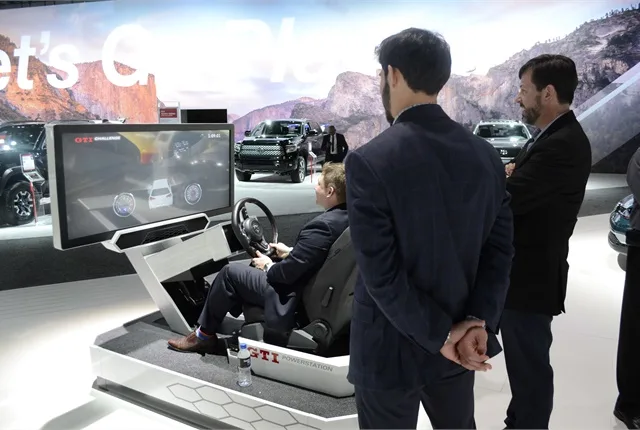
Media-ites drive a Volkswagen GTI - virtually - at the 2017 L.A. Auto Show. (Photo courtesy of Andy Lundin.)
Apropos of the name change, much of the news has shifted from the vehicles themselves to the services auto manufacturers are offering around the vehicles, and the tech to support that. Indeed, the industry is expected to lose 300,000 to 400,000 in new vehicle sales next year, and these new services — from vehicle subscriptions and satellite connectivity to personal drivers — are a welcome migration for automakers and dealers to higher profit margins.
These services encompass a more holistic view of the journey. For instance, Lincoln announced that its new subscription service pilot will come with the option of a personal driver to assist with daily errands as well as a partnership with CLEAR, the system to expedite airport security.
Hyundai revealed its Blue Link All-Access service, which connects owners with mobile car washing, grocery delivery, and on-demand fuel delivery services. Mitsubishi announced a subscription-based telematics service with safety and remote access options.
In another telling trend, 12 out of 35 press announcements were delivered not from the show floor but from the Technology Pavilion outside.
These announcements, while trend-setting, erode a bit of the sex appeal of an auto show — no reveal of an app or a service can compete with the smoke, lights, and pulsing, neo-noir soundtrack while the cover is pulled off a new model. When we arrive at our driverless future, can you imagine that same theater for the reveal of the likes of Ollie, Local Motors’ autonomous shuttle?
Faced with this conundrum, Volvo engaged in a bit of inspired showmanship during its press conference to reveal the details of its new subscription service, Care by Volvo. Volvo exec Anders Gustafsson invited onto the stage Heith Rogers, plucked from obscurity to be the service’s first-ever customer. Gustafsson put Rogers on a couch to complete an application within the last 10 minutes of Volvo’s press conference. The idea was to tangibly showcase a new way to acquire a vehicle — fast, easy, and transparent. It worked.
Yes, the cars are still the stars. There were a bevy of new SUVs, and their reveals still included a little glam, from a full five-minute drum jam from electronic musician Robert DeLong at the reveal of Nissan Kicks, a new small crossover, to a classy lounge piano set before Lincoln’s Nautilus uncovering.
Yet this evaporation of auto show attitude is indicative of something larger, the evolution of how we view vehicles. This fact was not lost on Masahiro Moro, president and CEO of Mazda’s North American Operations.
In Mazda’s noticeably Spartan pavilion, Moro spoke of an auto industry at a crossroads, in which companies are battling over how the future will look. “Is it a future where the steering wheel becomes an option, or a place where the car is reduced to a transportation appliance?” he asked.
At Mazda, creators of the design philosophy Kodo, or Soul of Motion, Moro said, “We’ll always believe that how your car looks and performs will continue to matter. There will always be a special bond drivers have with their cars.”
I thought about Moro’s comments as I passed one of the show’s virtual reality simulator displays. How cool, you can drive an Acura NSX without actually getting into one!
For the first time, I got wistful for a past that has yet to come. I can just imagine future generations excited to put on a headset to feel what it actually must’ve been like to drive.
More Blog Posts
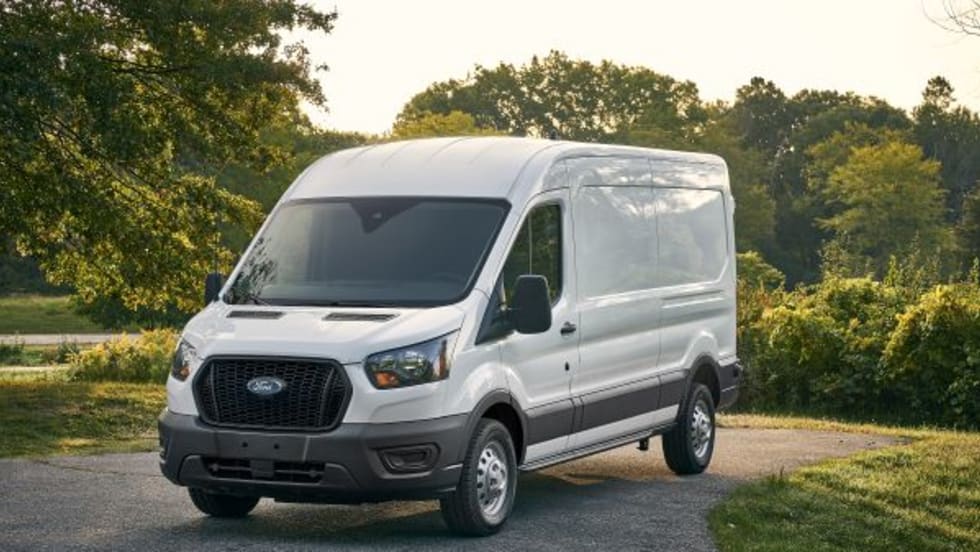
2021 Ford Transit Offers Versatility for Fleets
For the 2021-MY, Ford made ergonomic enhancements for drivers and added an available Parcel Delivery Package. This follows a major refresh in 2020, which added a Crew version, a new standard engine, standard active safety technologies, and embedded telematics to the Transit van family.
Read More →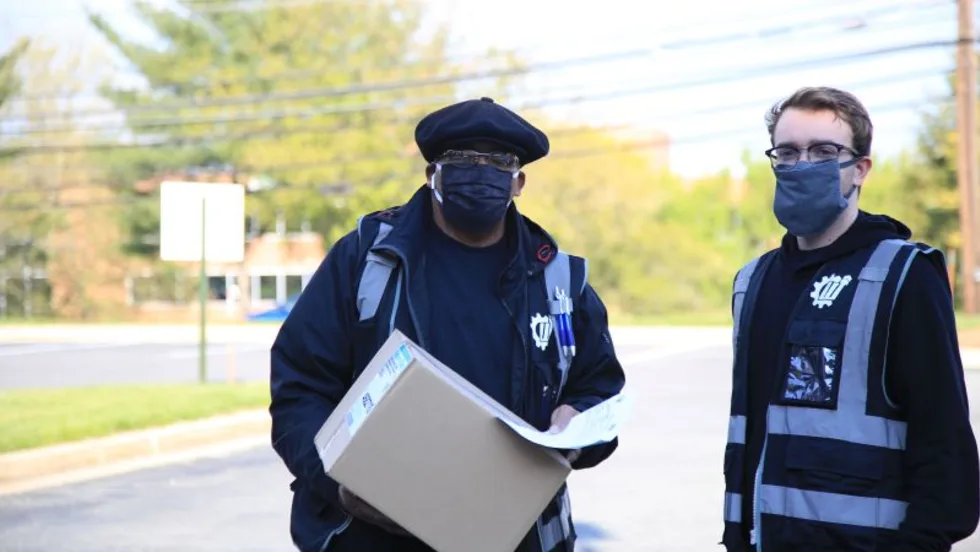
Recognizing the Other Essential Drivers
Vocational and business fleet drivers don’t get the attention that truckers do. Yet they too are on the front lines, and their jobs often bring them into uncontrolled environments every day.
Read More →
It’s Time to Formulate an ADAS Game Plan
As proliferation of Advanced Driver Assistance Systems (ADAS) increases, skilled labor, equipment, and training costs will increase as well. Fleet operators can’t mitigate these financial burdens by cutting corners on ADAS recalibration and repairs.
Read More →
The Future is Electric, But…
With an increasing emphasis on emissions reductions mandates, will fleet operators get caught between clean technologies on their way out and an electric future that hasn’t yet arrived?
Read More →
6 Trend Lines from the 2019 Work Truck Show
From giant leaps in torque and towing to heavy duty truck personalization and chassis cab styling, these trends emerged from this year’s Work Truck Show in Indianapolis.
Read More →
They’re Coming for Your Diesel
In Southern California and other parts of the world, regulators are coalescing to ban, or severely curtail, diesel vehicles. There’s a growing disconnect with the mandates to green the environment and the availability of products and technologies to get us there.
Read More →
Hey Cannabis Companies, Welcome to Fleet
An industry is forming, and it needs help with fleet. In the meantime, the fleet industry should know that these new businesses are navigating extraordinary circumstances, which is forcing them to be better fleet operators pretty darn quick.
Read More →
Takeaways from the Fleet Forward Conference
Most attendees — from established fleets and vendors to new players that were only formed five years ago — didn’t know anyone. But that’s exactly the point.
Read More →
Is it Time to Rethink How Drivers Are Paid?
With the ELD rule affecting miles driven, and drivers’ duties increasingly including more than just driving the vehicle, what can be done to more accurately and fairly reflect a driver’s workday?
Read More →
Whatever Happened to CNG?
While the light-duty market for compressed natural gas vehicles has almost evaporated, new near zero emissions technology and drastic reductions in infrastructure costs have reinvigorated the market for medium- and heavy-duty applications — even for smaller fleets.
Read More →